
Civil rights groups ask EPA to block efforts in NC toward ‘clean’ biogas. Here’s why.
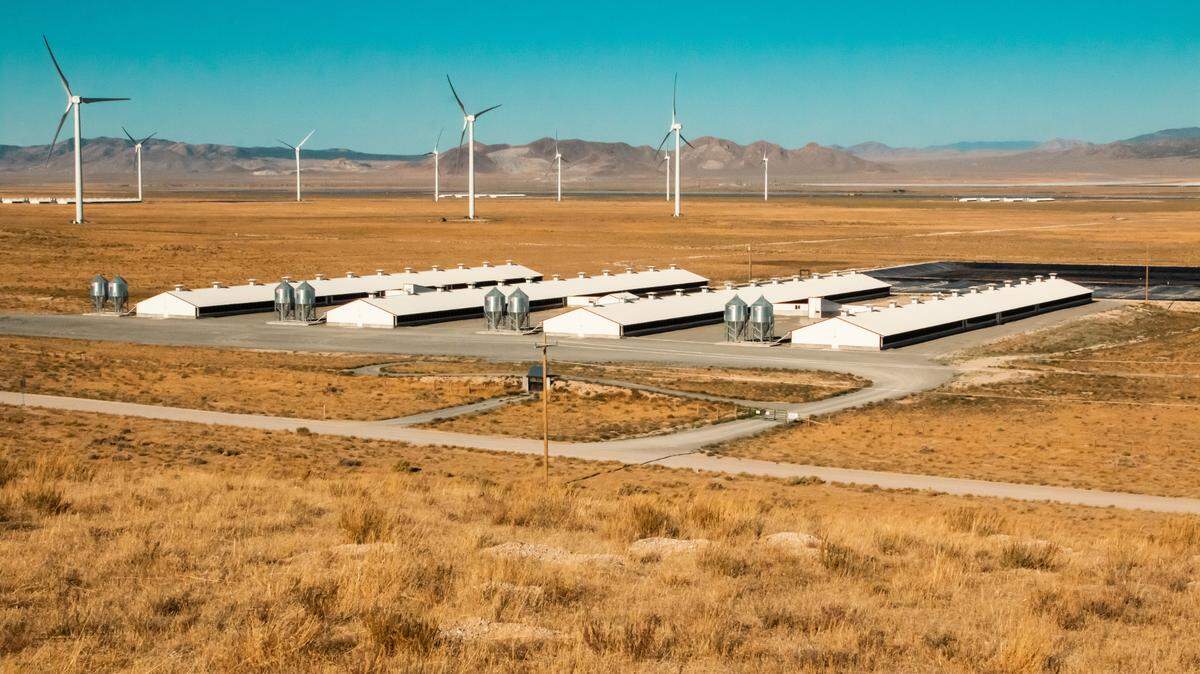
Two North Carolina civil rights organizations have filed a complaint with the U.S. Environmental Protection Agency alleging that state regulators’ decision to permit biogas facilities at four Eastern North Carolina hog farms will have disproportionate impacts on people of color in surrounding areas.
Biogas is produced by capturing methane, a greenhouse gas that is about 25 times as potent as carbon dioxide, in balloon-like structures built over waste lagoons. The methane is then piped to facilities that process it into natural gas, which, when burned, turns into carbon dioxide.
Supporters of biogas efforts — including Dominion Energy and Smithfield Foods — say it decreases greenhouse gas emissions and creates a new income stream for farmers. Critics say biogas will make it more difficult to eliminate the oft-criticized system of storing hog waste in lagoons and spraying it on nearby fields.
Monday, the Southern Environmental Law Center filed a complaint on behalf of the Duplin County Branch of the NAACP and the N.C. Poor People’s Campaign alleging that the N.C. Department of Environmental Quality violated the Civil Rights Act of 1964.
The complaint alleges that while an environmental analysis conducted by DEQ found that the biogas facilities would be located in places with disproportionately large Black and Hispanic populations, the analysis was merely a “paper exercise” and did not lead to meaningful changes to the final permits.
“The Permits issued by DEQ authorize not only the continued use of the discriminatory lagoon and sprayfield system, but also the use of anerobic digesters and uncovered ‘secondary’ lagoons, which will exacerbate the underlying system’s impacts on communities of color,” the complaint states.
Permitting biogas facilities will, the complaint alleges, cause nearby residents to suffer additional harm from fine particulates in the air and result in more water pollution.
Biogas in North Carolina
Align RNG, a partnership between Dominion and Smithfield, would see the widespread adoption of biogas facilities across Eastern North Carolina. The companies have announced their intention to invest $500 million in biogas projects, and an Align spokesman previously told The News & Observer that will include about $375 million in North Carolina.
“We are perplexed by any effort to thwart sustainable farming practices to address the threat of climate change, a top priority for North Carolina and our nation. Turning methane from hog farms into clean energy is an innovative, sustainable practice and an absolute win for North Carolina, the communities where Smithfield operates and the environment,” Jim Monroe, a Smithfield spokesman, said in a written statement.
Align’s projects include a plant in Duplin County’s Turkey community where gas from 19 farms in Duplin and Sampson counties will be gathered and processed before it is injected into a nearby pipeline.
DEQ has issued an air quality permit for the processing facility, which filings indicate could power about 3,500 homes when built to capacity.
Monroe also pointed to North Carolina’s Clean Energy Plan, which touts the state as having the third-highest potential for biogas production in the nation. The report says that burning biogas will convert methane into carbon dioxide, resulting in less significant greenhouse gas impacts.
The plan states that many of North Carolina’s hog farms are expected to cover their lagoons and capture methane, either using it to power their own facilities or selling it as renewable natural gas.
But the Clean Energy Plan also notes that biogas operations lead to higher concentrations nitrate and phosphorous in the liquid that is eventually sprayed across nearby fields.
Under the Farm Act of 2021, signed into law by Gov. Roy Cooper earlier this year, DEQ must craft a general permit for biogas facilities by July 2022. Under a general permit, hog farms would likely be able to apply for and receive permits to cap their lagoons much more quickly than under a more traditional process.
The Farm Act also states that if DEQ does not make a decision about a biogas permit within 90 days of receiving a notice of intent to construct one, the project will automatically be approved.
‘Blind eye’ or ‘fair treatment’?
The civil rights complaint asks the EPA’s External Civil Rights Compliance Office to investigate whether DEQ issued permits that failed to protect people living near the farms and called for the state environmental agency to consider existing pollution when making permitting decisions.
DEQ’s environmental justice review for the four farms that are subject to Monday’s complaint found that all four were in census tracts with higher percentages of Black, Hispanic and impoverished people than North Carolina state averages. Each of the four farms is also within a square mile radius of at least three — and as many as 10 — other animal growing operations.
“For too long, the Department of Environmental Quality has turned a blind eye to what the hog industry is doing to communities of color in North Carolina. Now it’s time for EPA and Administrator (Michael) Regan to follow through on their commitment to environmental justice for communities in eastern North Carolina,” Robert Moore, president of the Duplin County NAACP, said in a written statement.
Regan served as secretary of DEQ during Cooper’s first term in office. He was born and raised in Wayne County, which borders both Duplin and Sampson.
Regan was DEQ secretary when the farms applied for water quality permits and while the environmental justice analysis was conducted. Dionne Delli-Gatti was serving as DEQ’s acting secretary when the permits were issued in March.
Sharon Martin, a DEQ spokeswoman, said in a statement that DEQ responded to the public’s concerns by modifying permits “within the existing authority of the agency and applicable state rules and regulations.”
Those modifications included quarterly nutrient and pathogen sampling at three of the four farms and required two of them to submit reports detailing how they plan to manage waste spray fields to minimize impacts on nearby properties.
“DEQ is committed to the fair treatment and meaningful involvement of all North Carolinians,” Martin wrote, “and has made great strides in making our decisions more inclusive, transparent and responsive to community members.”
This story was produced with financial support from 1Earth Fund, in partnership with Journalism Funding Partners, as part of an independent journalism fellowship program. The N&O maintains full editorial control of the work.
This story was originally published September 29, 2021 at 7:20 AM with the headline "Civil rights groups ask EPA to block efforts in NC toward ‘clean’ biogas. Here’s why.."