
Budget deal could be reached in days, NC House Speaker Moore says. Gov. Cooper ‘hopeful.’
Four months into the new fiscal year, North Carolina’s most powerful elected officials finally sat down to meet and discuss the state budget in person. A compromise budget could be passed as soon as next week, House Speaker Tim Moore said.
The budget would allocate billions of dollars in taxpayer money for raises, education, tax cuts and capital projects.
Moore told reporters on Tuesday that he, Gov. Roy Cooper, Senate leader Phil Berger, Senate Minority Leader Dan Blue and House Minority Leader Robert Reives met Friday at the Executive Mansion to negotiate the budget. The meeting is one of the final hurdles of a long, drawn-out budget process that has stretched over several months between the chambers and now, the parties.
Cooper, Blue and Reives are Democrats. Moore and Berger are Republicans, as is the majority in both the House and the Senate.
“We had a candid and frank discussion about where we are on the budget, and so we expect to get an offer back from the governor this week to our latest proposal. We haven’t received it,” Moore said after the Tuesday House session.
During a press conference about COVID-19 on Wednesday, Cooper told reporters that his office was sending his latest counteroffer to Moore and Berger that afternoon. Cooper said that’s not a final offer.
“Until we reach an agreement, nothing should be final,” Cooper said.
But Moore said that if there isn’t a budget deal with Cooper by next week, Republicans will move ahead with passing a legislative budget. That’s the step in the process that’s currently stalled. The Senate and House each passed its own budget, but have not yet passed a compromise final budget, known as the conference budget, because they are negotiating privately with Cooper ahead of it.
Cooper said there is already agreement for “the vast majority of the budget,” including broadband internet, water and sewer expansion and community college and university construction projects. Taxes, health care and education are the issues they’re working to “iron out,” he said.
“I hope we will and I will continue to work hard and try to get us there. If we don’t get there, it’s because I believe it is a bad budget and I won’t sign it, but I’m continuing to be positive about it and as you can see, leaders in the legislature are continuing to be positive about it.”
In-person negotiations
Reives and a spokesperson for Berger’s office also confirmed the meeting.
“We had breakfast. It was quiche,” Moore said about the Friday meeting.
Similar issues from the 2019 budget stalemate — Medicaid expansion, taxes and raises — have again been central issues of this year’s budget talks. But Moore has said repeatedly, and again on Tuesday, that House Republicans will not vote for Medicaid expansion in the budget.
“We had a very candid conversation, and I relayed to the governor just what I’ve told others, just that we do not have the votes in our caucus to expand Medicaid,” he said. He said they could discuss it as a separate bill, but doesn’t have the House Republican votes to include it in the budget.
However, Moore did say Tuesday that Republican leaders “would put more money into education.”
He said raises and bonuses for teachers and state employees are also part of the negotiations, but will not share the exact amounts of raises or tax cuts being talked about “to honor the spirit of the agreement.”
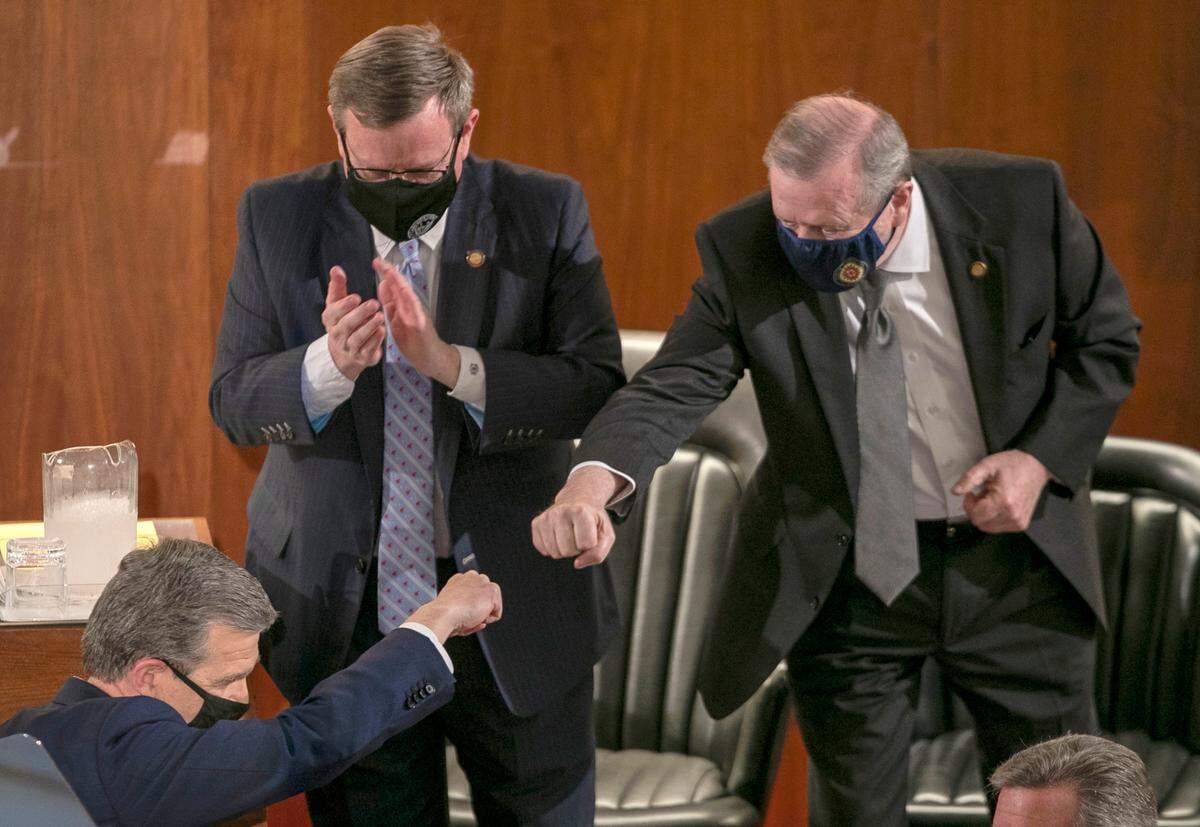
Tax cuts remain a Republican priority. Budget proposals from the House and Senate would reduce and eventually eliminate the corporate income tax rate.
“We continue to believe that the tax cuts are very important in North Carolina,” Moore said. “We believe that’s a key part — where we are as a state right now particularly compared to other states that are upside down is due in large part to our low tax and low regulatory environment. They go hand in glove to bring those new businesses here.”
Cooper said negotiators “have very different views on what’s a good budget for our state.” In order to get a final budget, he said, “there’s going to have to be significant give and take all around, and that can be difficult, but we want to try and get there.”
Reives, the House minority leader and a Chatham County Democrat, told The News & Observer in an interview Tuesday that negotiators are working on a true compromise for both sides, but stopped short of saying exactly how. He said he meeting “was very positive, a pathway forward for both sides, and everything is still on the table.”
He is confident that there will be raises in the budget, and hopes they will be closer to the Democrats’ goal. He said he definitely thinks that the Leandro court case dealing with the amount of funding for schools will be addressed.
Reives said whether or not they come to an agreement, “at minimum there has at least been a strong effort.” He said that is an improvement over the 2019 budget.
In 2019, Cooper vetoed the Republican-written budget and the legislature failed to override it. Instead, a series of piecemeal funding bills were passed and teachers did not get raises.
Timing for budget
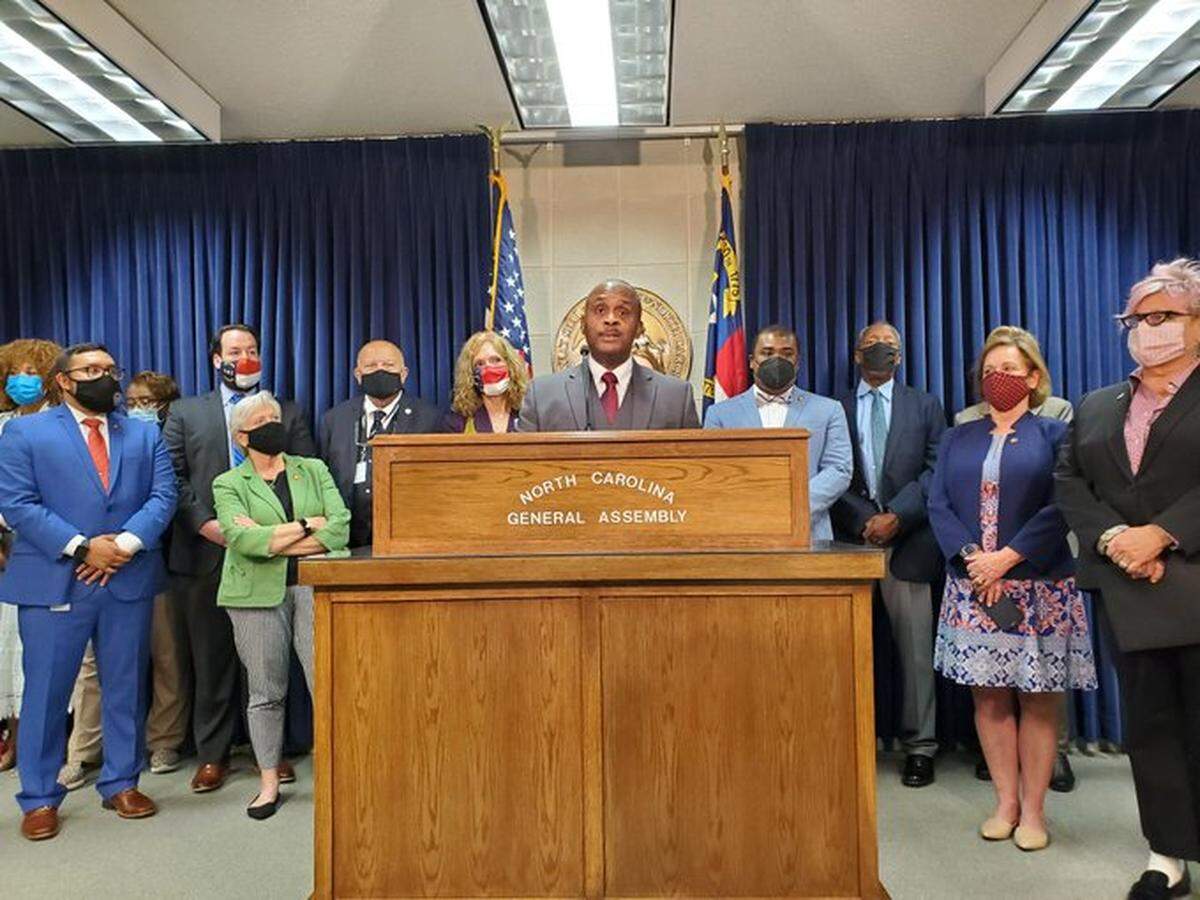
Reives said if an agreement is reached in the coming days between Cooper and the legislature, there will “definitely still be debate” as it goes through floor votes. “Process-wise we’ll be looking at something pretty quick,” he said.
Next week will be a busy week of House votes from Tuesday through Friday, Moore told lawmakers, with votes expected on redistricting maps as well as other bills.
Moore said that while a budget vote next week is the goal, it could be pushed back another week if lawmakers are too busy with votes on redistricting.
For more North Carolina government and politics news, listen to the Under the Dome politics podcast from The News & Observer and the NC Insider. You can find it at link.chtbl.com/underthedomenc or wherever you get your podcasts.
This story was originally published October 26, 2021 at 2:38 PM with the headline "Budget deal could be reached in days, NC House Speaker Moore says. Gov. Cooper ‘hopeful.’."
.jpg)