NC refugees find little ways to help family, friends trapped by Burma’s bloody regime
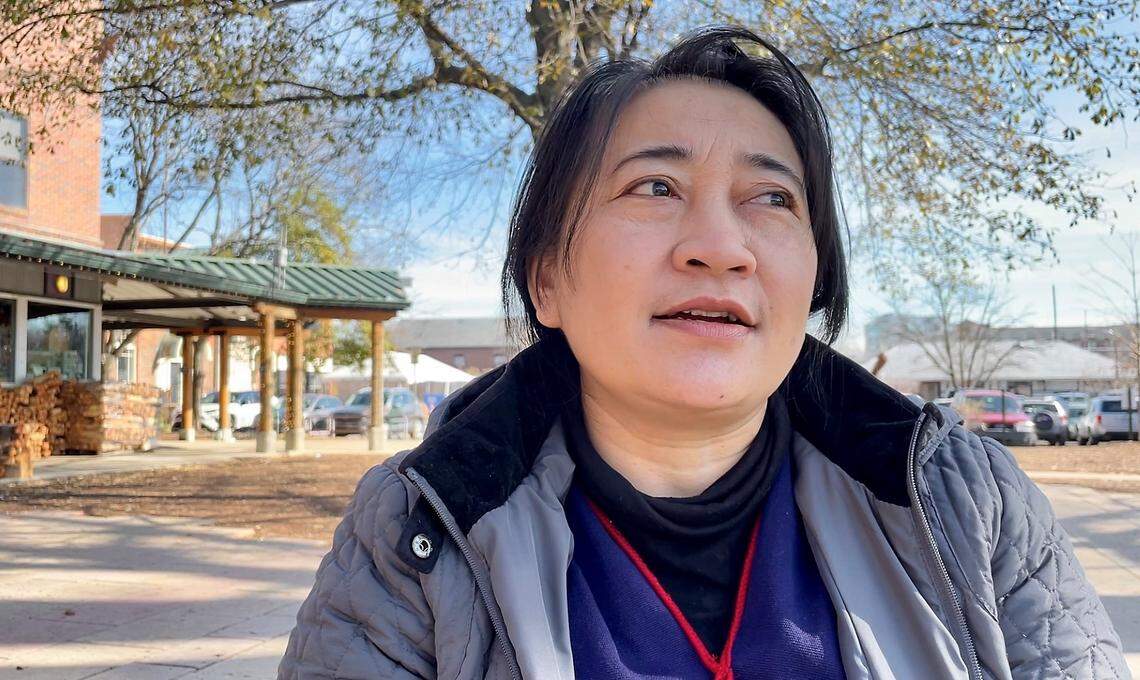
ChawChaw Thwai knows the fear of a child on the run, the sound of bullets in the jungle, and the struggle for hope in refugee camps that often lack enough food, clean water and safe shelter for everyone.
She was 7 when her family fled the Irrawaddy Delta, a rice-farming region and a hotbed of ethnic Karen recruitment and rebellion on Burma’s southern tip. Three years later, they reached a refugee camp on the Thai border, moving from camp to camp for the next 27 years as the soldiers returned each year to burn schools, hospitals and villages.
Thwai’s dreams of better schools and becoming a doctor dimmed as they fled “between the bullets,” back and forth over the border. One time, as she ran, schoolbag in hand, “they almost got me,” she said.
“My school bag was burned with a bullet. It didn’t hit me, but it hit my bag,” she said. “So scary.”
In 2007, Thwai left Burma with her children and husband Kyaw Lay Thwai, who had been a medical student before Burma’s military crackdown on a 1988 pro-democracy uprising forced him to flee. They met while working for malaria researchers in the camps.
“Why we decided to come (to the United States) is for our future, our children, a better life, a better education, and one day we can go back to our country and help our people,” said Thwai, 46, who now lives in Orange County.
But those who remain are never far from her mind, especially since a Feb. 1, 2021, military coup that dismantled Burma’s fledgling democracy and launched a new round of terror against its people, Thwai said.
Refugees fleeing war, persecution
Unlike immigrants, refugees are forced to leave their homes, often without warning, because of war, violence or persecution. Orange County is home to refugees from roughly a dozen countries, including over 1,100 who arrived from Burma between 2005 and 2019.
The U.S. State Department reports that roughly 1.1 million people from Burma — also known as Myanmar — are now living as refugees in multiple countries. Thwai was among 13,896 Burma refugees admitted to the United States in 2007.
Just over 770 refugees from Burma were admitted last year, about 6% of the 11,411 refugees resettled in the United States, most of whom were from the Democratic Republic of the Congo, Sudan, Syria and Afghanistan, the State Department reported.
More are expected to arrive this year, as the nation reverses a 40-year low in refugee admissions, largely because of COVID-19 restrictions, but also because of President Donald Trump’s reduced limits on new refugees, from 110,000 in 2017 to 15,000 in 2021.
It’s just a drop in the bucket compared to the 82 million refugees in 2020, up from 7.2 million in 2010, the U.N. High Commissioner for Refugees stated.
Aid groups have urged President Joe Biden to do more, and this year, he set the limit at 125,000 refugees. Many could come from Burma again, fleeing the military’s scorched-earth campaign that has targeted civilians with airstrikes and armed troops.
.JPG "Myanmar (4).JPG")
Political chaos, a coup and rebellion
The latest violence follows several years of uneasy peace and a short-lived move toward democracy for Burma that started with the release of human rights activist and opposition party leader Aung San Suu Kyi from house arrest in 2010.
Suu Kyi was elected to parliament in 2012, along with members of her National League for Democracy party, and then elected in 2015 to the newly created post of “state councilor,” because the state constitution barred her from becoming president.
In 2020, Suu Kyi’s party swept the national elections, prompting the military to claim voter fraud. On Feb. 1, 2021, the military arrested Suu Kyi and other leaders after declaring a state of emergency and seizing power.
Local human rights groups report more than 1,500 civilians have been killed and over 11,800 arrested since the coup. Another 405,700 people have been forcibly displaced, and striking teachers, health care and public service workers have joined civil disobedience networks.
The chaos is expected to continue crippling the economy and impoverish up to half of Burma’s population this year, the United Nations has reported. COVID-19, once largely under control, has skyrocketed since June, creating a public health crisis.
The military continues to block aid groups and supplies, international officials said.
Suu Kyi, 76, was sentenced in January to four years in prison on multiple charges, from breaking COVID pandemic rules to illegally importing walkie-talkie radios that her home security detail was using when she was arrested last year.
Grassroots relief efforts
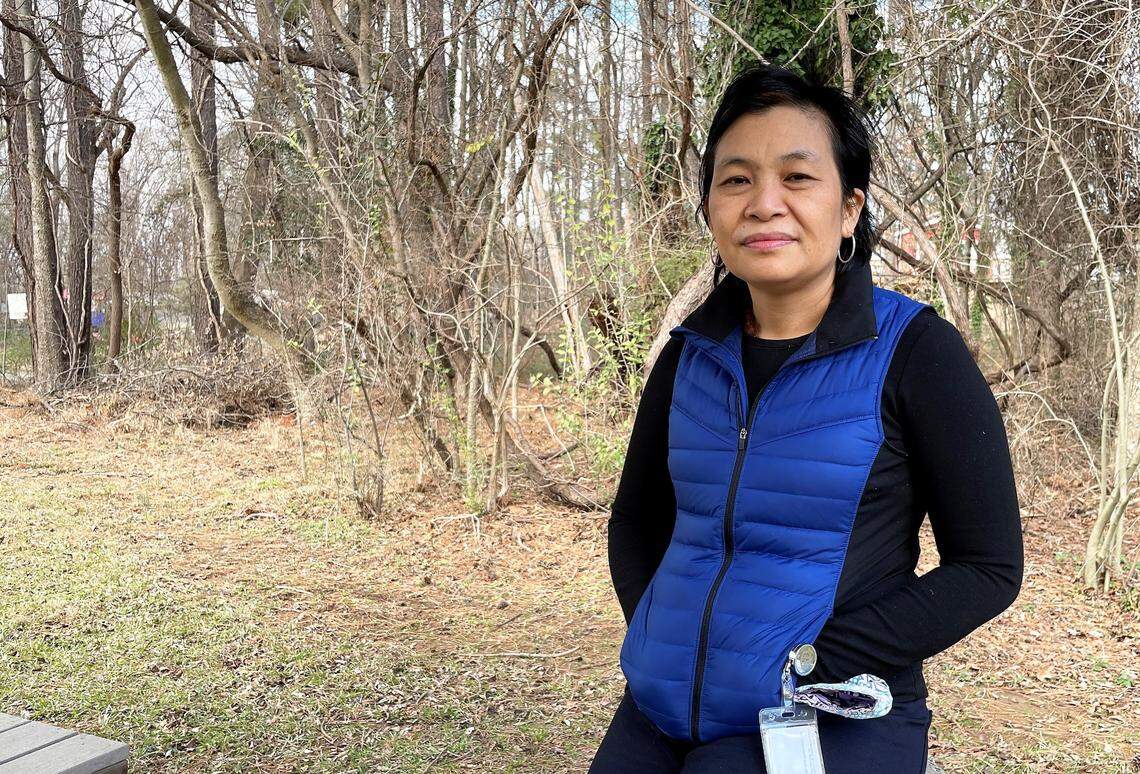
Despite her mistakes, including her defense of the military at a 2019 U.N. International Court of Justice hearing about Burma’s Rohingya Muslims, Suu Kyi retains the support of the people because she risked everything for them, Hillsborough resident MaiMai SuiSyn said.
Burma’s people are not likely to give up this time, she said, noting the formation of the pro-democracy Civil Disobedience Movement, as well as local People’s Defense Forces that have formed nationwide to fight alongside armed ethnic groups.
That includes in Chin State, a mountainous region of Burma where SuiSyn’s family lived before fleeing across the border with India and Bangladesh. They lived in an apartment in Malaysia for the next five years because police raids had closed the border camps, she said.
.JPG "Myanmar (5).JPG")
In 2013, SuiSyn arrived in North Carolina, where she faced new challenges, from hard-learned lessons about credit cards, insurance and online scams to the panic that set in every time she saw a uniformed police officer, she said.
A single mother of three sons, SuiSyn now works as a translator with Burmese and Karen families in the Chapel Hill-Carrboro City Schools and, along with Thwai, is a volunteer at the Refugee Support Center in Chapel Hill.
Last year, the center and local refugees reached out to U.S. Rep. David Price, an Orange County Democrat, to make him aware of the need for solutions in Burma.
The United States joined sanctions against Burma’s military leaders and military-owned companies last year and helped to pass a U.N. resolution calling for a cease-fire, but the international community has done little to quell the violence, SuiSyn said.
This year, the U.S. House could consider the Burma Act of 2021, which would increase sanctions against the military and provide $220.5 million in humanitarian aid for refugees.
But the military continues to benefit from its ties with China, Russia and other countries that have flouted the sanctions, cut off aid to refugees, and pushed for those fleeing the violence to be relocated outside their countries or returned to Burma, U.N. officials said.
Meanwhile, in Orange County, SuiSyn, Thwai and others are holding bake sales and raising money to supply emergency shelters, clothing and food. They’ve had to work with international aid groups based in the United States to get the money to Burma, because the military controls the internet and other lines of communication, targeting anyone who tries to help.
Some of the money has gone to teachers working under the radar with small groups of students, teaching them English and math, SuiSyn said. Other money has bought food, pans and stoves on which families can prepare a meal.
The situation is heartbreaking, because Burma’s people want peace, said Thwai, who works with refugee families in Orange County’s Early Head Start program.
“When I see a lot of what’s happening on the Thai-Burma border and the villages being burned, and then they keep killing, and then the children have to flee and they have to study under the trees, it makes me so stressed,” Thwai said. “I feel depressed, but my work keeps me strong.”
The Refugee Support Center is accepting donations at P.O. Box 1025, Carrboro, NC 27510, or online at refugeesupportcenter.org/donate.
Director Flicka Bateman asks that donors sending checks write “IDPs” on the memo line so the money gets to the right need; online donors should send an email to fbatemanrsc@gmail.com specifying the donation is for Burma relief, she said.
This story was originally published February 7, 2022 at 8:14 AM with the headline "NC refugees find little ways to help family, friends trapped by Burma’s bloody regime."