Will South Carolina lose its free beaches if coastal towns add paid parking?
The sand on South Carolina’s beaches belongs to the public, but most of what leads up to it certainly does not.
As coastal towns begin to cut off free beach parking, destinations like Isle of Palms and Hilton Head Island could set the standard for access to one of the state’s most renowned — and profitable — resources.
While the Isle of Palms city council may only have control over parking within in the town’s borders, leaders of other nearby beach towns wonder if one city’s actions could create a ripple effect, causing tourists to hop from one free beach to the next until they all implement paid parking.
A small waterway, the Breach Inlet, is all that separates Isle of Palms from its closest neighbor, Sullivan’s Island. The town’s wide beaches are its main amenity, aside from Fort Moultrie, a gas station and a popular strip of restaurants.
Sullivan’s Island doesn’t charge for any of its parking. Mayor Pat O’Neil said the issue of paid spots has become particularly “toxic” lately, but the city hasn’t studied what would happen there if Isle of Palms implemented paid parking across the board.
“If Isle of Palms goes to paid parking, how many people will be displaced and decide to come over here where it’s free?” O’Neil said. “We just don’t have data on that. I could argue either side of it. If it’s 10 bucks a day, if you look at what people will pay for a coffee these days (and) if somebody’s got a favorite spot at the Isle of Palms where they like to go on the beach, that may not dissuade them.”
Talk of implementing paid parking at any of Charleston’s beaches hasn’t been well-received by many tri-county residents. People who live farther from the beach have accused the local beach leaders of elitism and trying to close off the beaches to outsiders.
While he insists he isn’t trying to dissuade visitors, Isle of Palms Mayor Jimmy Carroll said his job isn’t necessarily to make them happy. But he does say that since the island can’t handle the sheer volume of visitors it gets every summer, it might be a good idea for some to vacation elsewhere.
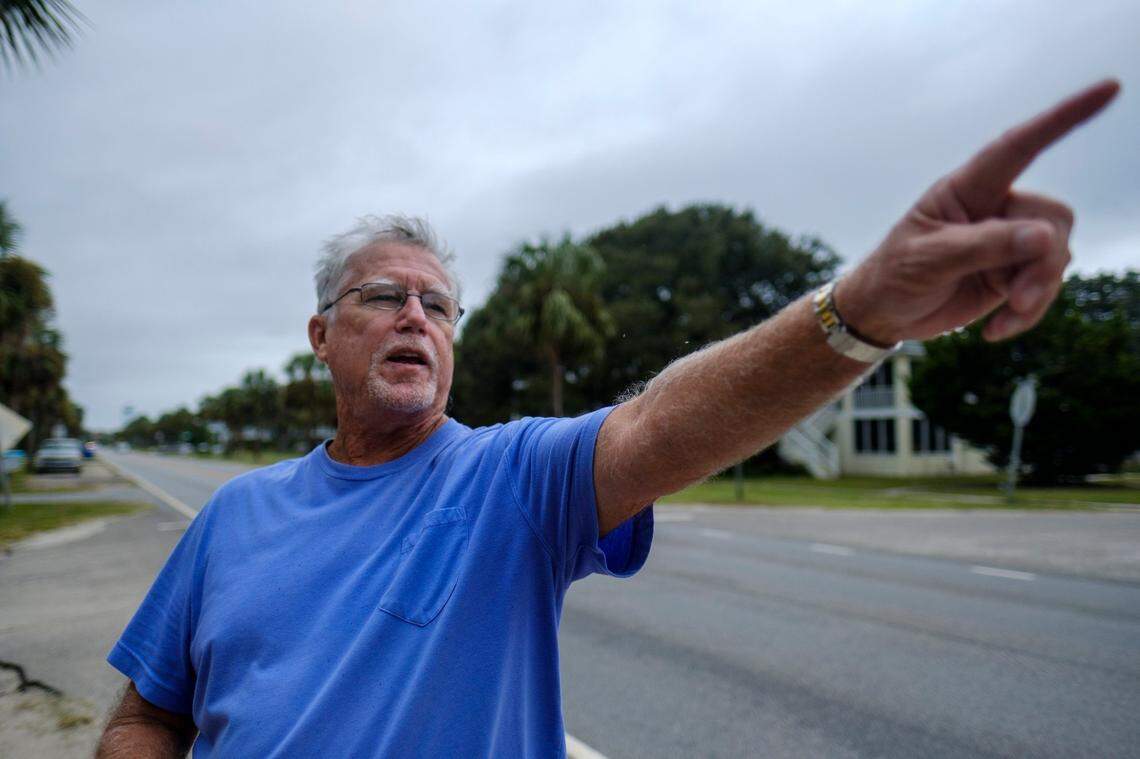
Statements like that have earned Carroll and other members of his city council a lot of flak, however.
“It’s always been hard to park, but these beaches have all made it even harder,” said Summerville resident Susan Jacques, who has gone to Isle of Palms for decades. Carroll has explicitly mentioned her hometown, 36 miles away from the beach, as one whose residents might consider vacationing elsewhere. “That was really insulting. Where are we going to go? We all go to either our Isle of Palms or Sullivan’s, or we go to Folly. They’re all about the same distance, and all the beaches, they’ve all got a parking problem.”
What’s happened so far
Isle of Palms, a mostly residential beach town, began restricting parking access to outsiders during the summer, which it justified by saying the measures were needed to slow the spread of COVID-19. The island barred most nonresidents from parking on the island. The move essentially choked off all use of beaches by nonresidents.
The restriction drew anger from people across South Carolina, especially from Charleston-area residents who have come to view free beach access as a right over many decades. Plus, closing off the beaches frustrated many whose only option for recreation during the pandemic has been to go outdoors, where socializing is much safer than going to bars or restaurants.
Some of those restrictions have since expired. But in August, Isle of Palms leaders began discussing ways to reduce the amount of parking on the island — specifically on Palm Boulevard, the main street that runs parallel to many beach access points — and begin charging nonresidents for the remaining parking spots.
Half of that plan failed after the South Carolina Department of Transportation told Isle of Palms it could not eliminate parking on the road because it’s a state-owned right of way. Department Secretary Christy Hall also said the city’s justification for eliminating parking on the landside of Palm Boulevard — that it created a safety hazard with people crossing the road — was illegitimate.
SCDOT’s stern warning to the city, along with a lawsuit filed by a pro-beach access group, led the city to halt its paid parking plans, fearing that if not properly approved by the department the first time they try, any future efforts could get tied up in years of litigation.
That was a month ago. Now, the city is still moving forward with figuring out how to charge nonresidents for parking.
Mayor Carroll said the city council hasn’t given up on eliminating parking on the landside of Palm Boulevard. Still looking at options, the city discussed Tuesday what would be required to take control of state-owned roads from SCDOT, giving them greater control over parking on those right of ways.
What other islands say
Regardless of what happens with the Isle of Palms, however, Sullivan’s Island has been looking at implementing paid parking for some time — or, at the very least, more clearly labeling parking spots, as the island has seen increased traffic from the rapidly rising number of people who live in and around Charleston.
“The Charleston area is growing by leaps and bounds, but we don’t have any more beaches than we had 50 years ago,” O’Neil said. “It’s increasing concentration, I guess you could say, is what we’re concerned about.”
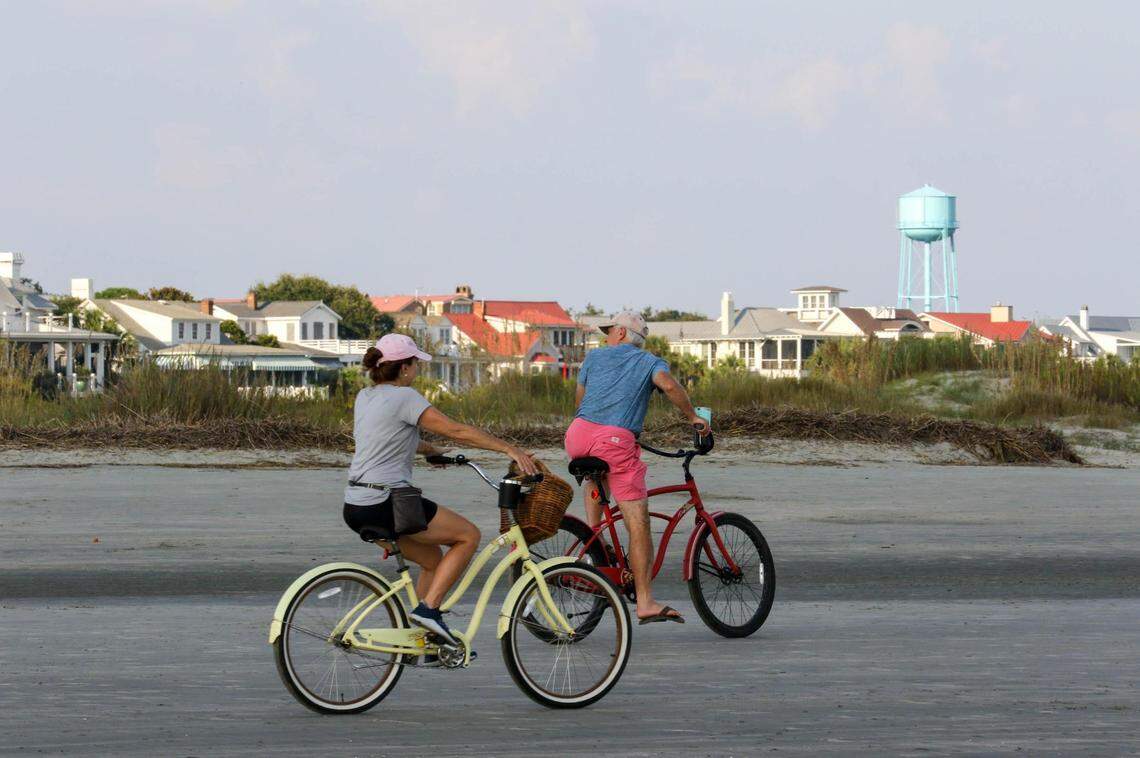
Sullivan’s isn’t alone in its parking worries.
Folly Beach, the largest of the three islands closest to Charleston, already has begun implementing paid parking at some of its beach access points. The town uses the money to maintain its beach access points and the wooden bridges that people use to cross the dunes. Mayor Tim Goodwin said some of the bridges are severely run down after years of wear and tear, and replacement can cost $50,000 to $70,000 or more for a handicap accessible bridge.
Parking revenue also helps fund emergency services for visitors, Goodwin said.
The city only charges for about 60 of its 600 parking spots, though most of the people who use the beaches stay at short-term rentals and don’t need beach parking anyway, Goodwin said. Paid parking currently costs $7 a day.
But, he said, the town might increase the number of paid parking spots or the price in coming years, as needed.
“We get complaints all the time. Everybody says, ‘Well, the beach is a state-owned asset, so we should be able to go to the beach for free,’” Goodwin said. “Well, the state parks are state owned assets and you don’t go to them for free. The national parks are federally owned assets and your federal dollars take care of that, and you don’t go to them for free.”
“I don’t think for any coastal town that’s too much to ask,” he added.
Right now, Goodwin said he isn’t worried about anything Isle of Palms does, since Folly Beach is almost 30 miles away
Farther down the coast, Edisto Beach Mayor Jane Darby doesn’t share the same optimism of her northern neighbors. Almost exactly halfway between Isle of Palms and Hilton Head Island, Edisto is one of the last remaining places on the South Carolina coastline without any paid parking and is actively trying to avoid implementing it.
“The day visitors contribute nothing to the economy,” Darby said. “They bring their coolers, enjoy the beach, and we’re happy to do this because we consider ourselves stewards of the public beach. However, it is a drain on your resources.”
Darby said so far, the island has been able to manage the increase of visitors resulting from South Carolina’s growing population and even opened up more free parking in recent years to handle them.
“We have not been forced to” implement paid parking yet, Darby said. “And we’re reluctant to anything at this point because we (do believe) people have a right to a public beach.”
.JPG "Edisto Island State Park (1).JPG")
With Edisto being 72 miles from Isle of Palms — an hour and a half drive on a good day — Darby said she worries about what might happen if Isle of Palms and its neighbors expand paid parking more and more in the coming years. One tipping point would be if it ever becomes more cost effective for day trippers in Charleston to make the trip out to Edisto.
“As other beaches put in more and more restrictions, it forces people who want a free day to come here,” Darby said. “We realize that all kinds of income levels live in South Carolina, and we don’t want to penalize anyone who wants to enjoy the beach. But at some point, the realization has to come that we have reached saturation.”
On the other side of Edisto sits Hilton Head Island, which on Tuesday released a wide-ranging overhaul to its beach parking. The report recommended charging for parking at the island’s last two free lots, as much as $4 an hour during the summer season. The Island’s mayor, John McCann, went as far as saying that his goal is to discourage day-trippers altogether.
“People that are selling developments out in Bluffton and Hardeeville are saying in their brochures that they have a beach,” McCann said. “They should have a footnote that says it costs $20 per day to park there.”
Much like Edisto’s Darby, McCann said day-trippers from the mainland are not spending any money while they’re on the island. Unlike Darby, he sees that as a detriment to the island’s already crowded highways.
Paid parking not new to SC
Despite the outrage of some South Carolinians over what’s happening on Isle of Palms and Hilton Head, paid parking near beaches isn’t new to the state. For some towns in the Grand Strand, it’s been a fact of life for years.
The difference, however, is that most paid beach parking in and around Myrtle Beach is targeted rather than encompassing entire towns. The Grand Strand also has many more miles of beach to work with — 60, to be exact. That’s nearly fives times greater than the sands of Folly Beach, Isle of Plams and Sullivan’s Island combined. Grand Strand cities are also built for high volumes of tourists, unlike their Charleston counterparts and Hilton Head, which are much more residential.
Myrtle Beach and North Myrtle Beach both use paid beach parking to encourage turnover in high-trafficked areas, as well as stretches of the city where businesses, such as restaurants, benefit from parking turnover to get more customers and reduce congestion closer to the ocean.
Myrtle Beach implemented its paid parking plan about six years ago.
“The city did not do it with the idea that, ‘hey, this is something that we need to do to make as much money as possible.’ It’s really a parking management program in most places,”Myrtle Beach city manager John Pedersen said.
Surfside Beach is the only Grand Strand town with no free parking at all. Its parking revenue is used to support city services for the thousands of tourists who flock there during the summer, and it’s been that way for more than a decade.
Taking control
While Isle of Palms is trying to take control of beach access and parking, its opponents are often quick to say it’s morally wrong to restrict access to the island and charge for parking, cutting off outsiders and making it hard for lower-income people who can’t afford to vacation elsewhere.
As for this week’s City Council discussion about taking control of state-owned roads on the island, the consensus by the end of the meeting was that such a step simply isn’t feasible right now.
Carroll, the city’s mayor, said the city’s recent actions concerning parking fall in line with what residents want. Their aim, he said, is to reduce summertime traffic on the island. He added that parking revenue also helps provide greater funding for emergency services for outsiders and beach cleanup for any messes they create.
In his job overseeing Isle of Palms, Carroll said he can’t be concerned about how its actions affect the other islands — he doesn’t represent them.
“We have to take care of our residents. Our goal is to take care of our residents,” Carroll said. “Every community does it their own way, whatever they feel is right. But unfortunately, we all have to pay to play. That’s the world we live in nowadays.”
Isle of Palms likely won’t implement any major changes to beach parking by March, the beginning of the tourist season, as the town seeks comment from residents on its plans and approval from SCDOT for anything it decides. Neither will Hilton Head because of how expansive its goals are.
Nevertheless, both places continue to take steps toward ending free parking for nonresidents within their borders, one way or another, even if it means going against the wishes of visitors, and some residents, too.
“Enough is enough. The beach is for everyone. Period. Stop trying to make the IOP a private island,” Rusty Williamson, an Isle of Palms resident who opposes Carroll’s efforts to restrict parking access, wrote on Facebook.
Katherine Kokal of the Hilton Head Island Packet contributed to this report.
This story was originally published October 30, 2020 at 5:00 AM with the headline "Will South Carolina lose its free beaches if coastal towns add paid parking?."