
Where are the dog-sized lizards now that SC is getting colder? Closer than you may think
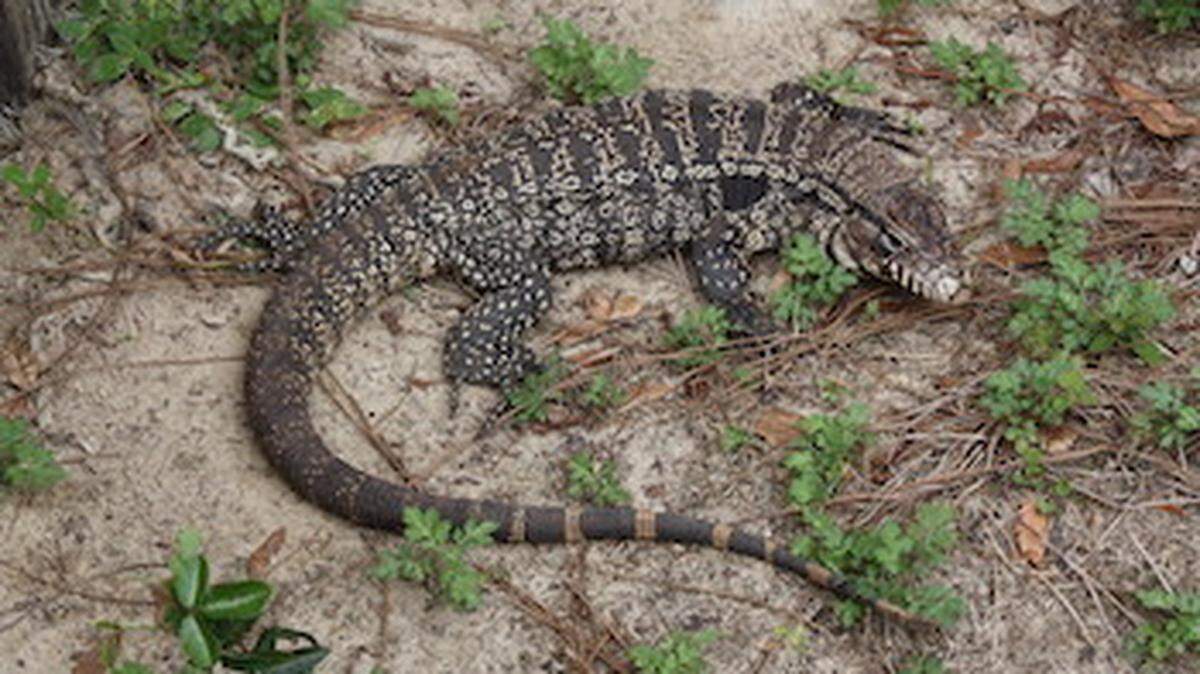
It’s probably not a surprise that a dog-sized lizard that’s been wreaking havoc on South Carolina wildlife doesn’t go far away when it gets cold.
Even though Tegus are more acclimated to the weather in South America, where they’re native. And even though the cold weather is likely to kill them.
Being the nuisance they are, when a freeze comes, they hunker down in a shallow burrow, most likely that of another animal. They are true opportunists. Or they nestle into a barn or under a house.
If it’s a hard freeze for several weeks they will freeze and die, according to Andrew Gross, a state herpetologist with the South Carolina Department of Natural Resources.
One thing working against tegu in South Carolina is that because they are not native they don’t know how to prepare for the cold weather. Most native animals eat more or stash food.
They just freeze.
If it’s just cold, they go about their pesky business eating eggs of ground-nesting birds such as quail and turkeys; alligators and gopher tortoises, chicken eggs, fruit, vegetables, plants, pet food, carrion and small live animals, from grasshoppers to young gopher tortoises.
They will eat pretty much everything.
Two types of Tegus have been seen in South Carolina, the more populous Argentine black and white and the lesser seen red.
Tegu end up in the wild generally because people who have kept them as pets let them go when they lose interest or the lizard gets too big — they can grow to be 4 feet long.
It’s now illegal to have them, except for the pets who were here before the law was passed in 2021.
Pet tegus have to be microchipped.
Tegus have been spotted in the wild across South Carolina, from tiny Cleveland in the mountains to Charleston and Horry County. A sizable number have been seen in the Midlands.
Grosse said the first tegu confirmed in the state was in 2020 and since then the South Carolina Department of Natural Resources has confirmed 32 tegus — three red and 29 Argentine black and white — in 17 counties from the coast to the upstate.
The agency confirms if there is a photo that clearly identifies the animal or if it is captured and turned over to SCDNR.
SCDNR has received 114 reports of tegus since 2020 in 27 counties.