
SC native fought his way out of Vietnam ambush. Can lawmakers get him a Medal of Honor?
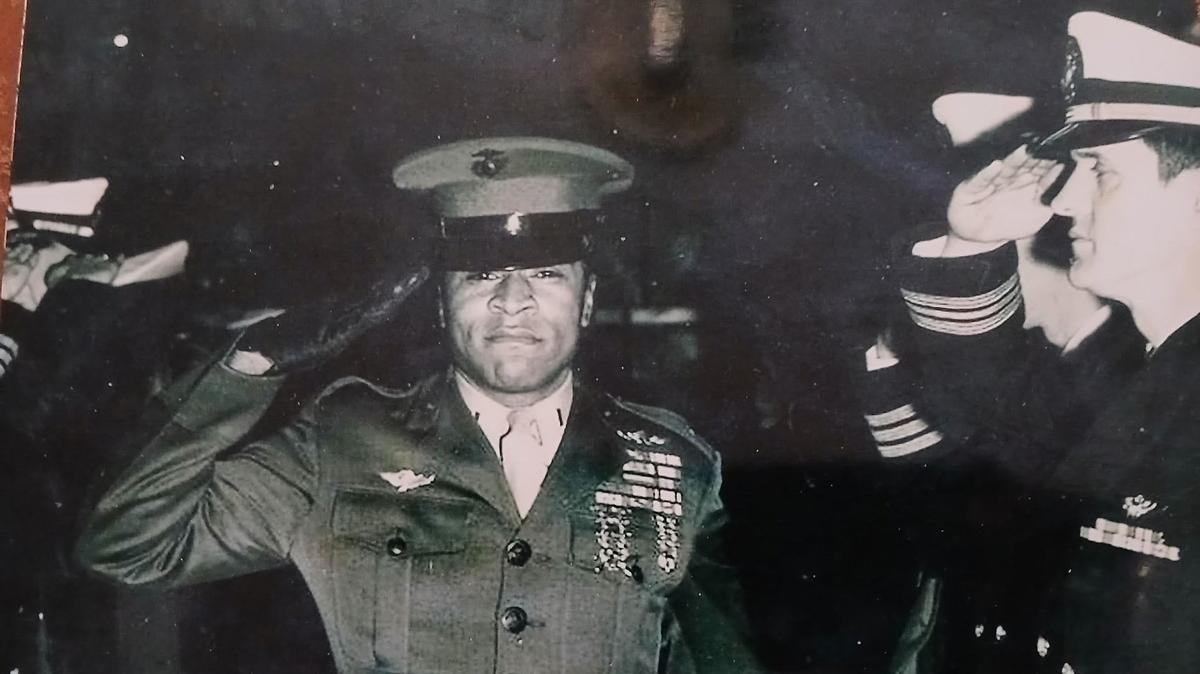
The year was 1967, and Maj. James Capers was in Vietnam, leading his Marine Corps unit to blow up an enemy base on the side of a mountain.
The engagement near Phu Loc just north of Da Nang is, in many people’s minds, what should earn Capers the Medal of Honor, the highest honor bestowed by the U.S. Armed Forces.
“Everything broke loose that night,” Capers recently told The State. “You could see the flares and the rockets. I had to get into a rice paddy to go around. I didn’t want to get my men into a situation where we would all be killed. We spent a few hours in a graveyard with cement stones, and stayed there until we knew what was going on and how to get to the base to blow it up.”
The team successfully located the base and Capers called in artillery and air strikes to destroy it, only for the unit to be ambushed by a larger enemy force on their way back from the mission.
“It was a bloody battle,” he said. “Everyone was wounded.”
That battle is the basis of a recent push by members of South Carolina’s congressional delegation for Capers, who was born in Bishopville and now lives in North Carolina, to finally get the Medal of Honor after multiple previous attempts.
“On the final day, after intense firefights that resulted in many enemy losses, Capers was ordered to lead his team back through previously cleared trails, a decision he deemed ill-conceived and dangerous but was forced to follow,” their letter recommending Capers for the Medal of Honor reads.
“As Capers’ team moved through the jungle, they were ambushed by a numerically superior enemy force. The attack, initiated with claymore mines, inflicted devastating injuries on all eight Marines and killed their war dog, King.”
Knowing his men’s lives were on the line, Capers fought valiantly to keep the enemy at bay while the Marines awaited aerial rescue.
“Despite sustaining severe shrapnel wounds, which ripped open his abdomen and broke his leg, Capers took control, halting the enemy’s advance and directing air, artillery, and mortar strikes dangerously close to his position,” the letter says.
“For nearly an hour, he engaged the enemy with his rifle and grenades, even as he suffered additional bullet wounds to his legs. ... When the enemy attacked again, Capers returned to the fight despite the Corpsman’s attempts to restrain him, holding off the enemy with his rifle until his rounds were exhausted and then with his pistol.”
A helicopter was flown in to evacuate the reconnaissance team, but it quickly experienced problems of its own, and Capers had to make another quick decision with his life and the lives of others on the line.
“The helicopter had problems,” Capers said. “It was a small helicopter. We got everybody on board and it didn’t look like we were going to be able to get off the ground. I got off because I wanted to save my men. I said I’d find a way to survive like I’ve done all this time. [But] my crew chief reached out and grabbed me by the arms and said, let’s try this again.”
The helicopter made it into the air like “the hand of God reached out and snatched it,” Capers said. The evacuees suffered a crash landing once they made it back to the air base, but everyone on board survived.
Decades after he was severely injured leading his unit out of harm’s way, the push to get Capers the Medal of Honor has been renewed. Will this latest effort by lawmakers finally earn him the recognition?
‘I’m not a young man’
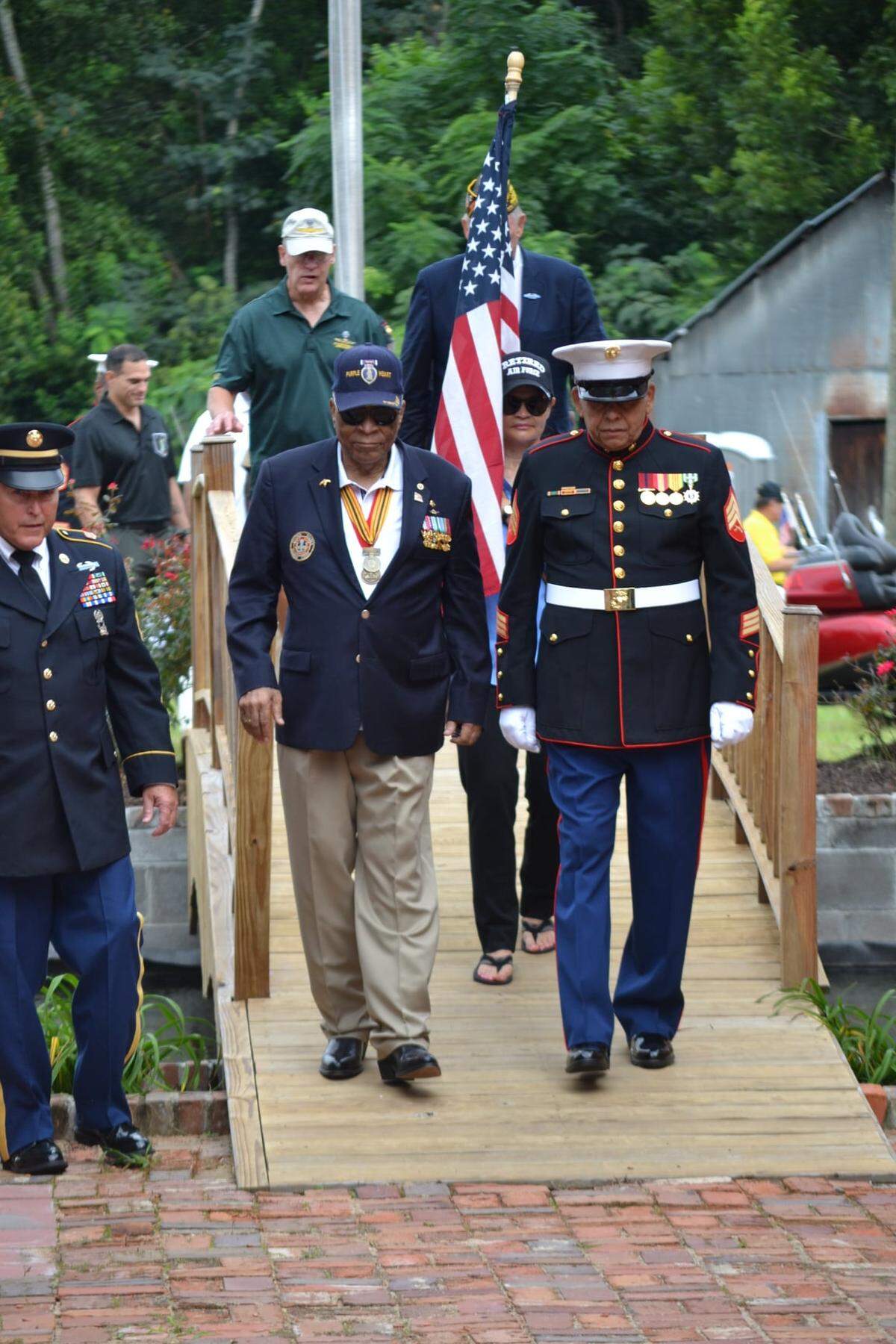
Six members of Congress from the Palmetto State recently signed onto the letter encouraging President Donald Trump to award the Medal of Honor to Capers.
“Major Capers is a trailblazer, a hero, and a symbol of the enduring principles of service and sacrifice,” the letter to the president reads. “Born into poverty in South Carolina during the ‘Jim Crow’ era, Major Capers overcame incredible adversity and systemic barriers to become a pioneer in the United States Marine Corps. He was the first African American to lead a Marine Reconnaissance company and to receive a battlefield commission.”
The letter was signed by Sens. Lindsey Graham and Tim Scott, and Reps. Sheri Biggs, Nancy Mace, Ralph Norman and Joe Wilson, along with 41 other members of Congress.
Speaking to The State from his home, Capers was unsure if he might get the award now after more than 50 years and numerous prior attempts on his behalf have come up short. If he isn’t awarded the medal now, he doesn’t know if he’ll have another chance to get it.
“I’m not a young man,” Capers said. “I don’t have a lot of time left. I’m 87 years old.”
Capers was born in Bishopville, but he didn’t grow up there. He moved away with his mother and siblings when his “father was put on the chain gang for a crime he didn’t commit,” and then grew up in Baltimore.
It was there that a high school-age Capers was approached by a recruiter who came to his school and convinced him he should become a Marine.
“Me and a buddy of mine, we loved the uniforms, so I decided I’ll go ahead and do that,” he said.
He enlisted as soon as he graduated, starting what he called a 22-year “adventure” in the corps that took him all over the world.
But by 1967, he was among the more than 2 million American service members sent to Vietnam.
”I didn’t have to go to Vietnam,” Capers said. At this point, the young Marine was already married and raising a young son who had been born blind. “They said, ‘You take a break,’ but men were dying. In the news media you’d see the battles, and I felt guilty. So I thought I wasn’t doing my duty because of my personal situation. ... My wife said, ‘I know what you’re thinking. It’s harder on you because of us.’”
So Capers deployed to Southeast Asia as part of a reconnaissance unit — nicknamed “Team Broadminded” — that was sent to the front lines of the conflict. He went to war as a sergeant, but was promoted to lieutenant because so many officers were killed as the unit repeatedly engaged the enemy.
“It took five minutes,” he said. “They put the lieutenant’s bars on my shoulders. I never spent a day in officer’s training.”
That battlefield promotion was why Capers led his men into the firefight that left him injured, and why he fought so hard to get them out. Following the ambush, Capers’ superiors recognized immediately the impact his actions had and the bravery it took to do what it took to hold his unit together amid the enemy onslaught.
“While Major Capers was awarded the Bronze Star, later upgraded to a Silver Star, for his heroic actions, several attempts have been made to upgrade the award to the Medal of Honor, including one from his former Executive Officer, Lieutenant Colonel James R. Rehfus, and several congressional requests,” Capers’ nomination letter notes. “The 3d Marine Division Commanding General, Major General Bruno A. Hochmuth, USMC, initiated the idea behind a Medal of Honor recommendation after he met with Capers and his team in the hospital and learned of the actions undertaken.”
But for decades after returning home from the war, Capers would be denied the nation’s highest commendation. He thinks he knows why.
“You see the color of my skin?” he said. “Since the Marine Corps started letting Black folks in it, there’s never been a [Black] Marine Corps officer who has been given the Medal of Honor. ... Why didn’t I get the Medal of Honor? It’s never happened before.”
Life after war
After his ordeal in Vietnam, Capers spent a year at Bethesda Naval Hospital recovering from his injuries. As bad as his physical wounds were, Capers and his doctors also realized his experience left him with what today would be called post-traumatic stress disorder, and he spent part of his time at the medical center undergoing psychological evaluations.
“It took them a while to bring me around,” Capers said. “They did these word games where they said ‘life’ and I’d say ‘kill,’ and they’d say, ‘No, lieutenant, that’s the wrong answer.’ They just asked what I thought were a lot of dumbass questions, but they were trying to bring me back because I had fought so many battles my mind was screwed up.”
One day, Capers had a violent confrontation with another patient after hospital staff moved a Japanese-American serviceman into his room overnight.
“I woke up and I thought he was Vietnamese, and I tried to kill him,” Capers said. “He was smart, and locked himself in the bathroom. ... He forgave me for the attempt I made on his life and we became good friends.”
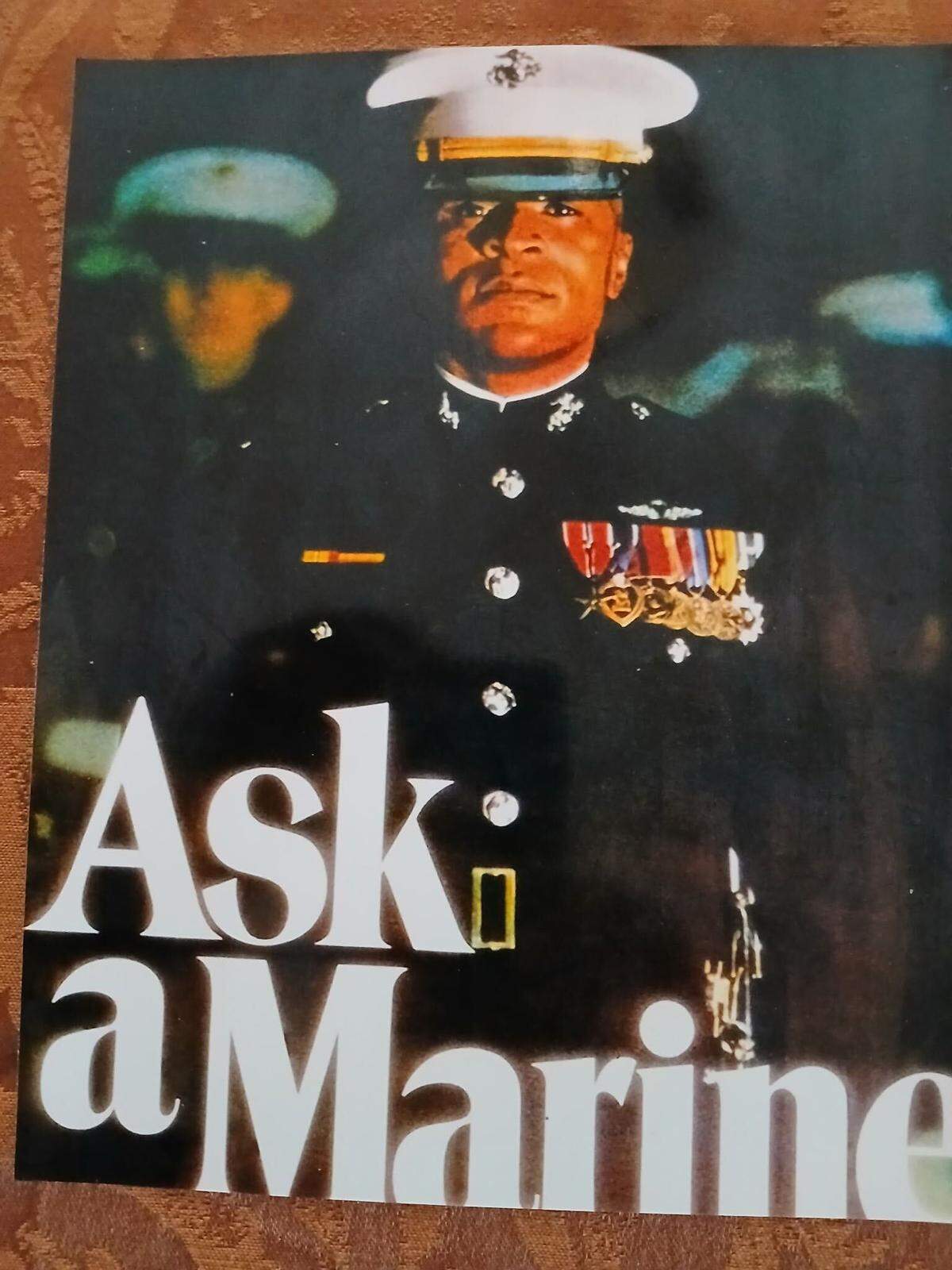
Capers would continue to serve in the Marine Corps until 1978. He was even the face of a recruitment campaign aimed at attracting more African American men into the Marine Corps, appearing in a series of posters and promotional films called “Ask a Marine.” Capers said he lost so much weight off his once-imposing frame during his hospitalization that he had difficulty finding a dress uniform that fit.
He would go on to attend business school and would eventually own a radio station and a construction company, among other ventures.
But tragedy didn’t stay away from the Capers family after the major left the service. His wife, Dottie Lee Capers, died of cancer after 15 years of marriage. Capers, who never remarried, still misses her deeply to this day.
“I still write to her sometime, although I can’t mail the letters,” Capers said. He said he would be writing to her later about his interview with The State. “I’ll tell her how I’m doing, how much I love her, and that I’ll see her again.”
In 2003, Capers’ son Gary died of a ruptured appendix. The loss of his family sent Capers back into the darker frame of mind he had after he initially came back from Vietnam.
“So now I’m alone with the memories of losing all those wonderful men in battle, and the demons come home,” Capers said. “I became angry.”
What saved him was a former lieutenant of his, now Gen. James Williams, who spearheaded a documentary about the exploits of their team during the war and convinced Capers to be involved. It was released in 2022 as “Major Capers: The Legend of Team Broadminded.” That same year Capers released his memoir, “Faith Through the Storm.” Confronting everything that had happened to him helped Capers heal.
“God took me away because the anger was going to overcome me,” he said. “I became a human being again.”
While he appreciates the recognition others are seeking for him, after everything he’s been through, Capers said he doesn’t spend a lot of time thinking about the Medal of Honor.
“We’ll see if the president’s going to do it,” he said. “But it doesn’t really matter to me. I did the best I could to fight for this country. I served. I bled. I sacrificed my wife and child. It doesn’t bring them back. It doesn’t bring these troops back.”
Instead, he’s worked to establish the Gary and Dottie Capers Foundation to raise money to help disabled people like his son.
“I made money, and I gave away a lot of money,” Capers said. “My house and my car are paid for. I don’t kiss anybody’s ass for anything. I served my country. You don’t need to feel sorry for me. Feel sorry for the other guys.”
.jpg "Image from iOS (2).jpg")
This story was originally published March 25, 2025 at 5:00 AM.
.jpg)