Why most SC school buses don’t have seat belts
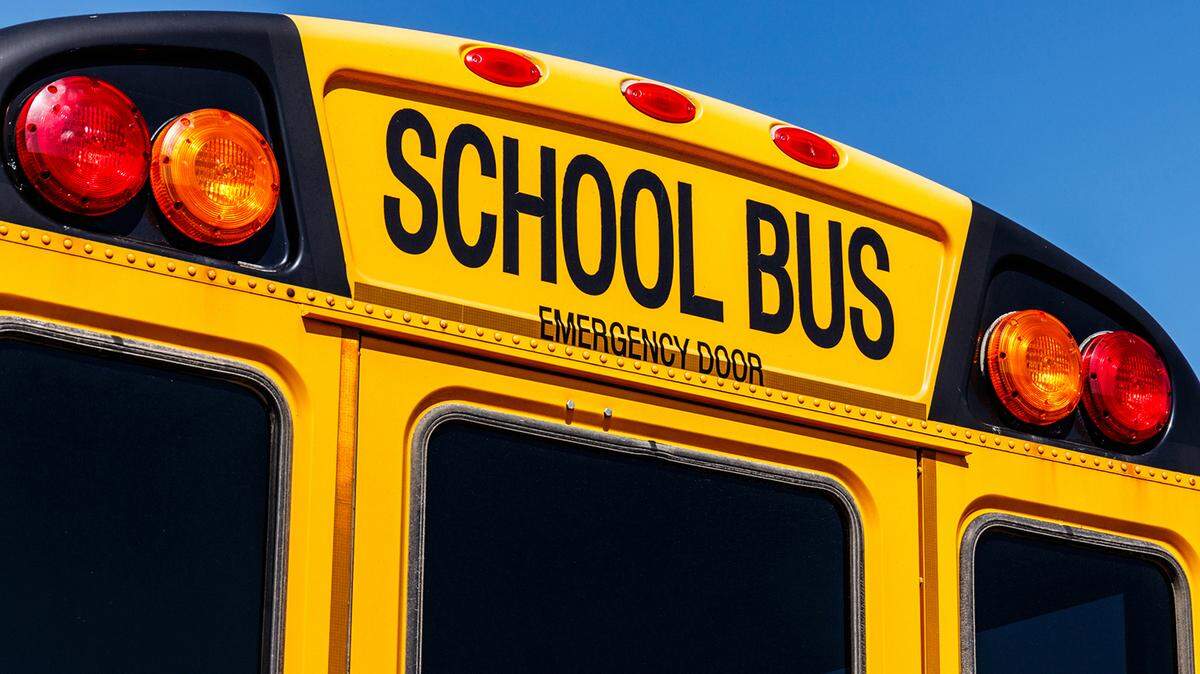
Few states require seat belts on school buses and South Carolina isn’t among them.
Only eight states, including Arkansas, California, Florida, Louisiana, Nevada, New Jersey, New York and Texas, have laws requiring seat belts on school buses, according to the National Conference of State Legislatures.
But why would South Carolina and so many other states forgo seat belt requirements on school buses when they’re required in most other passenger vehicles on the road? After all, accidents do happen.
One person was killed and multiple others were injured Thursday when a school bus carrying students from Pine Ridge Middle School in Lexington County blew a tire and flipped on Interstate 77, The State reported. The bus was coming back from a field trip in the Charlotte area.
Here’s what to know about school buses and seat belts.
School bus design
The classic large, yellow school buses like the one in South Carolina that flipped are designed for safety differently than your average passenger vehicle.
According to the National Highway Traffic Safety Administration, large school buses distribute crash forces differently and are heavier than passenger cars and light trucks. School buses provide crash protection through a concept called compartmentalization.
“This requires that the interior of large buses protect children without them needing to buckle up,” NHTSA states. “Through compartmentalization, children are protected from crashes by strong, closely-spaced seats that have energy-absorbing seat backs.”
This concept doesn’t apply to small school buses — those with a gross weight of 10,000 pounds or less — given that their sizes and weights are closer to passenger cars and trucks. Lap or lap/shoulder belts are required in those smaller buses for occupant protection, the NHTSA states.
School bus safety
American students are almost eight times safer riding in a school bus than in cars with their own parents, an NHTSA study shows.
“The fatality rate for school buses is only 0.2 fatalities per 100 million vehicle miles traveled (VMT) compared to 1.5 fatalities per 100 million VMT for cars,” NHTSA states. “This impressive safety record is a result of the Department of Transportation’s requirements for compartmentalization on large school buses, and lap belts plus compartmentalization on small school buses.”
Furthermore, an analysis of data by the NHTSA concluded that lap belts appear to have little, if any, benefit in reducing serious-to-fatal injuries in severe frontal crashes on school buses.
“On the contrary, lap belts could increase the incidence of serious neck injuries and possibly abdominal injury among young passengers in severe frontal crashes,” NHTSA states. “Any increased risks associated with the use of lap belts in small school buses are more than offset by preventing ejections.”
NHTSA school bus crash stats
- From 2012 to 2021 there were 998 fatal school-transportation-related crashes, and 1,110 people of all ages were killed in those crashes — an average of 111 fatalities per year.
- There were 113 occupants killed in school transportation vehicles; 52 were drivers, and 61 were passengers from 2012 to 2021. Most (70%) of the people killed in school-transportation-related crashes were occupants of other vehicles involved in the crashes.
- There were 1.6 times more fatalities among pedestrians (183) than occupants of school transportation vehicles (113) in school-transportation-related crashes from 2012 to 2021.
- From 2012 to 2021 among all school bus occupants k2021,d, 16% were 5 to 10 years old, and 63% were 19 and older. Among all pedestrians killed in school-transportation-related crashes, 22% were 5 to 10 years old, and 57 percent were 19 and older.
- Impacts to the fronts of school transportation vehicles were involved in the most occupant fatalities from 2012 to 2021.
This story was originally published April 18, 2025 at 10:27 AM.