
This nonvenomous SC snake eats copperheads. Here’s what to know about it
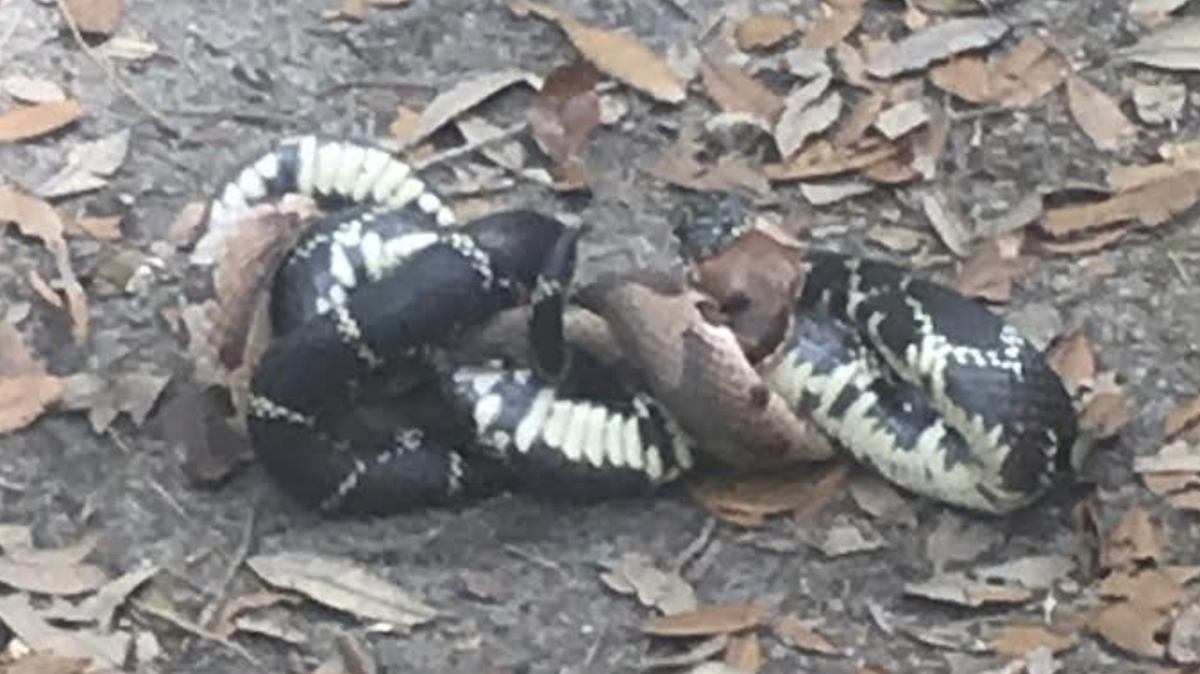
Andrew Grosse was driving in a coastal wildlife management area overseen by the South Carolina Department of Natural Resources when there in the road was a kingsnake wrapped around a copperhead, squeezing it to death.
The copperhead was the kingsnake’s next meal.
Grosse, the South Carolina Department of Natural Resources herpetologist, jumped out and got a picture. It’s not something most people often see because Eastern kingsnakes are so secretive you might have one living in your backyard and you don’t even know it.
But here’s why a resident kingsnake is a good thing. They eat rodents and other snakes, and they also eat the dreaded copperhead, South Carolina’s most populous venomous snake. Rattlesnakes, too.
The venom copperheads and rattlesnakes use to kill their prey just doesn’t work on kingsnakes, which have shiny black skin and narrow bright yellow or whitish cross bands. It’s constrictor versus pit viper.
The kingsnake grabs the head of a striking venomous snake and then coils its body to constrict the airflow. Every time the victim snake breathes, the kingsnake tightens, until dinner is served.
Grosse said kingsnakes can unhinge their jaws and take in animals much larger than you would think they could consume.
In a fight, kingsnakes will always win over copperheads unless they don’t get a good grip to begin with and the copperhead can slither away. Kingsnakes are longer than copperheads — 5 feet compared to 3 feet as adults — but not as big around as an adult rattlesnake.
Grosse said it’s hard to say how many kingsnakes there are in South Carolina, but the population appears to be declining. That is due to loss of habitat but also because of snake fungal disease, which affects most snakes across the Southeast.
“There is a lot of research going on now,” Grosse said.
So farm scientists don’t know how long or whether a snake can survive the disease.
With kingsnakes coming into contact with other snakes so frequently, they are susceptible to the disease, which causes scabs on scales and the face and then goes internal.
Grosse said DNR put a transmitter on an infected rattlesnake, which died within a few weeks.
South Carolina is home to 38 snake species, six of which are venomous.
Grosse said as with all wildlife, the best thing to do if you see a kingsnake is just leave it alone.
This story was originally published May 21, 2025 at 6:00 AM.