Copperheads are out in force in SC. Here’s how to identify them and their harmless lookalikes
As summer nears, venomous copperheads in South Carolina will be out in full force, but more less-dangerous lookalikes will be too.
Do you know their differences?
Having such knowledge could help you and others avoid dangerous situations or prevent the killing of harmless, nonvenomous snakes. Many such snakes help keep rodent and pest populations under control, after all.
Here’s how to identify copperhead snakes and their most common lookalikes in South Carolina.
How to identify a copperhead
The copperhead is one of six venomous snake species in South Carolina.
The copperhead gets its name from the coppery-tan color on its head and on parts of its body, Clemson Cooperative Extension states. Copperheads have triangular-shaped heads, similar to an arrowhead and can grow up to 4 feet long.
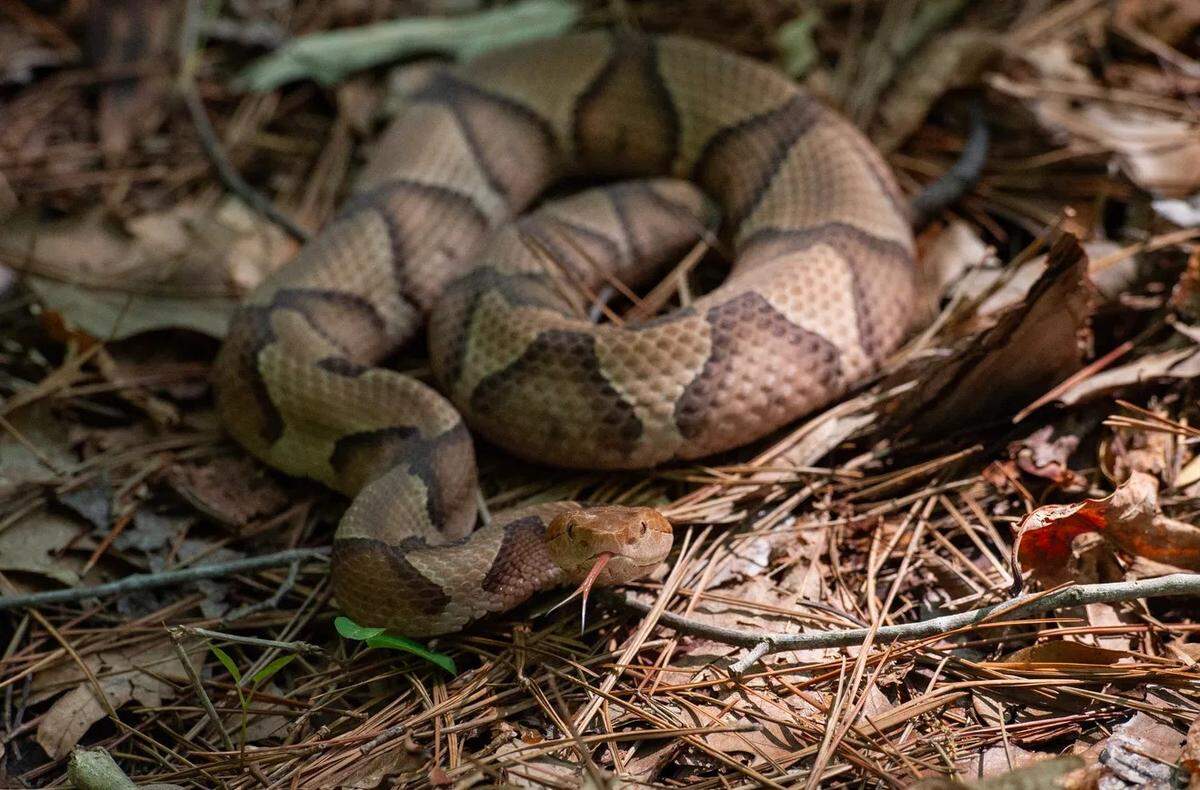
Copperheads also feature an hourglass-shaped pattern on their bodies — from the head down to the tail. When curled up, this camouflage can make them look like a pile of leaves. And like most other venomous snakes in South Carolina, copperheads have yellow eyes with black vertical and elliptical pupils.
Corn Snake
The corn snake is among the most common nonvenomous snake species mistaken for the copperhead, according to Clemson Cooperative Extension. While they lack flat, wide heads and hourglass patterns, their bright reddish color can make them appear from a distance like they have a copperhead’s copper coating.
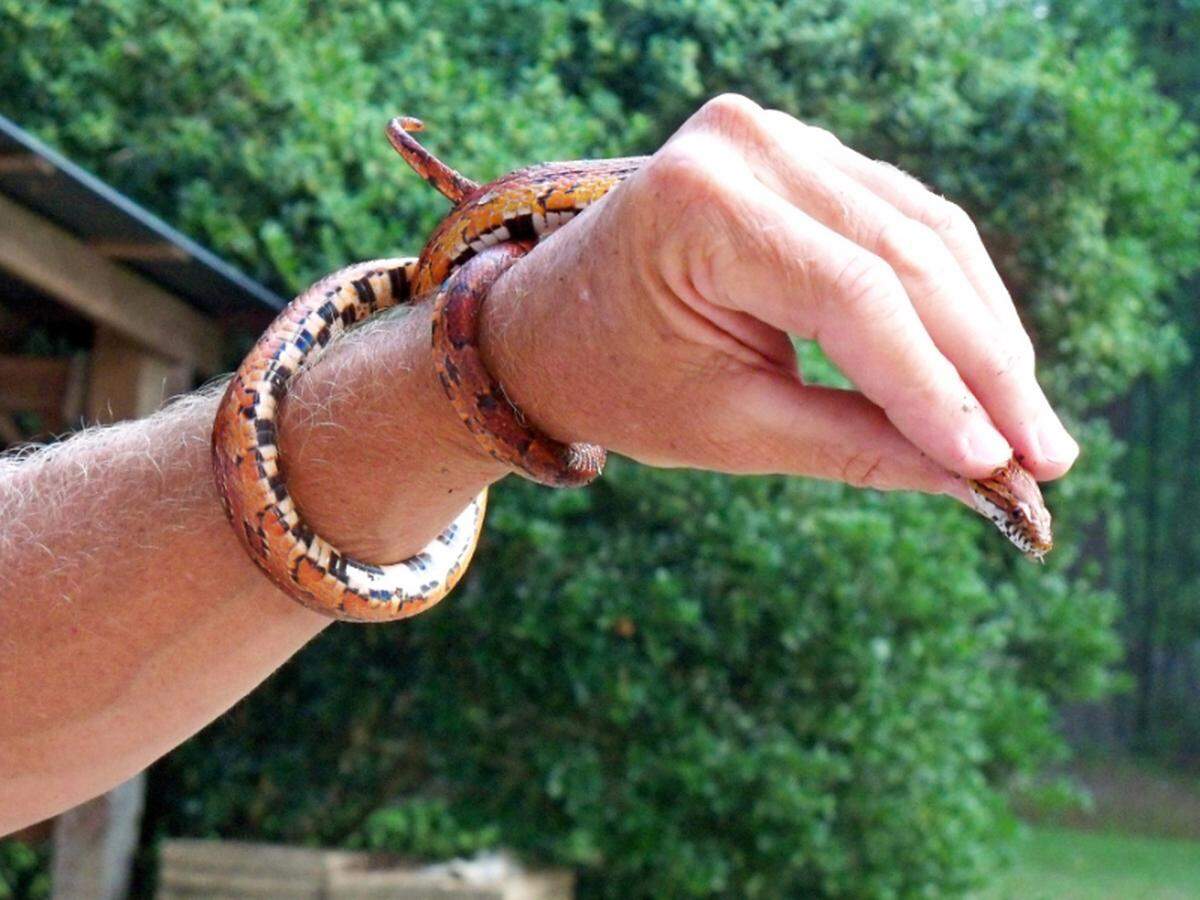
The light bandings across corn snakes’ bodies don’t help with the confusion either. Corn snakes also have round pupils, which is a typical characteristic of nonvenomous snakes.
Northern Water Snake
The northern water snake is a large, nonvenomous snake that boasts a similar pattern and colors to copperheads.
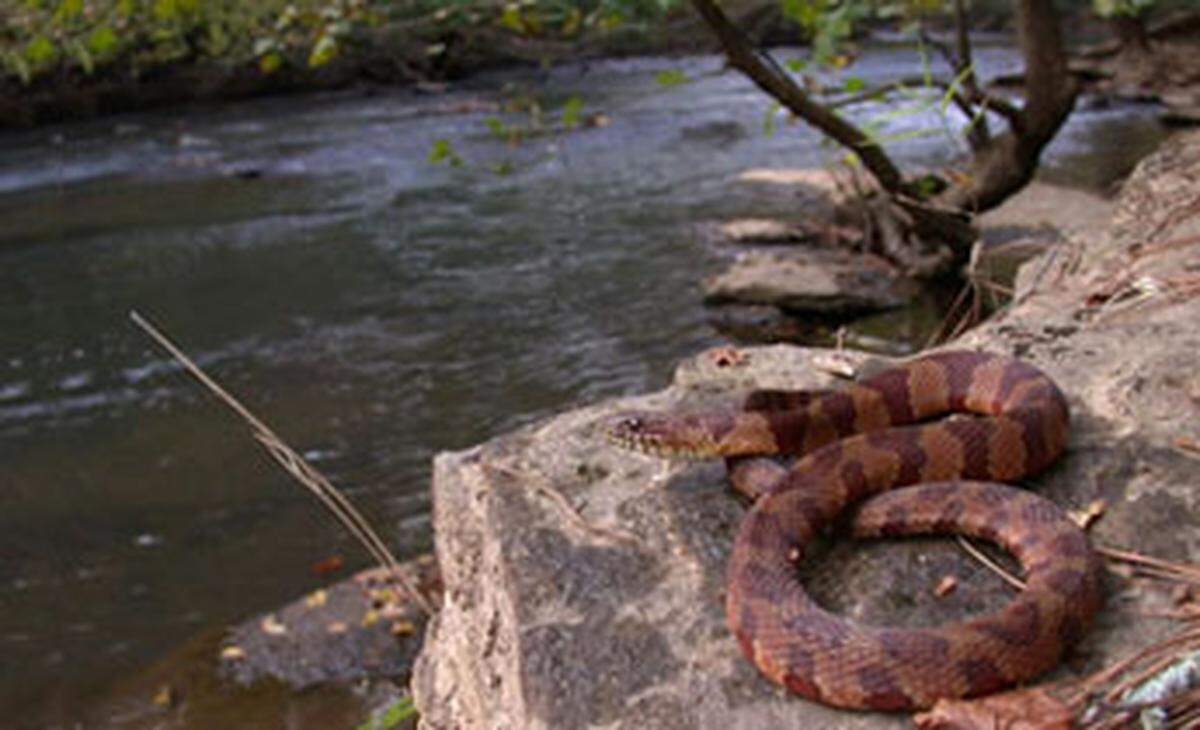
The northern water snake’s pattern includes dark blotches that are narrow on the sides, but get wider toward the backbone. Meanwhile, copperheads’ pattern is wider on the sides and narrower toward the backbone.
Northern water snakes also have round pupils.
Eastern Milk Snake
Eastern milk snakes have a similar pattern and coloration to copperheads. According to the South Carolina Department of Natural Resources, eastern milk snakes are most commonly found in mountain forests.
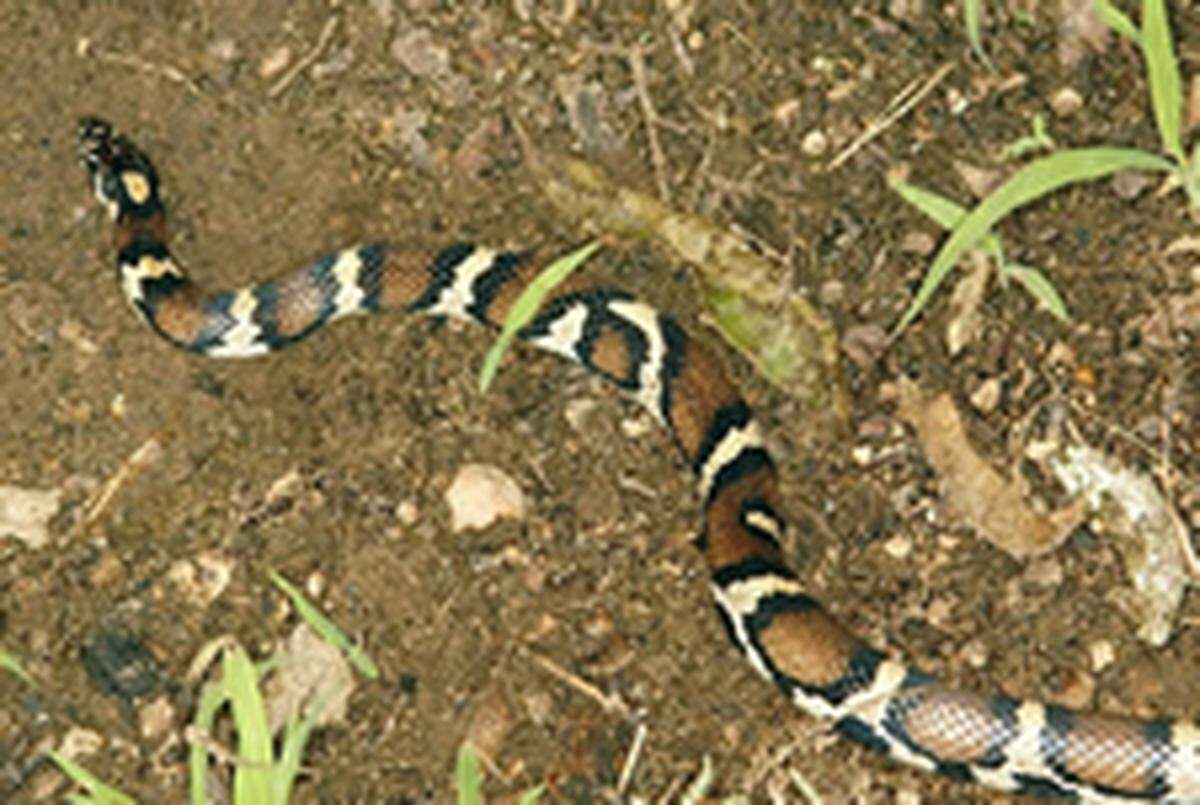
The nonvenomous milk snake can be told apart from copperheads by its lack of a uniform hourglass pattern. The copperhead has just one row of crossbands down its body, compared to the milk snake’s three to five rows of blotches down its body. Also, the copperhead has keeled scales, while the milk snake has smooth scales.
Mole King Snake
Mole king snakes constrict around their prey instead of using venom and mainly hunt small rodents. Mole king snakes prefer to live underground and are usually only seen when slithering across roads, DNR states.
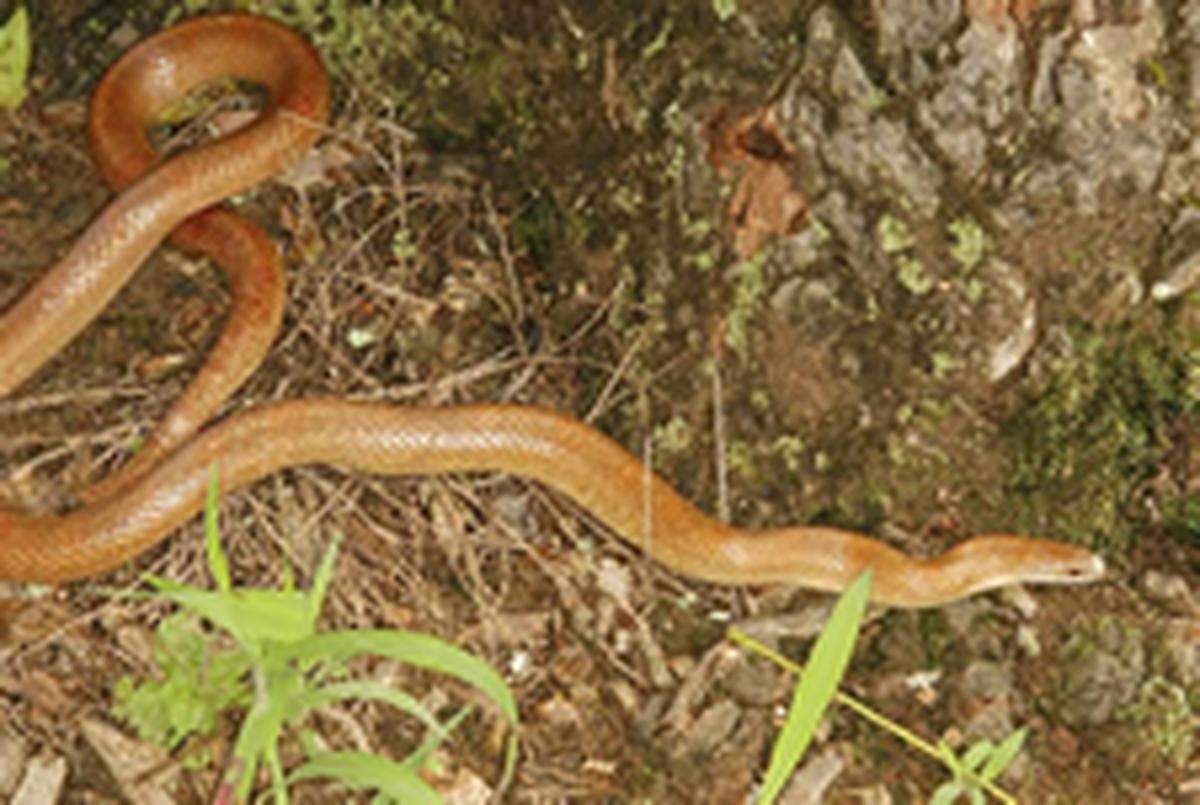
These snakes tend to grow up to 3 feet long with light, glossy brown scales with dark brown blotches, making them appear similar to copperheads. Unlike copperheads, mole king snakes are smaller and thinner and also have smaller, angled heads.
Banded Water Snakes
These nonvenomous snakes have a similar reddish-brown coloration to that of copperheads. They also are found near bodies of water and can sometimes cross paths with copperheads, which enjoy living in South Carolina swamps.
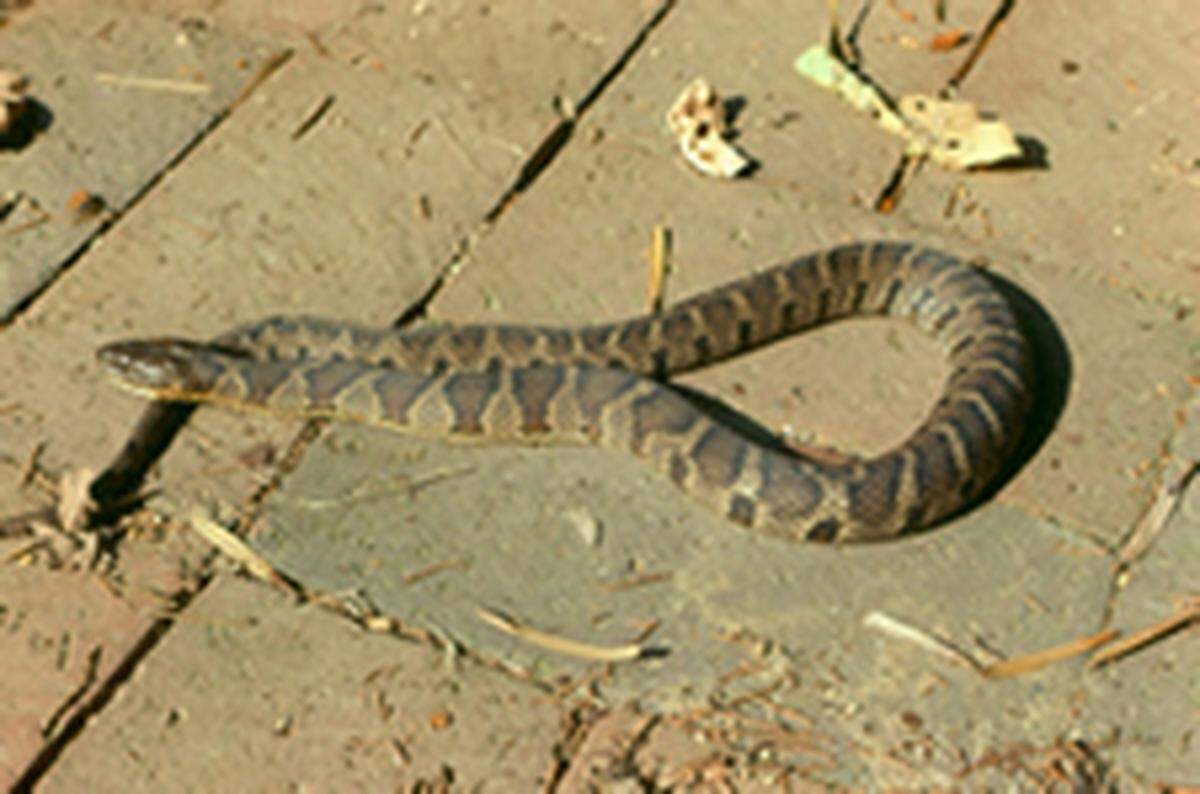
It can be difficult to tell the species apart, but banded water snakes do lack the hourglass pattern of the venomous copperhead. Banded water snakes do also have much smaller heads.
This story was originally published May 29, 2025 at 6:00 AM.