SC shrimpers are struggling. What they say is needed to counter ‘shrimp fraud’
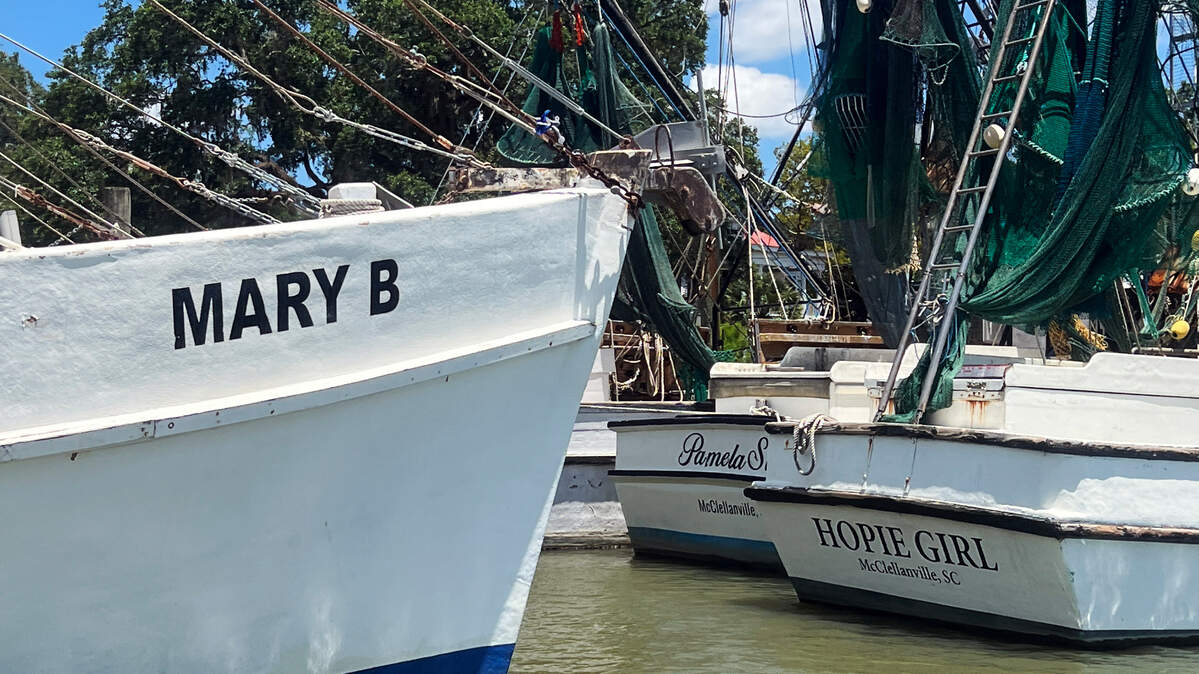
Cyndy Gay Carr moved home to Saint Helena Island in Beaufort County three years ago to help her family run Gay Fish Co., a generational seafood business that’s been in operation since 1948.
Summer is their busiest season of the year. Their highest-selling product is fresh, locally caught shrimp from their crew of seven shrimpers. They used to have close to 30.
Business is booming right now from patrons across the surrounding islands. But her family doesn’t sell to any restaurants. The demand hasn’t been there, she said.
Many South Carolina shrimpers describe the same experience. They spend difficult days out on the water bringing in a fresh catch, yet they can’t compete with the low cost of imported, farm-raised shrimp from the Pacific that are being sold to restaurants.
For the first time, Gay Carr said, customers are coming to their shop inquiring about the source of their shrimp. Local shrimpers have been dwarfed by imports and pushed to the wayside for decades, but now the public is paying attention.
The affordable cost and convenience of foreign shrimp have made it increasingly difficult for local South Carolina shrimpers to compete. That, along with rising operating costs and a lack of legislative representation, has left them fighting to keep their business sustainable for future generations. But they’re not giving up.
What is ‘shrimp fraud’? Why does it matter?
Shem Creek in Mount Pleasant, about two hours northeast of Saint Helena Island, is home to some of the coastal hotspot’s most popular bars and restaurants. Tourists drink on balconies that overlook fishermen and shrimpers bringing in their daily catch, often prepping it for sale right in front of them.
But almost none of them serve American shrimp, according to a genetic study commissioned by the Southern Shrimp Alliance in mid-May that revealed many Charleston restaurants have been selling shrimp from the Pacific Ocean advertised as locally caught. The controversy has been dubbed “shrimp fraud” by some, “shrimpgate” by others.
It’s been a known fact among shrimpers that many restaurants have been lying to consumers about the source of their product for decades.
12 million pounds of shrimp were imported into the U.S. back in 1947, and it’s increased ever since, “Captain Woody” Collins wrote in a book on the depletion of Lowcountry shrimp boats. Now that figure is in the billions, according to the Southern Shrimp Alliance.
The South Carolina Shrimper’s Association, a different advocacy organization, took the study as an impetus for legal action. A state and federal lawsuit was filed in mid-June against the alleged offenders of false advertising.
Bryan Jones, the vice president of the association, works to inform consumers statewide about the nature of the industry and the fraud within it. He operates the 1958-built “Pamela Sue” trawler out of McClellanville, a small coastal town northeast of Charleston.
Jones said that this “shrimp fraud” is “not a victimless crime.” It hurts not only shrimpers trying to make a living and consumers spending their money on an inauthentic product, but also restaurants that are paying premiums for local shrimp, which he said aren’t much higher than those of imports.
The lawsuit is not meant to be an attack against restaurants but rather a conversation starter with local shrimpers, the association said. Since its filing, the law firm has reached settlements with several restaurants through conversations about proper advertising and avenues to access local shrimp.
“When people develop a negative opinion of what they believe is wild-caught South Carolina shrimp, it hurts their industry, because they’ll then decide not to buy from local shrimpers,” said Bluffton Mayor Larry Toomer. The generational shrimper owns Bluffton Oyster Co.
Shrimpers who spoke to The State said they want consumers to recognize the issue and make a conscious effort to frequent honest restaurants.
“What our Lowcountry is known for is a mecca of Southern cuisine,” Jones said. “You can’t replicate that in a pond halfway around the world.”
He’s also spoken about the health concerns that could come with ingestion of farm-raised shrimp.
A University of Georgia study recently found that the chemicals in imported shrimp can make some people resistant to certain antibiotics. With several studies covering the subject, Louisiana officials issued the first health warning against consuming it.
“It’s not saying restaurants can’t serve something,” Toomer said. “Just be transparent about what you’re doing and not covering up, lying, and intentionally hurting an industry that’s struggling already.”
Jones said small towns like McClellanville, where he operates, are the biggest victims because shrimpers there don’t have many other viable careers. Their options are to work a minimum-wage job or stay in shrimping and “die a death by a thousand cuts” unless something changes, he added.
Relationships with restaurants
It’s understandable that restaurants would be enticed by imported shrimp, Gay Carr said. They cost less and the supply is more consistent.
The amount of shrimp imported into the United States is higher now than ever, Jones said, estimating the share of imported shrimp in the market is around 94-96%, with the remainder made up by local shrimpers. He knows they won’t replace imported shrimp, but even gaining 2% more from restaurant demand would double their ability to pay crew members and support coastal communities, he said.
They mainly want to be competitive in the global marketplace, Jones said: “We’re not trying to be millionaires out here.”
The S.C. Restaurant and Lodging Association “would not support misrepresentation of a product,” President and CEO Susan Cohen wrote to The State. Restaurants that make an effort to source local shrimp should be applauded, she said, adding that there are many, despite the implications of the Charleston test results.
Jones maintains a list of restaurants that the association has verified for sourcing local shrimp.
But many restaurants want a consistent supply of large shrimp, which isn’t always available in local waters depending on the time of year, state Department of Natural Resources Crustacean Manager Jeff Brunson said.
Two shrimp species, white and brown shrimp, are native to South Carolina waters. The white shrimp, present in the spring season, is larger. The brown shrimp are often thrown back overboard because restaurants don’t want them, Gay Carr said.
It would be helpful if restaurants altered their menus to be more forgiving of shrimp sizes, Gay Carr said, so shrimpers could serve restaurants year-round. If restaurants partnered with multiple seafood markets to meet the high demand of summer tourism, it could be an effective joint effort, she added.
“That’s the only way you’re going to be able to have a natural product,” Gay Carr said.
Toomer’s family business, Bluffton Oyster Co., includes a restaurant that only serves their wild-caught shrimp. For restaurants that use a mix of sources, he said they could rewrite their menus to allow consumers to choose which type of shrimp they are served.
“Let the consumer choose” was a common statement among shrimpers who spoke with The State. The Association maintains that they have no problem with restaurants choosing to serve imported shrimp, as long as the consumer is not “being cheated.”
Fewer hands on deck
Many shrimping businesses in South Carolina are owned by a third or fourth-generation shrimper who followed in a relative’s footsteps. Several said that tradition is in jeopardy due to rising costs.
The 1990s were great years for the shrimping industry, with the Department of Natural Resources licensing between 800 and 1,000 shrimp trawlers in the state, Brunson said. In the early 2000s, he said that number had dropped by half.
Toomer and his family have made shrimping a way of life since his grandfather opened their oyster house on Hilton Head Island in 1913, he said.
“I remember when I was a kid, we had about 30-something boats on Hilton Head,” Toomer recalled. “Today, other than my family’s boats, there are none, zero.”
It’s gotten worse over the past five years, he said. Rising fuel prices are a major burden, costing $4 to $5 a gallon compared to $1 received for a pound of shrimp. They also have to pay for their crews and maintenance of their boats, costs that have also increased.
Jones said they get the same price for their shrimp as in the 1980s, roughly 33 cents per shrimp, while working with significantly less manpower.
Not only are companies importing shrimp to the point where locals can’t make a profit, but they’re buying processing facilities and rejecting American fishermen because their freezers are already full of imports, Toomer said.
“Eventually it gets to the point where you can’t even make a living,” Toomer said. “I have 18 grandkids, and I would love nothing more than for them to be able to follow in my footprints and my forefathers’ footprints, and I’m still fighting for that.”
Fighting to survive
The study commissioned by the Southern Shrimp Alliance “said the quiet part out loud that everyone knew was going on,” Jones said, “Now it’s, ‘Where do we go from here?’”
The shrimpers The State spoke with pointed to a few things the federal and state governments could do to help.
Toomer said country-of-origin labeling laws should be a national requirement.
“Just like a box of cereal, all of your ingredients, any preservatives, everything should be on the label for the consumer to know,” he said.
Southern states such as Alabama, Louisiana, Georgia, Mississippi and Texas have all adopted some form of labeling requirement to designate whether a seafood product is imported or caught domestically. Neither North nor South Carolina has a labeling law, which several shrimpers said they’d like to see changed to encourage transparency.
The average inauthenticity rate across the south is 80% for states without restaurant labeling laws, according to the Southern Shrimp Alliance. In states with labeling laws in place, the rate is 34%.
The commercial fishing industry is often an afterthought in legislation, Jones said. There aren’t as many congressional districts representing fishermen as there are farmers, and as the fleet depletes, policymakers lose desire to listen, he said.
“I don’t know who’s making political contributions,” Jones said. “But I can tell you, shrimpers aren’t. We don’t have the money to. The only power we have is the graciousness and the interest of ... the general public.”
Several initiatives have supported the agriculture sector since the start of the Trump administration. The government has also been subsidizing operational costs for farmers for years.
It would be a huge help, Toomer said, if governments helped subsidize operating costs or create tax incentives for fishermen as they do for farmers. One of their biggest expenses is boat fuel, which is no different from the cost of fuel for a tractor-trailer, Gay Carr said.
A few shrimpers told The State that President Trump’s potential tariffs on imported foreign products would help. The market would be more fair, and the price of shrimp would be more in line with what it costs to stay in business, Toomer said.
The shrimpers also want equal regulation and inspection of the product across markets. The Southern Shrimp Alliance points to a 2025 study conducted by the U.S. Government Accountability Office that found the FDA conducts less than 5% of the foreign food inspections mandated by Congress. Jones said this is the same case for shrimp in South Carolina.
Shrimpers in the state say they want to see the inspection rate pushed higher to prevent health risks, which could in turn be blamed on local fishermen due to fraudulent menus and packaging.
That’s why it’s important in the meantime for consumers to be vigilant and make intentional decisions, Jones added.
“If that could be done better, then we’d all be better informed as to what folks are eating,” Gay Carr said.
Hanging on
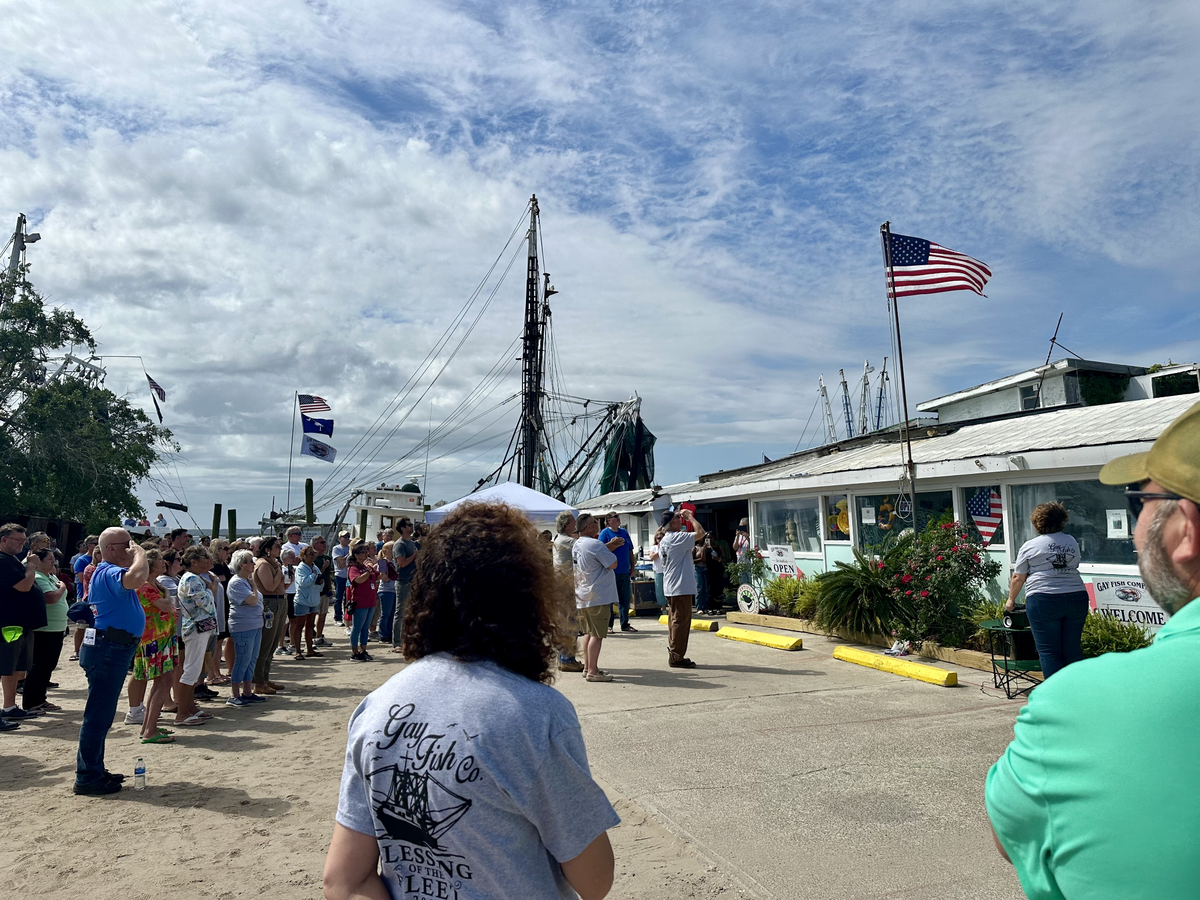
Cyndy Gay Carr is having her family business’ dock fully reconstructed for the first time since 1948. It had become unsafe in recent years for their six shrimpers to operate there, especially after Hurricane Helene flipped their largest boat, nearly 80 feet long, on top of the dock.
The funds to do so came from a reimbursable grant from the Department of Agriculture. It’s a good example of “community outreach,” she said.
“We’re not putting all this money into this dock rebuild just to look at it,” she said. “So we’re trying our best to put our money where our mouth is and keep this industry going.”
They’ve also partnered with DNR to host free fishing clinics to get more people interested in the commercial fishing industry. And the South Carolina Sea Grant Consortium has launched seafood apprenticeships. Growing programs like that could help get more hands on deck, Gay Carr said.
Local shrimpers would like to meet potentially increased demand from restaurants, but they’d need more hands on deck, which several shrimpers said could be a tall order. But shrimping has been a fixture of South Carolina’s culture and economy for over 100 years, and they’re intent on keeping it that way.
“It takes a lot of blood, sweat and tears to do this job, and we’re just glad we’ve got some guys that are still willing to do it,” Gay Carr said.
This story was originally published July 25, 2025 at 5:00 AM.