
Prep for an extra hour of sleep SC. Here’s when daylight savings ends in 2025
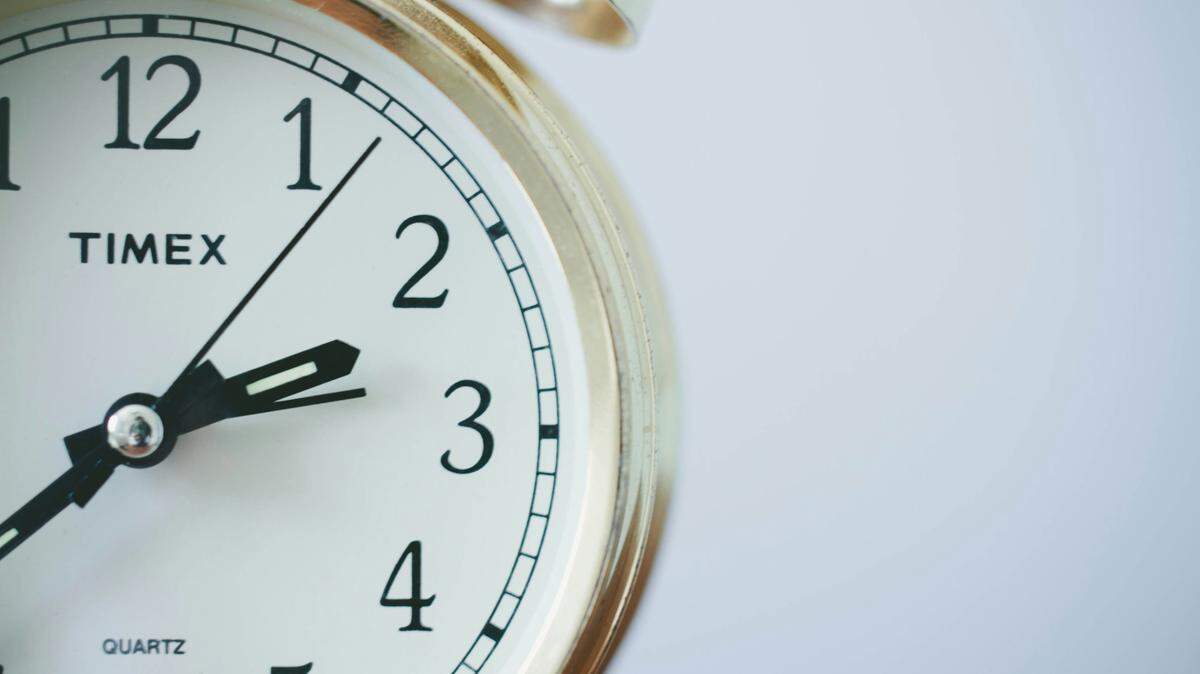
In a few short weeks, it will be time to fall back, as they say, returning to standard time and darkness falling before dinner time.
It also means an hour of extra sleep on the official day, Nov. 2, a Sunday. Daylight saving time began March 9.
South Carolina and many other states have already approved doing away with standard time and keeping daylight saving time year round, but putting it in place requires the approval of Congress.
The U.S. Senate approved what is known as the Sunshine Protection Act but the legislation has been stalled in the House of Representatives for years.
The Sunshine Protection Act was reintroduced earlier this year by Rep. Vern Buchanan of Florida.
It is a contentious decision.
Daylight saving time was enacted in its current form in 1966 as a way to save energy — more hours of light in the evenings.
But in recent years, studies have minimized energy savings and brought to the fore health risks such as increases in strokes, myocardial infarction and unipolar depressive episodes, the American Medical Association says. It also may bring about inflammatory bowel diseases.
The American Academy of Sleep Medicine has advocated eliminating daylight saving time.
“Current evidence best supports the adoption of year-round standard time, which aligns best with human circadian biology and provides distinct benefits for public health and safety,” American Academy of Sleep Medicine said.
The organization cited an online survey of 2,005 adults that found that 64% of Americans support eliminating seasonal time changes. About a quarter said public health and safety was the most important consideration.
“Nearly two-thirds of parents said they would be concerned about their children’s safety if they had to go to school before the sun comes up,” the academy said. “That would be common if permanent daylight saving time were adopted.”
Such time changes are common in most European and North American countries, as well as in parts of South America, Australia, and in New Zealand, the AMA saud.
British/New Zealand entomologist and astronomer George Vernon Hudson is generally credited with proposing the idea in 1898. To save resources during World War I, the German Empire and Austria-Hungary introduced daylight saving time in 1916. The U.S. joined in 1918, calling it war time, and at the same time implemented time zones.
It was repealed after World War I and brought back in 1942, in the midst of World War II, then repealed after the war in 1945.
Michael Downing, author of Spring Forward: The Annual Madness of Daylight Saving Time, in a 2015 video said states were allowed to set whatever time they wanted.
Downing said 71 of the U.S.’ largest cities practiced DST, while 59 did not in 1965.
The Smithsonian Magazine reported that the United States Naval Observatory at the time called America “the world’s worst timekeeper.”
The Uniform Time Act, split the year into six months of standard time and six months of daylight saving in 1966.
This story was originally published September 16, 2025 at 6:00 AM.