SCDOT spends more than $1B on road repairs, upgrades so far this year
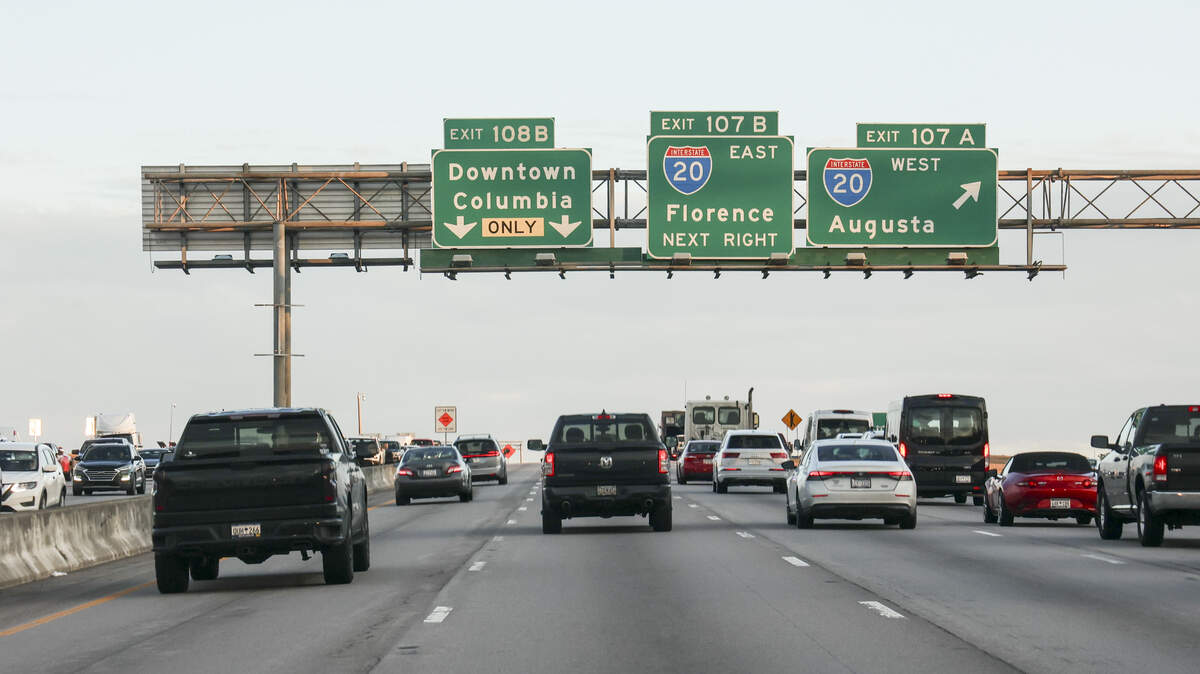
South Carolina’s transportation department has spent more than $1 billion so far this fiscal year on roads, bridges and operations — with a significant share flowing into the Midlands, where aging pavement and congestion remain among residents’ top complaints.
From December 2025 through the midpoint of the 2026 state fiscal year, the S.C. Department of Transportation reports spending $1.56 billion across all programs, according to a year-to-date expenditure report reviewed by The State. About $838.7 million — 54% of all spending — went to “maintenance and system preservation,” a category that includes resurfacing, bridge work, field maintenance and emergency repairs. Another $522.5 million, or 33%, went to “capacity and operational improvements” such as widenings, new-location projects and safety upgrades.
In the Midlands, DOT has already committed tens of millions of dollars to a mix of resurfacing, bridge repairs and widening projects in Richland, Lexington, Kershaw and Sumter counties, the report shows.
Richland County, home to Columbia and some of the state’s busiest commuter corridors, logged roughly $68.6 million in spending since December, including about $15.2 million for rehabilitation and resurfacing, $8.4 million for bridge work and more than $42.8 million for capacity and operational improvements.
Lexington County, one of the state’s fastest-growing areas, saw about $53.9 million in expenditures, led by $20.7 million in resurfacing, nearly $3 million for bridges and roughly $31.6 million for capacity projects.
Meanwhile, Kershaw County, which includes rapidly developing areas northeast of Columbia, recorded about $26.9 million in spending, most of it tied to resurfacing and bridge construction.
Sumter County, a key freight and military corridor anchored by Shaw Air Force Base, saw about $28 million in expenditures, including roughly $21.9 million for resurfacing and $4.7 million for bridge work.
Statewide, SCDOT’s spending patterns underscore how much of the state’s transportation budget is still going toward maintenance and upkeep versus new and improved projects, such as new lanes. The agency’s $838.7 million price tag on “maintenance and system preservation” since December includes:
- About $451.2 million for rehabilitation and resurfacing work, much of it fueled by the state’s Infrastructure Maintenance Trust Fund;
- Roughly $131.4 million for bridge projects, including more than $41.9 million tied to the maintenance trust fund;
- Nearly $79.8 million in field maintenance, the on-the-ground crews who patch potholes, clear ditches and respond to routine damage;
- $20.6 million in emergency repair and replacement and $1.46 million for emergency work funded by federal “non-federal aid” dollars; and
- About $66.3 million for maintenance-related personal services and another $34.6 million in employer contributions associated with that work.
Capacity and operational improvements — the projects drivers see as new lanes, new interchanges and major safety upgrades — accounted for another $522.5 million. That bucket includes $320.7 million for operational and safety improvements, $100.4 million for widenings and new-location construction and nearly $10.7 million in Infrastructure Maintenance Trust Fund money targeted to safety work. It also reflects large one-time injections, including $71.8 million in federal pandemic relief (ARPA) and about $4.7 million for Charleston’s Lowcountry Rapid Transit project.
The Midlands numbers in the report don’t capture individual road names, but they show where DOT is concentrating money at the county level. Lexington’s $3 million in “widenings and new location” spending and Richland’s $31.1 million in capacity and operational improvements suggest ongoing work on some of the region’s biggest choke points, including interstate and primary highway corridors that carry commuters into Columbia and freight traffic across the state.
Despite the heavy spending, the department continues to juggle rising construction costs and a backlog of needs on local roads that carry most daily traffic. The state’s own data show that while interstate pavement conditions have improved significantly since lawmakers passed a gas tax hike in 2017, many rural and secondary roads — including in the Midlands — still lag behind.