
How helpful are hurricane categories? Meteorologists want a better way to show impact
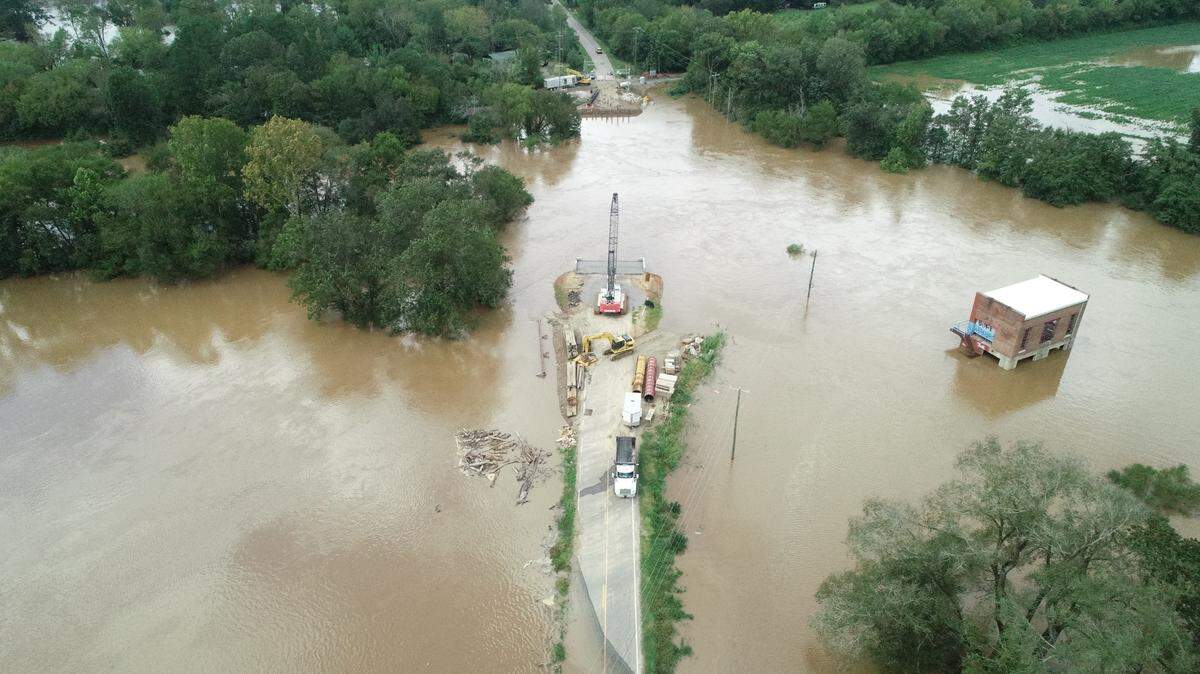
Sometimes, hurricane categories do not give people an accurate portrayal of how severe a storm can be.
Take Hurricane Florence.
The 2018 storm hit Wrightsville Beach on Sept. 14, 2018, as a Category 1 hurricane — the lowest wind speed on a cagtegory scale of 1 to 5.
The storm stalled and dumped unprecedented amounts of rain over North Carolina. In the first day more than 300 people needed rescuing from floods. More than 50 people died.
By the time Hurricane Isaias gets to the North Carolina coast — predicted to be late Monday — it is expected to be downgraded to a tropical storm.
But that doesn’t mean that North Carolinians should breathe a sigh of relief.
Aaron Swiggett, a meteorologist with the National Weather Service in Raleigh, explained that a hurricane’s category is based on the Saffir-Simpson scale.
“The largest downside of doing that is that it’s only based on wind speed,” Swiggett said. “There is zero other variables” in the calculation, he said.
Floods are dangerous, too
Swiggett said the scale leaves out rainfall totals, severe weather, and the probablity of tornadoes and flooding.
“Flooding counts for more deaths per year than any threat combined,” Swiggett said. “From lightening to tornadoes to wind, flooding is by far the greatest threat of all.”
Joel Cline, tropical program coordinator for the National Weather Service, said that the Saffir-Simpson scale’s namesakes derived the categories as a means to get people to pay attention to the dangerous levels of each storm.
But Cline agrees that it leaves out substantial information that helps people make informed decisions.
“You have people who will say, ‘I’m going to only evacuate if its a Category X,’” said Cline. “But that’s not the best representation of the storm and its threats.”
Cline said emergency management officials take into consideration all of the data for a storm when deciding whether to evacuate a community. He said it’s important for people to listen to those officials instead of making plans based on incomplete knowledge.
You may know the category number, but “you can’t tell the full scale of what the hurricane can do,” Swiggett said.
Hurricane Isaias was expected to be at the southeast coast of Florida by Sunday, and along North Carolina’s coaston Monday. The region may see between 2-4 inches of rain with some isolated areas averaging around 6 inches of rain.
Wind speeds in Raleigh could be at tropical storm levels of 45 mph but are likely to be closer to between 25 and 30 mph sustained.
New measurements coming
With this storm, Swiggett believes the state’s biggest threat will be the wind.
“There will be some impacts, there will be some downed trees, there will be some minor flooding, there will be some power outages,” Swiggett said, “but I think as a whole this is more of a good storm to practice hurricane preparedness.
While researchers are working to create a new scale that shows all of a storm’s impact to a region, Swiggett said, the National Weather Service is “rolling out” graphics that show that impact. He said the Raleigh office has not yet published those graphics to its website but will when the storm gets closer.
“Those graphics all together will paint a better picture than a straight-up category will,” Swiggett said.
This story was originally published August 1, 2020 at 6:29 PM with the headline "How helpful are hurricane categories? Meteorologists want a better way to show impact."