With heavy rain from Idalia, Columbia could see flash floods. What to know
A hurricane is bearing down on Florida, and it will bring rain to the Midlands.
Hurricane Idalia is expected to make landfall over Florida’s Gulf Coast Wednesday morning before hitting the Georgia coast and then the Carolinas Wednesday night.
By the time Idalia impacts reach the Midlands, the hurricane likely will have been downgraded to a tropical storm or a tropical depression, but the Columbia area should still expect heavy rain as early as midday Wednesday. The National Weather Service expects between 3 to 6 inches in the area, with heavy winds Wednesday night.
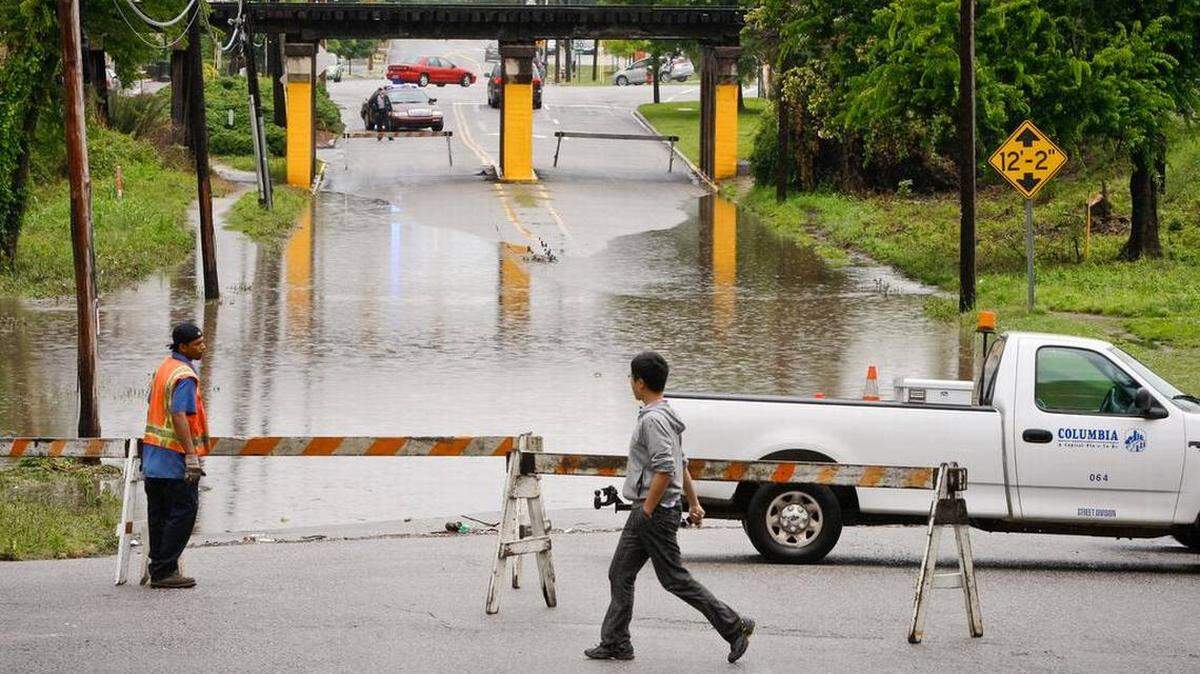
As Columbia braces for rain, parts of the city are likely to flood. When historic rainfall came to Columbia last July, parts of Five Points were half a foot under water, and most area businesses spent the following day drying out their stores. It’s a common practice when storms roll through the area.
Five Points is one of the most flood-prone areas of the city. Parts of the University of South Carolina campus and the Shandon neighborhood also see routine flooding with heavy rains.
Columbia has attempted to bolster flood protections in parts of the city, but the measures often prove only partially effective in heavy rain.
Several years ago, the city completed a $1 million project at Martin Luther King Jr. Park meant to reduce flooding in the area. The work created a stormwater retention area to hold rainwater and to channel it through Five Points when flooding does occur. Assistant City Manager Clint Shealy previously said the city has seen significant improvements to the amount of flooding in Five Points since finishing that project, but he added it can’t prevent all flooding.
“There’s certain levels of events you just can’t design (for),” he said.
This map shows Columbia’s most flood-prone intersections according to information provided by the city of Columbia.
If residents do encounter flooded streets, experts urge caution. Do not drive through floodwaters, even if the water does not look deep. If a road is flooded, turn around and find an alternate route.
“It takes just 12 inches of flowing water to carry off a small car, (and) 18 to 24 inches for larger vehicles,” the National Weather Service warns. The water may also be hiding washed-out road surfaces, electrical wires, debris or other dangerous objects.
More than half of all flooding deaths nationally occur when a vehicle is driven into hazardous flood water, according to the weather service.