Milton to become major hurricane as it tracks toward US. What that means for the Midlands
Hurricane Milton is growing in strength as it tracks toward the U.S., according to the National Hurricane Center.
Although Milton is expected to become a major storm, it’s not forecast to have a significant impact on the Columbia area of South Carolina, which is still recovering from the effects of Hurricane Helene.
“Thankfully, we are in a good spot with Hurricane Milton,” National Weather Service Meteorologist Brad Carlberg told The State Monday morning.
Hurricane Milton is currently in the Gulf of Mexico and is forecast to make landfall in the U.S. later this week when it reaches Florida, according to the National Hurricane Center. But the current track shows Milton heading out to the Atlantic rather than making a turn north.
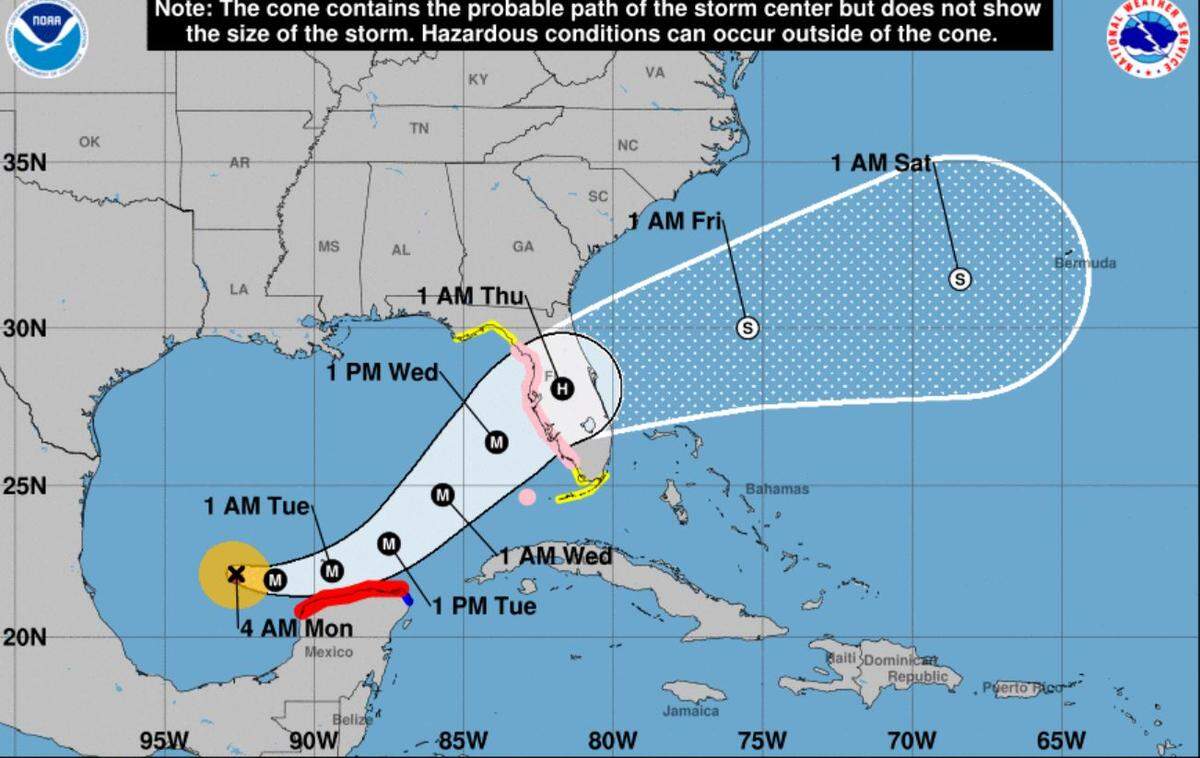
Another weather pattern, a cold front moving down from the north Monday night, will help shield the Midlands from the hurricane, and keep Milton and its severe weather effect to the south of the Columbia area, Carlberg said.
Columbia might experience wind gusts, some as strong as 20 mph, but that should be the extent of Hurricane Milton’s affect on the Midlands, according to Carlberg. Any winds from Hurricane Milton are likely to be felt Thursday, in the afternoon and through the evening, Carlberg said.
No rain is forecast for the Columbia area, and any caused by the storm will be to the southeast of the Midlands, according to Carlberg. Additionally, the Columbia area should not see any tornado activity.
Carlberg did say that forecast can always change and Hurricane Milton could become a greater threat to the Midlands, but current forecasts show that’s not likely.
“There’s medium-to-high confidence, 60 to 80%, that Milton will stay out of the area,” Carlberg said.
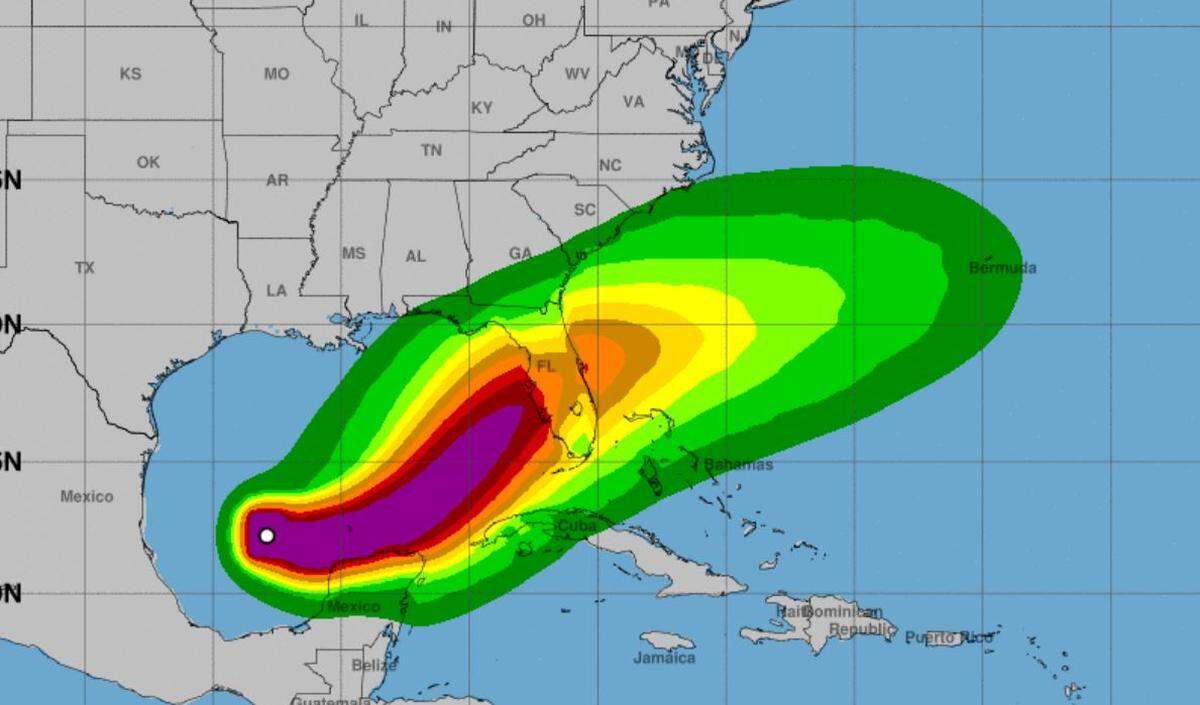
Hurricane Milton could cause issues along the South Carolina coast and closer to the Charleston area, according to the National Weather Service.
Coastal flooding is the greatest threat to South Carolina’s Lowcountry, primarily on Tuesday, Wednesday and Thursday, the National Weather Service said. Other severe weather threats to the Charleston area include wind gusts, rainfall, enhanced rip currents and high surf, according to the National Weather Service.
The forecast in Columbia is much calmer, with clear and sunny conditions expected and temperatures in the 70s through Friday. Overnight temperatures could dip into the 50s this week, according to the forecast.
“The week is shaping up to be nice, with fall-like temperatures,” Carlberg said.
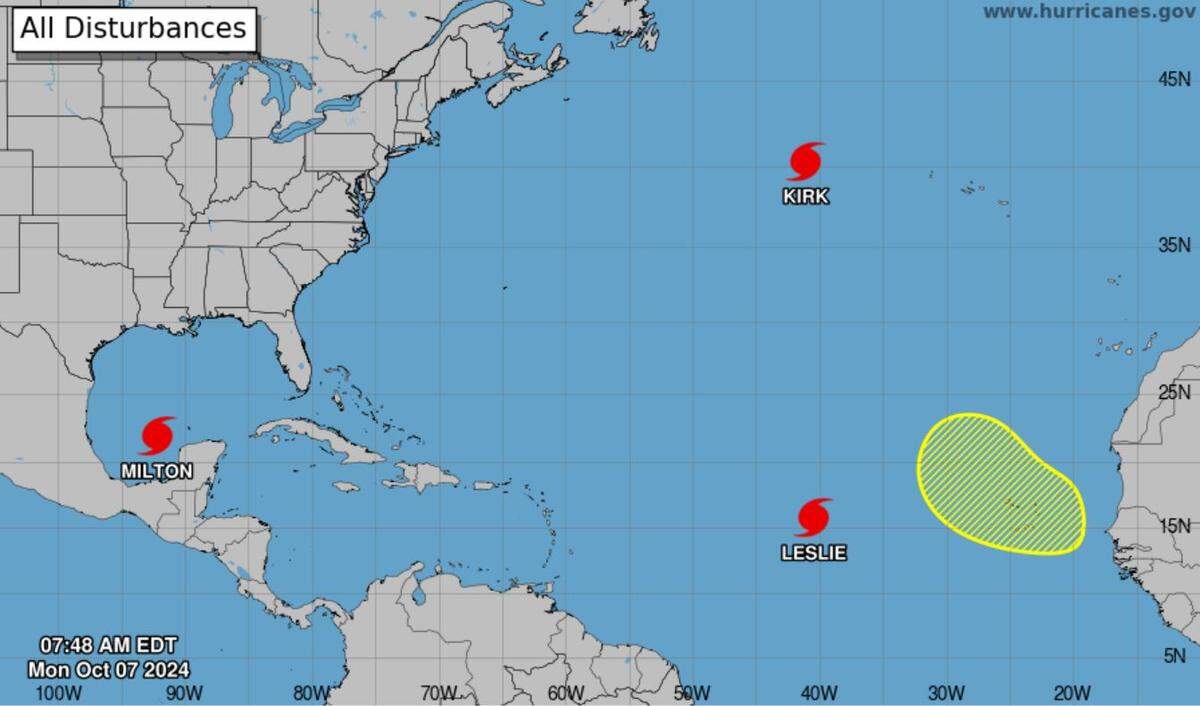
Although the Atlantic Ocean continues to be active with two other hurricanes and another tropical wave forming off the African coast, none of those storms are currently predicted to affect South Carolina.
It’s too early to tell if the tropical wave will develop, there’s only a 30% chance at the moment. Hurricane Kirk is moving east in the Atlantic toward Europe. While Hurricane Leslie is churning the middle of the Atlantic it’s forecast to stay in the ocean as it turns north.
“Leslie is what we call a fish storm,” Carlberg said of the hurricane that’s very unlikely to make landfall in the continental U.S.
Those storms staying away from South Carolina will be a relief after much of the Midlands and Upstate were ravaged by Hurricane Helene at the end of September. More than 40 people died in South Carolina as a result of the storm which caused widespread flooding, damaged roads and homes and left more than 1 million power customers in the dark. On Monday morning, more than 52,000 outages were still reported in South Carolina.
BEHIND THE STORY
MOREThis is a breaking news story
In a breaking news situation, facts can be unclear and the situation may still be developing. The State is trying to get important information to the public as quickly and accurately as possible. This story will be updated as more information becomes available, and some information in this story may change as the facts become clearer. Refresh this page later for more updated information.