‘Be prepared’. SC’s McMaster, state officials caution residents ahead of winter storm
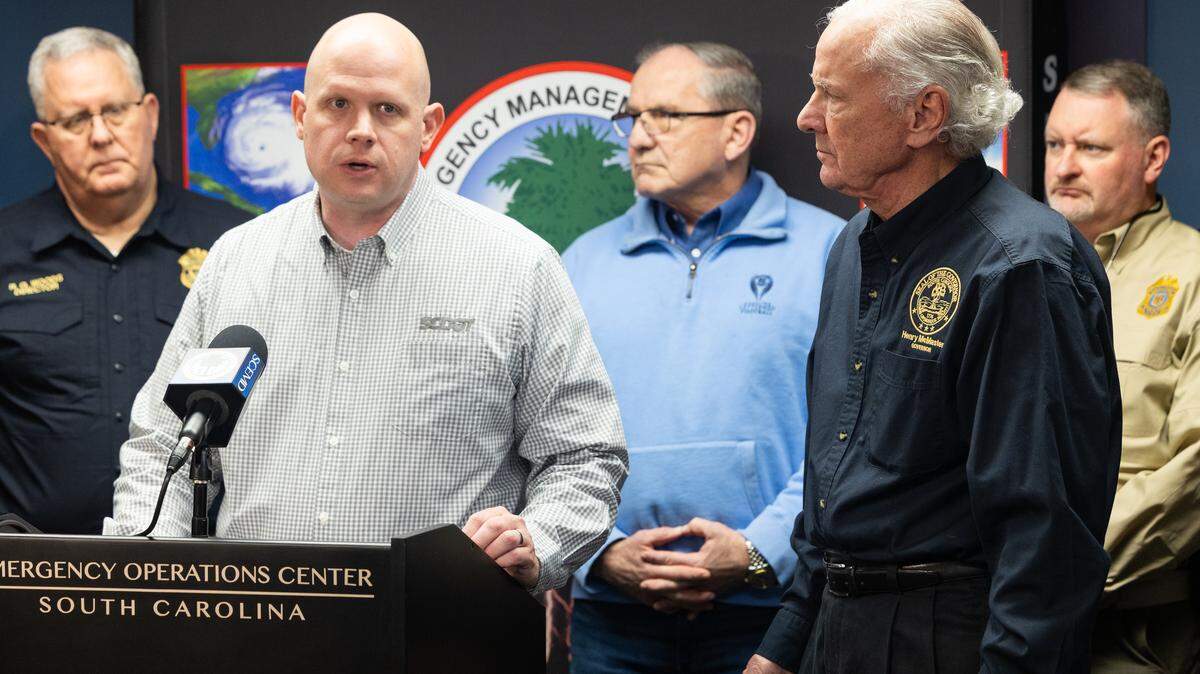
As South Carolinians brace for a winter storm that’s expected to impact more than half of the country, South Carolina Gov. Henry McMaster and state officials urged resides to “be prepared.”
In a news conference Saturday afternoon, McMaster — alongside numerous state officials — advised the public to lookout for themselves and their neighbors as winter storm Fern barrels toward the Palmetto State.
“With this ice storm, it’s going to be cold,” McMaster said. “It’s liable to have all the power lines, in the affected areas, down. The ice will either bring the lines down or bring the tree limbs down onto the lines, and you may be without electricity for maybe four days or maybe longer.”
Winter storm Fern is forecast to begin impacting the Midlands on Saturday night, beginning with rain that’s expected to freeze as temperatures plunge overnight into Sunday.
John Quagliariello of the National Weather Service in Columbia said freezing rain may be accompanied by sleet and frigid temperatures lasting into early next week, signaling the Upstate as the greatest area for concern.
“The greatest impacts will occur across the Upstate of South Carolina, where freezing rain will result in crippling ice accumulations up to one half to one inch,” Quagliariello said. “This will be the most significant ice storm in the Upstate since 2005.”
Significant impacts are also expected through the Midlands and Pee Dee along and north of the I-20 corridor, where one-quarter to one-half inch of ice accumulation is expected, Quagliariello said, adding that extensive travel disruptions, prolonged power outages and vast tree damage is likely to result.
McMaster, who requested a Federal Emergency Disaster declaration on Thursday, announced Saturday that the request was approved and, therefore, will bring additional resources to the state to help curb the effects of the storm.
Currently, 375 personnel are on duty from the Army National Guard, the Air National Guard and the state guard, according to Major General Robin Stilwell, the adjutant general of South Carolina. In addition, 14 vehicle recovery teams have been deployed along roadways in South Carolina designated by the Highway Patrol, Stilwell said.
“If you are not ready for power outages or extreme cold, then please relocate or get to a shelter today,” Stilwell said. “Today is easy. The roadways are clear. Tomorrow, after the storm has hit, transporting people for medical needs or to shelters is going to be a much more difficult proposition.”
The South Carolina Department of Transportation began preparing for the winter system all week, with 3,000 personnel “working around the clock statewide ... treating roads, staging equipment and stockpiling supplies,” according to SCDOT Secretary Justin Powell.
“We have already put down over 1.5 million gallons of brine on our roadways, with a particular emphasis on our interstates, our highest travel primary roads and bridges and overpasses,” Powell said. “Crews will continue to treat roads through the day as the storm approaches.”
With the risk of serious power outages, leaders of South Carolina energy providers — including Keller Kissam of Dominion Energy, Tim Pearson of Duke Energy, Jimmy Staton of Santee Cooper and John Frick of the electric cooperatives — echoed one another, saying crews are on standby and prepared to restore power as soon as possible.
Kissam said Dominion has begun prepping power reserves that’ll be fueled by water and coal.
“The greatest risk we have facing our linemen are the same risks that you have being on the road,” Kissam said. “We don’t have any choice. You have a choice. Stay off the road if you do not need to be there. The second thing is falling trees. Stay out from underneath tree branches. If you have a small limb that breaks and comes down from 40 feet, the velocity of it will make it feel 20 times heavier than what it is actually.”
Meanwhile, 21 shelters, including 13 general population shelters and eight medical equipment power shelters have opened across the state, according to Tony Catone, the State Director for the Department of Social Services.
McMaster repeatedly emphasized the importance of keeping cell phones fully charged ahead of power outages.
“If the power goes out, you’re not going to be able to charge (your cellphone) up,” McMaster urged. “So charge it up, charge it up. Keep it charged, fully charged. And then if the power does go out, you have only a limited amount of (charge). So, don’t waste the (charge) on anything that’s not essential, because you might be without power for three or four days.”
This story was originally published January 24, 2026 at 4:39 PM.