
Never backing down from dream in five decades, SC rocker leaves legacy of music dedication
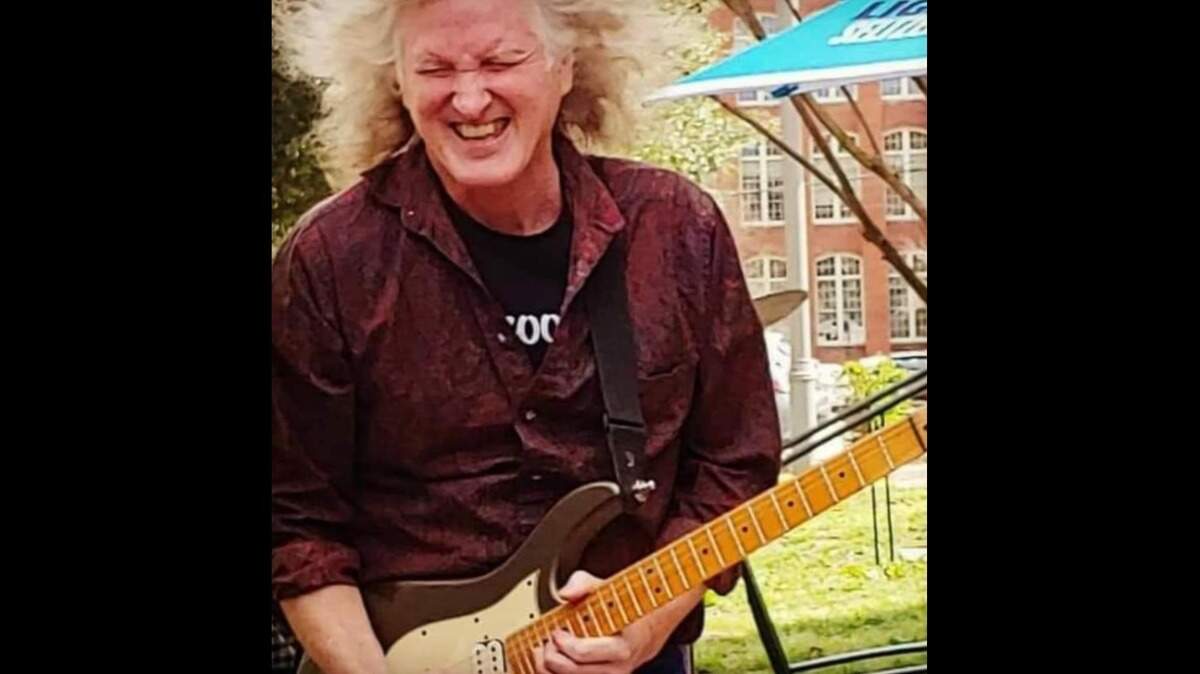
Bloodying his head in an excited jump on stage, shooting sparks from his guitar by accident, and tracking down KISS drummer Peter Criss — all are tales from the life of Ruba Say, a South Carolina guitarist and snotty-voiced vocalist.
He impacted the Midlands music scene with his unwavering commitment to living by his own rock ‘n’ roll credo. Sadly, his music has been silenced: Ruba Say died from a chronic condition on July 16 at 56 years old.
Ruba Say is not a name the majority of South Carolinians know. His name won’t make headlines across the Palmetto State. Broadcast news won’t dedicate two minute segments to his legacy. But among the rock music scene of Columbia and Florence and a few towns beyond, his electric troubadour exploits and passion for rock ‘n’ roll are legendary, bordering between truth and myth but always reinforced by an authentic personality.
He was an enigmatic music scene figure seemingly transported from another time who played hundreds — if not thousands — of gigs in South Carolina across five decades.
“He was a real rocker and real friend” to many, said Garrick Turner, a Columbia musician who knew Ruba for almost 20 years.
From the time Ruba discovered rock music in the 70s until his dying days, he never stopped being the kid daydreaming about playing a gig at a dirty dive bar, according to friends and family.
He started out playing the metal and heavy rock sounds of the late ‘70s and ‘80s in Florence, S.C., before coming to Columbia. He put on rambunctious shows with cobbled together musicians and little to no rehearsing under the band name Ruba Say and the Cosmic Rays.
He was known for his interest in cosmological events and sayings like “hognuts” and “rocketh forever onward” as well as his arcane knowledge of rock history and facts. Anyone who found themselves in a car with Ruba ended up laughing at the stories he told.
His family remembers him as a kind and gentle soul in torn jeans and rock band T-shirts. What he lacked in material possessions or trappings of a typical life he made up for with care and love for his family and friends.
“He was very sentimental and generous and sweet even when he didn’t have anything of his own,” Ruba’s niece Kathryn Sell McGinley said.
The one thing Ruba had maybe more than any other musician in South Carolina — “ridiculous enthusiasm” for rocking.
“He never had any level of commercial success,” said Jay Matheson, owner of Jam Room Studio in Rosewood where Ruba recorded in the 1990s and 2000s.
Ruba lived on “his crazy personality and go-for-it rock attitude and his raw perseverance.”
‘That rock ‘n’ roll guy’
Ruba was born Robert Sell during the summer of 1966 in Philadelphia.
His parents relocated when he was an infant to Florence, where Ruba fostered his enthusiasm for rock music, particularly the 1970s kind, through artists like Rush, AC/DC, Cheap Trick and KISS, whose guitarist, Ace Frehley, Ruba idolized.
He picked up guitar and began writing songs when he was 8 years old, The Florence Morning News reported in a late 1980s article.
James Mitchell, a former World Championship Wrestling (WCW) and current National Wrestling Alliance personality, met Ruba about 1978. They had English class together.
Ruba always carried back issues of rock magazines like Creem, “America’s Only Rock ‘n’ Roll Magazine” as it billed itself, to school, Mitchell said. The two sat in the back of class and flipped through the magazines.
“He’d teach me all about the history of rock music,” Mitchell said.
Ruba was the only guy in junior high school who had an electric guitar, Mitchell said. With his distinct long, curly red hair, he could be seen from afar walking around Florence carrying his guitar, amplifier and a notebook full of song ideas.
“Everybody knew he was that rock ‘n’ roll guy,” Mitchell said. “There were no other rock ‘n’ roll guys in 7th, 8th grade. Everyone was chasing girls. He was chasing rock ‘n’ roll.”
In 1981, during their freshman year in high school, Ruba booked a gig playing for a Florence chapter of the Shriners in a McDonald’s parking lot despite not having a backing band, Mitchell remembered. The Shriners thought they were getting a 1950s cover band.
Ruba enlisted a drummer, forewent a bass player and drafted Mitchell to sing, though he had zero experience in front of a microphone. Ruba stayed up all night before the gig teaching Mitchell a dozen songs by AC/DC, Judas Priest and the like.
They were not a hit with the crowd, but the gig instilled in Mitchell a “quest for fame.” Mitchell sung in a few heavy metal garage bands in Florence, developing a villainous stage persona, before transferring that character to his three-decades-and-still-going career in professional wrestling as an evil manager figure and commentator.
“I was inspired by Ruba because he was so completely unique,” Mitchell said. “I picked up from Ruba the importance of standing out in a crowd.”
“I’ll always be inspired by his fearlessness and total commitment,” Mitchell said.
Bloody but still rocking
Ruba was one of six children born to Andrew G. Sell Sr. and Eleanor W. Sell. How he got the name Ruba is something of a mystery.
Ellen Townsend, Ruba’s younger sister, said a friend or the friend’s father gave him the name, possibly playing on the name Bubba (Ruba is pronounced like Bubba) in his teenage years.
Only his mother called him Robert or Robby after he took his rock ‘n’ roll nom de guerre, McGinley, his niece, said.
“Robert just didn’t fit him,” McGinley said.
An article in Flagpole, the Athens, Georgia, alternative weekly newspaper, said Ruba was “his spiritual name.”
Changing his name wasn’t about breaking away from his past. He remained close with his family and connected to South Carolina, though he never had an average family man’s life.
His father was a musician, and his parents supported him playing music when he was young but always told him to have a backup plan, something that would make him money, Townsend said. Early on, it was obvious that Ruba was not going to have a backup plan.
She remembered Ruba busting into her room while she was playing with Barbies. He picked Ken and Barbie and said: “This is Doc Rock and this is Miss KISS.”
He never stopped being her “goofy” older brother.
“He was always funny and always good-natured,” Townsend said.
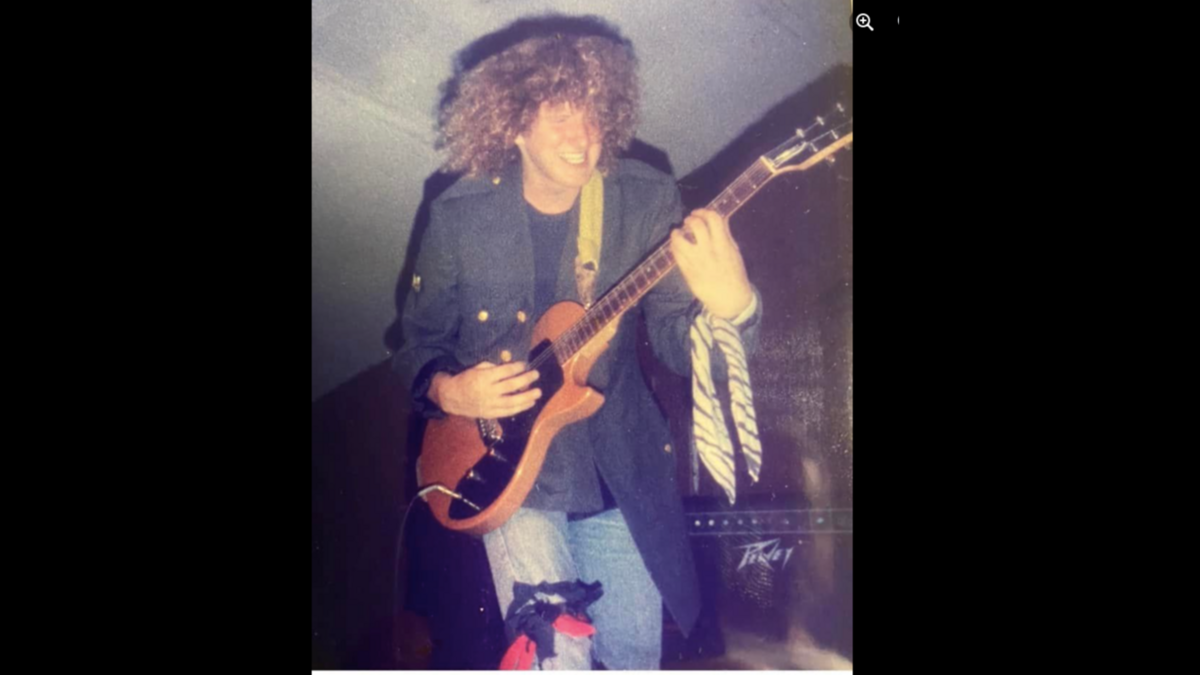
In the late 1980s, Ruba hitchhiked from South Carolina to Los Angeles, or maybe he partially hitchhiked, people close to him recalled. Maybe he got a ride or rode the bus. Some talked about having fundraiser at the time for Ruba to make the trip. People tell different versions. It’s one of those apocryphal stories about Ruba that speaks more to his character than facts.
He went to try to “pave a way” for his then-band Impact!, his former bandmate Chris Boswell wrote on social media. But Ruba was making his way back to South Carolina after a little while.
“He always seemed like he was homesick,” Townsend said. “Family was very important and his friends.”
When he returned from California, Ruba received a $250 arts grant from the Florence Area Arts Commission to record “Cosmic Justice - A Rock Opera,” according to the Florence Morning News and social media posts. He ran out of money before finishing the vocal and guitar tracks. He made his way to Columbia in the early 1990s.
He worked a few jobs here and there in kitchens and delivering newspapers. His friendliness and connections to the Columbia rock music scene meant someone was there to lend him a couch or spare bedroom when needed.
“He was fine with living like that as long as he got to hang out with his friends and play a few gigs,” McGinley said.
Any generosity he received stemmed from his personal unselfishness. He gave the money that he had to family and others in the music scene when they were hard up, family and friends said.
He gave the most to the stage, even his own blood.
At a show at the now-defunct Elbow Room in Five Points, Ruba was rocking out, McGinley remembered. Maybe about a dozen people were at the show. His vigor on guitar manifest into a leap. His landing lacked the same confidence, resulting in him bashing his head into some stage gear. He came up bloody faced, McGinley said.
“He didn’t stop and pause and rub the blood off his face,” McGinley said. “It was so dead, but he was playing like it was a huge show.”
“This is Ruba doing Ruba stuff,” she said.
‘A broken string’
Matheson, the owner of Jam Room, played bass in Ruba’s band on and off again in the 1990s.
Before their first gig together, Ruba asked Matheson to play with one day’s notice and no time to practice. They played three hours of 70s and 80s rock covers to a fantasy football league that had rented a space called The Police Hut near Riverbanks zoo.
They made $100 each, Matheson remembered.
Such a high payday “is unheard of for a Ruba gig,” Matheson said
Whether it was playing for people who didn’t care to hear him or sacrificing his body on stage, stories abound about Ruba’s dedication to rock ‘n’ roll.
Throughout the 1990s, Ruba would book gigs in Atlanta, get a bus ticket and find local musicians to play impromptu sets with him, Matheson recalled. On one such occasion, Ruba hadn’t made any money at the gig and got stuck on a shady side of town in the middle of the night. He found a pawn shop, pawned his guitar and got a bus ticket back to Columbia, Matheson said. Soon after, he returned to Atlanta to buy the guitar back and ended up again stuck in the Peach State, pawning his guitar and making it back to Columbia.
Or so the story went.
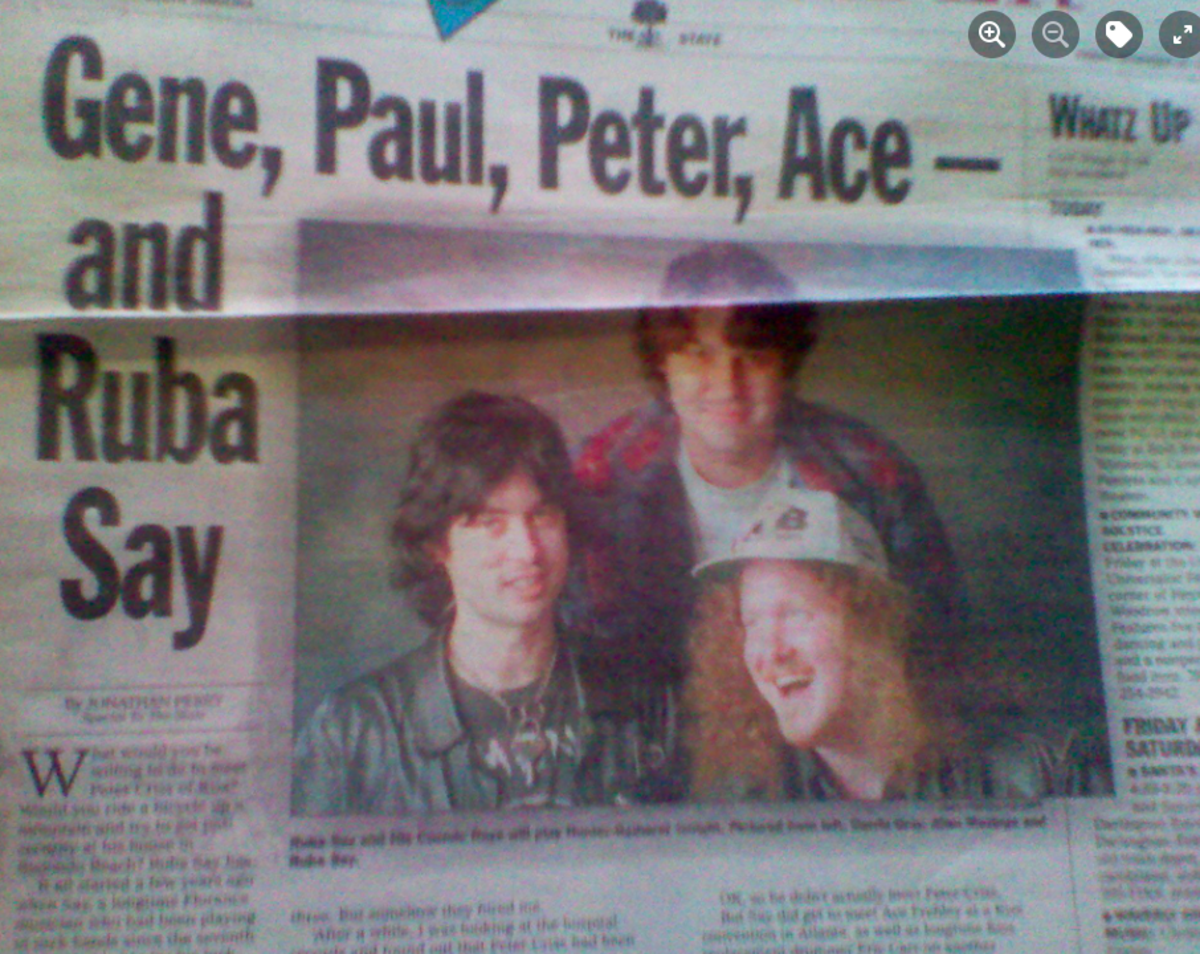
While living in California, Ruba was said to have tracked down the address of Peter Criss, drummer for KISS. Ruba rode his bike “up a mountain” to drop off a demo tape of his music only to be stopped by a security guard when he reached Criss’ house. The guard said he’d give the tape to Criss. A year later, Ruba got an autographed picture in the mail signed by Criss. “To Ruba,” it said. Ruba told the story for a 1996 article in The State.
Such stories created a mythical quality about Ruba.
“You didn’t know quite where it would drift into fantasy” when musicians talked about Ruba, Matheson said.
One story that is true:
During another gig in the 1990s at Group Therapy in Five Points, Ruba borrowed a guitar to play some songs, Matheson remembered. While Ruba was rocking, he climbed with bare feet onto a stage barrier about eight feet off the ground and leaped. He landed on the wet ground with broken beer bottles on it and stumbled forward, nearly stabbing the guitar’s head into the floor and almost electrocuting himself. Sparks from an electric discharge shot out of the guitar’s headstock, Matheson said.
“Some of the shows were bad, but some were like a bottle of lightening and he threw down something that you were glad you didn’t miss,” Matheson said.
When others around him were putting aside dreams of making it in music, Ruba was still looking for the next gig into the 2000s and beyond. In the year leading up to his death, he was working on a new album with other local musicians.
“He was not backing down from his vision of rock ‘n’ roll,” Mitchell, Ruba’s childhood friend, said. “There was something so pure about it. It was real.”
In June, Ruba wrote a social media post asking for donations to help complete his latest album. He started the post with an epitaph that he wrote in 4th grade.
“Like a broken string on the guitar of life. Nevermore to ring out or sing out. But hopefully remembered as one who gave his all.”
This story was originally published July 27, 2022 at 2:43 PM.