
SC’s high court should hit the brakes on SLED’s unauthorized mass surveillance of motorists
When you drive on South Carolina roads, you’re being tracked.
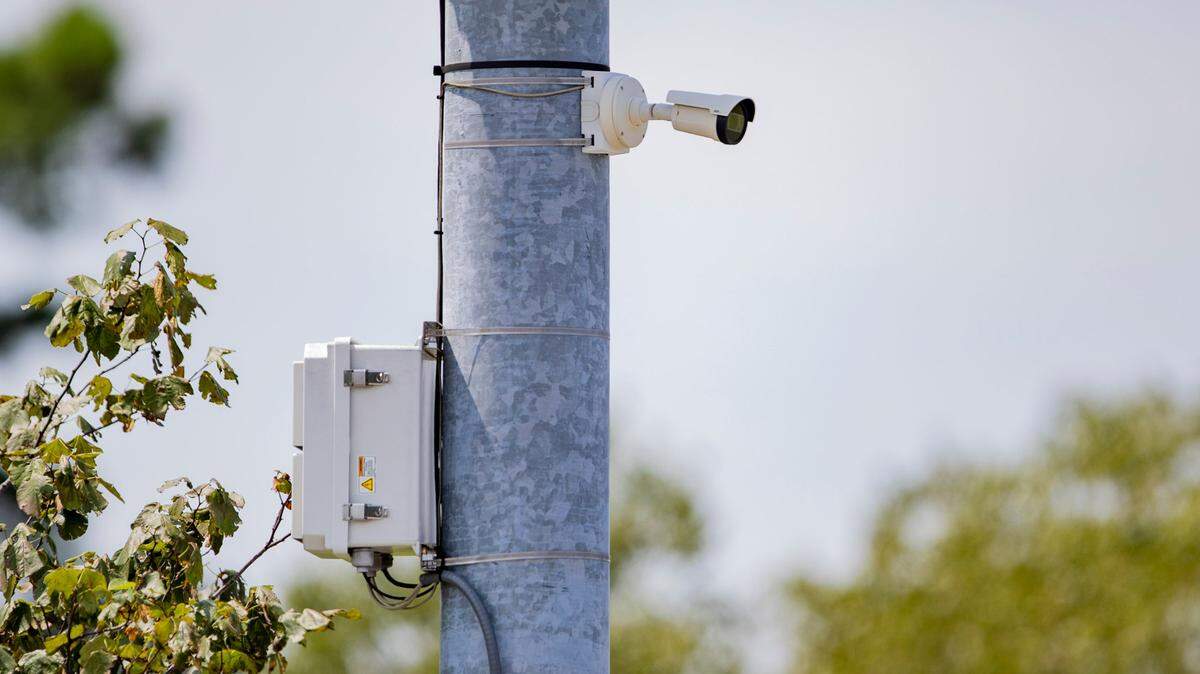
We’re not talking about tech companies selling your location data (though that happens too). We’re talking about the sprawling network of surveillance cameras – called Automatic License Plate Readers (ALPRs) – that blanket our state’s roads. Through these discreet devices, the South Carolina Law Enforcement Division (SLED) captures an average of 400,000 images every single day. Only a small fraction of these photos are useful for law enforcement, but every single image – along with time and location data – is stored in a database that already holds more than 400 million license plate snapshots.
Imagine being tracked by these readers. At 8:32 a.m., an ALPR captured you at the intersection by your house. And at 9:17 a.m., another saw you pass by the police car in front of your church. The readers tracked you when you went to that political rally, stopped to buy ammunition for your hunting weekend, and went to your doctor’s appointment.
Each time you passed an ALPR, your license plate was checked against a “hot list” of stolen vehicles, wanted persons, and the like. But because your plate didn’t come back “hot,” you went on with your day. Meanwhile, your location data was stored indefinitely – each time without your knowledge or consent.
As you might imagine, ALPRs pose a serious threat to privacy and other civil liberties. As a federal judge observed in a GPS tracking case:
A person who knows all of another’s travels can deduce whether he is a weekly church goer, a heavy drinker, a regular at the gym, an unfaithful husband, an outpatient receiving medical treatment, an associate of particular individuals or political groups — and not just one such fact about a person, but all such facts.
As more cameras are added and SLED’s image bank grows, law enforcement (and potentially other actors) become increasingly capable of using ALPRs to construct detailed pictures of our lives. All this is done without a warrant, without suspicion of wrongdoing, and without any oversight whatsoever.
South Carolina’s ALPR scheme is particularly problematic. Unlike in other states, SLED stores its ALPR data for multiple years and grants virtually unlimited access to federal, state, and local law enforcement. In fact, SLED allows more than 2,000 law enforcement officers from at least 99 agencies to search its data without assurances that those searches relate to legitimate law enforcement activity.
Fewer limits on our ALPR data means a greater likelihood of abuse. Nationally, we’ve already seen officers misuse ALPR data, including to stalk their partners or spy on citizens, the Associated Press reported. ALPRs have even been used, at the request of federal agents, to secretly gather information about gun show attendees, the Wall Street Journal reported.
If you’re thinking, “Who signed off on this?” you’re not alone. That question is at the core of a new lawsuit filed in the state Supreme Court on behalf of the SC Public Interest Foundation and a Greenville resident, John Sloan.
The lawsuit shows that SLED created this program by itself, without legislative authorization, and without the restraints or oversight. That means that important questions like – where do cameras go, how many pictures do they take, which pictures are stored and for how long, and who has access to the database – are answered without any democratic process or political accountability.
Limits imposed by lawmakers in other states show that political influence matters. In North Carolina, New Hampshire, and Arkansas, elected officials have dramatically limited what images can be saved, how long ALPR data can be retained, and who has access to the information.
These limits did not erupt organically from the minds of law enforcement – they were insisted upon by voters and lawmakers. But in SC, because SLED is operating outside its legal authority, there isn’t a clear legislative path to place guardrails on this extensive and constitutionally questionable system. This new lawsuit could change that.
South Carolina law does not give SLED carte blanche to secretly surveil law abiding citizens. If SLED wants to engage in this practice, they need consent of the governed. And even if elected officials agree to some version of this practice, public transparency and political oversight will hopefully ensure that SC doesn’t devolve into the unaccountable surveillance state SLED is leading us into.
This story was originally published November 17, 2022 at 11:51 AM.