
Electing Kamala Harris president would shatter the ‘highest and hardest glass ceiling’ | Opinion
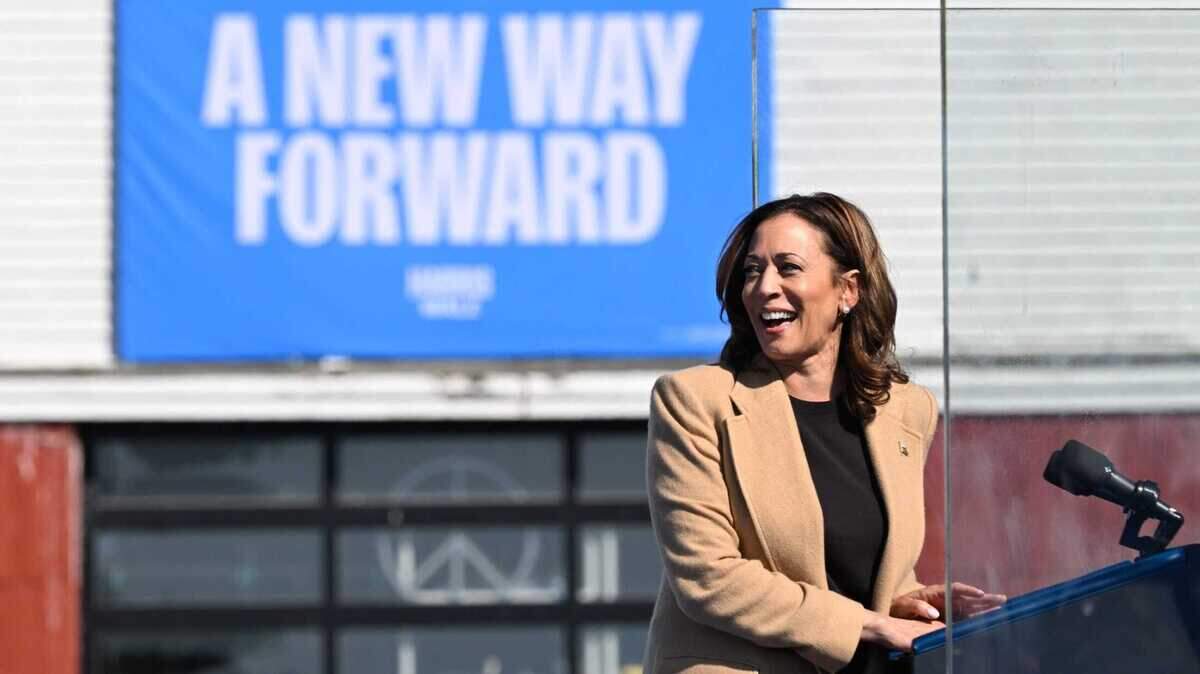
What former presidential candidate Hillary Clinton described as the “highest and hardest glass ceiling” is as yet unbroken. No woman has ever been elected as president of the United States.
In 1937, Gallup asked Americans if they would vote for a generally well-qualified woman as president, and 64% said no. The most recent figure of 5% from a poll in January is an improvement but remains disconcerting. There are still misogynists who consider women unequal to the highest office or believe women unfit for positions of high stress.
The nominee of the Democratic Party is now a woman of color, the daughter of an Indian mother and Jamaican father, married to a Jewish man. Can the country overcome all the prejudices that have worked against her and possibly still do?
Americans are indignant about Afghans who stop women’s education, Iranians who force hijabs on women and Cameroonians who inflict genital mutilation on them. Americans criticize countries like South Africa, Brazil and Mexico because of their levels of sexual violence.
Yet the Georgetown Institute of Women, Peace and Security, a distinguished research institution that tracks women’s safety in various countries and studies factors such as partner violence, community safety and political targeting of women, ranks the U.S. 37th in the world, well behind countries like Singapore, Latvia and the United Arab Emirates. The United States ranking of women’s safety has declined sharply in the last seven years.
Another respected group, the World Economic Forum, which follows the world’s gender gap — the extent to which a country fails to treat women on a par with men — has placed the U.S. 43rd in a ranking of 146 countries, well below nations such as New Zealand, Nicaragua and Namibia, based on a study of health, education, work and political leadership factors. Here, too, the U.S. ranking has dropped from previous years; the progress toward equality has stalled.
Women’s gains in certain areas have been accompanied by regression in other areas.
The cards are stacked further against women in politics. One stunning index: Women make up only 29% of the U.S. House of Representatives and only 25% of the U.S. Senate though they have accounted for more than 51% of the U.S. population for over 10 years.
Given this tidal wave of gender prejudice, it is a significant achievement for Kamala Harris to have succeeded in becoming a district attorney in San Francisco and then an attorney general in California. She became a vice president thanks to President Joe Biden’s decision to correct the gender imbalance.
Now, her selection as a presidential candidate is a phenomenal breakthrough, for in the history of the U.S., prior to Kamala Harris, only one woman had been proposed by each party for the vice president’s role and neither had ascended to the seat.
The breakthrough is even more spectacular because Harris is a woman of color in a country as yet acrimoniously divided along racial lines. After all, the country took 188 years after its founding to elect a woman of color, Patsy Mink, to Congress.
This year’s presidential election will continue to involve ideological battles between two parties, though the issues have been blurred by the Republican party’s fealty to a leader more than to its traditional values, such as limited government and fiscal prudence. The one issue whose paramountcy remains beyond dispute is the business of piercing the last glass ceiling.
It seems overdue in a country where women are a majority but which cannot even pass an Equal Rights Amendment to ensure legal equality of women, where women cannot make basic decisions about their bodies even at the risk of serious harm, where a vice presidential candidate can speak of childless women as “people who don’t really have a direct stake in it” and a presidential candidate can be found liable for sexual abuse without any electoral repercussion, and where women with tinted skin must still wait and wait long to be taken as human and equal.
It is perhaps time to end the durability of that glass ceiling.