
Think Trump’s tariffs would boost the US economy? History shows they bring disaster | Opinion
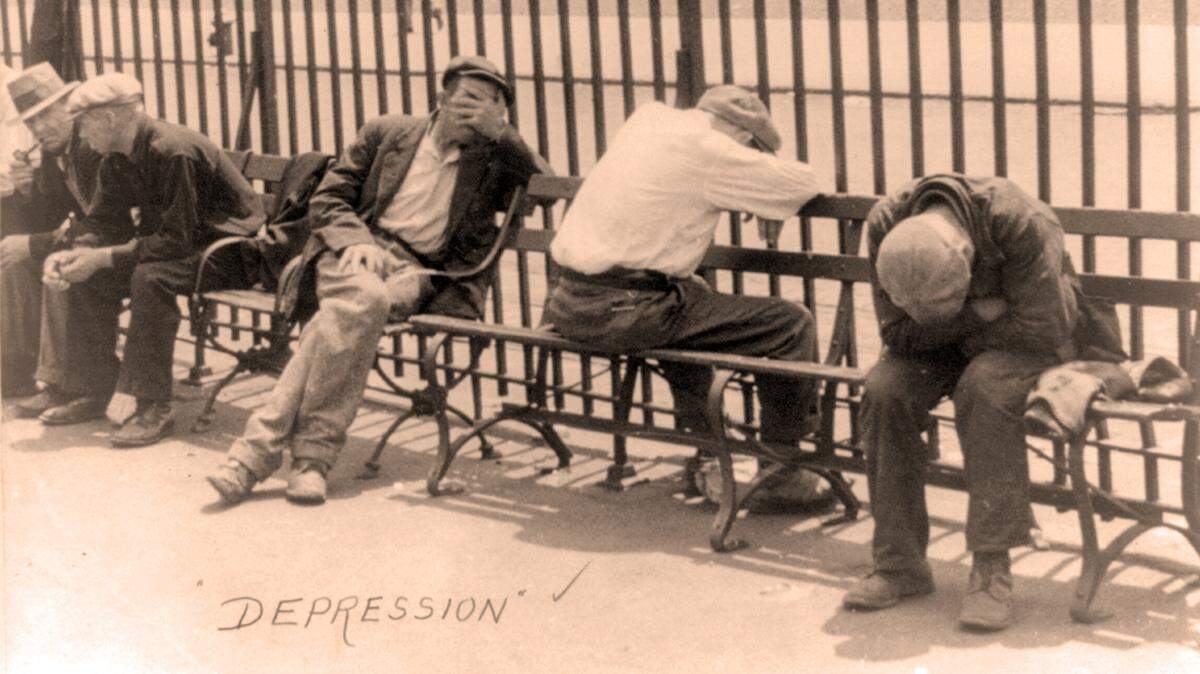
Protectionism doesn’t work, and history proves it.
Throughout the past presidential campaign, Republican candidate and now president-elect Donald Trump promised that he would solve America’s economic problems in a heartbeat. He would level the fiscal playing field by addressing the trade deficit between the United States and the rest of the world. His solution was the implementation of protectionist tariffs.
To the ill-informed, this notion sounds like the righting of a serious wrong. It was as if other countries were the beneficiaries of trade relations with our country, and Americans were paying the economic price. Our markets were flooded with their goods, which we purchased, while ours were at a price disadvantage. As a result, our workers were paying the price for this uneven trade relationship.
Such a notion is hogwash. The United States began its colonial existence based on trade. In that relationship with Great Britain, we supplied raw goods that were shipped to the mother country and returned to us as finished products for sale. Any interruption in that relationship caused economic hardship for both parties. Even after our independence, Great Britain was our foremost trading partner.
It is best to keep import taxes at lower levels for foreign goods from other countries, which, in turn, will maintain the same low tax level for our goods shipped to their shores. The laws of supply and demand guarantee a profitable relationship for both parties. The other side to this is that raising import tariffs increases the overall prices of goods from different countries, often a measure to influence populations to buy domestically. However, in retaliation, a trading partner will raise import tariffs on our goods, placing them at a distinct disadvantage in their markets. Less demand influences companies to lower production and lay off workers.
Trade embargo, first American depression
Historically, disruptions in this trade relationship have caused severe hardship for the country that tinkers with it. During the Napoleonic Wars, President Thomas Jefferson thought it was time to implement a trade embargo against the warring parties of England and France. It was a major contributor to the Panic of 1819, the first major economic depression in American history.
Jingoistic political movements have long argued that the U.S. has been taken advantage of, and that this situation has caused hardship in our country. Protectionist tariffs may cause a slight uptick in domestic prosperity in the short term, but in the long haul, they ultimately lead to higher prices and limited availability.
For example, on May 19, 1828, President John Quincy Adams signed a bill that set a tax rate of 38% on certain imported goods and 45% on many raw materials. Though meant to protect manufacturing concerns in the North, the tariff devastated the South and its cotton exports. In that region, it was termed the “Tariff of Abominations” and directly led to the Nullification Crisis of 1832, which planted the seed for secession and civil war a generation later.
Signed into law by President Benjamin Harrison on Oct. 1, 1890, the McKinley Tariff raised the tax rate on imports to almost 50%. It caused an immediate inflation rate on domestic goods and a marked decrease in demand for American manufactured goods abroad. By February 1893, the American national economy had slid into a deep depression. President Grover Cleveland forced Congress to repeal it in 1894.
Farms abandoned, Dust Bowl
The world began rebuilding after the Armistice of 1918 and the Treaty of Versailles. Europe’s meager industries began sending products into the American marketplace at competitive prices. In September 1922, in a move to protect American farmers, protectionist President Warren Harding signed the Fordney-McCumber Tariff, which hiked tax rates on imported agricultural goods. As a result, Europe raised its tariff rates in kind, which cut off the demand for American goods. Additionally, the Harding-Coolidge administration continued to encourage farmers to produce at total capacity, which caused an overabundance in the marketplace. By 1927, farm soil had eroded; mass price deflation had taken its toll on American agriculture and many family farms went bust.
Then came the stock market crash of Oct. 29, 1929. Afterward, no one had the cash to purchase anything, let alone agricultural goods. Farms were abandoned, and the few crops produced were either kept or publicly destroyed in protest. Then, the effects of over-farming took their toll with the Dust Bowl of the early 1930s, in which the once-rich topsoil of American farms blew away.
President Herbert Hoover and his administration looked to foreign markets to regenerate the American economy, asking governments to lower their tariff rates. When they unilaterally refused, on June 17, 1930, Hoover signed the Smoot-Hawley Tariff Act. This retaliatory import tax raised rates on thousands of items by an average 20%, furthering the effects of the Great Depression.
US factories moved overseas under Reagan
These are but a few examples from American history of protectionist tariffs’ effects on the U.S. national economy. Thus, it becomes plain that any public figure who touts them as the cure for the country’s economic ills has not read American history. Yet, in our time of a globally-linked economy, implementing protectionist tariffs would be the equivalent of fiscal suicide.
During Ronald Reagan’s presidency, long-standing regulations were repealed against transferring domestic manufacturing concerns abroad to take advantage of cheap foreign labor. Over time, huge numbers of U.S. companies’ factories ended up in China and Taiwan, where now much of what once was manufactured in the United States is made, though Americans still own them. Should a trade war become punitive for purely political reasons, the Chinese government could quickly nationalize these American manufacturing concerns, stripping our country’s ownership of these companies, and nothing could be done about it. At that point, what once were American goods would be owned by the Chinese, and they would reap profits from megastores such as Walmart.
Whether we like it or not, we live in an economically integrated world in which trade is the network of sinews that binds us together. What we do for short-term gain in this country will have far-reaching consequences throughout the globe. It can potentially turn allies into foes who will face one another on the battlefield.
That is why implementing protectionist tariffs in the age of a global economy is sheer absurdity — for, as history has proven, it never works.
This story was originally published January 9, 2025 at 7:08 AM with the headline "Think Trump’s tariffs would boost the US economy? History shows they bring disaster | Opinion."