
Why South Carolina should be skeptical about reviving the V.C. Summer nuclear plant | Opinion
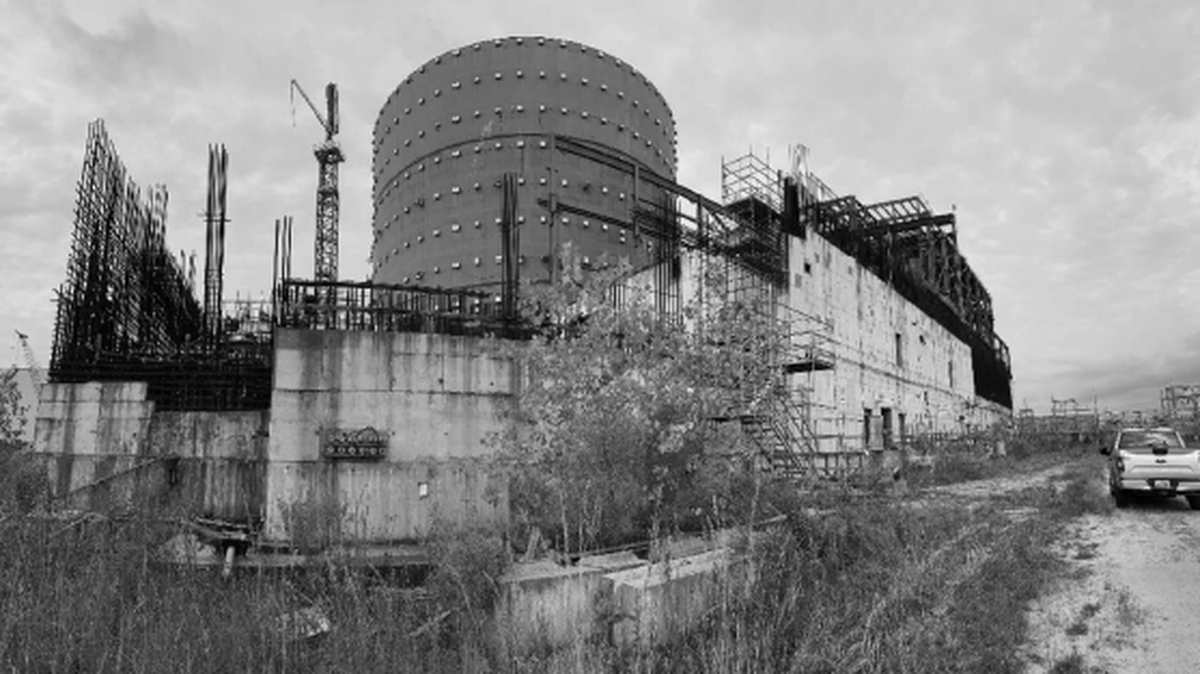
Santee Cooper, South Carolina’s state-owned utility, wants to sell two famously unfinished and abandoned nuclear reactor units. Some South Carolina lawmakers are supporting a plan to revisit the project amid growing interest in using nuclear power to provide for our state’s energy needs. Gov. Henry McMaster is backing it, too.
Wouldn’t it be nice if a corporate savior would agree to pay for resurrecting the old V.C. Summer nuclear plant that Santee Cooper and SCE&G abandoned eight years ago after spending $9 billion on the biggest financial boondoggle in South Carolina history?
Well, I’m skeptical.
Let’s look at Georgia’s recent experience building its Vogtle nuclear plant, now billed as the nation’s largest generator of clean energy. Plans to rebuild that plant were approved in 2009. By the time it was completed last year, it was seven years behind schedule and its cost had ballooned from its initial $14 billion estimate to $36.8 billion. Vogtle now holds the distinction of generating the most expensive electricity in the world. Ratepayers’ bills have increased almost 31%. Is this what we want?
I suppose there’s no harm in asking whether any entity is interested in finishing the V.C. Summer plant, but it seems counterintuitive to think anyone wants to invest in a spectacularly failed project that has been gathering dust and rust since 2017. And even if anyone did, we are looking at a completion date over a decade away at a cost of who knows how many tens of billions of dollars. It will not meet our immediate needs.
In today’s utilities market there has been rising interest in smaller nuclear reactors, which may be more viable and cost-competitive, but none have been built in the U.S. Again, our needs are more immediate than can be met with a multi-billion dollar, unproven, decade-plus project.
There is no doubt our state will need more electricity due to an influx of new residents and large manufacturing plants. It is also true that if we allow more energy hogs like data centers and crypto mining facilities, those energy hogs will demand even more electricity.
We need to establish a regular program at each major utility to acquire large scale solar and batteries through competitive auctions. These incremental capacity additions are faster than nuclear or even gas, and will provide value to the system whether or not projected data center loads fully materialize.
We also need robust programs to retrofit existing buildings for high performance and low energy usage. We need to leverage the batteries that customers are increasingly adding to their own solar systems so that they improve grid operations as a whole. And we need to upgrade transmission lines ahead of generation additions rather than reactively meeting short-term needs.
All of these strategies will quickly add capacity, at less cost, without betting billions of ratepayer dollars on one or two long-range projects.
Let’s also remember that our state’s grid infrastructure is aging. It’s not capable of handling the increased demand for electricity that new data centers will need. Failing to update our grid will lead to more blackouts along with higher energy costs. The most significant risk is that ratepayers will be left with the financial burdens by missing out on cheaper, cleaner and more sustainable energy sources.
Finally, a recent unexpected development may change future energy calculations altogether. China’s new DeepSeek artificial intelligence system says the costs for new electricity demands can be scaled back with a technological breakthrough that greatly reduces costs associated with AI. This means we may not need nearly as much new electricity for data center computing power.
Even in Texas, where oil and gas are king, state policy has supported rapid adoption of thousands of megawatts of solar and battery power in the last few years to enhance reliability and lower cost.
Our state can similarly meet the challenges of developing a mix of energy sources to meet our needs for decades to come. Let’s work together to create a win-win strategy that is sustainable, efficient and affordable.