
End the death penalty. We need moral leadership and these public safety policies instead | Opinion
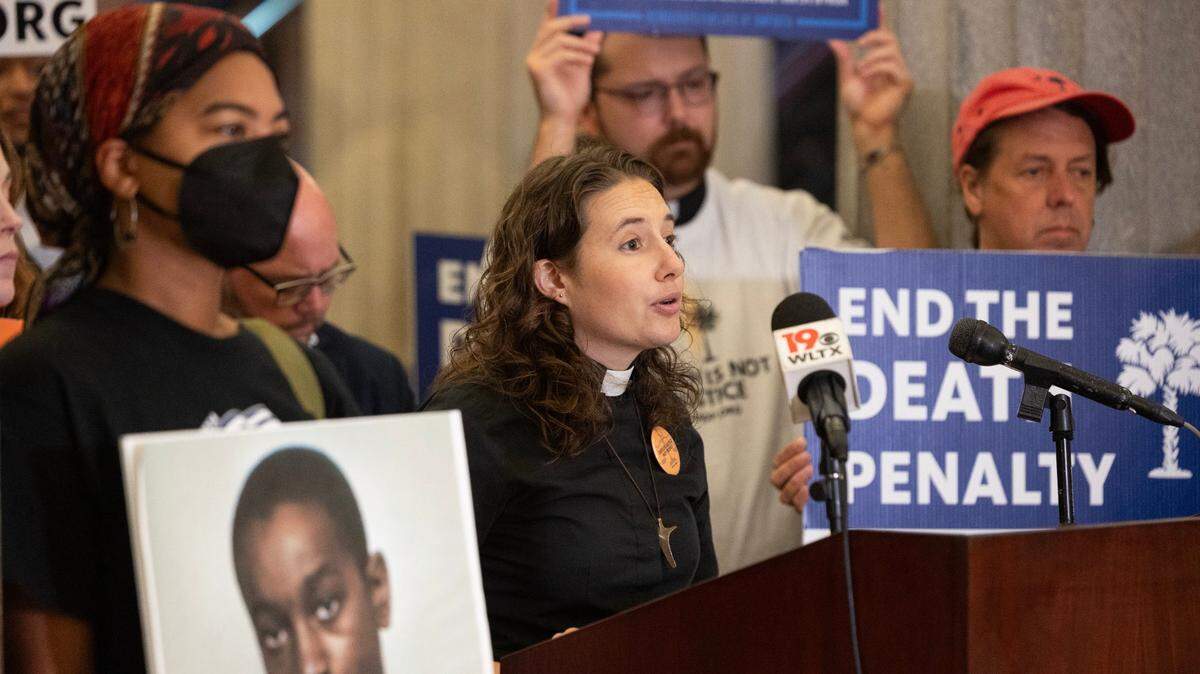
I’ve come across all kinds of opinions about the people who have been executed with such swift and stunning regularity in South Carolina since Sept. 20.
As executive director of South Carolinians for Alternatives to the Death Penalty, I mostly meet people who want to end the death penalty and promote criminal justice reform across the state. Occasionally, however, I encounter people who are viscerally supportive of capital punishment. They are almost always on social media. Their identities are almost always private or hidden behind unusual usernames. They post things like: “Good riddance filth,” “It’s time to go out with a bang,” or “I’m remembering the victim, not this POS.” Sometimes these commenters even tell me what the Bible says about the death penalty — as though our organization is not supported by Christians all over the state, or led by me, an ordained Christian minister.
I do not delete these comments on our social media. I recognize commenters feel the need to be heard by us. And I imagine there are very real reasons people post a desire for vengeance. We live in a world where so much harm is committed so often without repercussion.
The systems we currently have in place are not effective at stopping this harm, and our politicians — for all of their uttered enthusiasm about addressing violence — lack the moral leadership and imagination for legitimate public safety strategies. If they had that, we would have more resources for mental health first aid, addiction recovery and child protective services and even more robust victim services.
But we don’t.
We have the death penalty, which may seem politically expeditious but will not stop more people from becoming victims of violence. We gain nothing from executing people who are already incarcerated, many of whom have become different people over decades and want to be part of the solution to violence. They are working to stop others from causing the same harm as them.
Despite these infrequent comments that I see advocating for vengeance, and despite Gov. Henry McMaster’s insistence that executions continue, people in South Carolina and across the country are divided on the death penalty.
A 2018 Winthrop poll found two in three supported the death penalty. A 2016 University of South Carolina survey showed more support for life in prison without the possibility of parole than the death penalty for convicted murderers, 36% to 33%. And support for the death penalty is down nationally, at 53% in a 2024 Gallup poll, from a high of 80% in 1994.
The system is being upheld by politicians who say, “It’s the law, and we must obey the law.” Yet that is a poor excuse to continue any practice in our society. Slavery was law. Segregation was law. Just because something is law does not mean it is justice.
Our takeaway is that nobody actually wants the responsibility of executing people. When carrying out executions, the South Carolina Department of Corrections says it’s doing the job assigned to it by the state. But if that were the case, where are all the people demanding the death penalty? At the last four executions, there was not a single pro-death penalty protester outside Broad River Correctional Institution.
Even those who support the death penalty do not want to participate in it. For the last four executions, there have been zero pro-death penalty protests outside of Broad River Correctional Institution. Not even the lead solicitors witnessed the executions. Like Pontius Pilot in Christian scriptures, they wash their hands of them: they put the responsibility of actually carrying out what they set in motion on other people.
It’s clear that South Carolinians are not prioritizing the death penalty. The ugly truth is that many South Carolinians may not know we are actively executing people as they go about their daily lives.
I challenge Gov. McMaster and the entire South Carolina General Assembly to address the problem of violence in our state instead of creating more of it, instead of keeping a system in place that ultimately impacts so few people. Executions don’t make South Carolina or the 26 other states conducting them safer. Our state has the ninth-highest violent crime rate in the country. So let’s do something different.
Death row inmates often suffer from severe mental illness. What if we invested in quality mental health first aid programs across South Carolina to guard against severe mental illness?
Death row inmates also often were first victims of someone else’s violence and never got help when they were in danger. How about more hospital violence intervention programs to provide wraparound care and support to all victims of violence?
Finally, executions don’t always mean closure for murder victim family members. Is there a way we can promote restorative justice programs that promote actual accountability and the chance for people to change instead of punishment?
These are just a few of the proven violence prevention strategies that have been used elsewhere in the U.S. It’s time we started using them in South Carolina.