
Why South Carolina’s college system can seem so unfair to SC students | Opinion
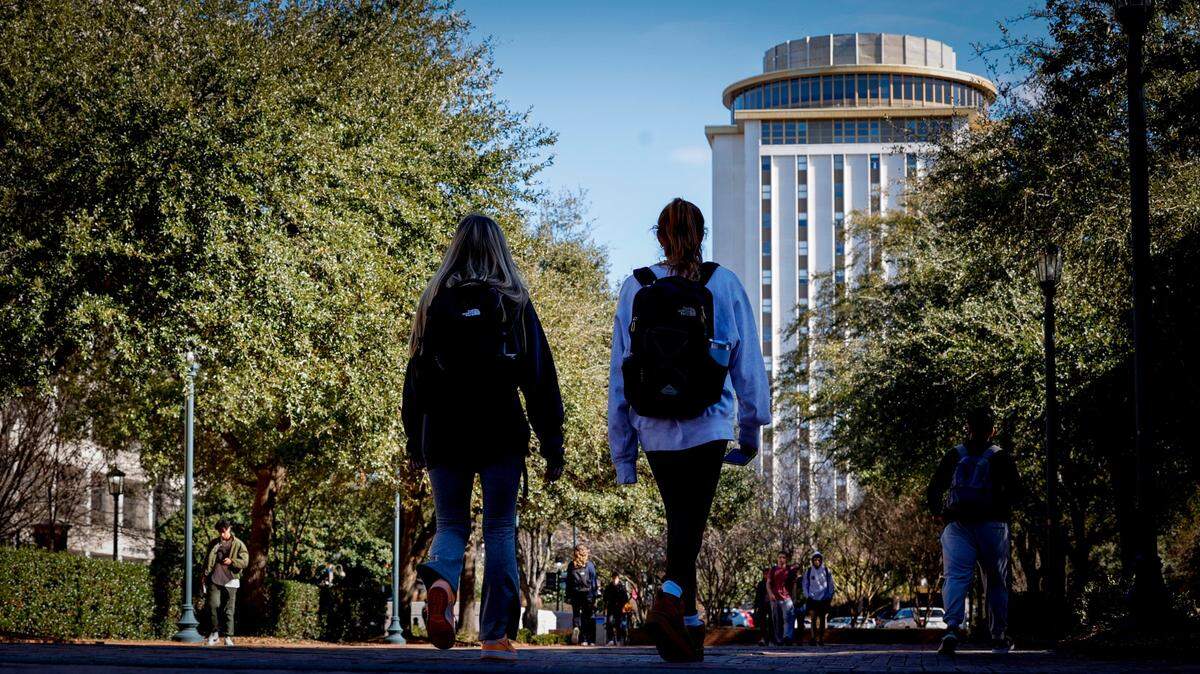
South Carolina students and parents navigating college admissions may be surprised to find fewer options than expected, improbably low chances of getting accepted to a preferred school and a process that seems vaguely unfair.
That’s because it is unfair — at least for students who want to attend a top public university either in South Carolina or a neighboring state.
And it’s not a bug, it’s by design.
Under the current system, South Carolina students face immense admissions competition from out-of-state students at Clemson and the University of South Carolina — and limited opportunities to attend top public universities in neighboring states.
For the 2024-25 freshman class, 44% of Clemson and 48% of University of South Carolina students were from out-of-state.
Meanwhile, North Carolina limits out-of-state students at its top universities to just 18% of enrollment. Florida imposes an out-of-state cap of 10% for its entire public university system, and the University of Florida is in the process of increasing non-resident undergraduate enrollment from 21% to 25% between 2024 and 2028.
The University of Georgia stated goal is no more than 20% out-of-state students.
The imbalance is even more pronounced when comparing enrollment at individual schools. The entire 23,401-student undergraduate student body at Clemson in fall 2024 included 1,052 students from North Carolina and 892 students from Georgia. Of the 28,574 undergraduate students enrolled in spring 2025 at the University of South Carolina in Columbia, 1,463 were from North Carolina and 794 were from Georgia.
UNC Chapel Hill’s student body includes less than 100 undergraduate students from South Carolina and last year’s freshman class included just 20. The University of Georgia wasn’t much better. They enrolled only 35 South Carolina freshmen.
Adjusting for state population and school size doesn’t make the ratios any less egregious.
Data also suggests that most of these out-of-state students are not staying in South Carolina. Clemson’s Center for Career and Professional Development estimates that 44% of all Clemson students remain in South Carolina after graduation. While a breakout of post-college destinations for in-state vs. out-of-state students is not available, students who didn’t grow up in South Carolina are less likely to remain.
And it gets worse for South Carolina residents when you remember that this lopsided admissions system is funded in part by the public’s tax dollars. Clemson University and the University of South Carolina receive hundreds of millions of dollars each year from South Carolina taxpayers, amounting to approximately 11% of their total budgets.
With so much funding from South Carolinians, one would assume educating South Carolina’s children would be their primary focus.
But that common sense is not shared by those defending the current system. They primarily make two arguments: money and prestige. They point out that the universities benefit from higher out-of-state tuition rates and that the enrollment of well-qualified out-of-state students enhances the overall reputation of the schools.
Their arguments aren’t untrue, but they don’t justify a rigged system in which smart South Carolina kids can’t get into Clemson or USC — and can’t get into a top state school in a neighboring state, either.
While the fix is super simple — admit more South Carolina students at South Carolina’s largest public schools, making that change won’t be easy. Our universities have too many incentives to recruit as many out-of-state students as possible.
The good news is that we are at the start of another highly competitive gubernatorial race with many of the candidates promising to “put South Carolina first.”
Maybe our next governor will do just that — put our South Carolina kids first and level the playing field for college admissions.
Editor’s note: I sought guest essays about in-state enrollment from USC and Clemson after receiving this unsolicited commentary. Clemson submitted one. USC declined.
This story was originally published July 9, 2025 at 5:00 AM.