
Why SC doesn’t need an Alligator Alcatraz immigration detention center | Opinion
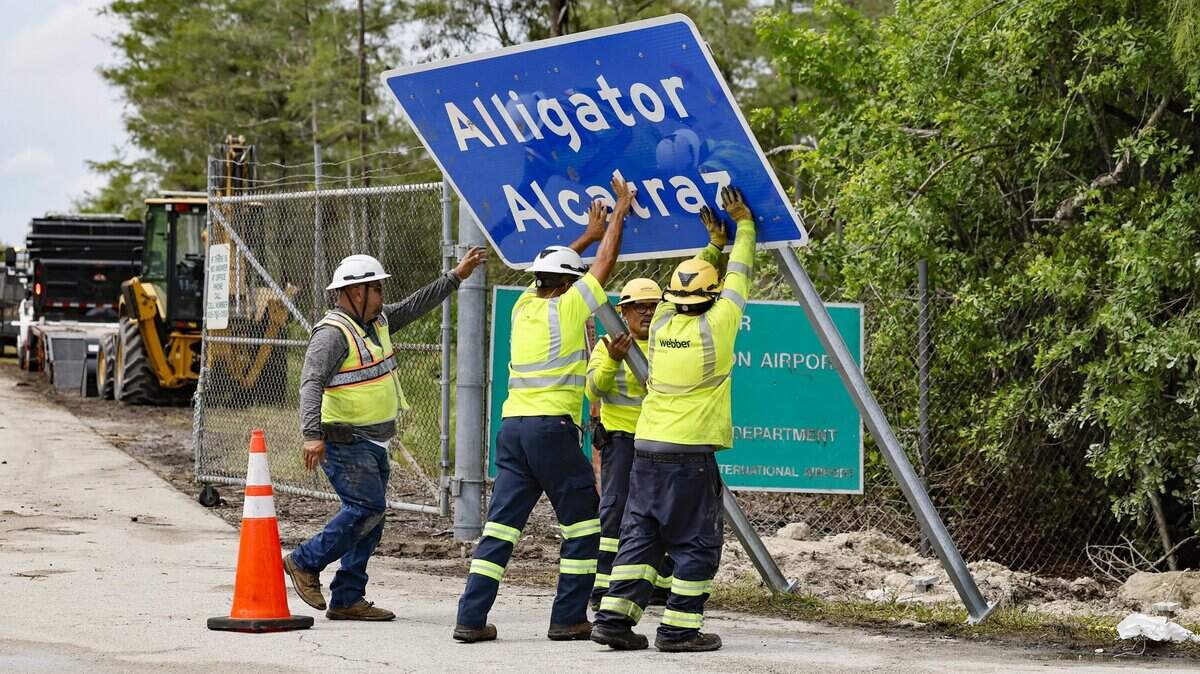
This past month Gov. Henry McMaster’s Office said it was open to helping build a large immigration detention center in South Carolina like the one constructed in Florida that President Donald Trump and his allies in a crusade against the immigrant community have celebrated and called “Alligator Alcatraz.”
Rep. Nancy Mace, a Lowcountry congressional member and one of several candidates running to replace the termed-out McMaster, has also supported the idea. She even flippantly mentioned that South Carolina’s alligators are ready “and they’re not big on paperwork.”
Such political gamesmanship and rhetoric are being used in order to align our state with Trump’s agenda.
However, in a state like South Carolina with such a dark and problematic past, the calls from these public officials should give us special pause.
Of course, we were the first state that left the union after state officials did not obtain the results they wanted in the 1860 election. Those officials rejected democracy when there was even a small possibility that the expansion of slavery could be halted under Abraham Lincoln.
Before the war, South Carolina’s government not only permitted but used its power to bolster the oppressive system of slavery. Perhaps most notably, The Citadel was created in order to prevent slave rebellions. We were also a state that was adamant in preserving Jim Crow and segregation.
It was our U.S. Sen. Strom Thurmond who famously sought to filibuster civil rights legislation. That history of oppression is seen in the latest treatment of undocumented immigrants by the Trump administration.
Administration officials have kept asylum seekers and many undocumented immigrants who have never committed crimes other than possible civil or misdemeanor immigration offenses in inhumane conditions where lights are kept on 24 hours, people are kept in crowded cages, and the food is both lacking and of poor quality.
The conditions are far worse than would be allowed in many actual prisons for convicted felons in the United States. Though people would not say it as blatantly as they would have said it in 1860 about the enslaved population or in the 1960s about African Americans in the Jim Crow South, our federal government sees immigrants as less than human.
Just like we look back at shame with our history of slavery, we will look back at disbelief and shock at our current actions. Just as we look back at John C. Calhoun praising the institution of slavery as somehow good, we will look back at Rep. Nancy Mace talking about alligators going after immigrants with a similar shock and disbelief.
How could we possibly have elected officials who treated other humans with such disregard and disdain?
Partnering with U.S. Immigration and Customs Enforcement and the Trump administration to facilitate human rights abuses and mass deportations will not benefit the people of South Carolina.
If the U.S. government’s history with so-called 287(g) agreements that enlist local jurisdictions to help with immigration policy are any indication, new detention centers could end up costing us financially. The state of Florida has already paid out $245 million in contracts for its new detention center, and Florida taxpayers are also expected to cover at least some of its $450 million annual operating costs.
Given the poor track record of both the federal government and the Trump administration in repaying debts to local governments, these types of politically motivated policies could cost South Carolinians dearly.
More importantly, they would guarantee we continue on the oppressive path that we have sought to move beyond.
Just as we should have rejected the racism of John C. Calhoun and Strom Thurmond, we must resist the current antagonism and injustices too many are demonstrating toward immigrants today.
William McCorkle is an education professor and immigration advocate in South Carolina.
Got another view on this subject? Send opinion editor Matthew T. Hall your own 650-word essay at mhall@thestate.com.