
For USC football legend Marcus Lattimore, the future is still a wide open field
Read part one: Pain into poetry
what did i see to be except myself? i made it up here on this bridge between starshine and clay, my one hand holding tight my other hand; come celebrate with me that everyday something has tried to kill me and has failed. — Lucille Clifton
Marcus Lattimore made his name by being on the move, from his first sprints on a football field in Duncan to his elite days at the University of South Carolina before a career-ending injury, to his relocation to Portland, Oregon, five years ago.
There, he’s found a new life as a spoken word poet and author.
There, he stopped outrunning his past, stopped seeing his dashed NFL dreams as nightmares. No, they were opportunities.
When he ended a two-year comeback attempt and retired from the San Francisco 49ers in 2014, some people wondered if he was the most talented player to never play a down in the NFL.
A lifelong goal, gone, with a lifetime ahead of him.
Yet South Carolinians didn’t forget him. Lattimore was inducted into the USC Hall of Fame on Oct. 17, 2019.
He’s told the story before, but it still hurts. He said that day was “by far, still, the emptiest day” of his life.
He realized that day he wasn’t happy, he didn’t feel as if he was growing. He was stuck, stagnant. He was used to working toward a goal, toward something. He wasn’t where he wanted to be.
He wanted to look forward, not back.
Now he can do both. He’s excited for USC’s coming season of high expectations, and his own path.
His memoir, published in June, is called “Scream My Name.” It’s about the sound of tens of thousands of fans cheering you on during football games, told from the perspective of someone who knows what it sounds like when that stops.
His poems earn applause in smaller settings now, but he says there are parallels between poetry and football and he knows that he didn’t just become a poet when he moved to Portland. He was moving toward it all along.
‘Those influences are inside me’
Like many young kids, he grew up listening to the music of his parents and older siblings. His mother loved Luther Vandross, but his brothers loved rap. His oldest brother was into the lyrical stylings of Talib Kweli from New York. His middle brother gravitated toward Atlanta’s Young Jeezy, a Columbia native, and TI and New Orleans’ Juvenile and Lil Wayne. They were artists from places.
“I listened to the music for the entertainment, not for the lyricism and the poetry that’s in it,” Lattimore told me this month. “I really wasn’t hearing it. I just put it on because it sounded good and I didn’t know why it sounded good. I didn’t understand sound waves and beats.
“Me and my middle brother would beatbox for hours but it wasn’t a big deal, like we weren’t trying to make music out of it. We weren’t trying to make a song or rap. We were just beatboxing and it just sounded cool and we’d move on and we’d play games, it was just all play.
“The play behind it is what’s in me.”
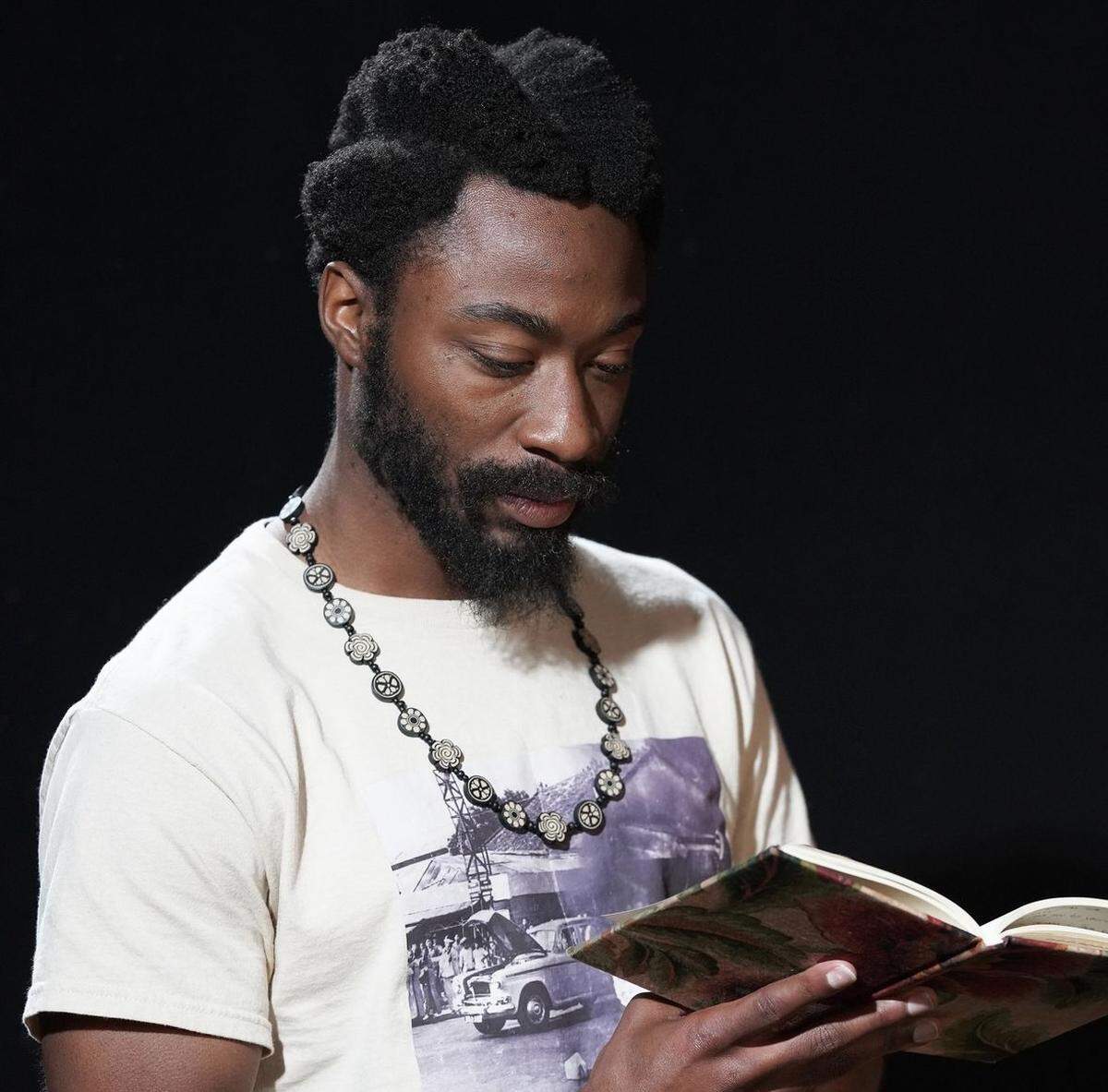
He traces his style back to the adults of his youth, too.
“The first poets that I heard were my coaches and my preachers,” he said. “If you spent any time around a locker room or in a sanctuary, in a Southern sanctuary especially, they are masters at language and using repetition and anafora and simile and personification.
“That was my first introduction, so I guess those influences are inside me, and I kind of hear that style when I’m on stage as well. I grew up in the church and I grew up around coaches who were masters at motivating and inspiring.”
He remembers his childhood being full of uttered words but not many written words. He has no vivid memories of literature in his childhood with one exception. When he was little, his mom bought him a book on geography.
He had it memorized within a week.
“All the capitals, all the trees, all the state birds, the popular rivers. That sticks with me, in terms of my mind being expansive at that age,” he said. “I remember reading a few biographies. I was always interested in biographies. But after sixth grade, I was sports, sports and sports only.”
‘This new path that I’ve carved’
As a teenager, he said, he led by example, by yards gained and tackles broken and touchdowns scored.

Not by talking. He much preferred to run than to run his mouth.
“I was not vocal at all,” he said. “I led by example because there was just this understanding in high school that I was coming from such a rich legacy of excellence. And those guys before me, I felt a responsibility to protect their legacy, the Will Korns and Stanley Hunters and Everett Dawkinses and all of my heroes that I watched growing up in Duncan, South Carolina.
“There was this thing inside me that I wanted to protect,” he said. “I wanted to make sure that the Byrnes legacy would continue. There was not much to talk about because I saw from an early age what to do and that’s just to work your tail off, work your ass off every single day, and push yourself and listen to coach Michael Strock, who was the foundation of Byrnes High School’s success, our strength coach, just listen to him and everything will take care of itself.
“Honestly, I didn’t have to talk much because it was built into the fabric of Duncan athletes, Duncan football athletes, that this is bigger than you, and when something’s bigger than you, words are not really necessary. As much as I use words today, I really think they’re overrated.”
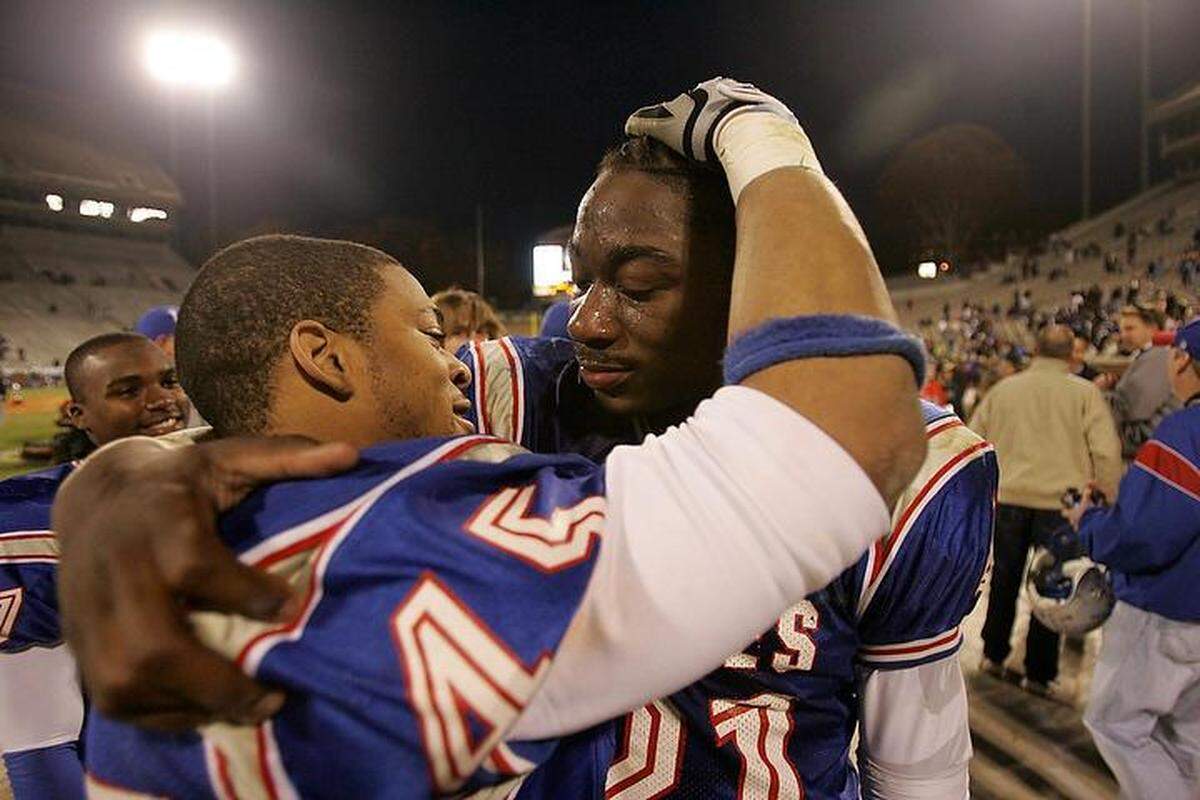
Lattimore understood something that is as true in learning football as it is in living life: Listening before you talk is like looking before you leap. It’s vital. Before you hit the hole, you need to know where it will be.
The same is true for poetry. Having an ear for language is a writer’s greatest asset.
“If I had to name my greatest skill from 7 years old to the time I retired, it was listening,” he said. “And it was absorbing and it was taking what somebody said and putting it into action. And I think that is important in this new path that I’ve carved.”
‘Home is where you feel free’
Our conversation ends where it began: with talk of home, with a question about where home is now.
You’d think home might be hard for Marcus Lattimore to define these days, but it isn’t.
His answer is pure poetry.
“I ran from South Carolina because there was a limitation in my mind that home meant location,” he said. “When I first got to Portland I was experiencing this taste of peace and freedom and silence, and I was like OK, this is my new home, this is my new home, Portland is my home, Oregon is my home. But I’ve been back to South Carolina many times since I left South Carolina five years ago. And I realized I was never trapped in South Carolina. I was never trapped by expectations. I was never trapped by popularity and adulation. I just thought I was.
“I was too immature to see that freedom is just a state of mind. You can be free anywhere. Home is where you feel free. When I go home now, I can be free because my mind is free. So it’s really wherever your mind is. If you feel you’re trapped then you’re trapped. If you feel you’re free, then you’re free. Are there less distractions in Oregon? Yeah. Are there less expectations and maybe obligations? Yeah. But that doesn’t mean that South Carolina is not home. I think home is a state of mind and I think of home where I feel comfortable. I feel comfortable in South Carolina now at 33 years old, and I feel comfortable in Oregon.”
“So it is a state of mind, and my roots are, and always will be, in Duncan, South Carolina.”

He’ll be back in South Carolina for the Sept. 13 USC-Vanderbilt game, where he’ll be signing autographs for fans. He’ll be planted in front of the TV for Sunday’s special season opener and every other Saturday he’s in Oregon.
This fall, he will also be in a play in Portland and reciting poems live and on Instagram.
For Marcus Lattimore, the future is still a wide open field.
“My daily practice will always be writing and the spoken word will always be my weekly routine and ritual wherever I am in the world, but I don’t know where this is going to take me,” he said. “I’m just open.”
Life only tackles you if you let it.
Matthew T. Hall is McClatchy’s South Carolina opinion editor. Email him at mhall@thestate.com.
This story was originally published August 26, 2025 at 5:00 AM.