
The Lindsey Graham of 2006 wouldn’t stand a chance in today’s Republican Party | Opinion
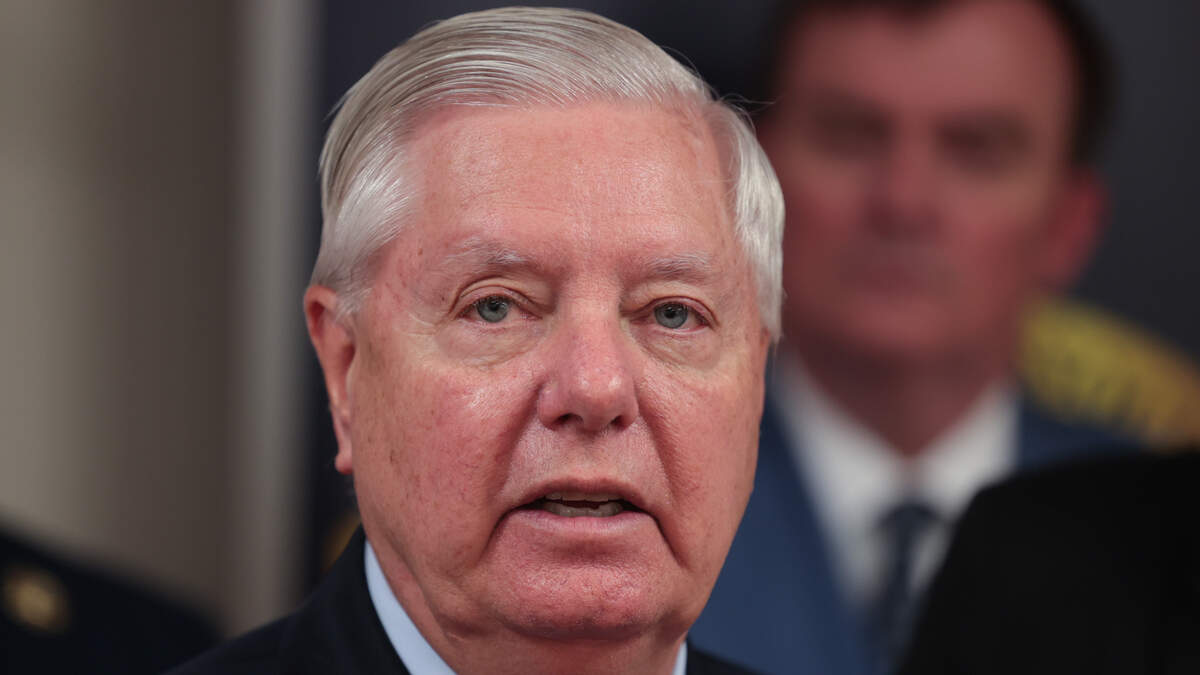
I’m looking at a C-Span video of Sen. Lindsey Graham. It’s 2006, and he’s standing on the Senate floor speaking eloquently. His hair is darker. He’s slimmer.
He sounds like the Lindsey Graham I once thought was a statesman who would forever put country above party, a Lindsey Graham who once got my vote.
He’s talking about the Civil Rights Movement, saying “my life is better” because of it.
“It’s enriched the country,” Graham says. “I’ve got to interact with people in ways that would have been impossible if segregation had stood.”
He’s talking about the reauthorization of the historic Voting Rights Act, a piece of legislation that transformed the United States of America into the democracy it had long proclaimed it was or wanted to be but never quite lived up to that ideal. Just about every other Senator joined Graham in voting to reauthorize the Voting Rights Act, Republican, Democrat and independent alike.
Later, Republican George W. Bush would sign into law “The Fannie Lou Hamer, Rosa Parks, And Coretta Scott King Voting Rights Act Reauthorization And Amendments Act Of 2006,” named for a trio of civil rights era legends.
“I would argue that most Americans’ lives are better because in America you can interact in a meaningful way now, and one of the interactions is to be able to vote,” Graham says in the video.
I wonder if today’s version of Lindsey Graham would be ashamed of the 2006 version. Or if he even remembers who he was then.
Today’s version of Graham barely resembles the one from two decades ago. I can’t imagine Graham doing today what he did then. He certainly is no longer a strong advocate for the Voting Rights Act. His Republican party has launched an all-out assault on the foundation of our democracy, and a conservative-heavy Supreme Court seems poised to gut the law.
He hasn’t taken to the Senate floor to object.
There are many reasons I don’t want South Carolina voters to return Graham to office next year. He’s gone along with President Donald Trump at nearly every turn, including supporting a tax “reform” law this year that will hurt the most vulnerable in the Palmetto State while fattening the pockets of the privileged. That’s a particularly telling change given Graham’s background of overcoming early family hardship to become one of the most powerful senators in the nation.
But policy differences aren’t my primary objection to Graham. It’s that he’s so fundamentally walked away from who he used to be, or at least who he used to pretend to be. The old Graham would have pushed back against any president continually undermining the foundation of democracy. That version of Graham understood political power is fleeting and swings back and forth as American voters vacillate between which major political party they support.
That version of Graham seemed to know the health of the nation would always be more important than the health of a political party.
Graham hasn’t been challenged during recent elections and has a war chest that dwarfs that of each of his Republican primary opponents in the red state of South Carolina. In 2020, Democrat Jamie Harrison ran the most expensive campaign in South Carolina history and showed promise in several polls throughout that campaign. Graham won that race by 10 percentage points anyway.
Democrat Annie Andrews seems promising, especially after raising more than Graham during the third quarter. But Graham still had more than $13 million to spend than Andrews at the end of September. That’s why he will be a heavy favorite next year, especially because he’s gotten President Trump’s endorsement, a man who is extremely popular in South Carolina.
The truth is, though, given the state of the GOP, the 2006 version of Graham would lose — and lose badly — to today’s version. Loyalty to Trump is more important than loyalty to the flag and the principles for which it stands, and Graham’s loyalty is clear. It’s not to the country.
Little else better illustrates the devolution of a democracy — one which we aren’t losing, but, rather, are throwing away — than Graham’s ominous shape-shifting.
Issac J. Bailey is a McClatchy opinion writer in North Carolina and South Carolina.
This story was originally published October 30, 2025 at 5:00 AM.