
Bill Gates finally gets it on climate. He could have asked these 3 guys | Opinion
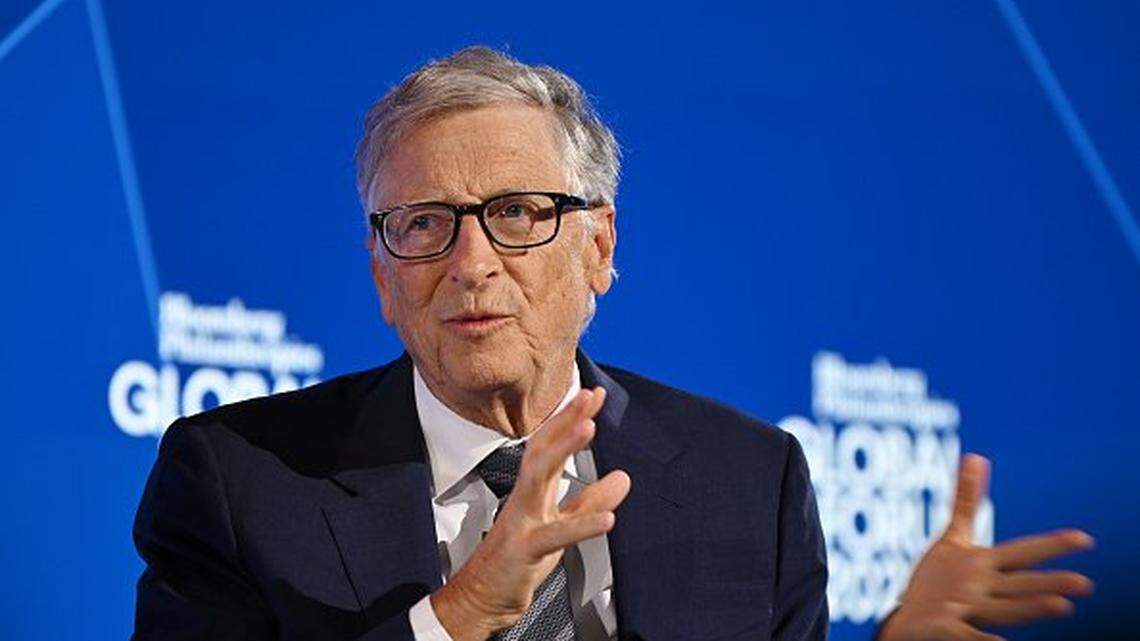
Earlier this spring, I wrote a column about why I don’t much care about climate change. It was a little facetious. I have kids, so of course I care about the future world they’ll live in. But there is one guy who really cares about the climate.
His name is Bill Gates, the founder of Microsoft and the world’s biggest climate philanthropist and investor. If the sun shines on it and warms it up, he cares. If it photosynthesizes, he cares. If it produces, consumes, transforms or otherwise does anything to a greenhouse gas like carbon dioxide, he and his foundation are there with a donation or startup proposal to fix it. If someone has smart ideas about how to stop the climate apocalypse, he’s there buying into the seed round, ponying up with a grant or hiring them to work for his nonprofits.
If there’s anyone leading the way to a bright green future, it is Bill Gates, but last week he published an essay that has environmentalists freaking out. Gates, after spending tens of billions of dollars and investing countless hours and spending untold personal energy, concluded that all this apocalypse talk was counterproductive. The way to get to a green future, he wrote, was to turn the world’s backward poor people into prosperous, techno savvy capitalists like us.
‘Not the biggest threat’
Gates has found what he calls “three truths”:
- Climate change is not going to end the world. “Remember that climate change is not the biggest threat to the lives and livelihoods of people in poor countries, and it won’t be in the future,” Gates says.
- We should stop worrying so much about how much exactly the temperature is going to change. Why? Because, “The global temperature doesn’t tell us anything about the quality of people’s lives.”
- Prosperity and health are the best defense against climate change. “From the standpoint of improving lives, using more energy is a good thing, because it’s so closely correlated with economic growth, he writes. “More energy use is a key part of prosperity.”
For Gates, these were really expensive lessons. Though they have long been obvious, they remain so controversial among environmentalists that anger and derision are pouring down on the bespectacled technologist for saying them out loud.
But you could have learned them pretty cheap. I did. And all I had was a subscription to a couple newspapers and magazines. Here are the three guys who told me all I needed to know about climate and any of the other environmental catastrophes that have passed through the headlines during my lifetime.
Norman Borlaug, Ronald Bailey, Bjorn Lomborg
Norman Borlaug was an Iowa farm kid from a tiny town as far north in Iowa as you can go. After spending the 1940s working for a chemical company and getting a PhD, he turned his love of science to wheat, the top crop in Kansas, and using technology to get it to grow more abundantly in more places. His work, focused in Mexico, gave birth to the Green Revolution. That’s green for growing, not green for environmentalism. His technological optimism swept the world and turned the population doomerism of the 1960s and 1970s into a footnote of history. In 1970, he won the Nobel Peace Prize for saving more lives than any human in history. Today the $250,000 World Food Prize goes to those who follow in his footsteps. That prize should get more attention than the Nobels, the Pultizers and the Heisman combined, but it doesn’t. Perhaps that’s why Gates had to spend billions to learn the lessons that were sitting right there on Wikipedia.
Ronald Bailey is a Texas-born D.C. science journalist for the libertarian Reason magazine. Bailey has been writing about the environment and what it takes to overcome environmental challenges since the 1980s. In 1995, he edited “The True State of the Planet,” in which he argued that the environmental disasters we were being warned of were either overblown or would be easily solved through advancing technology and prosperity. Those were just the conclusions that Gates published last week. Given that Gates was busily launching Windows 95 amid the birth of the World Wide Web in 1995, he can be forgiven for missing that. Gates could have learned these lessons a decade ago with Bailey’s 2015 opus “The End of Doom: Environmental Renewal in the 21st Century.”
Bjorn Lomborg is a Danish political scientist whose book “The Skeptical Environmentalist” in 2001 was ripped apart by the popular science press like Nature and Scientific American. Lomborg’s research was dismissed by the Danish Committee on Scientific Dishonesty, but he stuck by his guns in numerous columns in the Wall Street Journal and USA Today. His views presaged Gates’ conclusions by a solid 25 years right down to Gates’ essay noticing that cold waves — even in times of global warming — have always been bigger killers than the heat waves we are so frequently warned about by the climate change doomsayers.
I remember sitting around with a group of other opinion editors at USA Today and wondering whether that exact fact could possibly be true and whether it mattered to climate change policy while we worked on one of Lomborg’s columns. Now the world’s biggest climate nerd says it is true and that it does matter. It matters because the reason we care about the environment is that we care about people.
In the moment when Gates’ essay opens the door to a reshuffling of climate dogma and perhaps some significant advancement in solving our environmental problems, it is worth remembering those who were optimistic about technology and the future of humanity before Gates made it cool. These three normal guys, a farm kid, a journalist and a college prof had insights that were worth billions. Gates spent a fortune to learn them, when all he needed was a library card.
David Mastio is a national opinion columnist for McClatchy and The Kansas City Star.
This story was originally published November 4, 2025 at 8:56 AM with the headline "Bill Gates finally gets it on climate. He could have asked these 3 guys | Opinion."
