
NC State, Duke, UNC among growing number of football teams using protective head gear
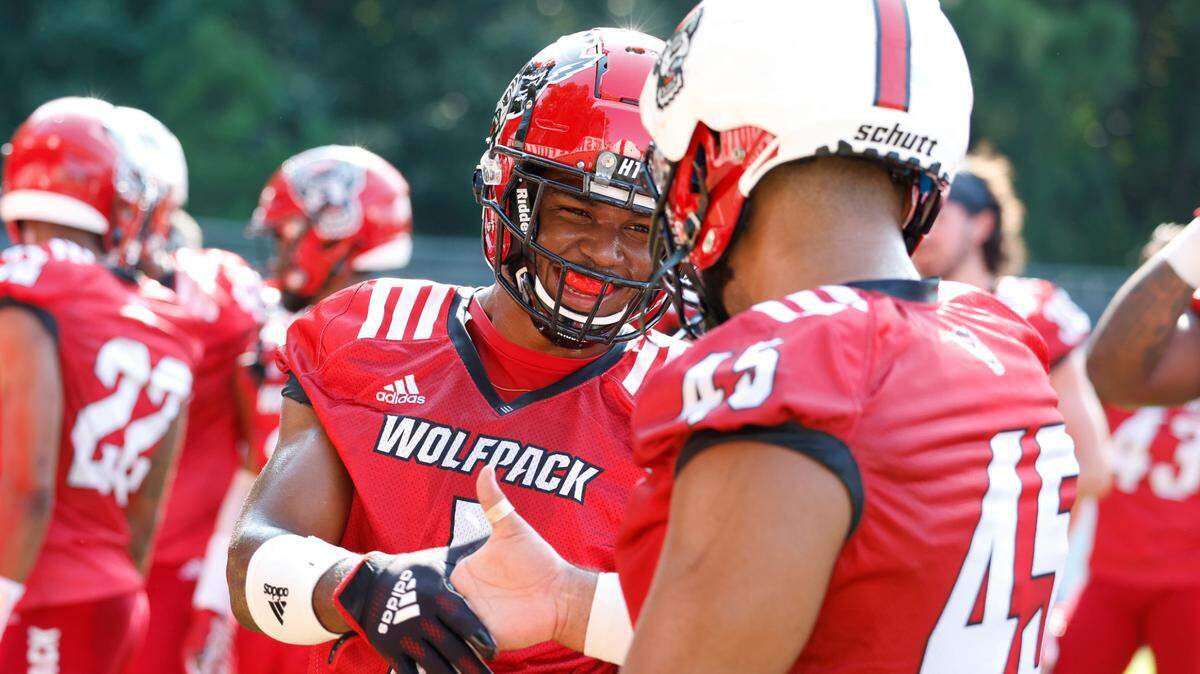
Defensive tackle Davin Vann used to leave practices at Cary High School with headaches from the continual hits he either took to the head or dished out himself.
They’re no longer a problem heading into his sophomore season at N.C. State. Not since the Wolfpack equipped every helmet with a protective head wrap.
N.C. State has all of its helmets fitted with the Defend Your Head brand SAFR (Scientifically Advanced Force Reduction) Pro Tech model. At Duke, every player with the exception of quarterbacks and kickers/punters — who are off limits from contact anyway — wears the Guardian brand cap on their helmets.
“In high school we didn’t have those, and so during practice you’re banging out all the time and walk away with headaches,” Vann said. “I haven’t really had that issue since I got to college, so I think it really does help.”
The use of an extra layer of protective head gear on the outside of football helmets is trending in college football. Initially, it was primarily just used for linemen. Now some schools have made it mandatory for the majority of their rosters. It’s a small step toward helping curb head injuries in football.
Erin Hanson, the chief executive officer and co-owner of Guardian, said the caps are designed to help mitigate all forms of contact with the head, be it the ground, a shoulder or a leg. She added that they were effective for lowering the cumulative effect of repeated hits to the head.
“Everybody’s focused on that one big impact, that one big concussion kind of thing and our focus has always been on the accumulation of all those small hits,” Hanson told The News & Observer. “Yeah, it might be that one hit that’s the straw that broke the camel’s back. But we think it’s a hit count over time.”
But not everyone is convinced. North Carolina players are given the option of using Guardian caps and several players in the positions targeted for use would rather not have them.
“I’ve never worn one, I really don’t want to wear one,” UNC nose tackle Ray Vohasek said. “I hear a lot of guys in the NFL complaining about them. I hear they’re heavy, so I’m just going to stick to what I know, unless somebody forces me to wear it.”
Carolina offensive linemen William Barnes and Ed Montilus each said they have previously worn a Guardian before, but both declined to continue doing so this season.
“I wore one in high school, it was kind of uncomfortable for me, so I decided not to this year,” Montilus said. “It probably doesn’t make a big difference. It just starts ripping every now and then whenever you bang heads or whatever. I feel like maybe it does help because the cushion on the outside helps with like the impact and stuff, but not really.”
The NFL made it mandatory this season for each of its 32 teams to use Guardian caps for offensive and defensive linemen, linebackers and tight ends in practices through the second preseason game. Colleges have been quicker to their use starting with South Carolina in 2012 being the first to use Guardians, with Clemson following shortly after.
Of the 10 ACC schools that responded to N&O inquires, only Virginia Tech and Pittsburgh do not use the added layer of protective head gear at all. Virginia, Syracuse, Boston College, Clemson and Louisville, at the very least, follow the NFL model where the four position groups who collide the most wear them.
“Obviously, head injuries are a huge part of the game and trying to prevent them is something that we’re very diligent with,” Duke coach Mike Elko said. “Our medical team feels like they protect us a little bit, to whatever degree that is. I’m not 100 percent sure how much, but they make us safer when we have contact and so we kind of put the investment in to put them on all of our guys that are going to have any type of head contact.”
Elko added that he was informed by the medical staff that the caps were not as effective if everyone wasn’t using them, so he had all the positions that engage in contact during practice fitted.
UNC coach Mack Brown said he shied away from forcing the use of extra head gear — just like the use of knee braces — on his team due to legal implications.
“If you force them and they get hurt, you’re liable to be sued,” Brown said. “We wanted them available, but it’s not 100 percent fact that they can keep you from having a concussion or the knee braces keep you from having a knee operation, because probably some have happened with both. So what what the medical staff decided, and what I’m pleased with, is that we have the best things available for them if they want to use them.”
Duke senior wide receiver Jalon Calhoun acknowledged that wearing one takes some getting used to because of the added feeling of weight. But he believes it’s worth doing for more reasons than just reducing impact.
“I feel safer, especially how many times we hit when we come in contact with different teammates — we all feel safer,” Calhoun said. “I think it’s teaching the defense not to lead with their heads when they are tackling, different stuff like that, and us not to duck our heads.”
The caps are still being tested to determine just how big a role they can play at limiting concussions or head trauma. What can’t be denied is the players that use them tend to feel safer.
“I’m wearing it for protection because I want to keep myself safe and the guy across from me safe,” UNC defensive tackle Jahvaree Ritzee said. “So I feel like it’s smart for us to wear.”
News & Observer staff writer Steve Wiseman contributed to this story.
This story was originally published August 24, 2022 at 6:10 AM with the headline "NC State, Duke, UNC among growing number of football teams using protective head gear."