Jack Leggett reflects on ‘great memories’ at Clemson, why he still longs for closure
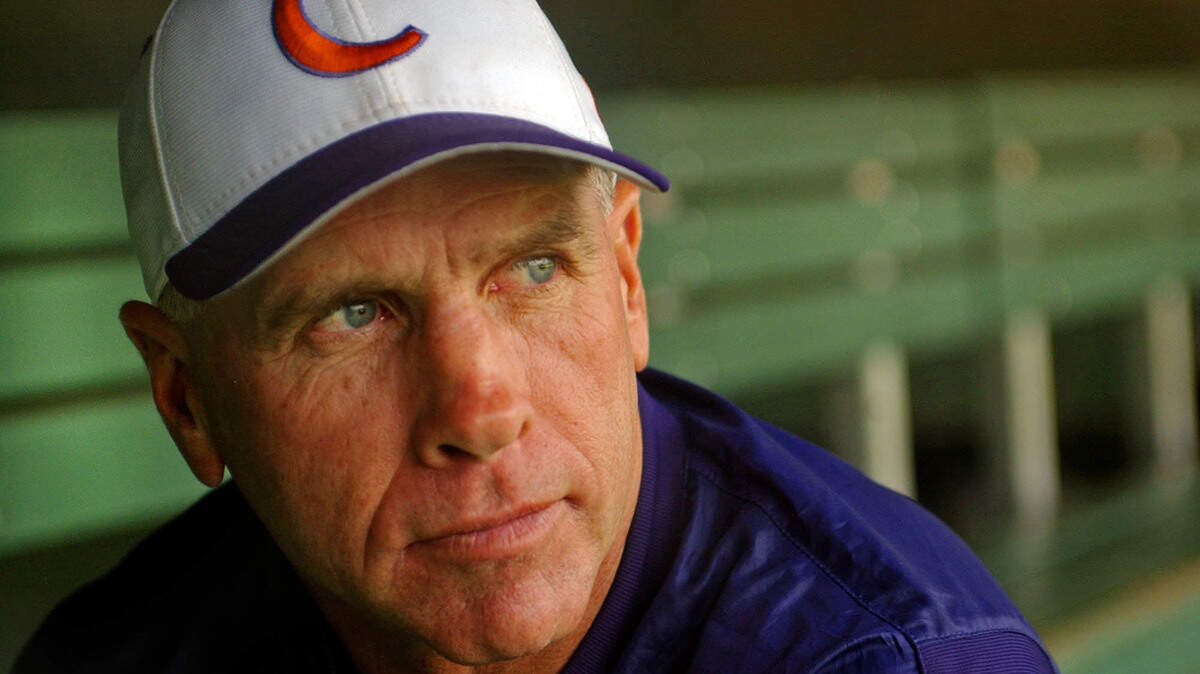
Jack Leggett can’t deny it: Coaching is in his blood.
After spending 40 years dedicated to the profession, 22 of those at Clemson, he still loves the game and the relationships he’s built because of it. Even after parting ways with Clemson in 2015, he’s stayed in touch with former players and looks back fondly of his tenure with the Tigers — though how things ended still stings.
He started out as an assistant coach under the late Bill Wilhelm in 1991, then became the head coach in the fall of 1993. His time at the head of the program included a 955-480 record, 21 NCAA tournament appearances, nine Super Regional appearances and six trips to the College World Series. Leggett was inducted into Clemson’s Athletic Hall of Fame in 2020.
The State spoke recently with Leggett, who turns 68 on Saturday, to discuss his time with the Tigers’ program, getting let go and what he’s been doing since then.
Note: Some responses have been edited for length and clarity.
Alexis Cubit: How would you describe your time at Clemson?
Jack Leggett: We were fortunate. We had some immediate success. We went to Omaha two out of the first three years: ‘95, ‘96 and had some good runs. Went to Omaha in 2000 again, and then 2002, 2006 and 2010, and ended up being in nine Super Regionals, which is difficult to do.
I really had a great time at Clemson. The teams were hard-working, loyal. We had great assistant coaches and they were the same. We just had a really good fan base. At that time, I had really good administrative support with Bobby Robinson, who was the athletic director, and Dwight Rainey, who was the assistant athletic director. When he retired, Terry Don Phillips came in and was very supportive of me. (Phillips and) Billy D’Andrea were my administrators that were very supportive.
We had a couple of national players of the year along the way and several guys that went off to play in professional baseball and in the big leagues and, and we hosted some regional Super Regionals. It was a great time for Clemson baseball, that two-and-a-half decades or so.
Cubit: What was the most memorable team or season?
Leggett: It’s a difficult question. I think my first teams in ‘95, ‘96 that went to Omaha. The ‘95 and ‘96 teams were a group of very gritty, tough, hard-nosed, loyal baseball players and people. They kind of got the ball rolling. We had some really good players and we had National Player of the Year in Kris Benson, another great player in Shane Monahan and a really good cast of players and then a lot of good role players that played hard every day.
That was a really good era and then we got up to 2000, 2002, that era where we went to Omaha. Those two years, we had the National Player of the Year in 2002, Khalil Greene, and were ranked No. 1 in the country at different times in both of those eras. Then in 2006 and 2010, as I mentioned, we went again, and we had some other really good players and some guys who played in the big leagues. Several of them play in the big leagues still.
Cubit: Clemson then decided to go in a different direction in 2015. What was your reaction to that?
Leggett: Well, kind of a delicate thing, to be honest with you. It was very, very shocking and disappointing, because we had something going. We had a new facility, we had a new recruiting class coming in. The athletic director (then Dan Radakovich) had a different plan.
I just felt a little blindsided, to be honest with you, felt a little betrayed. That was hurtful because I always loved Clemson, always felt that Clemson would do the right thing and handle situations in the right way. I had been very loyal and we had a great program. Everybody we played in the conference and in the country respected our program, so it was disappointing that it came to that. And it was hurtful because of the way it was done. It just wasn’t the Clemson I knew and had grown up to be a part of. It just didn’t didn’t seem like that.
I wanted to go on my own terms. I think I deserved that, and I think my players and era of baseball feels the same way, and it’s unfortunate. It was a very tough time for me because I was so passionate and so loyal and so invested in this program, so that made it tough.
Cubit: What did you do in the months, years after that? Was there a mourning period, a period of reflection or anything like that?
Leggett: I wasn’t ready to be done because I felt like I was on top of my game. I wanted to stay in baseball. I wanted to continue to coach, but I wanted to be the Clemson coach. I saw myself as a Clemson coach. I had a few opportunities at other schools to be the head coach there and I just felt like the timing wasn’t right. I just really wasn’t in the right frame of mind to take over another program at that point. And so, I took a year off, kind of walked away from a couple of chances.
I got involved in USA baseball. In 2017, I went out for a week with the Tournament of Stars and saw how that system worked. Then Matt Blood offered me an opportunity in 2018 and 2019 to coach the 18-and-under USA national team. I was excited about doing that, and really was invested in it. I got involved with some really good coaches and some good players. It’s something that I may never have experienced if I was still coaching. I turned down some USA chances while I was coaching at Clemson because I wanted to put on my heart and soul on recruiting and all that during the summers, and I didn’t want to leave the Clemson program to go off and do USA Baseball.
I wrote a book called “The ABCs of Excellence” … and then I also did 29 coaching videos that are on the website as well. I’ve spoken at the national convention in Nashville a few years back. We’ve done some traveling to places I normally wouldn’t have been, I guess, if still coaching. But I do think the bottom line is, I missed it, I missed being out on the field, I missed the fundamentals of the game. I miss teaching it. I miss the relationships from being in the dugout, on the bus and on the field and competing.
Cubit: As you mentioned, you’d still love to be out there, but would you say it’s been a bit of a silver lining in all that you’ve been able to do?
Leggett: There’s been some good things to it, for sure, but at the same time, I probably would have enjoyed those things even more had I been allowed to leave when I wanted to — on my own terms and in a classy way. I would have felt a lot better about it, and I would feel better about my time coaching had that been allowed to happen. That’s the only disappointing part. I feel like I wasn’t allowed that and that I deserved it, but there has been a silver lining and being able to do some of these other things.
Cubit: With leaving on your own terms, did you have an end goal in mind?
Leggett: Honestly, I felt really good about where we were at, where we were headed and what was next on the horizon for Clemson baseball. Felt great about it. We had some really good moments ahead of us, I felt, and I felt like I had really good relationships with my players. They’re very loyal to this day. We were having a lot of fun out there playing hard, working hard, working together. I felt like there was still gas in the tank. The competition, that whole thing, was still in their heart. It was still in my heart, so that was the tough part.
Cubit: Do you still keep up with Clemson baseball? What’s your relationship like with the program?
Leggett: I wish I felt better about it. I wish that they handled it better. There’s just no recognition of our time within that stadium for 22 years on the fence or inside the stadium, which is just kind of disappointing. But everybody I see is awesome to me. I feel great when I see them — the fans, support staff, they’re all awesome and still really good friends. I just haven’t been involved with the program much. I haven’t been asked to come back or be in touch with them or be involved with the program, so it’s hard to get real close to it.
I still follow college baseball very closely. I’ve got very good friends out there and a lot of coaches that are playing, so I’m watching games on a weekend and following everybody’s score. I just wish that at some point there’ll be some closure at Clemson and a good feeling about it, and I hope for that someday. I always wanted to come back like coach Wilhelm. When I took over for coach Wilhelm, he’d come to the games, go to the fence and I’d talk to him. We had a great relationship and I wanted him to feel a part of that program because of all the years that he had put into it, and I wanted him to know that I respected him and respected the program. That was important to me as a coach.
I do have a great relationship with my players and all those that played for me and all those that coached with me and all the people that worked alongside for all the years, whether it be Vermont or Western Carolina University or my players and coaches at Clemson as well. I have great memories, the Hall of Fame, which was a nice gesture, and honorary alumnus was a really nice thing. So I had some great times at Clemson, and I’ve got some great memories there.
Cubit: So, you don’t talk to Clemson head coach Monte Lee much?
Leggett: There’s not much contact back and forth, so not really.
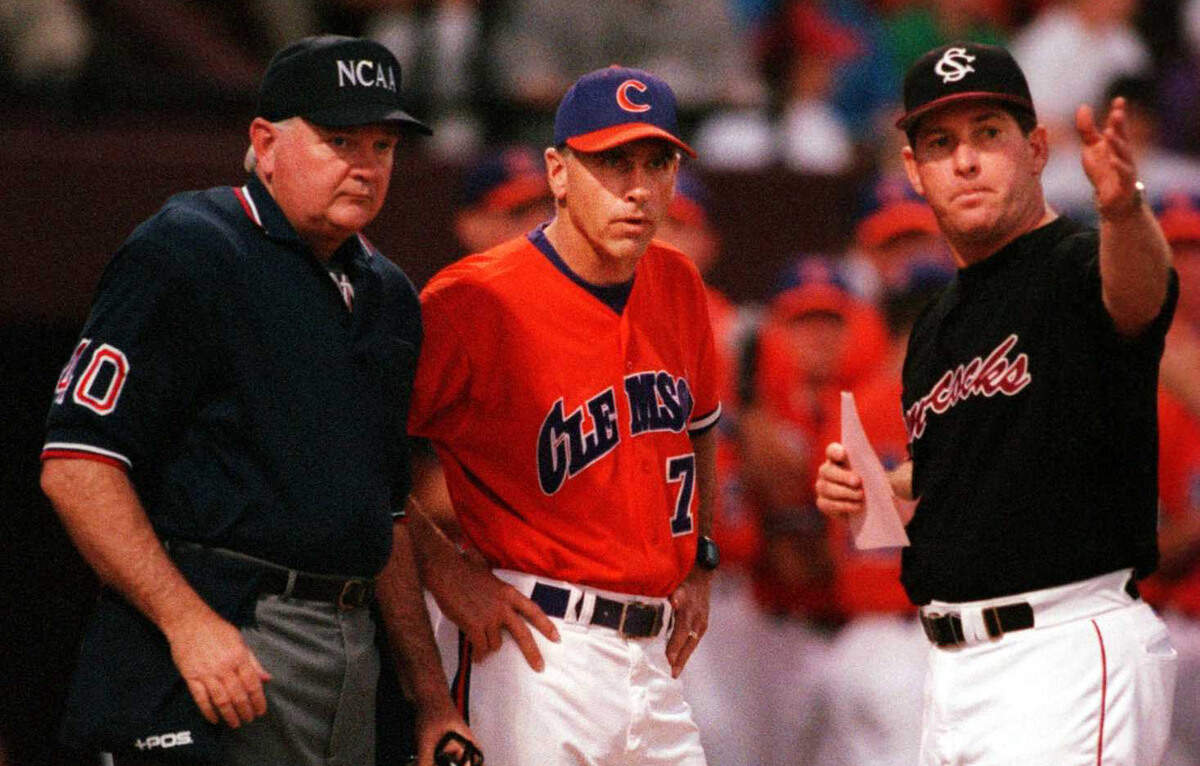
Cubit: The Clemson-South Carolina baseball series is coming up this weekend. What was that like when you were coaching?
Leggett: It was a big weekend. There’s no question about it. We had good moments, they had their good moments. I think over the course of time, we had some really good competition going back and forth between Ray Tanner’s team and our team. It was always a battle and it was always tough competition. It was something that I think, because of the two coaches and how good both teams were during those eras, I think that at that time that rivalry was really very special, very competitive.
Cubit: Do you still talk to Ray Tanner at all?
Leggett: No.
Cubit: What does the future hold for Jack Leggett?
Leggett: That’s a good question I think about every day. I want to travel a little bit, stay involved with my relationships that I have with my players and stay in contact with the coaches that I had. I enjoy talking baseball. I enjoy helping kids. (My wife and I have) a couple grandkids that play baseball, so I enjoy working with them and seeing them all play. There’s six of them. I enjoy keeping up with my kids, traveling, skiing, golfing once in a while with my buddies and seeing a different part of the world.
Baseball is on my mind. It’s in my DNA, it’s in my blood. Coaching, teaching, helping and mentoring and those relationships are really close to my heart. And I just really enjoy talking to my players and talking to my coaches and seeing what they’re up to and what’s happened to them since college. There’s a lot of really good things that have happened in my 40 years of coaching.
Cubit: What’s been your favorite place to travel?
Leggett: Well, my wife and I went to Italy for a month and it was unbelievable. I spent time in Italy, Austria and a little bit of Germany. It was a month-long trip — this was two years back — and it was Rome, the Amalfi Coast, Tuscany, Cinque Terre. We went up to Lake Como, over to Venice, up into the Dolomites up in the mountains in northern Italy. Went into Innsbruk and Salzburg, Austria and then we went to Munich and that was a tremendous trip. Then we went to France and went to Paris down into La Rochelle and Bordeaux and Nice and Monaco and went into Barcelona, Spain. It was a great trip, too.
We’ve also got an RV. We’ve taken three big trips: one to Vermont, Maine and back, and then two trips out to Colorado and one out to Arizona, Colorado, Wyoming, South Dakota, (which was) about a month long trip there. The United States is beautiful, too. There was the Grand Canyon and things I hadn’t seen before were spectacular. The mountains of Colorado and Grand Canyon and Sedona, the Tetons, Yellowstone, really, really good stuff.
This story was originally published March 2, 2022 at 5:00 AM.