How this SC football mom went from domestic violence victim to national advocate
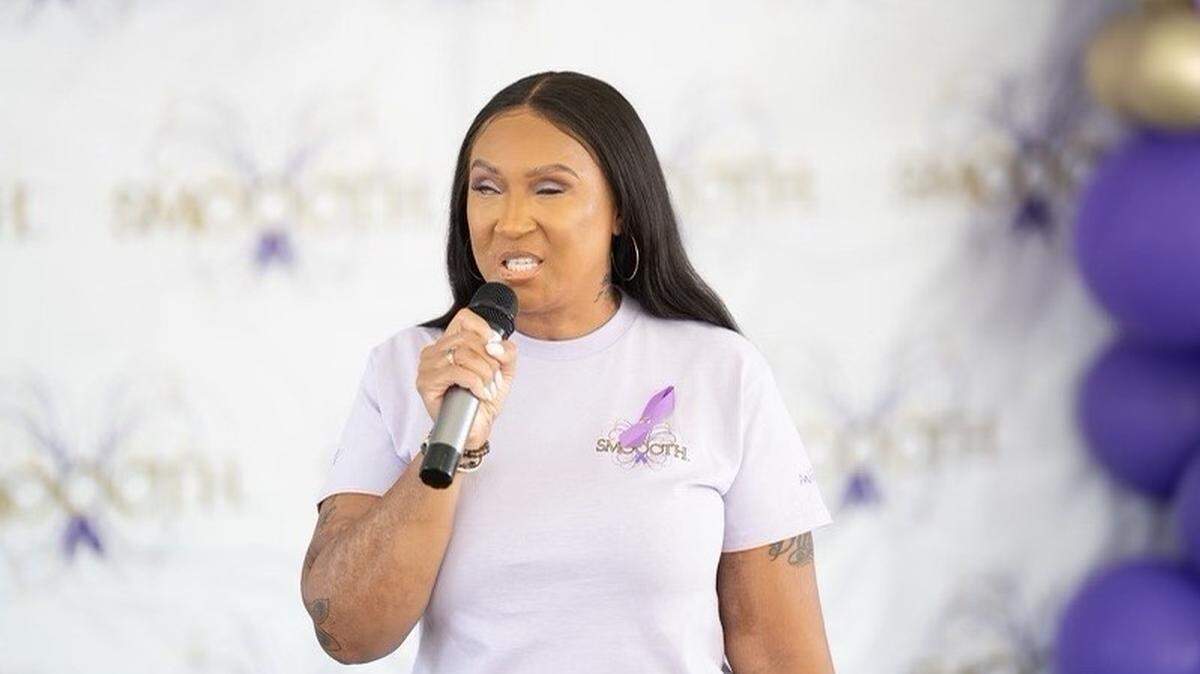
For a long time, Sabrina Greenlee held back.
Working through the trauma she’d faced growing up in South Carolina was hard enough. Talking about it publicly? That was a process in and of itself. As she grew in her role as an advocate for domestic violence victims, she was telling her story.
Just not all of it.
“In the beginning, I spoke on what was comfortable for me to live with,” said Greenlee, the mother of Clemson and NFL star wide receiver DeAndre Hopkins.
Over time, though, she realized people needed more. Warning women to watch out for red flags was one thing. Walking them through the exact warning signs she saw in her own relationships that turned abusive was more impactful.
Same for the accident in 2002 that left her legally blind. It was no accident: It was a violent acid attack in which a woman — who, unbeknownst to Greenlee, was also seeing the man Greenlee was dating at the time — splashed a mixture of bleach, boiling water and lye onto her face.
The attack sent Greenlee into a nearly one-month medically induced coma, burned over 17% of her body, left permanent scars and forever damaged her vision. She had limited eyesight for roughly a decade, and she has been completely blind since 2015.
As her influence grew and she took on more and more public speaking opportunities, Greenlee said there wasn’t a specific light bulb moment when she realized she had to open up more. But deep down, she knew:
The more details she shared, the greater her potential impact.
“The story needed to be told, because people are really going through some horrific things when it comes to domestic violence,” Greenlee said. “I wanted to be the one that said, ‘You know what? This is what I went through. This is how I got over it.’ ”
“I wanted them to really, really understand what it really took for me to get to this point. And I could not have done that by continuing to stay on the surface.”
Greenlee, 55, is now in the middle of a remarkable second act in life as an author, philanthropist and advocate. She’s built a nonprofit dedicated to supporting victims of domestic violence, and she’s earned national recognition and media attention.
On Thursday night, she’ll get a local honor, too. Greenlee was named the South Carolina Football Hall of Fame’s 2024 Humanitarian of the Year in February, and she’ll be officially honored and inducted in the hall of fame during an enshrinement ceremony at Hotel Hartness in Greenville.
Greenlee is the 11th person to receive the organization’s Humanitarian of the Year award, the second woman and the first Black woman. S.C. Football HOF president David Wyatt, who first met Greenlee in 2018, said she was an “incredible” person.
“She’s making a real impact and a real difference,” Wyatt said. “That’s for sure.”

Sabrina Greenlee breaks the cycle
Greenlee is currently the president and founder of the nonprofit SMOOOTH, which stands for Speaking Mentally, Outwardly Opening Opportunities Toward Healing.
The organization focuses on helping women and children affected by domestic violence through various community events held annually in Greenlee’s home state of South Carolina (she’s a native of Easley) and across the country.
The nonprofit’s offerings include women’s empowerment conferences; transition programs for women who have gotten out of abusive relationships; a kid-focused Christmas event and gift giveaway called SMOOOTH Santa; and Pretty Scars Into Stars, an event where women who’ve faced adversity get to participate in a free “Purple Carpet Makeover” and charity gala event.
Greenlee also makes frequent visits to shelters to meet with victims directly.
“I’m not afraid to go wherever they are, hold hands with them as long as I have to, talk to them and let it really be about showing them that someone cares,” she said.
She doesn’t shy away from recounting her life story, and the challenges along the way, whether she’s speaking to a small group or on a national TV interview.
As detailed in Greenlee’s memoir “Grant Me Vision,” which was released last summer, the first three decades of her life were turbulent. She was raped at a young age. One of her two brothers died young in a car accident. Her other brother, a former Clemson receiver, was shot and killed in by police in his 20s.
Hopkins’ father, who Greenlee still calls her soulmate, died in a car accident when Hopkins was 10 months old. Outside of that relationship, Greenlee wrote that she had multiple abusive partners. At one point, she sold crack to provide for her family.
And on July 20, 2002, her life changed forever when a woman (who was later sentenced to 20 years in prison) attacked her by throwing acid into her face.
Greenlee had to be airlifted to a hospital in Georgia and was in a weeks-long coma. She went through dozens of eye-related surgeries in an attempt to repair her vision. She regained her sight in a limited capacity before losing it completely in 2015.
In the subsequent years, Greenlee said she was able to break out of a decades-long cycle of abusive relationships and trauma and push forward in life. Setting a good example for her four children was a key factor, she said.
Speaking publicly about what she’d been through helped, too.
As part of that process, she has publicly forgiven the woman who attacked her in 2002, as well as the man involved, because, as she wrote in her book, “the Bible says that you can’t hate somebody and expect for breakthroughs or blessings to come.”
“I knew that the more I talked, I would never go back to being a victim,” she told The State this week in an interview ahead of her S.C. Football Hall of Fame enshrinement.

DeAndre Hopkins, her No. 1 fan
Greenlee and SMOOOTH have a forever supporter in Hopkins, the third oldest of four children Greenlee raised in the Clemson area.
Hopkins, 32, is one of the most productive receivers in Clemson and NFL history and is entering his 13th season as a pro with the Ravens this fall.
But he’s also a child whose upbringing was heavily affected by domestic violence. Hopkins was 10 when his mother was attacked and lost her vision.
Greenlee experienced depression and suicidal thoughts after the attack and has credited her son for saving her life when he was a teenager. One night, he sensed something was off, realized his mom wasn’t home, walked outside and ultimately stopped her from walking out of their neighborhood and onto an open highway.
Greenlee, in her book, described that moment as a “walk toward suicide.”
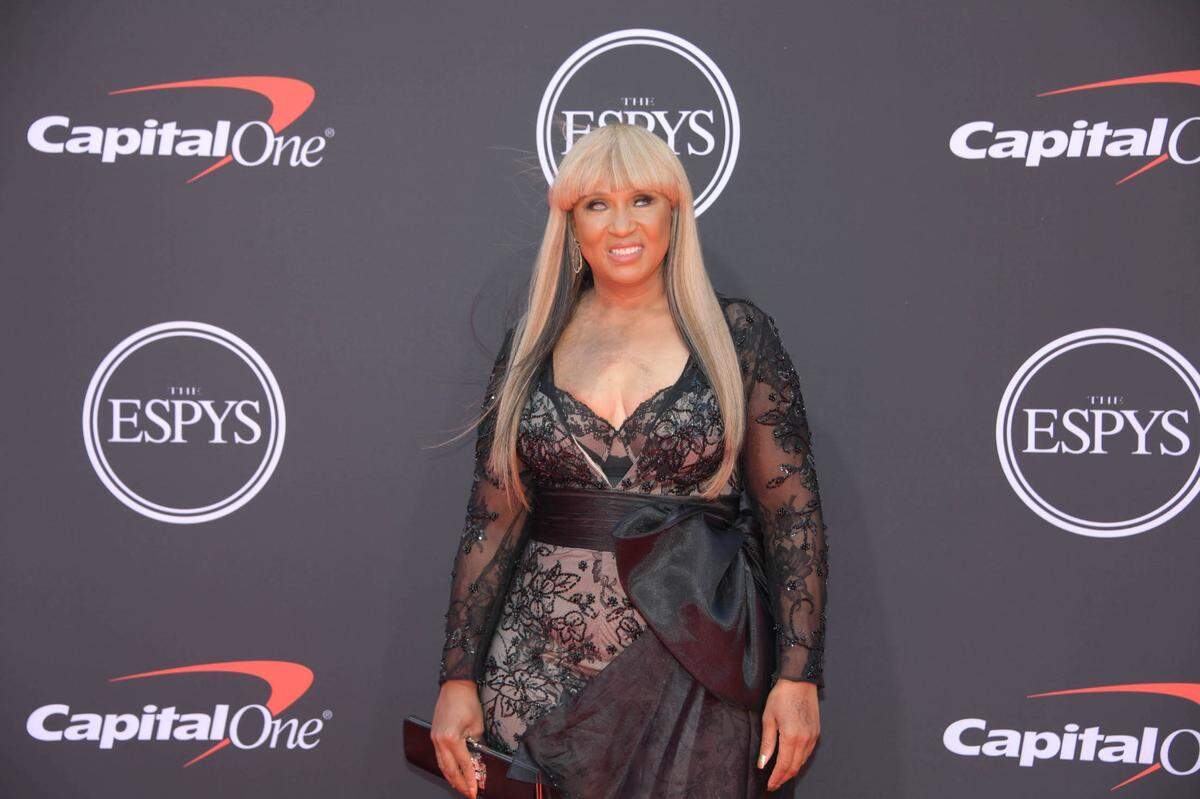
In many ways, Hopkins’ football journey from Clemson star to multi-year NFL Pro Bowler has overlapped with and helped elevate his mother’s personal journey. One of the first times Greenlee’s story made national news was when she and Hopkins participated in a joint ESPN cover story in 2019, when he was playing for the Texans.
That ESPN story revealed a touching tradition that continues to this day: If Hopkins scores a touchdown in the end zone where Greenlee is sitting (she attends nearly all of his games), he’ll find her in the stands and give her the ball.
It’s a reminder that while she can’t see the play, or him, he still sees her.
Hopkins’ support has been “amazing,” Greenlee said. “I’ve asked him multiple times, ‘What is it that you want to do?’ And he so graciously says, ‘I just want to support you.’ He’s never created a foundation. He’s never connected himself to anyone else other than my organization. As a mother, that’s pretty much all you could want.”
At each of Hopkins’ professional stops so far — Houston, Phoenix, Nashville and Kansas City — Greenlee has found ways to get involved in the community with SMOOOTH. Hopkins, the NFL’s active leader in career receiving yards, has also been outspoken about the role men can play in preventing domestic violence.
“I show up for him as he shows up for me,” Greenlee said.
An honor for ‘every survivor’
Given her son’s status as a star NFL player, Greenlee said she’s gotten used to fielding requests to make an appearance or do an interview … with one caveat.
“It always goes, ‘Oh, and by the way — can DeAndre come?’ ” she said.
So she was impressed when Wyatt, the S.C. Football Hall of Fame president, called her earlier this year to tell Greenlee she’d been selected as the humanitarian of the year — and, over the course of their talk, did not mention Hopkins’ name once.
Of course, Hopkins’ career is part of the “football fabric” that binds Greenlee to the state, as Wyatt put it, and made her a slam-dunk candidate. Her dad played football at Easley High. Her late brother, Terry Smith, played wide receiver at Clemson in the 1990s. Greenlee was a cheerleader in high school and has always loved the sport.
But “it’s about her,” Wyatt said. “It’s not about her dad, her brother, her son.”
Greenlee said she was “blown away” by the honor from the S.C. Football HOF. Hopkins was not expected to attend Thursday’s enshrinement ceremony in Greenville, but Greenlee said she’s anticipating her mother, her father and two of her other three children to be in attendance for the event, where she’ll give a speech.
In her mind, though, she’s not accepting the award for herself.
Her S.C. Football Hall of Fame recognition, she wrote on her Instagram page earlier this year, is for “every survivor, every advocate and every person committed to breaking the cycle of domestic violence and uplifting our communities.”
Wyatt said his organization is honored to celebrate Greenlee and the “huge difference” she’s made in South Carolina and nationally.
“Her story of overcoming a terrible situation, tragedy, depression and then to go out and be a beacon of light for others … this is exactly what we’re talking about” in the award’s criteria, he said. “That’s why she’s our humanitarian of the year.”
This story was originally published April 17, 2025 at 8:00 AM.