Inside Charleston basketball’s rise from ‘sleeping giant’ to top Cinderella team
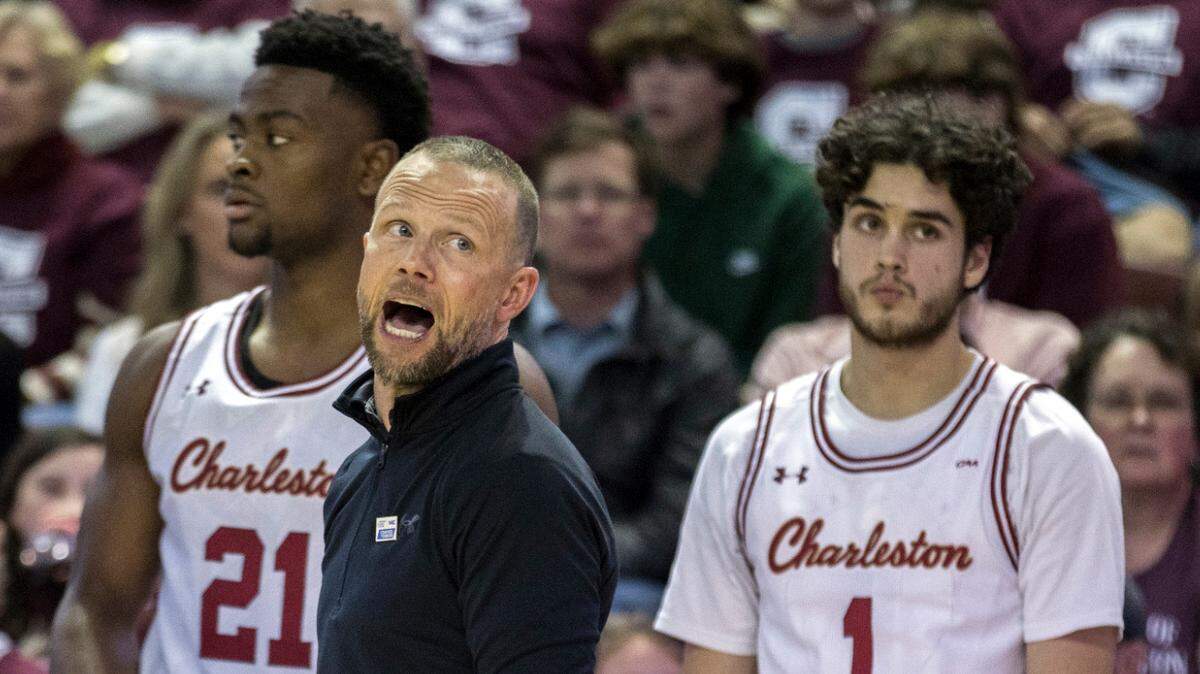
Pat Kelsey was scrolling through Twitter last year when he came across a gold mine: something he’d describe months later as the perfect “pre-practice mojo.”
It was a short video clip of Edwin Díaz, a New York Mets relief pitcher, jogging out of the bullpen while his home stadium blasted his intro song — a catchy, techno-Western tune that Kelsey had never heard but immediately loved.
Now, each time his College of Charleston men’s basketball team starts practice, they start it with “Narco” — electronic trumpets ringing through TD Arena as the Cougars take an opening lap around the court, never touching inside the lines, to symbolize that they don’t cut corners.
“That dude loves that song,” Charleston guard Dalton Bolon said.
In a way, it’s quintessential Kelsey: taking something well-established (a pre-practice jogging routine he borrowed from a coaching buddy) and sprinkling in something new (“The best entrance music in sports,” per The Athletic) and making it his own high-intensity thing.
Safe to say it’s paying off.
As the college basketball calendar turns to February and inches toward March, College of Charleston has emerged as not only the best team in the Colonial Athletic Association but one of the top mid-major programs in the country under second-year head coach Kelsey.
Entering Saturday’s game at Delaware, Charleston sat at 21-3 and 9-2 in conference play. The Cougars won 20 consecutive games from Nov. 14 to Jan. 21, the longest streak by any Division I team this year, and ranked No. 18 in last week’s AP Top 25.
Even though last Saturday’s home loss to Hofstra snapped a four-week poll streak, College of Charleston remains a favorite to win next month’s CAA tournament in Washington, D.C., and advance to its second NCAA tournament this century
No. 1 Purdue and No. 19 Florida Atlantic are the only teams with a better winning percentage this season than Charleston.
The Cougars finished sixth in the CAA a year ago but are now squarely in the national conversation, thanks to a fascinating roster and an Energizer Bunny coach pushing all the right buttons — “Narco” and otherwise.
There’s a long way to go, Kelsey told The State, “but I think it’s kind of manifested itself now to show what the vision that I had — that we had — for what we could build here. And that’s something very, very, very special.”
‘A sleeping giant’
The way Matt Roberts tells it, the awakening of the sleeping giant started on a driveway in Rock Hill, South Carolina. He interviewed five candidates in person for Charleston’s basketball coaching vacancy in March 2021, but only one made him do something out of the ordinary.
Still riding the high of his extended sitdown with Kelsey, who was coaching at Winthrop, Roberts couldn’t even make it to his car before he called his wife, Amanda, to gush about him.
“I think I just met my next head coach,” he said.
Kelsey, at that point, was fresh off his second March Madness appearance in five seasons at Winthrop — three if you count the 2020 postseason that never happened because of COVID-19 — and widely regarded as one of the top young minds in college basketball.
He’d mastered the art of doing more with less at a college that’s routinely offset its modest enrollment and athletic budget with a fierce men’s basketball tradition.
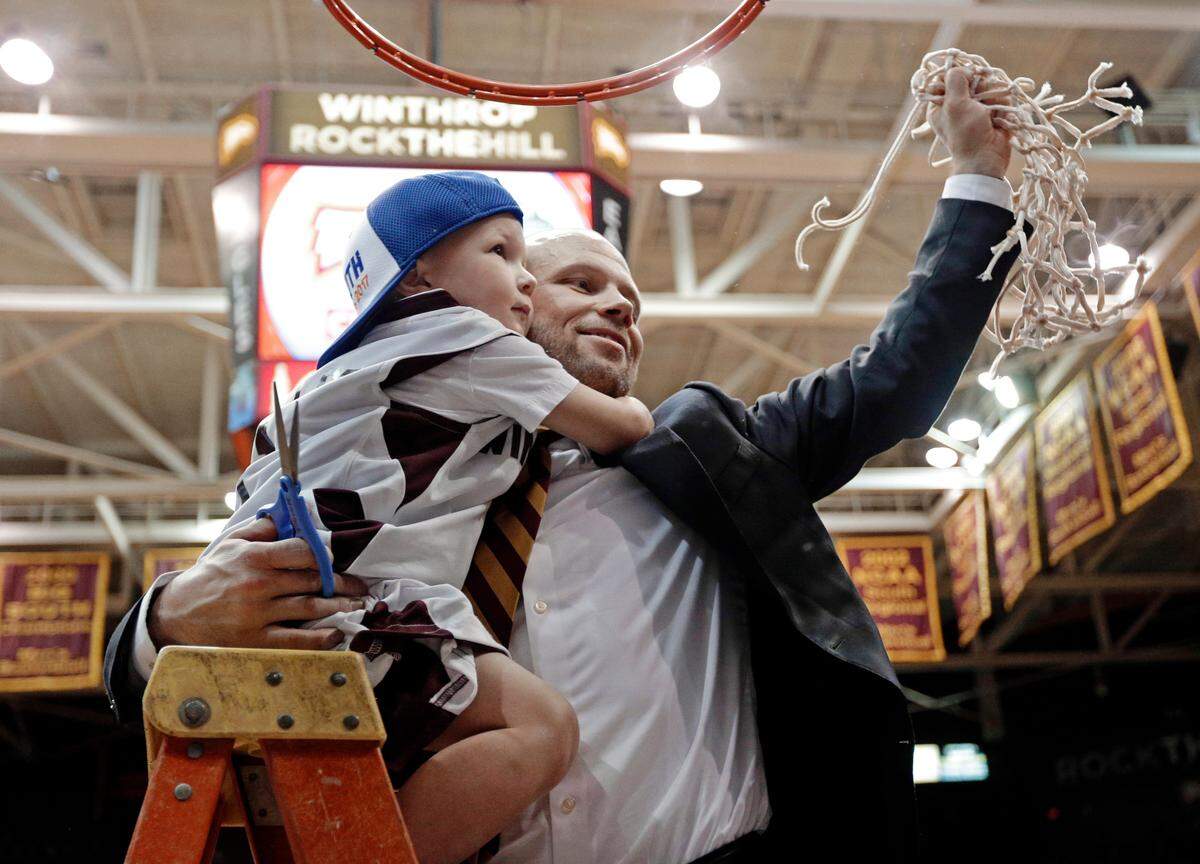
Kelsey averaged 20.7 wins per season in his nine years at the 5,000-student school just south of Charlotte, and his accolades were endless. Roberts thought he was the perfect person to replace Earl Grant, who’d just left to coach Boston College after seven seasons and one NCAA Tournament appearance at Charleston.
And to maintain the lofty standards of John Kresse, who’d coached Charleston to a 1983 NAIA championship and four NCAA Tournaments in their first eight years as a Division I school from 1991 to 1999.
But would Kelsey bite? In March 2017, he signed a contract to become the next coach at UMass. But he had a change of heart two days later and requested to be released from his contract roughly 30 minutes before his introductory news conference.
Citing “personal reasons,” Kelsey went back to Winthrop and coached there another four seasons. A year before the Charleston job opened, he was an early candidate for the Wake Forest job that ultimately went to Steve Forbes, another mid-major coach.
He was selective. Aiming high. So, why Charleston?
A pay raise certainly helped. Kelsey’s base salary his final year at Winthrop was $247,150, according to the Rock Hill Herald.
His five-year, $3 million deal with CofC immediately doubled that number. Kelsey’s 2022-23 base salary is $575,000, per a copy of his contract obtained by The State through an open records request.
But Kelsey, 47, focused on something equally crucial: Charleston’s position as a “sleeping giant.” At the time of his hiring, the Cougars ranked a sneaky seventh all time in winning percentage among Division I men’s basketball programs at 68.5%, albeit playing far fewer games than the six teams ahead of them: Kentucky, UNC, Duke, Kansas, UCLA and UNLV.
“There was a bubbling underneath of a program that was ready to explode,” Kelsey said. “There’s powerful people in town. There’s influential people here in this city. People are continuing to move here.”
“It’s just growing by leaps and bounds. And I think the long-term vision and future of this program and the ceiling is limitless.”
And so began The Great Experiment.
Learning on the fly
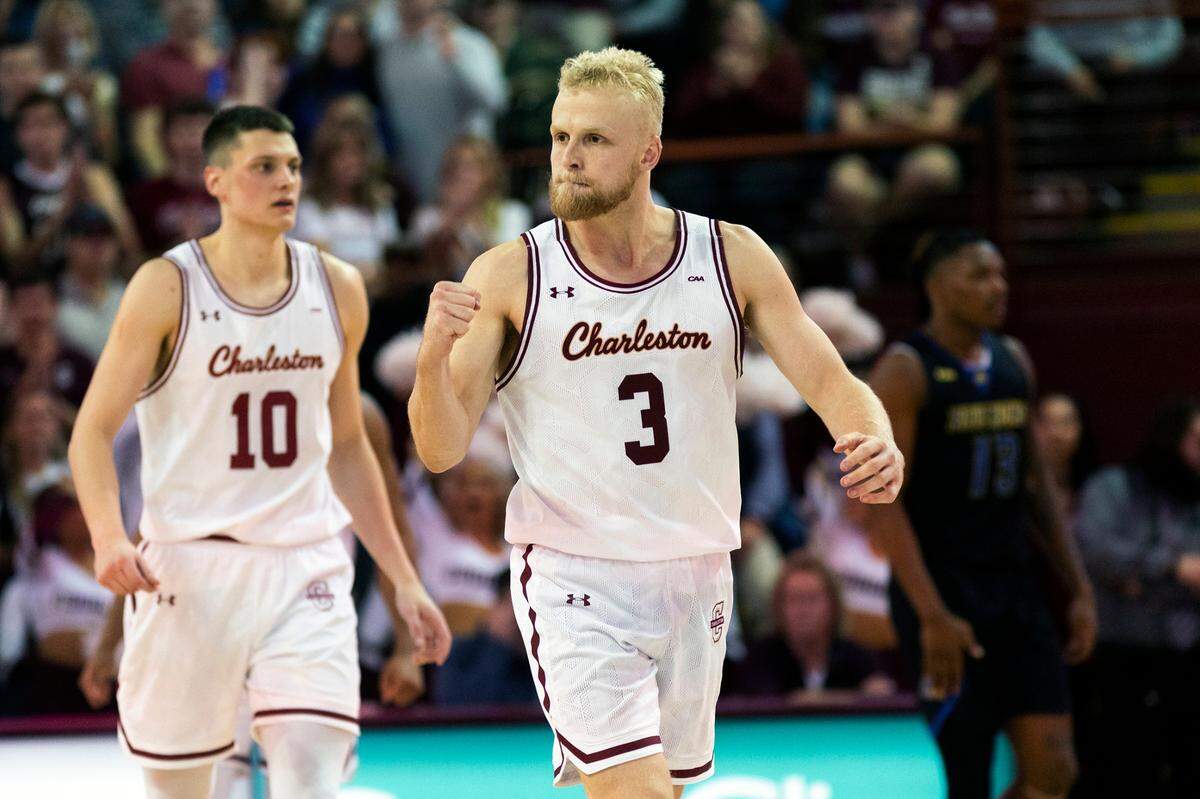
Bolon likes that framing — The Great Experiment — because that’s what it was: a bunch of coaches and players from all walks of life taking a gamble and moving to coastal South Carolina and trying to take the hometown team from good to great.
Heck, the three-time All-American from Division II West Liberty University didn’t even take an official visit. Restricted by the NCAA’s COVID-19 dead period, which ran for 15 months through June 2021, Bolon’s recruitment played out exclusively over the phone.
Bolon is a no-frills guy who admittedly hates the pomp and circumstance of the recruiting process — his West Liberty coaches actually had to encourage him to enter the transfer portal — and thought he’d wind up down the road at West Virginia, the big in-state school.
Somehow, Kelsey and company got through. There was no “blowing smoke,” Bolon said. Just some good old-fashioned basketball talk. Here’s who I am. Here’s what I’m doing. I’d love for you to join.
“I actually looked forward to their conversations,” he said.
So did 10 other high school and transfer portal recruits hailing from, among other locations, Australia and Senegal and Fort Mill, South Carolina.
On Opening Night 2021, Charleston had a new head coach, three new assistant coaches, 11 new scholarship players and one common goal: Instill a winning culture, growing pains be damned, with the help of a fiery coach who likes to say he can “make coffee nervous.”
“You have to establish your DNA,” Kelsey said. “You have to establish your way. … If it was a 20-chapter novel, we started on Chapter 12 this year. Year before, we started on Chapter 0.”
Last season, nonetheless, had some entertaining footnotes: two All-CAA players, two players on the conference’s all-rookie team, Charleston’s first CAA tournament semifinal since 2019.
The Cougars finished 17-15 in Kelsey’s first season, not bad for a team that returned just 24% of its minutes and 20% of its scoring from the previous roster.
Bolon watched the majority of that season from the bench with a foot injury, healing up while his teammates learned a new system and blazed a new path and “took on the task of rebuilding a culture here.” One year later, he said, “it’s a night-and-day difference.”
Or, as Roberts put it, “what you dream of as an AD.”
Playing 10 deep
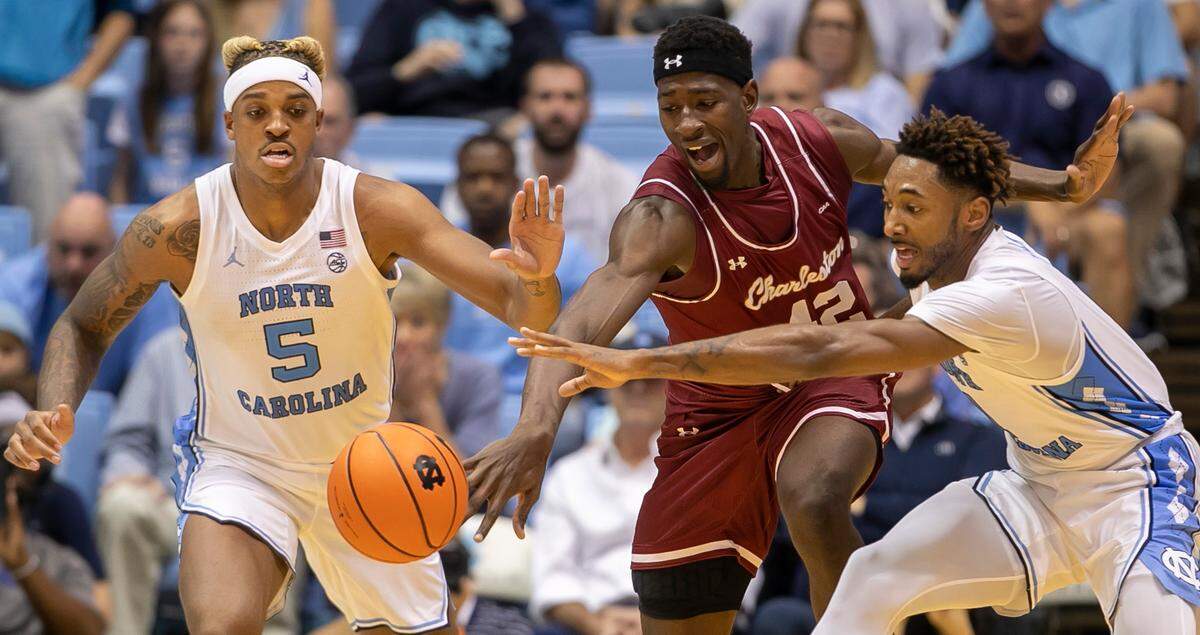
On Nov. 11, the UNC Tar Heels hosted Charleston in an early season non-conference game which, like it or not, was expected to be a breeze for the AP’s preseason No. 1 team.
North Carolina, still basking in the glow of a surprise 2022 national championship game appearance under first-year coach Hubert Davis, had two five-star recruits and three four-star recruits in its starting lineup that night and six more four-stars on its bench.
Charleston, meanwhile, trotted out players with past experience at Dawson Community College, NAIA Bethel College and West Liberty for opening tipoff with reserves via D2 Southwestern Oklahoma State and West Liberty (yes, they’ve got two Hilltoppers) standing at the ready.
No matter. The visiting Cougars scorched the Smith Center early as 20-point underdogs, connecting on 53% of their shots en route to a 50-43 halftime lead.
It didn’t last — UNC wore down them with an excellent second half and won 102-86 — but it was an early indication Charleston’s No. 4 spot in the CAA preseason poll might’ve been a tad low.
The Cougars returned to TD Arena three days later and beat Richmond in overtime. They beat three teams in four days, including reigning ACC champion Virginia Tech, to win the Charleston Classic on their home court on national TV.
They beat Towson, the preseason CAA favorite, in overtime on the road to end 2022 with 13 consecutive wins, and in 2023 the list got longer. N.C. A&T. Delaware. UNC Wilmington. Elon. William & Mary. Monmouth. Northeastern.
CofC was too good to ignore. The Cougars debuted at No. 23 in the AP Top 25 on Jan. 2, which was their first AP ranking since 2002-03 and, stunningly, the first time a Kelsey-coached team had ever been ranked (Winthrop got a handful of “receiving votes” nods late in his tenure).
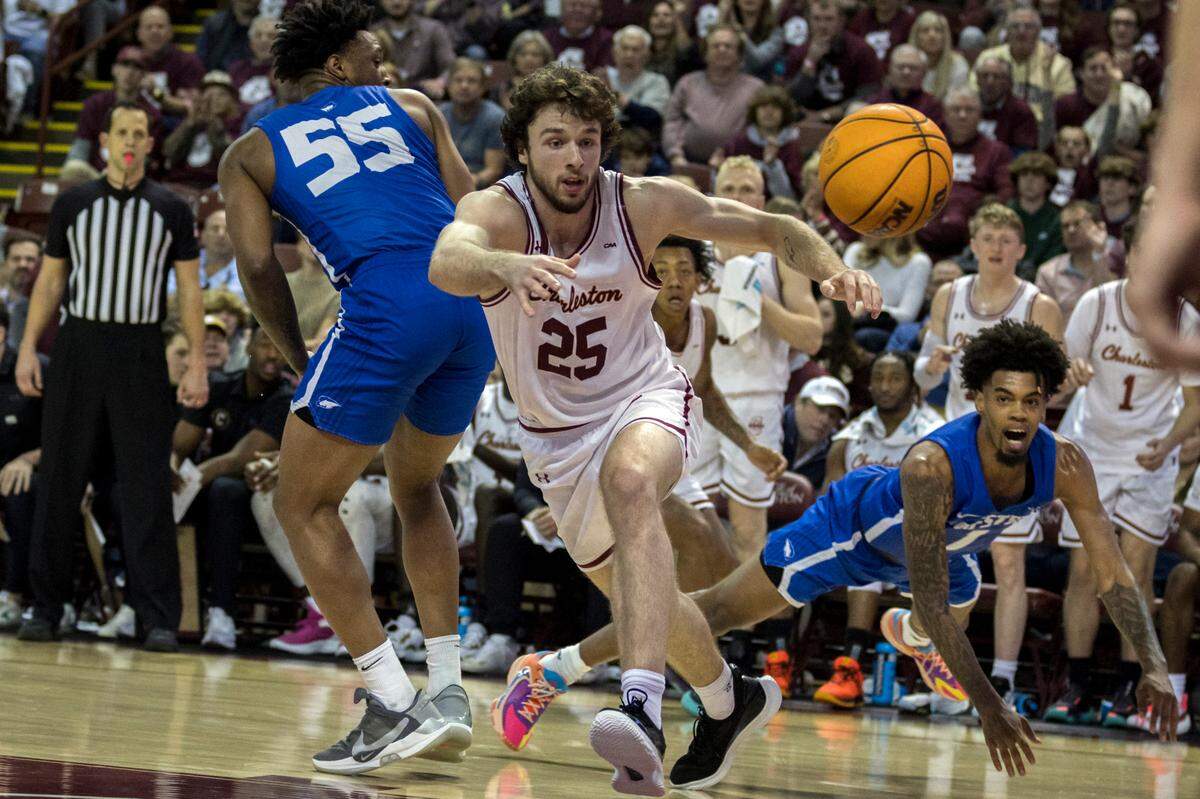
A suddenly national relevant team was navigating the trials and tribulations of a sneaky good CAA, which is currently 14th among 32 D1 conferences in NET rating, and doing it the Kelsey way.
That meant lots of possessions, lots of scoring and the “deepest, most diverse lineup that we’ve had,” Kelsey said. “Guys that can really, really hurt you all the way down our roster.
Bolon, who’s in his seventh and final season of college eligibility, is technically the clubhouse leader at 13.0 points per game, but he’d be the first to admit that’s not the story of this team.
Charleston’s top-to-bottom competency has given Kelsey the privileges of lineup tinkering and mass substitutions. Boy, does he take advantage.
Seven players have started games, nine average at least 15 minutes per game and five of them — Bolon, Reyne Smith, Ryan Larson, Pat Robinson III and Ante Brzovic — average at least 10 points per game. Ben Burnham, Raekwon Horton, Babacar Faye and Jaylon Scott aren’t far behind, all between 7.9 and 4.5 points per game.
The result is an offensive style that’s generated Charleston basketball a lot of points, a lot of wins and, quite noticeably over the past two months, a lot of new fans.
Just ask Harper Scott and Olivia Phillips.
A Cinderella push
Scott and Phillips are freshman College of Charleston students from Greenville, and they came here last fall to major in English and middle grade education, respectively, while enjoying the sights and sounds of a city that routinely ranks among the top tourist spots in America.
Not so much to attend basketball games.
“I don’t even know the rules of basketball,” Phillips said.
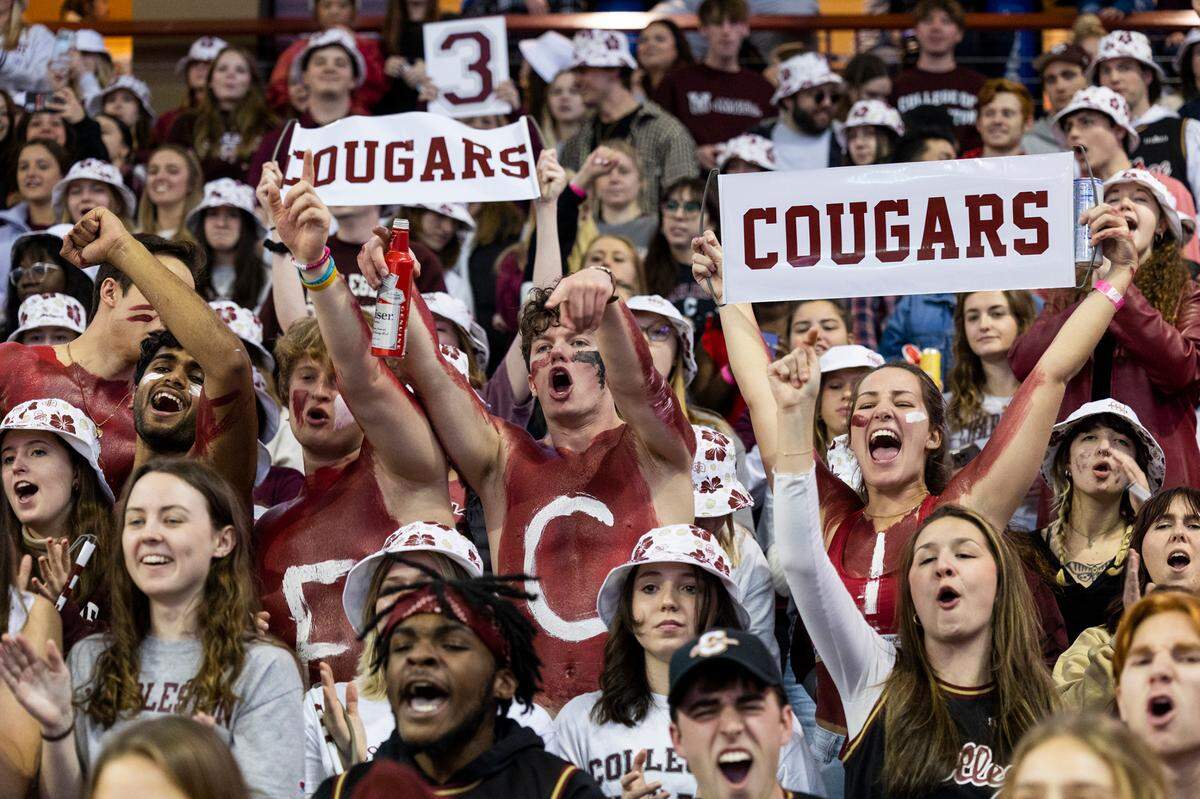
Five months later, they were the first two students in line for a home game against Hofstra. Tipoff wasn’t until 4 p.m., but they weren’t taking any chances. Scott and Phillips showed up four hours early, at noon, to make sure they were in prime position for Charleston’s first-come, first-serve student tickets, which are free as space allows in 5,100-seat TD Arena.
It was a veteran move: 90 minutes before tipoff there were 200-plus students behind them, packing George Street and spilling over onto King Street, decked out in maroon and white to watch the No. 18 team in the country keep things going.
Call it Cougars fever.
“We feel like we’ve grown with them,” Scott said.
Jan. 28 marked CofC’s 10th consecutive home sellout at TD Arena and demonstrated, once again, what a red-hot team can do for the bottom line of an athletic department that doesn’t sponsor football and consider men’s basketball its No. 1 revenue driver.
Thanks to the Cougars’ national success, Charleston’s athletic department is on pace to set records for total revenue and total donations, according to the Post & Courier. The school’s also expecting a record number of applicants for the fall 2023 semester, its president told the paper.
Raucous environment aside, though, last Saturday also underscored Charleston’s basketball reality as an aspiring mid-major power.
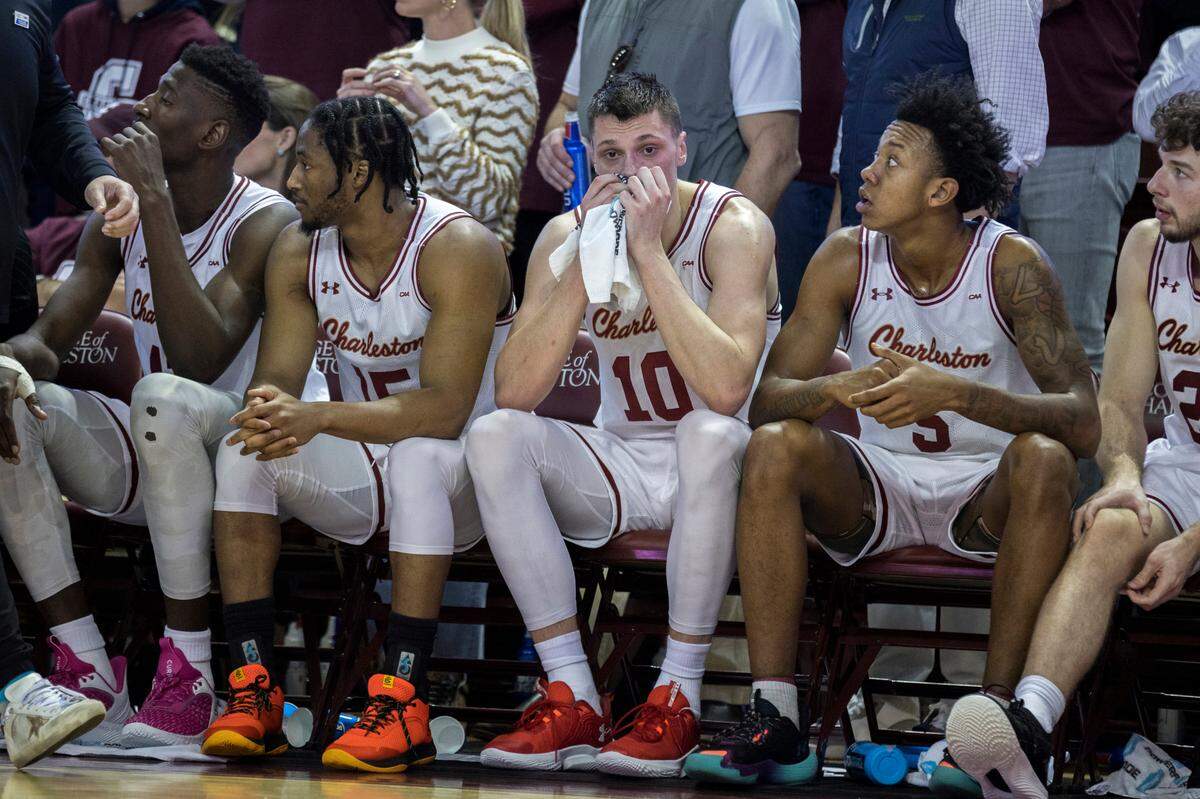
The Cougars went cold from three that afternoon and lost 85-81 to a good Hofstra team at home, snapping their 20-game streak and likening the chances they’ll need to win the CAA tournament to make the 68-team NCAA field in March as an automatic qualifier.
To which Larson — who, coincidentally, was part of the state’s last great run by mid-major basketball program as a four-year player for Wofford — offered a healthy dose of perspective amid defeat.
“We don’t want to lose, but in a 35-game season, there might be three or four losses,” he said. “It could be 10, depending on the season. Stay focused. Stay together. It’s gonna be OK.”
Coming back down to earth hit Kelsey hard, too. He doesn’t wake up at 4:30 a.m. and do mid-practice pull-ups on the rim and promote his team in person across campus like a traveling salesman to put out an inferior product.
Losing to Hofstra, he said, made him “want to vomit.”
But a key tenet in Charleston’s culture is consistency – extreme consistency, regardless of circumstances – and amid the setback, Kelsey said last Saturday night, “I’ll be honest with you: I’m excited to see how our guys respond.”
Their 20-game streak was over, and the Cougars returned home that night and licked their wounds. On Monday, they lost their spot in AP Top 25.
It didn’t matter: that same afternoon in downtown Charleston, one of college basketball’s hottest mid-major teams was already jogging around the outside of court, playing “Narco” and figuring how to do it all over again.
This story was originally published February 2, 2023 at 9:50 AM.