New traditions: Why Columbia College is boldly stepping into men’s athletics
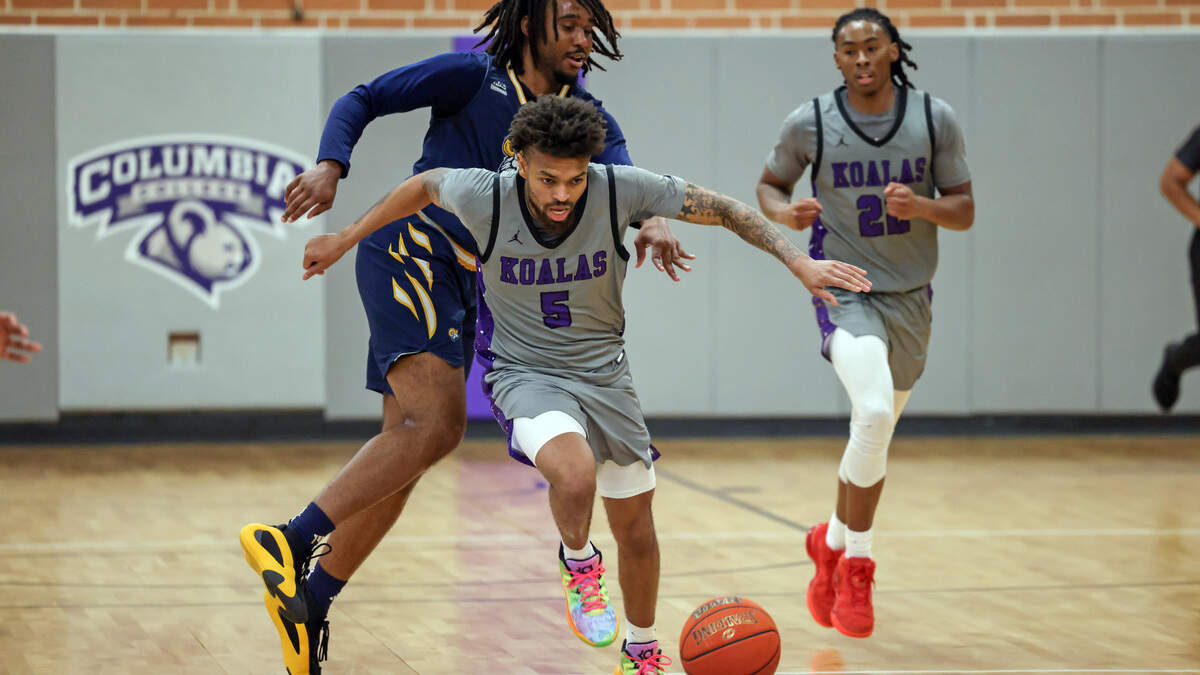
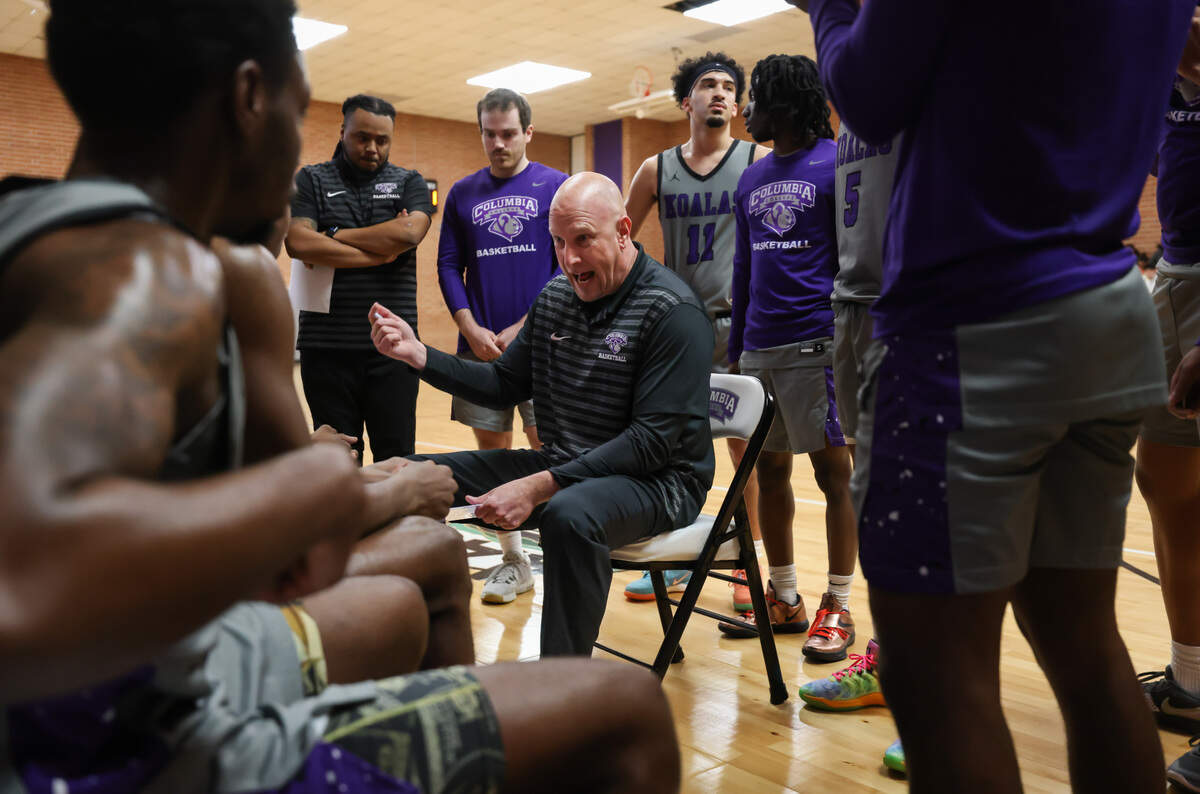
In a gym where every bounce of the basketball echoed off the walls, the loudest sound wasn’t the squeak of sneakers or the thud of a missed shot. It was the players’ voices.
“Guys that care about winning at a high level communicate,” head coach Jake Deer bellowed, halting a drill to make his point. “If we don’t communicate at a high level, we don’t care about winning.”
Around him, Columbia College’s men’s basketball players nodded, adjusted and started back — words tumbling over each other as they pieced it together in real time.
The Koalas, a team still forging its identity, weren’t just running drills. They were learning to speak the same language. That’s par for the course with a brand-new team. But for Columbia College, this process of discovery was part of a much bigger transformation.
Founded in 1854 as Columbia Female College, the school has changed and evolved many times. It dropped “Female” from its name in 1904 and rebuilt after a devastating fire in 1964. In 2020, the institution made a pivotal decision to go co-ed. And with that decision came a shift in the campus landscape — and in the athletic department.
With around 1,500 students, Columbia College is embracing its new identity, this time through men’s sports. The changes are far from a short-term splash. They’re part of a larger plan aimed at securing the future of a college in the midst of financial uncertainty.
A program in its infancy
Before Deer took the job as Columbia College’s first men’s basketball coach, the school wasn’t even on his radar. Building a program from scratch wasn’t exactly an easy sell, but it was part of the appeal.
In the first year of Koalas MBB, he wanted to build the program from the ground up. The background of the school was just a bonus.
“I didn’t know much about Columbia College before taking this job, but I did my research and spoke with people connected to the school,” Deer said. “What stood out to me was its rich history and strong academic reputation. I believe in our president’s vision and our athletic director’s leadership.
“I truly believe this program has the potential to be special. I wanted us to be great right out of the gate, and while we’ve done some good things, I understand it’s a process. We’ll get there.”
Columbia College is a member of the National Association of Intercollegiate Athletics. The Koalas compete in the Appalachian Athletic Conference along with Columbia International University and other smaller colleges in the Southeast.
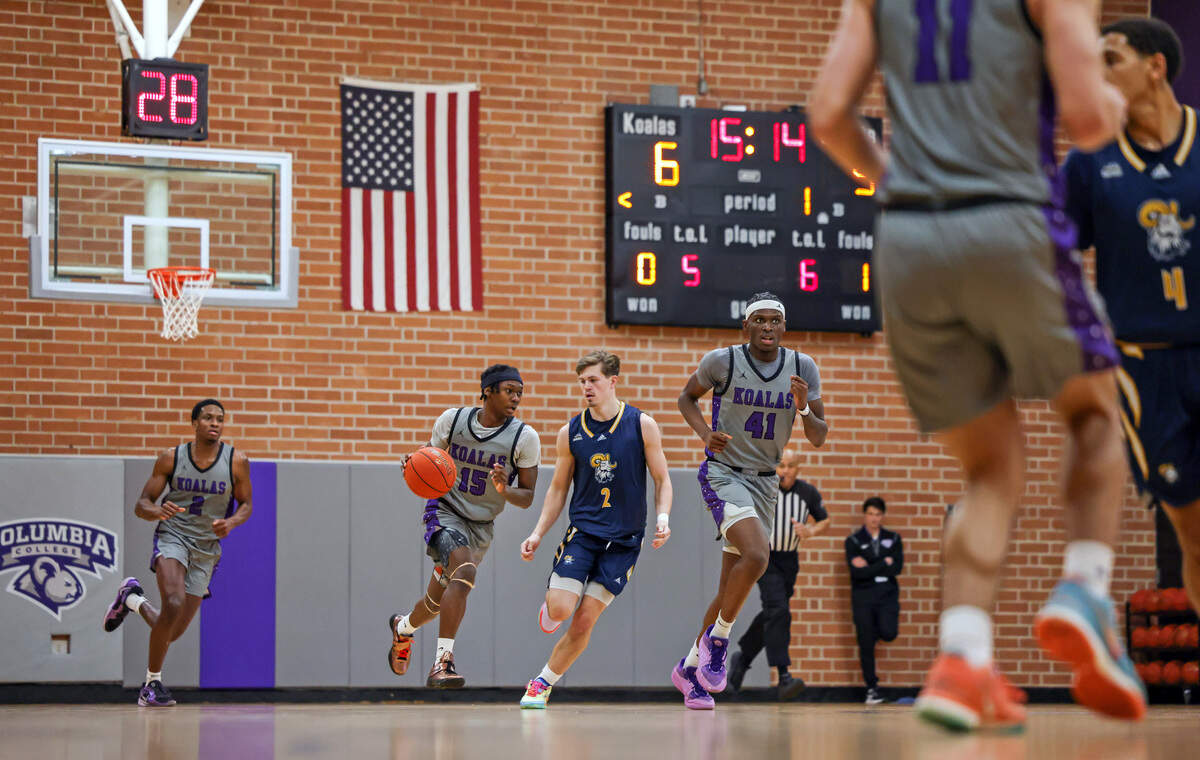
In the men’s basketball program’s first year, the Koalas finished 14-14, including a solid 7-1 record in non-conference play. Not bad for a program with no history.
Deer, a veteran coach with over a decade of experience, knows a thing or two about turning struggling programs around. But starting one from scratch? That’s a whole different beast. That’s especially true when you have to prove to young players that a program with no past can have a bright future.
“I wouldn’t call it adversity, but there’s just so much to do — recruiting players, building connections in a new community, establishing a culture,” Deer said. “Every day brings a new set of challenges, and there’s not a lot of time to get everything done.”
That culture starts with communication. Deer likes to tell his players they need to be “a team of left tackles” — a squad full of guys who look out for and protect one another.
And they’re buying in.
“If you had told me before the season that we’d be one game away from making the conference tournament, I would have thought you were crazy,” athletic director Glen Crawford said. “I expected us to finish dead last in Year 1, so to be in the mix for a conference tournament spot is an incredible achievement.”
Why add men’s sports?
For Columbia College, the decision to add men’s sports was a no-brainer once the school became a co-ed institution.
“When making that shift, we wanted to bring excitement to campus and grow our athletic department,” Crawford said. “The easiest way to do that was by adding men’s sports to complement our existing women’s programs. Since we now serve all genders, it’s important that our athletic offerings reflect that excitement and spirit on campus.”
In other words, adding men’s sports wasn’t just about athletics — it was about keeping the school’s future alive. And the expansion isn’t stopping anytime soon, especially with the “fantastic” reception the teams have received from the college and the community, according to Deer.
It makes sense that the move would be viewed well by Columbia College proponents. Many small colleges struggle with declining enrollment. With the school turning co-ed, adding men’s sports is a way to attract more male students while also increasing revenue through sports.
After all, more students mean more tuition. Athletes also tend to stick around longer, reducing dropout-related losses. It’s a classic case of “build it, and they will come.”
‘Our long-term vision is continued growth’
The growth isn’t just about numbers. Crawford emphasizes that Columbia College isn’t just trying to sign up as many athletes as possible. They want to grow strategically and sustainably, avoiding bloated rosters just for the sake of size.
“The majority of male students on campus tend to be student-athletes, so it’s a work in progress in terms of measurable impact,” Crawford said.
It’s also about facilities. Success can’t happen without the proper infrastructure. Successful programs, Crawford says, build gradually, bringing in freshmen and transfers to ensure long-term stability.
“Without facilities, you can’t have a program,” Crawford said. “That includes office space, locker rooms and playing fields. When we look at adding a sport, we first ask: Do we already have the necessary facilities? Can we make adjustments to accommodate new teams? If a new field house or stadium is required, that’s a much bigger conversation.”
Crawford learned many of his ideas from his nine years at Reinhardt University. They added four sports during that time.
“That experience gave me insight into how things should be done and what challenges to anticipate,” Crawford said. “I was involved in faculty meetings and learned firsthand what works and what doesn’t.”
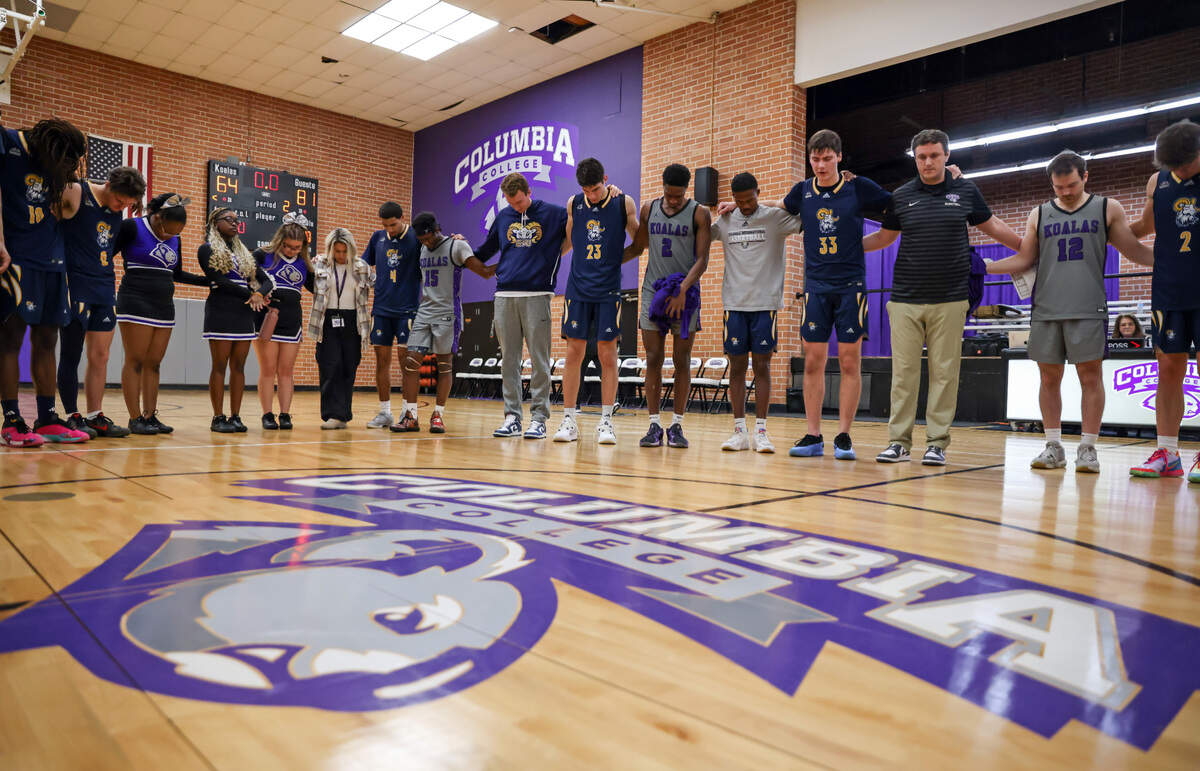
At Columbia, the transition into men’s sports is also about upgrading the campus. This includes expanding facilities for men’s basketball — new locker rooms, a wood floor for the court and more seating for fans.
For all sports, they’ve made major logistical improvements with transportation, purchasing two new buses. They plan to buy two more next year, helping the Koalas move away from the charter bus system and giving them more control over team travel.
What’s next
Columbia College isn’t done expanding its men’s sports offerings. Crawford has about five more sports on his radar for the near future. Though he’s keeping specifics close to the vest for now, baseball and wrestling might be in the mix.
“There are certainly plans for expansion, but it all depends on the right timing and resources,” he said.
For now, men’s and women’s lacrosse programs are set to begin next year. They’re planning to install a new turf field starting April 21 for them to play on ahead of next year. The same field will also be used for men’s and women’s soccer.
The addition of lacrosse will give Columbia College eight men’s sports programs and take its male athlete total from 115 to about 150. Lacrosse will be the Koalas’ 11th women’s sport, taking the female athlete total from around 160 to 180 or so.
The school is also creating two new coaching offices, and is prioritizing adding a third locker room. There are more changes to come, as there are talks of potentially building a new gym.
With that growth comes challenges. Sharing facilities, especially in the weight room, has been tricky, and housing could soon become a problem, Crawford said. The school has had to allocate resources the best way it can to ensure both men’s and women’s programs thrive.
“That’s the nature of growth — there’s always something to figure out,” Crawford said. “Ideally, I’d like to have everything in place before launching a new sport, but I understand that sometimes certain pieces have to come later.”
But the end goal? A sustainable, thriving athletic program that will ensure the school’s future.
With all of these risks, there is a chance that things don’t work out. But the step in this direction could mean the best possible results for Columbia College, including improving its brand image in athletics in the Columbia area next to the powerhouses like the University of South Carolina.
“The biggest risk is failure,” Crawford said. “Championships are great, but the greatest reward is seeing students succeed. … Seeing these student-athletes earn their degrees is the most meaningful achievement. We do this to change lives, and that’s the biggest win.”