
‘Stars lined up’ for South Carolina’s 1969 ACC title. Bonds forged then remain strong
They came along too early to celebrate like teams do today. There was no dousing of the coach with Gatorade, no reveling in triumph with Queen’s “We Are The Champions” blaring through the sound system or by getting pelted with confetti raining from above.
That exuberance would not have been theirs anyway. They clinched their championship on a cold, raw day a couple of hundred miles from home, and only the most loyal backers would be there to share in the joy.
Besides, who could have known that this one — the 1969 Atlantic Coast Conference title — would be the only league championship in football for the University of South Carolina since the Gamecocks delved into the sport in 1892?
Could 50 years have passed since those Gamecocks swept undefeated through the ACC, then the university’s athletic home? Could two generations have missed the opportunity to cheer their favorites on a march to the pinnacle? Could ... ?
Questions come, and answers are “yes,” but time stands still on remembering how they turned every day into a holiday and every meal into a feast.
“Success is counted sweetest, by those who ne’er succeed ....,” the poet wrote long ago, and those words fit the 1969 Gamecocks. The theme suggests that only one who has suffered defeat can understand and appreciate triumphs and, certainly, USC’s football history until then had offered little in the highlight department.
Then, along came 1969 . . . .
Proud of then — and now
Ask about the 1969 University of South Carolina football season and sure, the men, now in their 70s, who made that championship happen appreciate their achievements. But equally important — or maybe moreso — are the camaraderie that remains today and their lives after football.
Look no further than this bunch for the ideal definition of “team.”
Dave DeCamilla, All-ACC offensive tackle: “We had a group of exceptional people who were competitors and worked hard. We were risk takers — in a good way. We would push the envelope. We all lived together in the athletic dorm. That was fun, and we bonded. We weren’t altar boys, but we didn’t do anything outrageous.”
Ken Wheat, defensive tackle: “We got together for the Florida game (this season). We had 65 guys there and 16 are deceased. We had 87 in the team picture and could account for 81 at the reunion. That’s pretty special and tells a lot about the bond we had. That was a good group of guys. The average age now is probably 72, and 15 or 20 still get together once a week. We just enjoy each other’s company.”
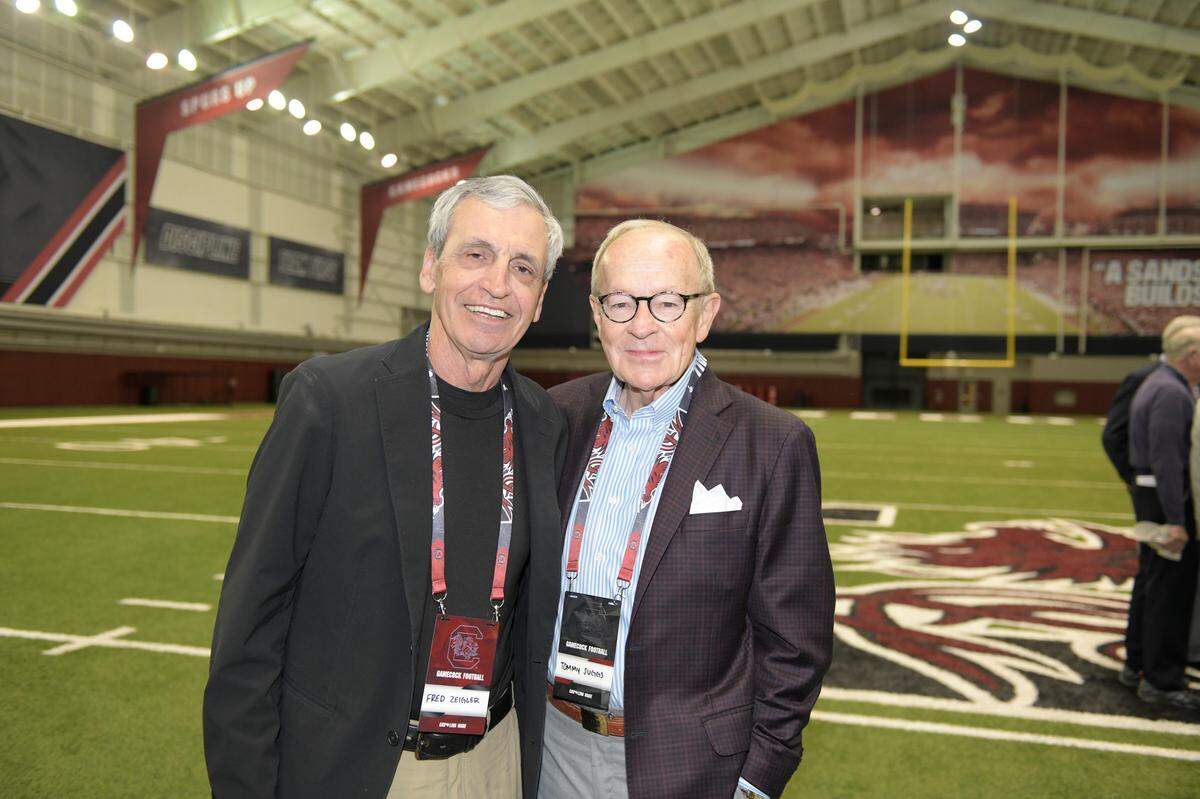
Fred Zeigler, All-ACC split end: “We had such a tight group. Everybody worked together. We did have some ‘moments.’ We had a curfew, so everybody was together in the evenings and that’s not always a good thing (for decorum). I think about them and what a good group of guys we had. We cared for the team and for each other. The fact that so many came to the reunion is pretty impressive. We have done well in life and in business, and we still feel the bond that was forged back then.”
Rich Moye, offensive guard: “We’re proud of what we accomplished on the field, and I’m proud of what my teammates have become. Guys like Ken Wheat. He’s very generous and does things the right way. Guys like him ... they were the glue. As we go on, we realize not only what winning the championship meant but also the friendships we made and how we cherish them. If Dave DeCamilla calls me from Sacramento and say he needs me, I’ll be there. And the reverse is true. That’s very special.”
Johnny Gregory, graduate assistant coach (and 1968 team captain): “So many of those players have done well in life. They were a special group.”
Always making plays
They became USC’s only conference championship football team thanks for the knack of making a big play at the right time. And a different hero popped up practically every week. A Tommy Suggs pass, a Billy DePre field goal, a Jim Mitchell punt return, a Dickie Harris interception or kickoff return, a Zeigler catch ... the list goes on.
Gregory: “The team and staff went into the season optimistic. We had gone 4-6 the year before. We had the wild win in Chapel Hill and were right there in a lot of games (four losses by a total of 17 points). Beating Clemson to end the season (on Tyler Hellams’ 68-yard punt return) meant a lot. Coach (Paul) Dietzel was an early advocate of off-season workouts and that helped over the course of the year. The players took care of business. That team had such great leadership.”
Donald Bailey, defensive back: “We had what you need for a good team. Good offense, good defense, good special teams. Tommy (Suggs), Warren Muir, Rudy Holloman, Tommy Simmons in the backfield. Tom Trevillian — I always thought he was underrated. Zeigler, of course, was outstanding. On defense, Jimmy Poston, Rusty Ganas, David Lucas and Lynn Hodge at the ends. Jimmy Pope, Joe Wingard, Dickie Harris, Pat Watson, Al Usher ... so many outstanding players and outstanding people.”
Wheat: “Memories? Jimmy Mitchell had that punt return to beat N.C. State. Billy DuPre’s field goal to be Virginia Tech. Playing very well against (nationally ranked) Georgia and Tennessee on the road. Zeigler. What a character and what a player. He was small and slow and always open and always caught the ball. He tipped one to himself to win one game.”
Zeigler: “That tip (for a touchdown catch against North Carolina) was all luck. Tommy did a good job to give me a chance to go up and get the ball. I did tip it, then I fell flat on my back and the ball fell into my hands. We all remember DuPre’s field goal at Virginia Tech, but don’t forget Doug Hamrick’s great catch (of a Suggs’ pass) to set it up. Somebody was always making a play like that.”
Characters and antics
In guiding LSU to the 1958 national title, Dietzel, a master innovator, had named his starters the White team, his offensive specialists the Go team and his defensive specialists the Chinese Bandits. A decade later, USC’s starters composed the Garnet team and reserves were the White team.
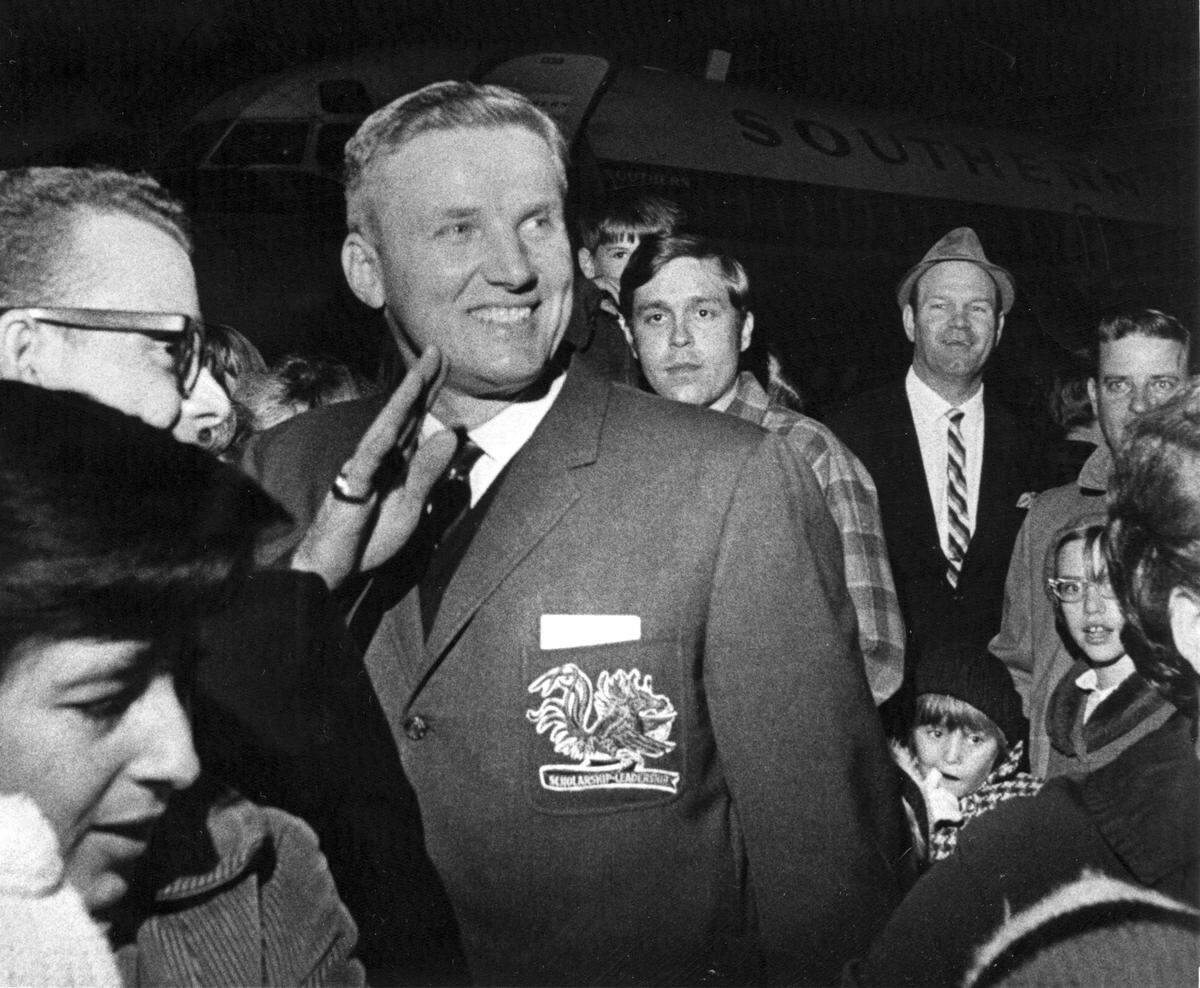
Wheat: “We named our second team the Brown team. We were always in the second bus or on the second plane. The Garnet team rode in a nice air-conditioned Greyhound; we had an old yellow school bus with the windows open. We had a captain. We had awards for everything, for the best play by one of our guys or the most spectacular screw-up. Jim Mitchell was one of us and he made the punt return to beat N.C. State.”
Moye: “Coach Dietzel said everybody on the team was equal, but as George Orwell wrote in Animal Farm, some animals are more equal than others. That’s how the Brown team came into being. We used that to our advantage. We had our own culture, our own awards. Kenny Ross, our long-snapper and second-team center, handled a lot of it. If a guy got promoted to the Garnet team (and became a starter), we had a moment of silence for him. It was a fun thing and pretty successful.”
And if the “Brown team” weren’t enough, there were characters and, of course, antics. For instance, all-star fullback Warren Muir had a pet snake.
Moye: “You can’t print everything, but we had some jokesters. Warren and his snake, a boa constrictor, I think, came along on the plane to the Florida State game. Bob Miranda, who went on to Hollywood and acted in the movies, hated snakes. Naturally, Warren put the snake in Miranda’s room, and Bob literally jumped out the window.
“Zeigler had such a great sense of humor. Like the time Coach Dietzel came into the meeting room and told us he had just gotten off the phone with President Nixon. He said, ‘I was offered the job to head the Selective Service.’ Zeigler piped up and said, ‘Take it! Take it.’ Of course, with Vietnam going on and our ages, the draft was on everyone’s mind.”
‘The stars lined up for us’
This special group did something no Carolina football team has done before or since. Yes, there was no championship available during the years the Gamecocks played an independent schedule (1971-91) and a few teams have hogged the Southeastern Conference title since USC joined in 1992. Still, don’t you think ... ?
Bailey: “Going to the Peach Bowl at a time there were only 10 or so bowl games was a big deal, and winning the championship was outstanding. I would have thought we would have won another one by now. I was on the Board of Trustees when we went into the SEC and I thought, ‘This is going to be great.’ It’s certainly been a positive for the university, but it just hasn’t happened in football.”
Gregory: “We had a lot of players back (in 1970), but things kind of fell apart (4-6-1, 3-2-1 in the league), then we got out of the ACC.”
DeCamilla: “Everything is so much different now. After a game, we’d get $5 and go to Shimmy’s (restaurant) for a steak. After we won the ACC championship, we got back to Columbia and (assistant athletic director) Ralph Floyd gave us some meal money. Ken Walkup, Danny Dyches, me and maybe some others went to Cogburn’s on Sumter Street that Saturday night. We went in and sat at the counter. No big deal. But then a hush fell over the place. Hey, we were hungry; we weren’t looking for attention. (Owner) Ben Cogburn grabbed the menus and set us up with big ol’ steaks and a plate of onion rings. That’s how we celebrated the championship.
“Think about the guys: Danny Dyches, our center. A great athlete. Golfed in the 70s, a juggler, great footwork, centered to Joe Namath in the pros. Dickie Harris, Canadian Football League Hall of Fame. We didn’t have a Billy Cannon (LSU Heisman Trophy winner under Dietzel), but the stars lined up for us. We had a team in the best sense of the word.”
Wheat: “How the team came together is interesting. Lou Holtz (USC assistant 1966-67) recruited a lot of us. He would tell us, ‘We’re going to the Rose Bowl.’ We’d say, ‘We’re not eligible.’ He would say, ‘We’re going anyway.’”
Moye: “Holtz is the one who discovered Zeigler on the scout team. Fred was small like Holtz and wore those glasses with lenses as thick at a Pepsi bottle. Holtz convinced Dietzel to give Fred a shot with the varsity, and the rest is history.”
Leaving a legacy
Yes, it’s history now.
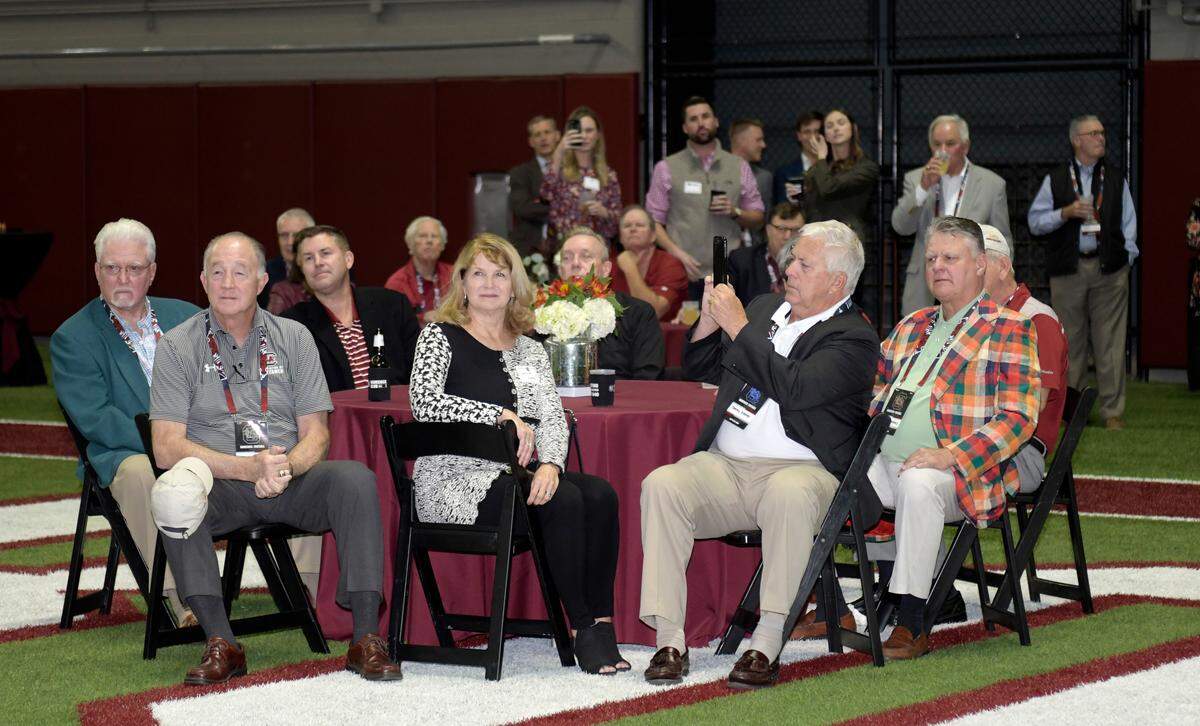
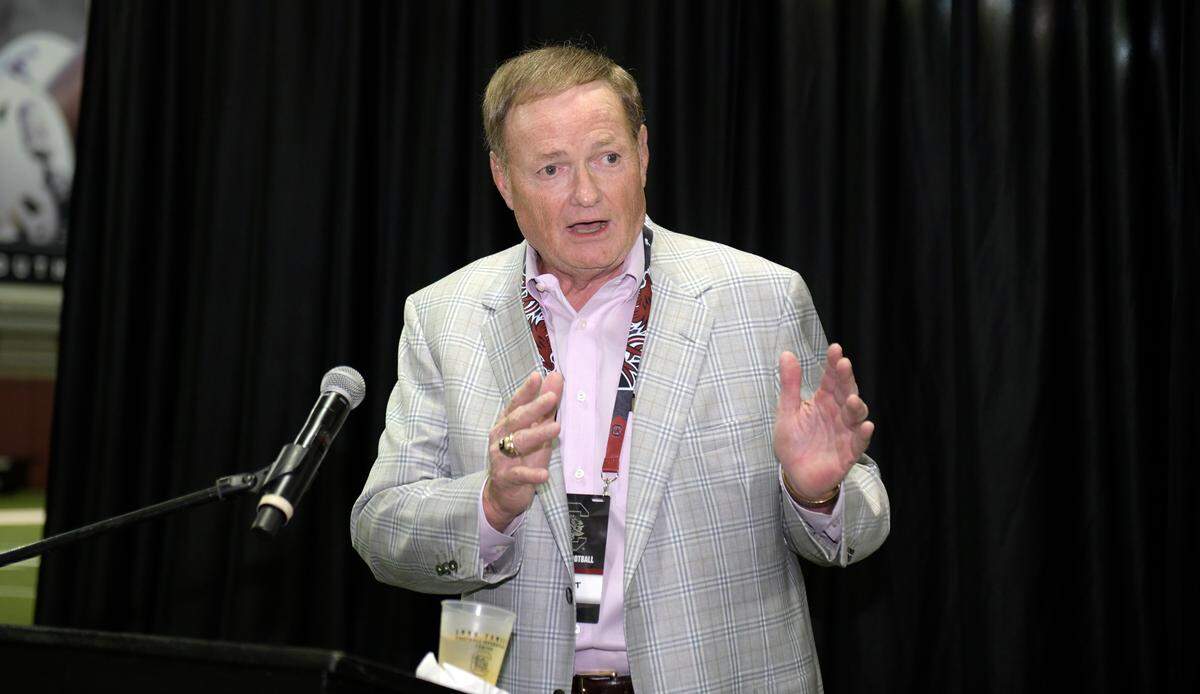
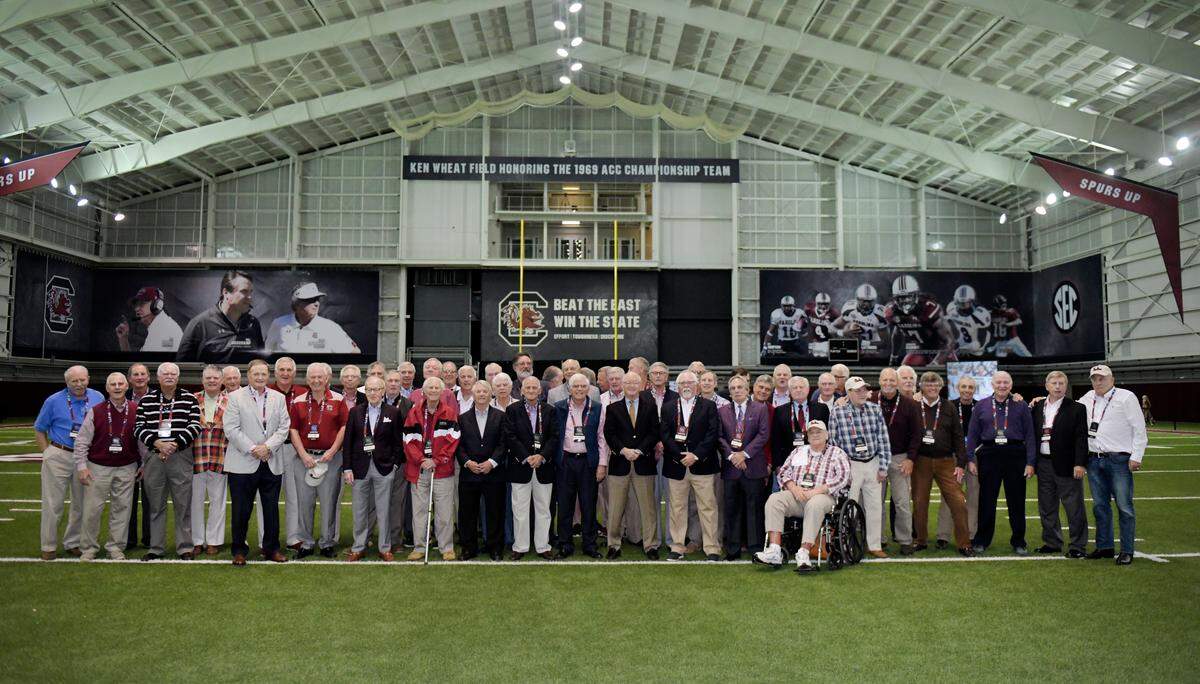
It’s history that USC went undefeated against ACC opponents in football and in regular-season basketball that 1969-70 season. But their legacy is more than victories and a championship. Rather, it’s the lives they live. The bonds created then have never been stronger, a fact on display at their 50th reunion in October.
They met at USC’s indoor practice facility on the field that bears Wheat’s name and that of the 1969 Atlantic Coast Conference football champions.
“When I gave them some money, it had two stipulations — the field would be named to honor the 1969 championship team and we would have a reunion on the field,” Wheat said.
So they came, more than 60 of the them, to tell stories, reminisce and remind of the time long ago that they turned every day into a holiday and every meal into a feast.
They were a team in the best way — and still are.
USC’s 1969 Season, game by game
USC 27, Duke 20
Sept. 20, Carolina Stadium
Down 17-13 and facing a fourth-and-2 play at the Duke 48 in the final period, USC gambled and quarterback Tommy Suggs bolted 48 yards for a touchdown. After the Blue Devils tied the game on a field goal, the Gamecock marched 75 yards for the winning touchdown with Warren Muir scoring with 1:25 remaining
USC 14, North Carolina 6
Sept. 27, Carolina Stadium
Favored by two touchdowns, USC mustered only a pair of first downs in the first half and trailed 6-0 at intermission. The Gamecocks rebounded over the final two quarters with Fred Zeigler’s “tip-drill catch” for a touchdown the highlight. Dickie Harris’ interception at the 7-yard line with 22 seconds left sealed the win.
Georgia 41, USC 16
Oct. 4, Athens, Ga.
The Bulldogs, ranked seventh nationally, dominated statistically and broke open a tight game with 27 points in the fourth quarter. Georgia led 14-10 headed into the final period in a game that saw USC commit five turnovers and Georgia six. Warren Muir powered USC with 136 yards rushing on 21 carries.
USC 21, N.C. State 16
Oct. 11, Carolina Stadium
The Gamecocks trailed 10-0 before erupting for three touchdowns in a span of 8 minutes, 4 seconds in the second half. A 45-yard kickoff return by Dickie Harris ignited USC’s first scoring march, and Jimmy Mitchell’s 72-yard punt return for a touchdown put the Gamecocks in front. USC added another TD before the Wolfpack cut the march with a late touchdown.
USC 17, Virginia Tech 16
Oct. 18, Blacksburg, Va.
The Hokies overcame four lost fumbles to take a 16-14 lead with 1:13 remaining. Back came the Gamecocks with Dickie Harris’ returning the kickoff to the 32-yard line. Tommy Suggs completed two passes to Fred Zeigler and one to Doug Hamrick before Billy DePre kicked a 47-yard field goal to give USC its fourth win, all by eight or fewer points.
USC 17, Maryland 0
Oct. 25, Carolina Stadium
The Gamecocks overcame what coach Paul Dietzel called “a flat performance” to boost their record to 5-1. USC led 3-0 at halftime before the passing combo of Tommy Suggs to Rudy Holloman spurred the second-half offense. The coach called the defensive end play of Dave Lucas, Lynn Hodge, Jimmy Pope and Joe Wingard the keys to success.
Florida State 34, USC 9
Nov. 1, Tallahassee, Fla.
The Seminoles capitalized on Carolina miscues and took command with 20 points over a 7½-minute span of the second quarter. Florida State piled up almost 500 yards of offense, and for the only time all season, USC entered the final period with no chance.
Tennessee 29, USC 14
Nov. 8, Knoxville, Tenn.
The Gamecocks played the nation’s third-ranked team to a standstill for 55 minutes in perhaps their best game of the season. The Vols converted a third-and-14 play to keep their game-clinching drive alive in the final minutes. Warren Muir punished a premier defense for 159 yards rushing on 31 carries.
USC 24, Wake Forest 6
Nov. 15, Winston-Salem, N.C.
The Gamecocks clinched not only the ACC championship but also the school’s first winning season in 10 years with the dominating victory. Carolina’s defense forced the Deacons into nine turnovers _ recovering five fumbles and intercepting four passes. Candler Boyd led the assault with 12 tackles, three assists and an interception.
USC 27, Clemson 13
Nov. 22, Carolina Stadium
With a Peach Bowl bid already secured, the Gamecocks finished their championship season in style by whipping the Tigers in what would be Clemson coach Frank Howard’s final game. USC scored on its first three possessions before the Tigers cut the lead to 17-13 at the half. The Gamecocks, on their way to 517 yards of offense, dominated the second half. Overall, USC ran 96 plays and restricted Clemson to 62.
West Virginia 14, USC 3
Dec. 30, Atlanta
The second annual Peach Bowl turned out to be a mud bowl with torrential rains turning the field into a quagmire. The Mountaineers piled up 356 yards rushing and finally clinched the win with a late touchdown. A consolation prize for Carolina fans: John Roche and Tom Riker led the USC basketball team to an 84-83 triumph over Notre Dame in a battle of nationally ranked powerhouses the same evening.