Mike Bobo is home again in the South. How family, football, rare illness shaped him
A basketball hoop and a family cornhole tournament — these are the things George Bobo remembered when it came to his son Mike’s competitive drive.
They’re small moments, long before Mike Bobo’s time as a successful college quarterback at Georgia, a successful coach at the same school and eventually a head football coach at Colorado State. Now he’s landed at South Carolina, where he was just hired as offensive coordinator and tasked with reviving a Gamecocks attack that struggled mightily last season.
The drive he’ll likely bring to this coming endeavor, it wasn’t hard to see early on.
Bobo’s parents bought a young Mike a basketball goal for Christmas. They put it up in the yard and he started shooting.
“That night, ‘Dad, we gotta put a light out here so I can practice,’” George Bobo recalled.
Years later the family held cornhole championships on vacations, with competitions for the kids and the parents. Teams were sets of couples.
It turned out, Mike Bobo’s brother-in-law Daniel was pretty good and led his team to victory. Mike Bobo took that to heart.
“Next year, he and (his wife) Lainie practiced,” George Bobo said. “And they just blew everybody away. That’s the way he works.”
For much of his life, Mike Bobo led a remarkably blessed career. He got to play and star first for his dad in high school in south Georgia and then for his home-state school. In a profession where stability and moving far from home are regular occurrences, he had uncommon stability and never had to venture too far before finally getting the call-up to a head coaching job.
That took him out of his native region and through a scary health situation.
Now he’s back in the Southeast, set to help an old teammate, Will Muschamp, try and turn things around. The defensive-minded head coach has yet to find a consistent offense across eight seasons and is looking for a big rebound in his fifth year in Columbia. For Bobo, it’s a return to a familiar role, as an SEC offensive coordinator, and a return to much more.
“He’s a great family man,” said Mark Richt, Bobo’s boss for most of his professional career. “He grew up in a home of a coach. He’s a tough, hard-nosed football coach. He’s very current in his ideas, but he’s old school in his process or at least his mentality.”
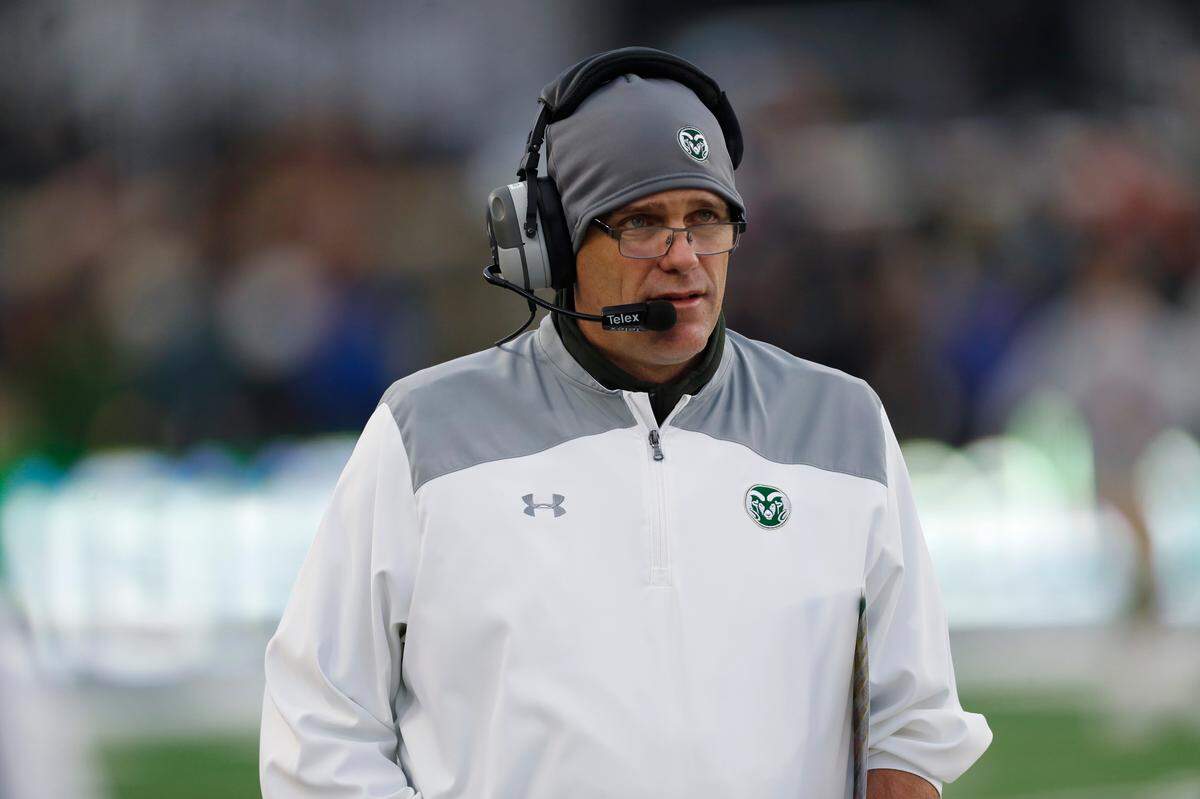
Starting young
As a football coach’s son, Mike was tasked with a crucial role: ball boy. And we’re not just talking every so often.
“He was the ball boy for every time,” George said.
Considering George carved out a gridiron coaching career that stretched across 30-plus years, it was a lot of games.
One of Mike’s most memorable ball-boy exploits came in the 1982 state-title game between West Rome High School, where his father was an assistant, and Mary Persons High. There was torrential rain in a 7-6 game West Rome ultimately won by making its extra point. That meant work for young Mike Bobo, and one big hazard.
“He was running out there to swap the ball and got knocked down,” George said. “He came back ... got knocked down by a big kid. He had mud all over his pants, over his face, and there were tears running down from his eyes. And I hollered, ‘Son, you’ve still got more things to do. You’re one of the most important people out here. You’re keeping the ball dry.’”
The ball-boy experience also showcased a little something else about Mike.
“I’d have the official say, ‘Good gracious alive, your son can throw,’” George said.
The coach’s son was destined to be a quarterback, and a pretty good one.
When Mike Hodges, who George Bobo worked for, left for the college level and Georgia Southern after the 1989 season, George took over the Thomasville High School program. The team went 5-5 in Mike’s sophomore season, and then made the jump to 10-3 the next two years, averaging 29 and 30 points per game. (The team made it all the way to the state title game the year after he left.)
And as Mike was slinging it around, he caught the attention of folks on the next level.
“Just an old-school tough kid,” Richt remembers. “Standing there and throwing strikes, leads his team, competitor, really serious competitor-type guy.”
At that point, Richt was in his first few years coaching quarterbacks at Florida State under Bobby Bowden and future South Carolina coach Brad Scott. Richt tried to get Mike to make that 35-mile trip to Tallahassee and join a team that was about to see Charlie Ward take the sport by storm.
But another coach won that battle.
“His father was a high school coach with a bunch of guys that I knew and got to know and got real close to,” then-Georgia coach Ray Goff said. “I’ve known Mike, I don’t know how long, but it was years before he was a football player. And I was fortunate enough to offer him a scholarship that he came to the University of Georgia was really a good quarterback and a good player and a good person.”
Putting on the jersey
The Bulldogs program Mike joined was one in good shape and, although one couldn’t know at the time, coming of the zenith of the Goff era. UGA had gone 10-2 in 1992, Mike’s last high school season, and had an established passer in quarterback Eric Zeier.
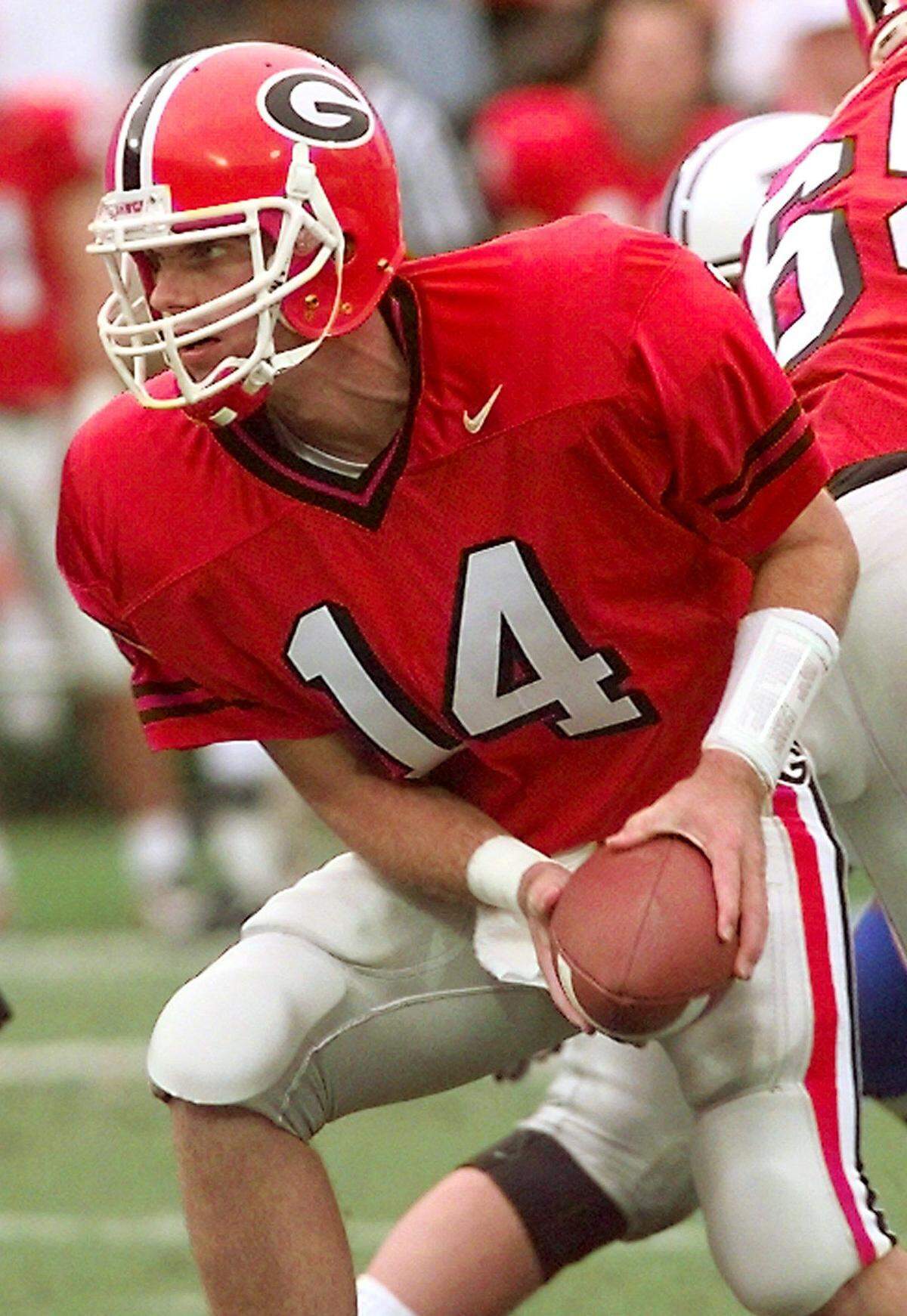
But Goff didn’t get much chance to coach Mike after that.
“He got hurt my last year as the head coach,” Goff said. “At Ole Miss, he tore his knee up. But he was a really good player for us. He understood the game. He knew how to make things happen.”
Mike only played four games that year. Future NFL wide receiver Hines Ward led the team in pass attempts as it finished 6-6. Goff was let go.
So Bobo had a new coach in Jim Donnen.
“He was a very good, accurate quarterback with a pretty good arm but really kind of a coach on the field,” Donnan said. “Did a good job changing plays and really good leadership ability and, you know, being a coach’s son, he knew a lot about the game. He was always really hungry to learn and he was a big part of our program.”
Bobo threw for 2,440 and 2,751 yards in 1996 and 1997, respectively. That second Georgia team went 10-2 and made the Outback Bowl with him ranking second in the country in completion percentage and second in the SEC in passer rating.
Donnan still remembers that afternoon in Tampa, a near perfect day for the quarterback as UGA dominated Wisconsin.
“He set a Georgia record for completion percentage against Wisconsin,” Donnan said. “You can look up what the stats were, I can’t remember, he only missed two, like 26 out of 28 or something like that. So that game really sticks out I mean, his last game was just great. Ron Dayne and all those guys. We really got after them.”
The coach’s memory was pretty good. Bobo was 26 for 28, 267 yards and his team scored the first 33 points of a 33-7 win.
George Bobo had been warned by Goff that it was a different beast watching from the stands as a parent. He always had on a headset, not listening to the running color commentary from fans around him.
Later on, the father learned watching his son play was easier than watching him coach for a simple reason.
On the field, Mike had all the control. With a headset on, he was like any other coach, one level removed and hoping all the preparation paid off.
“I never worried when he was playing,” George said. “When he’s coaching, he ain’t the quarterback, you know, you always worried, well can his kid do what Mike did?”
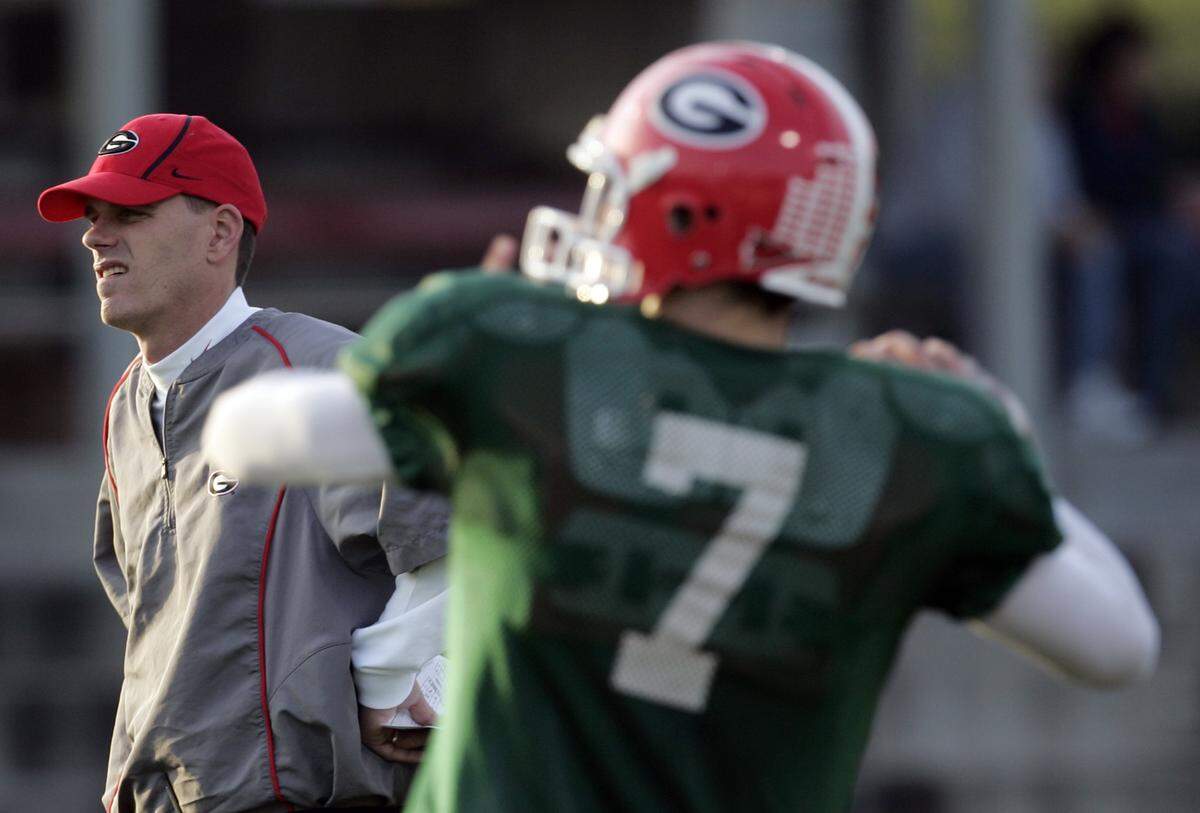
The rise of a coach
Coming up in the communities where he was raised, Mike Bobo might not have had a chance to be anything but a coach. He was in towns that cared deeply about football and was right near the center of it.
“He always made this statement that, ‘All I wanted to be was a head coach, a high school football coach just like my dad was,’” George said, “‘because I saw how everything was where we were.’”
Communities such as Commerce and Thomasville were steeped in the sport, but when college was finished, Mike didn’t leave.
He stayed in Athens, first for a year as an administrative assistant and then a graduate assistant. That was a life of doing the small things, learning the trade hands on.
“He was working with the tight ends and really helping with our scout team,” Donnan said, “running the scout team defense, getting the defense lined up for us. He was very prepared, organized, knew what his job was, and he did a good job during the game charting the other team’s defenses and putting them up on the board at halftime. You could tell he could be a good coach.”
He departed for one season of coaching quarterbacks at Jacksonville State.
But Athens pulled him back, for a different sort of role. Donnan was fired and Mark Richt arrived from Florida State. He wanted Mike, as he had years earlier on the recruiting trail. Yet Richt wanted to remain quite involved with the QBs, his specialty, even as he brought in his QB coach.
“He was capable the first day to coach quarterbacks,” Richt said. “But, you know, I wanted it taught a certain way. So that’s how we did it. But I had his input all along the way.
“At the beginning, I would install the offensive system in the quarterback meeting room and he’d be in there. And he would be the one on the field to carry it out. ... By year three, he was back in the room and he was installing everything and I was sitting there observing.”
Mike spent part of his second year coaching another position group after another assistant was let go. He worked with some good passers, guiding David Greene to one of the best careers in SEC history and helping D.J. Shockley to a strong season in his lone starting year.
By 2006, Bobo was working with eventual No. 1 NFL draft pick Matthew Stafford, and he’d had skill players such as Bryan McClendon and Thomas Brown — both current USC assistants.
Then came the next step of Richt stepping back even more and handing the reins of the offense over.
“The first game he called was a bowl game,” Richt said, “and we didn’t tell anybody about it. I didn’t make some kind of announcement, to say Mike’s taking over play-calling. I said, ‘Mike, here’s the deal, you’re going to call the plays his game.’ ... So I gave him time to get over the, I don’t know if it was the shock of it, but to get over the you know the thought of it and then I said, ‘If things go well, I’m going to tell everybody you called the plays.’ I said, “If things don’t go well, I’ll tell them I called the plays.’ And we did well, won the game, he did a super job and I was able to announce to everybody that Mike’s going to be doing that from then on.”
That was a Chick-fil-A Bowl against Virginia Tech in which UGA ripped off 28 consecutive points in a comeback win.
Bobo called plays for the Bulldogs the next eight seasons. The team mostly fielded good-to-very good offenses loaded with NFL talent. Stafford gave way to Joe Cox, who ended up an assistant on Mike Bobo’s staff, and then Aaron Murray and Hutson Mason.
After Mason led the ‘Dogs to more than 41 points per game, Bobo’s big chance came. He’d have to leave the Southeast. But Jim McElwain had gone from Alabama as an assistant to Colorado State as head coach and then to Florida.
Bobo was hired to replace him and take a next step.
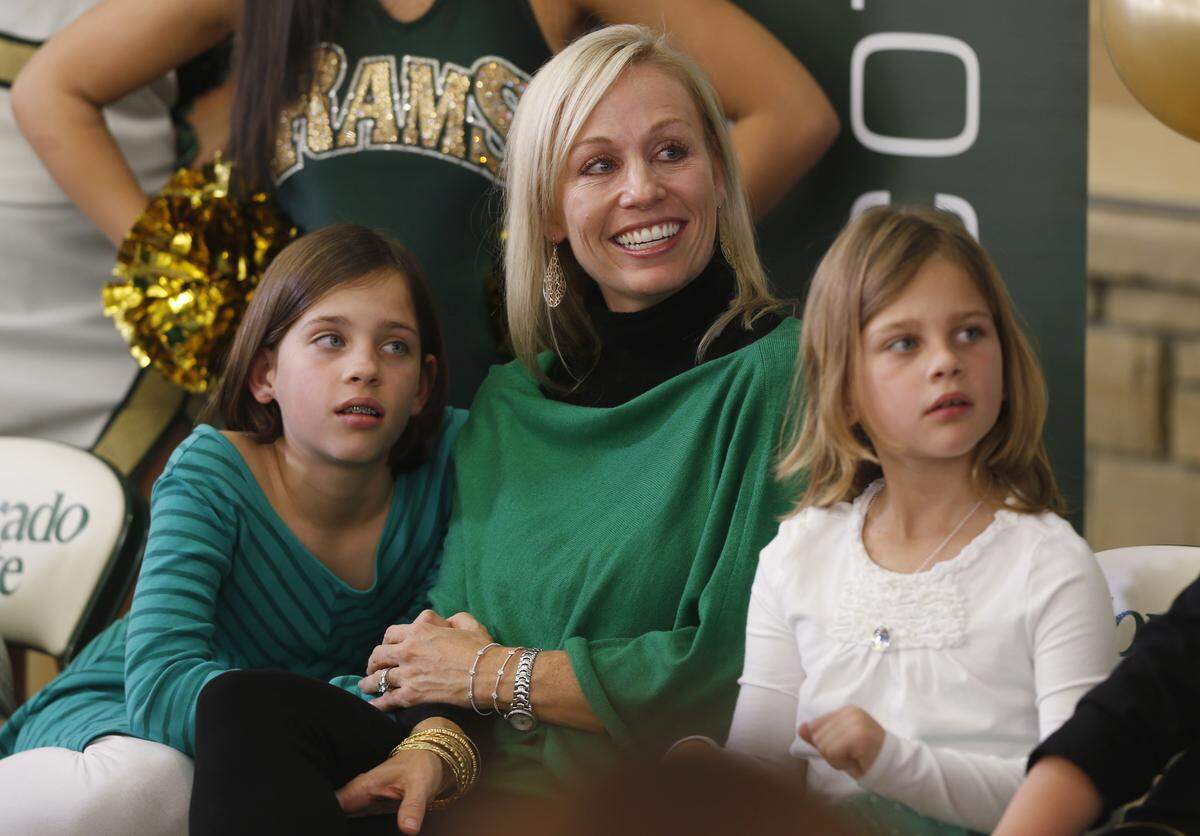
Triumph and trials in the mountains
Although Mike Bobo and his family moving meant going far away from family, it did provide an opportunity for George Bobo and his wife, Barbara, to do a little adventuring.
One year, they spent 70 days in Colorado.
“We went to all the national parks,” George said. “I love going up in Wyoming, I love trout fishing, I love fishing. And we would come back on the weekends if it was a home game and watch the game. Or, this year, we still took the fifth wheel out there. And then we came back into town and aborted some of our stuff because I had some things that happened my truck and we ended up staying there, around that area for three weeks and I got to watch my grandchildren play sports.”
The first three years in Fort Collins were solid for Bobo on the field by most accounts. Each team won seven games and went bowling. The offenses averaged between 29.6 and 35.3 points per game.
But something far more serious befell Mike Bobo.
He told the Fort Collins Coloradoan that he started feeling numbness and soreness after a walk in Las Vegas during Mountain West Media Days in July 2018. He checked into the hospital early that August after pain and numbness spread to his right arm. When he returned to the team 10 days later, it still wasn’t clear what was causing the issues.
And his family rushed to his side.
“His wife called me and said he’s going into the hospital,” George said. “And I said, ‘Do you want us there tomorrow?’ ‘Yes.’ And I got on a plane and flew out there and stayed out there for six and a half weeks. I drove him to work every day. I sat there at the fieldhouse or at the complex and I would take him home at night. And because he was having issues I was there with the kids while he was in the hospital for 12 days or 10 days or however long it was. But that’s what parents do.
“I got to talk with the kids and they wondered why this would happen, and I told them, well it’s just something that’s happening right now. We don’t question the Lord, we just ask him that dad gets better — and he’s gotten a lot better.”
The diagnoses that eventually emerged was a “rare autoimmune disease” that attacked his respiratory system and nerves. He was limited in his coaching with an 18-month recovery timeline.
“I was very concerned about him,” Richt said. “I love him and his family and I worked with him for I don’t know how many years, but 13, 14 seasons together you share a lot of life together.”
Conversations between the two men that had been about first-time head coaching situations turned to something more important. Richt said, “We didn’t talk much about football during that time.”
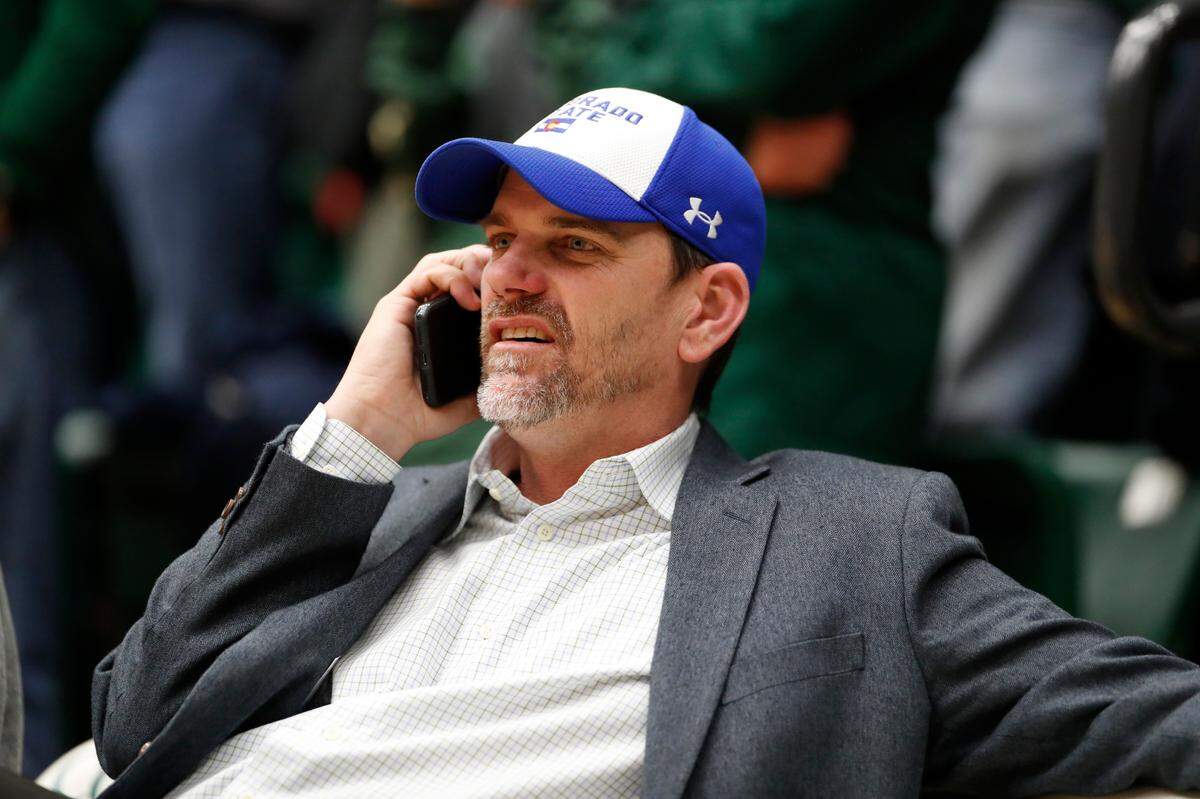
Mike Bobo refused to blame his illness for the team’s 3-9 season in 2018. He told the Coloradoan he was still regaining some motor function after that season. A 4-8 finish in 2019 ended with a mutual parting of ways.
George said he didn’t talk to his son about what the next step was going to be. But everything he was linked to was in the Southeast.
“I talked to his wife when he was in hospital,” Donnan said. “I was very concerned about him just like all of us were but I’m glad he’s able to get that behind him.”
Coming back home
The start of a new assistant coaching tenure is a scrambled and transitory time.
Mike Bobo was approved as a South Carolina football assistant coach Tuesday. He was on the road recruiting that night, seeing quarterback Luke Doty in Myrtle Beach, then tight end Jaheim Bell in Valdosta, Georgia, on Wednesday and making a trip up to Baltimore to see running back MarShawn Lloyd on Thursday.
And his wife is several thousand miles away managing five kids and preparing for a move. But Lainie Bobo is well prepared for something such as this.
“We call her the general,” George said. “She’s given them orders and lines everything up. But she understands that because her aunt is Barbara Dooley, so she saw or watched how Miss Dooley did everything.”
Barbara is the wife of former Georgia coach Vince Dooley. George lamented the strain college coaching puts on fatherhood, but noted his son makes a point to take his kids to breakfast or get to games when he can.
For the moment, Lainie has five kids on three different teams. Her oldest is a sophomore offensive lineman who jumped right into high school basketball. George said he’s got faith she’ll dig in and research the two most important things: a school for the kids and a good church.
George joked one of his immediate priorities is getting himself a Gamecocks hat. He lived up in Rabun County, just over the border from Clemson, and the stores mostly sell UGA red or Clemson orange.
That’s where former USC quarterback Connor Shaw’s father used to coach and where his brother coaches now. George helped some of their quarterbacks with fundamental work, but when he’s asked to do more, he just says he’ll cook them a fish dinner as the start of the season, tell them they’re doing a good job, and get back to retirement.
And at the moment, the finer points of Mike’s coaching aren’t high on his priority list.
After the news broke, George Bobo got a call from Goff talking about meeting to take a trip to Columbia. (“I’ll meet you on the interstate,” George said). He made an offer to his daughter-in-law to come out to Colorado and babysit while she looks at schools and houses in the Columbia area.
This process is getting back to something for the Bobos. Mike was blessed to be close to home, close to family for most of his life, until opportunity took him far afield. It didn’t work out the way one might hope and featured some harrowing moments, but now he’ll return to this part of the country, join a team run by a former teammate (Muschamp), work with former players (McClendon, Brown) and start something new.
George didn’t waste much time getting to his own silver lining. He’d grown used to watching Mike and Lainie’s children’s athletic events on video or streaming online. Soon, father, son and everyone else will be just a few hours away.
“He’s bringing my five grandchildren back,” George said when asked about a silver lining. “They’re all looking forward to coming back, fishing on Lake Burton and being with Grandpa and Grandma.”