
This former South Carolina football player aims to change policing from the inside
Four days after George Floyd’s death, a young Black protester walked up to a line of baton-wielding police officers in San Jose, California, kneeled on one knee and raised her fist in the air.
Then, with tears in her eyes, she approached the biggest officer in the line — a 6-foot-3, 300-pound Black man — and asked him a simple question:
“Why? Why would you want to be a cop?”
There was a time, not long ago, when Terrence Campbell wouldn’t have known how to answer that question. He never planned on becoming a cop, and he didn’t particularly like the police. For most of his life, the only dream that mattered to him was playing football.
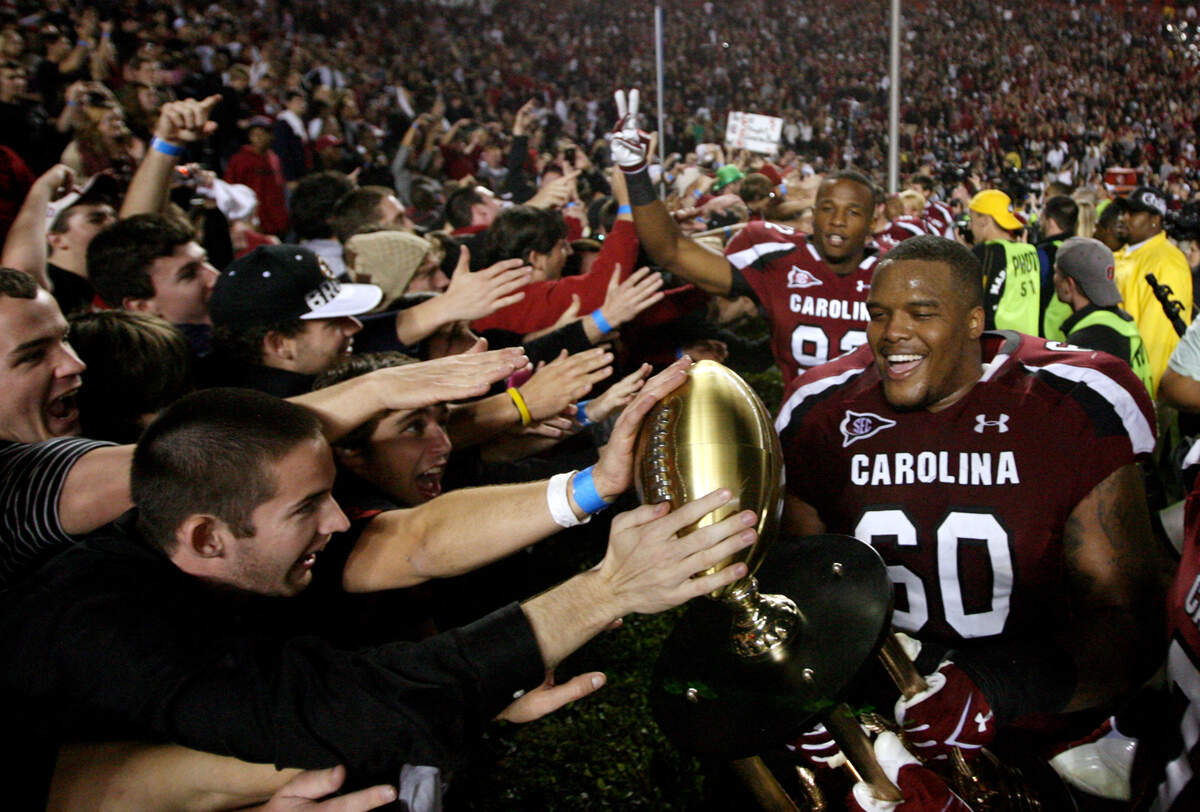
Campbell played on the offensive line for two of the best South Carolina teams in program history, in 2010 and 2011, protecting quarterbacks Stephen Garcia and Connor Shaw and opening up running lanes for Marcus Lattimore. He had NFL opportunities with the Washington Redskins and New York Jets as an undrafted free agent, but he spent the bulk of his professional career bouncing around the Arena and Canadian football leagues.
When his football opportunities dried up around the age of 30, Campbell tried opening a gym in his hometown of Atlanta, but the business floundered. In April of 2018, Campbell realized he needed to find a new line of work.
There was no grand vision behind becoming a police officer — at least not at first. In the beginning, Campbell was simply browsing job websites and searching for work that paid well and had similarities to sports. When he started hearing from police academy recruiters, he was skeptical. Even when he moved to San Jose and started taking academy classes, he had numerous thoughts of backing out, wondering if he was truly making the right move, wondering what his friends back home would think of him.
“In the beginning I was like, ‘Man, I ain’t gonna tell nobody I’m a cop,’” Campbell said. “I was telling my friends, ‘Let’s just keep it a secret. Let’s not say too much. I’m not letting nobody know.’”
Like many Black Americans, Campbell grew up in communities that feared and distrusted the police — and for good reason. He had friends who were on the receiving end of police discrimination, and he experienced discrimination himself. Because his mother gave birth to him when she was 14, Campbell lived the first few years of his life in a group home owned by his grandmother in Tennessee, with 10 or 11 other boys. He has memories of officers coming to the home and arresting some of the boys, for reasons he never knew. When Campbell moved to Atlanta with his mother as a second-grader, his fear intensified.
One day, a neighbor called the cops on Campbell and another elementary-school-aged boy for fighting in the street in front of Campbell’s house. Campbell remembers how frightened he felt when the police officer cuffed him and put him in the back of his car, driving Campbell to his friend’s house to apologize. As a teenager, there were nights when Campbell would walk home after hanging out with friends, and cops would follow behind him, shining their lights on him, telling him to put his hands up against a wall and then searching him.
At 17, Campbell was arrested in his neighborhood for driving without a license and possession of drug paraphernalia. Those charges were later expunged, but Campbell will never forget the hours he spent in the holding cell or the cops asking him to strip naked so they could search his body for drugs. One cop told him that he’d never get to college, that he was going down the wrong road. Campbell held onto those words and used them for motivation.
So, no, Campbell didn’t like the police when he was younger. He never knew a cop who looked like him or who could relate to him. When he started looking at job opportunities in the world of law enforcement, he doubted whether he belonged. He wondered whether he could be a cop and also be his authentic self, whether he could still listen to rap music and dress how he likes to dress.
“My whole body’s covered in tattoos,” Campbell said. “I’m big. I’m loud. I like to wear nice clothes. I fit that whole description of somebody who potentially could be a drug dealer.”
He’s not kidding. While studying at the police academy, there were nights Campbell would go out in San Jose and strangers would come up to him and ask, “Hey man, you have any cocaine?” And he’d politely respond that he was a cop in training.
“I look like that,” Campbell said. “That’s the perception you get, because of the movies and music. That’s the perception you get in your head.”
And that’s a perception Campbell is trying to shake.
Campbell pushed past his doubt and graduated from the San Jose police academy in September of 2019. Nine months later, on May 29, he stood shoulder to shoulder with his fellow officers, baton in hand, staring back at a sea of protesters holding “Black Lives Matter” and “I Can’t Breathe” signs.
When that young woman approached Campbell, he could see the pain in her eyes. He knows that pain. He’s felt that pain. TV news cameras zoomed in on Campbell having a conversation with the protester, talking with emphatic passion. He talked with multiple protesters. He didn’t see his uniform as a barrier between them. He didn’t see himself as being on another side.
“I am them. I’m from that,” Campbell said. “I’m African American myself, and just because I’ve been a police officer for nine months doesn’t change the fact that I’ve been an African American for 32 years. So I understand what’s going on, and I’m totally for the cause. When I see that stuff happen, of course I’m going to be compassionate. Of course I’m going to want to speak to her. Of course I’m going to explain to her why I want to be a cop, because I want her to understand what I’m looking to accomplish and seeking to do. I want her to know that. Black lives matter all day, every day.”
Why does Terrence Campbell want to be a cop?
Because he’s not going to wait for policing in America to change. He wants to be the change.
Never Took a Day Off
Across Campbell’s chest, just over his heart, is a South Carolina Gamecocks tattoo.
Columbia will always be close to Campbell’s heart. It’s where he grew into a man and a leader, where he found his confidence and self-belief and where he developed a positive outlook on life.
If not for key mentors, Campbell’s Gamecocks career could’ve easily never materialized. He’ll never forget his high school teacher Victor Burrell, who helped Campbell with his community service after his arrest at 17. Burrell would take Campbell out to eat and talk to him about the importance of opportunity, of going to college, and he tutored Campbell to make sure his grades didn’t slip below college requirements.
Shortly after Campbell arrived at USC in 2006, he injured his left knee in camp and had season-ending surgery. His grades immediately suffered. With no vehicle, Campbell could barely navigate campus on crutches. Without football, he struggled to stay motivated. Then-coach Steve Spurrier could’ve kicked Campbell off the team before he even played a snap. Instead, Spurrier arranged for someone on his staff to drive Campbell to every single one of his classes. Then, to keep him involved with the football program, Spurrier had Campbell host recruits on their visits.
A naturally bubbly and charismatic extrovert, Campbell filled that role with aplomb. He remembers hosting current Philadelphia Eagles wide receiver Alshon Jeffery as a recruit and Jeffery telling him, “I’m trying to go to the hall of fame.” Campbell had never seen such confidence in a teammate before. Players like Jeffery, Lattimore and Stephon Gilmore with their high motors and laser-focused determination all rubbed off on Campbell. In his six years in Columbia, Campbell grew into a master motivator in his own right. He used to yell repeatedly during practices, “Never took a day off. I do this (expletive) to pay off.”
“He would scream that all day long,” said Akeem Auguste, a former South Carolina cornerback. “We would be dead tired, everybody would be out there throwing up, passing out, and he’s just screaming, ‘Never took a day off. I do this (expletive) to pay off.’
“And that would motivate us, man. People would get up. If he could do it, we could do it. He was one of those guys that everybody fell in line for. It was off of his actions. People followed him.”
Even more, after every Friday practice, Campbell would host a cookout for the entire Gamecocks team at his off-campus house as a way to foster team chemistry and togetherness. The idea was Campbell’s alone. He funded the cookouts himself.
In those days, none of Campbell’s teammates could’ve predicted that he would go on to become a police officer. Even now, Campbell hears reactions from old teammates and friends like, “Dang, I can’t believe you’re a cop,” or, “I don’t know how they let you become a cop.”
Auguste is one of those former teammates who was surprised by the move. Three years ago, Auguste partnered with Campbell to open their gym in Atlanta, and when it failed, Auguste couldn’t believe that Campbell would enter the policing world.
Much like Campbell, Auguste witnessed police discrimination while he grew up in Florida. He said there were certain streets in Broward County that Black people couldn’t drive down by themselves without getting pulled over. With the recent police killings of George Floyd and Breonna Taylor, Auguste remains wary of cops. He’s still living in Atlanta, where police shot and killed Rayshard Brooks outside of a Wendy’s on June 12.
“There’s no love for nobody right now in Atlanta, because you can’t trust nobody,” Auguste said. “It’s scary right now. Literally scary. Like, this guy gets shot in the back. You shoot in the back?”
Auguste said he doesn’t believe all police officers are bad. He doesn’t blame individual cops as much as he blames a system that empowers the kind of person who would shoot an unarmed Black man or place a knee on someone’s neck for nearly nine minutes. Because of 400 years of systemic racism, he’s skeptical that just one person, one cop, can create change.
But he admires Campbell for trying.
“Even those recent events that have happened, it’s been going on,” Auguste said. “This ain’t new. It’s been going on our whole lives, and nobody’s yet to change it. But if somebody can, and I think with the right support, T-Camp can be that person. I tell him, you should try to be president. I mean, why not?”
Auguste will always be in Campbell’s corner. He even attended Campbell’s police academy graduation in September. In their time together at South Carolina, Auguste saw firsthand how Campbell acts in a position of leadership, how he treats people with kindness and compassion, no matter their race.
“He really brought us together,” Auguste said. “And he feels like he can do that with the world. And if he can, I’m gonna be with him. I’m still gonna be with him.”
‘We have to get involved.’
After TV cameras caught Campbell peacefully engaging with protesters on May 29, his Instagram inbox flooded with messages from people he never met before. Black citizens of San Jose sent Campbell messages like, “Man, I’m so happy you’re on the force,” and, “I feel safe knowing that you’re in San Jose.”
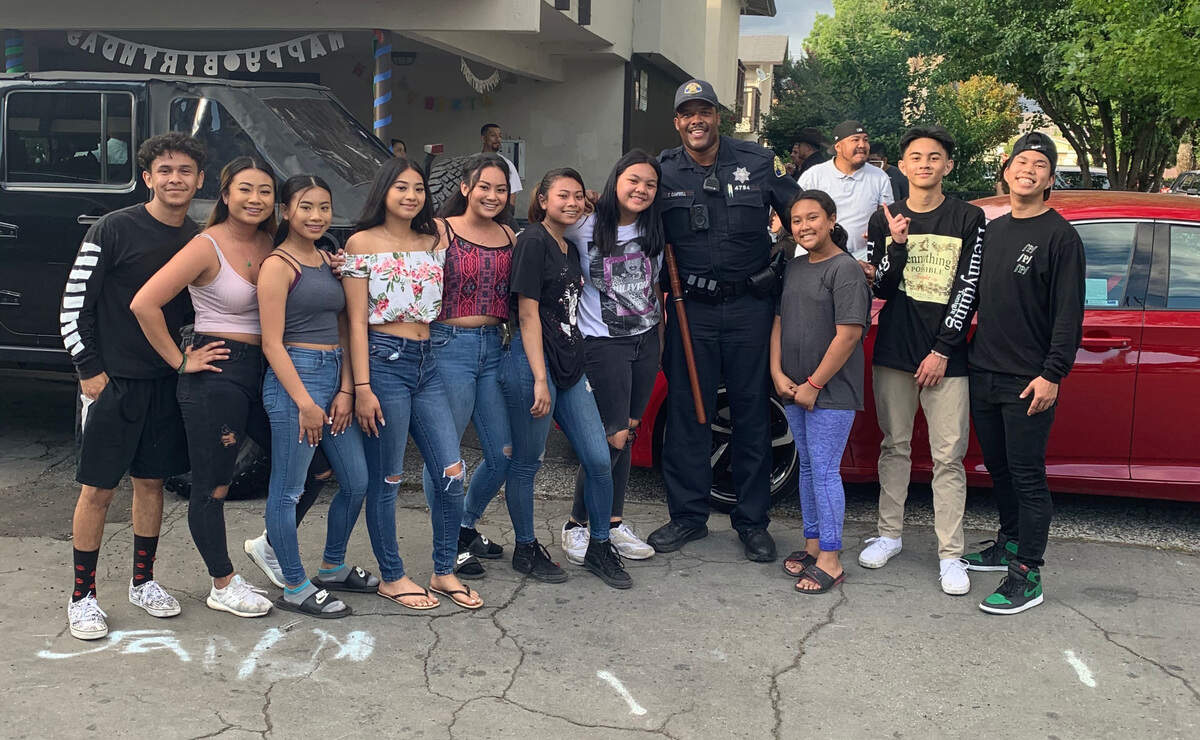
A day later, the San Jose Police Department posted an Instagram picture of Campbell, in his full police uniform, playing basketball outside with a group of San Jose teenagers.
Campbell treasures those kinds of interactions. While he didn’t become a police officer for the attention, he also understands the platform that he has now. He wants to show others that it’s possible for someone with his background to become a cop, and that cops can make positive contributions to a community.
Campbell’s negative experiences with the police growing up have shaped the kind of cop he is today. He wants to be the kind of officer he never met growing up in Atlanta, the role model he never had, someone young black teenagers can trust instead of fear.
“I don’t want to work in a nice neighborhood,” Campbell said. “I don’t want to work in a neighborhood where it is peaches and cream, where everybody is already out there running around and jogging and people are pushing baby strollers. I want to be in a neighborhood where people are a little shaken up, with gangs outside. Those are the neighborhoods I want to be in.
“Because I’m the cop that’s going to come up and drop you off at basketball, and after I drop you off at basketball, I’m gonna drop some knowledge on you about life and about opportunity and about change.”
Campbell said he gets no satisfaction from arresting the common citizen. He knows, from experience, how hard an arrest can be on a person’s family, how it can change someone’s life. And he insists that he’s never going to stand by while a fellow officer puts a knee on someone’s neck or slams a handcuffed person to the ground. When he analyzed the recent situation in Atlanta, where officers found Brooks inebriated and sleeping in his car at a Wendy’s drive-through, Campbell said his response would’ve been to let Brooks walk home or arrange a courtesy transport, especially given the current climate.
“And I truly believe my command staff would’ve been fine with that, as well,” he said.
The San Jose Police Department has shown nothing but support for Campbell expressing his views, Campbell said, and he appreciates the opportunity to have a voice. Equally, Campbell appreciates Black Lives Matter protesters expressing their own voices. When he heard that Will Muschamp and the current South Carolina football team marched in protest, he called it “awesome” and said his South Carolina teams would have marched, too.
But Campbell adds that America needs more than protests; it needs action. When he thinks about the Civil Rights movement, he thinks about the doors pioneers like Martin Luther King Jr. opened for Black people to become officers, doctors, lawyers and politicians.
“That’s why I’m like, ‘Man, if we really want change, we have to get involved,’” Campbell said. “We have to vote. We have to become officers. We have to get in the door and have those uncomfortable conversations to make people understand that just because I look like this it doesn’t change the content of my character. I can have dreads. I can wear gold teeth. But does that mean I’m not a great person? Does that mean I’m not going to stand up for what’s right? No, it doesn’t.”
In the short time since Campbell appeared on TV during the San Jose protests, he’s sent five police department applications to former teammates and friends. He said his goal is to recruit former athletes and people of color to the police, to show them that they can create change from the inside.
Zack Williams, one of Campbell’s former teammates in the Arena Football League and a former 2011 Carolina Panthers draft pick, is currently enrolled in the same San Jose academy that Campbell attended. In a few months, Williams and Campbell will be teammates, once again, on the police force.
Though Williams was already considering joining the police, his relationship and conversations with Campbell cemented his interest and led him toward San Jose. Much like he did in his football-playing days, Campbell has inspired others through his work ethic. Williams said whenever he calls Campbell on one of his off days to see what he’s up to, Campbell will respond with something like, “I’m going to go talk to the kids,” or, “I’m going to volunteer.” Police academy instructors are already talking about Campbell’s engagement with protesters during Williams’ classes.
Seeing Campbell thrive while being his true, authentic self gives Williams’ hope that he can do the same.
“I think it’s huge, man, because for people who know him and know where he comes from, they’re like, ‘Terrence is a police officer? That’s crazy,’” Williams said. “If he can do it, maybe I can make a difference. Maybe I can do something. Change doesn’t happen overnight. We protest now, but we protest for the future. Things aren’t going to change tomorrow or in an hour. That’s just not how life works.
“But the things that we’re doing now, with Terrence taking small steps and doing what he’s doing, that changes the future. Change comes from within. You can only start with yourself.”
11:11
Why did Terrence Campbell become a police officer?
Campbell didn’t always know his “why.” His “why” had to evolve. It took time. Early on in his training, Campbell was simply looking for a sign. He prayed to God: “If this is really for me, can you please show me? Can you please give me some type of direction? Give me something?”
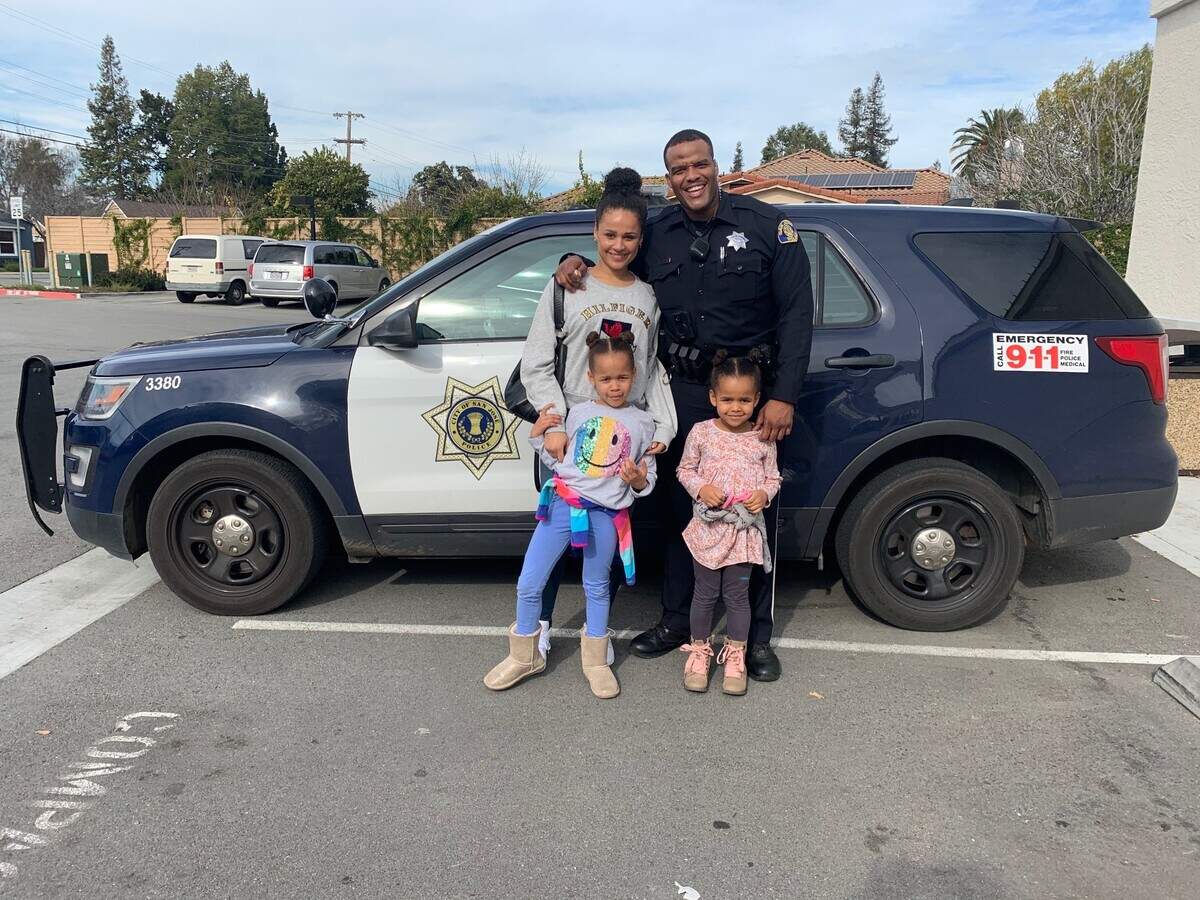
Faith plays a central role in Campbell’s life and perspective. He believes that everything happens for a reason, that it’s all part of a bigger plan. And he finds comfort in the little synchronicities and coincidences he finds in his life, especially with dates and numbers. One day, he added up all of the digits in the birthdays of his two daughters, Milana and Lucie, and discovered that they added up to 60 — the number he wore at South Carolina. The discovery gave him chills.
Eleven is another important number to him. Maybe the most important. Campbell’s best friend growing up, Kenny McKinley, wore No. 11 at South Carolina. Campbell and McKinley were inseparable at USC, both fun-loving people with vibrant personalities. In September of 2010, while with the Denver Broncos, McKinley died by suicide. To this day, every time Campbell sees the number 11 or sees 11:11 on a clock, he’ll say to himself, “One time for my boy, Kenny Mac. I love you always and forever.”
It was through McKinley that Campbell received the sign he needed. Campbell’s police academy graduation happened to fall on Sept. 20 — the exact date of McKinley’s death.
“When I saw that correlation, I was like, ‘Man, God, turned a day that was such a negative day for me, such a negative day for my family and my friends, he turned that day into a joyous day,’” Campbell said. “He’s turning that day into a day of accomplishment, a day of gratification. Of course, we’re still going to think about Kenny on that day, but we’re also going to be like, ‘That boy decided to be a police officer on that day. That boy decided to be a part of change.’”
McKinley’s parents and sister were present on that day. McKinley’s mother told Campbell that his graduation was the first reason she had to smile on Sept. 20 since her son passed.
Campbell doesn’t view that connection as a coincidence, nor does he think it’s an accident that he ended up in San Jose, or that he was the officer in the police line that the protester approached and talked to.
“God don’t make no mistakes, man,” Campbell said. “I’m exactly where I’m supposed to be, and I’m doing exactly what I’m supposed to be doing. And at the end of the day, I know that this is going to affect and help a lot of people in the long run. And that’s what it’s all about. That’s what my life is all about.”
That’s his “why.”
This story was originally published June 24, 2020 at 5:00 AM.