How South Carolina’s newcomers changed their bodies one meal at a time
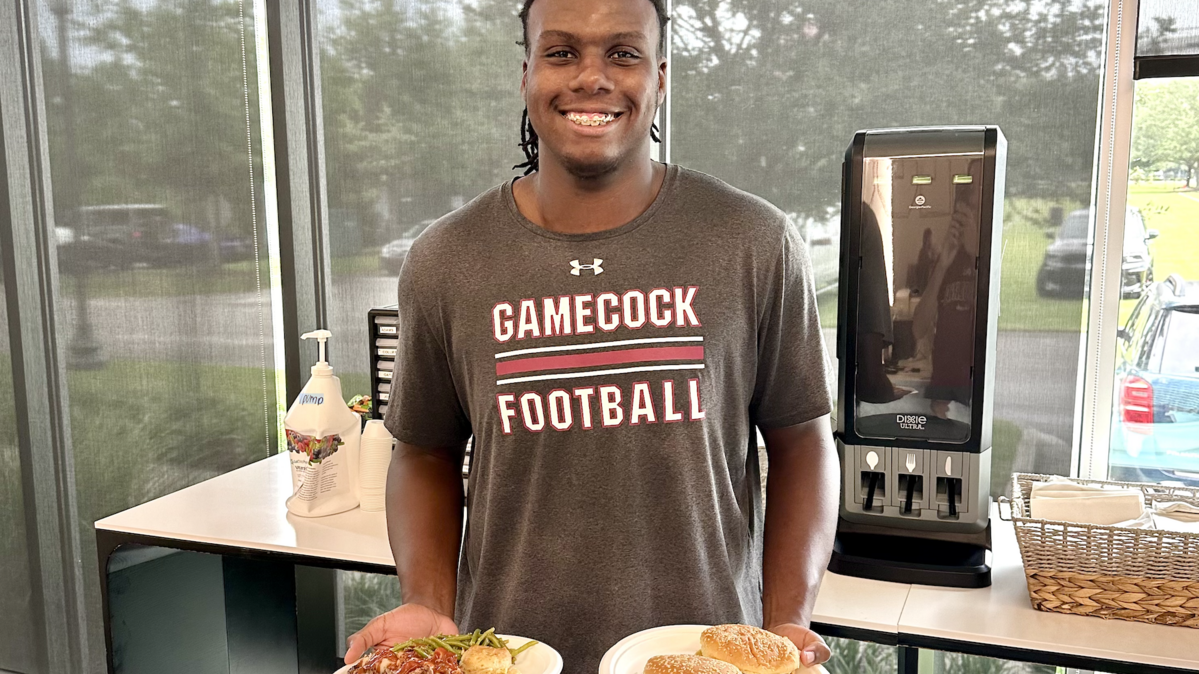
Dylan Stewart does not like veggies. Which is sort of incredible.
He is 6-foot-6, 248 pounds. He has a 4.9% body fat percentage while looking like a Men’s Journal cover model … and good luck ever seeing him carry a plate with broccoli or asparagus.
He is not the first football player to detest greens and he won’t be the last. Yimy Queipo Rodriguez, South Carolina’s director of football nutrition, knows this. And he has a solution: Eat fruit. Sub a banana for a bell pepper. Trade in blueberries for Brussels sprouts. Strawberries for squash.
“At least you get some nutrients there,” Rodriguez said.
When Stewart, the five-star freshman edge rusher, arrived on campus, Rodriguez and the Gamecocks’ coaching staff weren’t sure exactly what Stewart needed. They had to first see Stewart in a college weight and training program for a little bit before they could identify whether he needed to put on pounds or drop a few.
Heck, they’re still exploring what different phases of the football calendar year are doing to Stewart’s body and what weight will have him playing his best. The goal has simply been to keep Stewart maintaining his weight.
The two big keys were trying to educate Stewart on timing his meals — spacing out when he’s eating to maximize energy — and ensuring sure he was eating 200 to 250 grams or protein so he didn’t lose any muscle.
OK, there was another key — making sure he ate.
“He’s not a big eater,” Rodriguez said. “He’s coming from a different city, different background and at times he’d come through the line and was like, ‘Man, I really don’t feel like eating this.’ … When you see (new food), you might not know what to do with that. It might not look the best, right?”
The solution: Personalize the meal.
South Carolina’s food is normally served buffet-style, but Rodriguez would have one of the Gamecocks’ chefs put Stewart’s meal in a different container with his name on it.
If the buffet had Spanish rice, BBQ chicken, mashed potatoes and a roll, Stewart’s container would have Spanish rice, BBQ chicken, mashed potatoes and a roll. But Stewart’s meal would be cheffed up — plated cleanly, with maybe some finely diced green onions on top.
“It’s the same thing, but we just present it differently,” Rodriguez said. “Again, everyone is different and these things are not in any book. This is us going the extra mile to get a guy like Dylan Stewart to eat our meals.”
That lasted about a month or two. Then Stewart began to get comfortable with the food, OK to go through the line and serve the food himself. He adapted, losing 10 pounds of fat and gaining 7 pounds of muscle since arriving at USC in January.
And now he’s about to head into his freshman year as an 18-year-old with a physique ready for a bodybuilding competition.
Rocket Sanders using knowledge to get leaner
For Rodriguez to keep the Gamecocks eating properly, it takes education and options.
Take Raheim “Rocket” Sanders as an example. He arrived at South Carolina as a transfer running back from Arkansas who had just undergone shoulder surgery. Before the tailback spoke with Rodriguez, no one had ever talked with him about how his nutrition could affect both his body and his recovery.
The education had been boiled down to: If you want to gain weight, eat more. If you want to lose weight, eat less. It had skipped over all the nuance of food, all the talk of carbs and fat and protein.
When he came into the South Carolina program, he weighed 250 pounds with 18% body fat. Rodriguez sat down with him and they formulated a plan. Sanders bought in immediately. As of this week, he weighed 226 pounds and his body fat was down to 11%.
“He bought in from Day One,” Rodriguez said. “Your typical pro-minded player.”
Different nutrition paths for freshman O-linemen
Managing a 120-man football team is darn near impossible. There is a ridiculous number of guys at different positions needing their bodies to look different ways. And even the ones playing the exact same position can have two mismatched objectives.
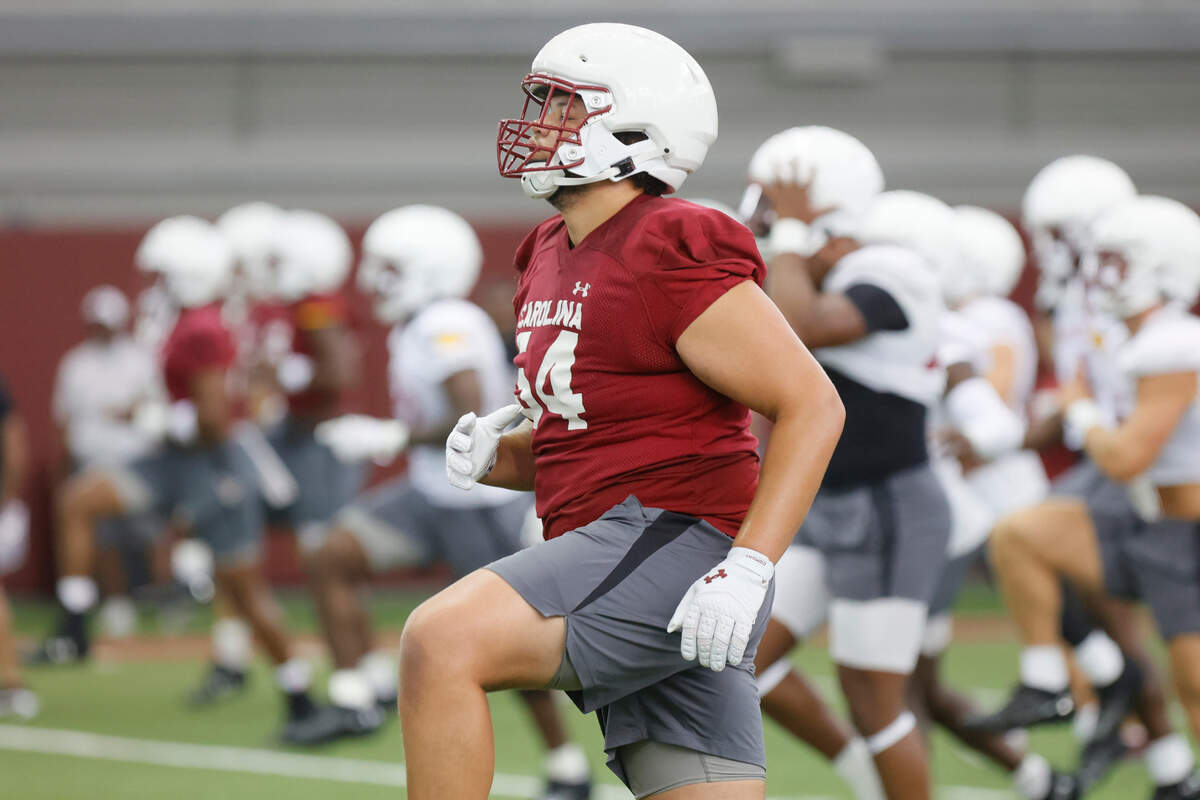
The best example: South Carolina’s two highest-rated offensive line signees in the Class of 2024 were five-star Josiah Thompson and four-star Kam Pringle. Both played tackle. Both were well-regarded. Both arrived on campus in January.
And yet they weren’t in the same weight stratosphere. Pringle arrived weighing 368 pounds. Thompson got to Columbia at just 265 pounds.
Over the past seven months, both have been on diverging nutrition journeys.
Rodriguez’s plan was for Thompson to gain 1 to 2 pounds weekly, a consistent climb that would allow his joints and ligaments to adapt to the extra weight. Sure, Thompson could’ve scarfed down a PB&J and chugged a glass of milk every two hours, but then again, lean and obese are different.
Still, Thompson was eating six to eight meals a day — depending on the training and effort of the day. That’s 5,000 to 6,500 calories and 250 to 300 grams of protein. It’s basically double what the average man consumes.
“With Josiah, the first step was understanding portions,” Rodriguez said. “Using the simple concept of your hands as kind of a measuring tool to make sure you are hitting (your) ranges. I didn’t want to overwhelm him.”
When asked how many calories he consumes on a daily basis, Thompson had no clue. Perhaps that’s for the best. Rodriguez isn’t trying to bog these guys down with exact numbers. He tells them how many daily meals they need, how much protein per plate (an example: two chicken breasts the size of your hand) and then gives them options so they enjoy the process.
A possible meal day for Thompson might look like this.
Breakfast: Three pancakes with syrup. A bowl of grits. Eggs. A couple of pieces of bacon. Juice. Any fruit.
Post-training session snack: Meal replacement shake that consists of granola, high-protein milk, peanut butter and fruit. (It can be tweaked with different stuff based on what Thompson is craving.)
Lunch: Two cups of mac and cheese. Six ribs. Vegetables. (“He’s a really good eater,” Rodriguez said.) Some fruit. Juice or a protein milk.
Afternoon snack: Rice and chicken. (For the guys trying to lose/maintain weight, Rodriguez gives them a “goodie bag” with beef jerky, yogurt and/or pistachios to eat in the afternoon.)
Dinner: Two sloppy Joes. Meatloaf. Mashed potatoes. Green beans. Two rolls. (During the summer, Rodriguez would give guys a list of places to go and they’d send pictures of their plates. Now they eat dinner at the facility).
Late-night snack: Ham and cheese sandwiches. Some fruit. Milk. Yogurt parfait.
“It takes discipline. I can only give guys the tools and guidance,” Rodriguez said. “At the end of the day, they have to come through. And he did. He’s doing a great job. He’s a pro at it.”
In a different way, Pringle knew he had to change.
“(I was) way too big,” he said.
Rodriguez had never met an 18-year-old pushing 370 pounds before Pringle walked into the facility. The challenge was getting Pringle to understand he needed to lose a significant amount of weight but didn’t need to starve himself.
The plan was to make sure Pringle ate enough protein to maintain his muscle mass, then Rodriguez had him cut back on the portions of everything else.
He also had to educate him more about fried foods, which were a staple for Pringle in high school, explaining that the oil is fatty and one gram of fat is nine calories.
“He loved Armando’s (Mexican Restaurant) and wings,” said Pringle’s dad, Troy. “He learned he can’t move with that kind of weight at the college level.”
Pringle was almost too disciplined. He lost almost 40 pounds in two months, dipping so low that he actually had to begin gaining weight — up to 338 pounds, where he sits now.
Rodriguez said: “What I tell these guys is, ‘Look, you got to this weight in years. You didn’t get to this weight in a month. Don’t expect to get where you need to be in a month.”
At dinner Sunday, there was a dessert option of chocolate or peanut butter pie. Pringle waltzed through the line and didn’t grab either. No pie! Rodriguez wasn’t even watching — another offensive lineman told him about it later.
Recalling the story, he grins.
“He’s come a long way,” Rodriguez said.
This story was originally published August 9, 2024 at 7:15 AM.