
LaNorris Sellers preps for Year 2 as starter. How did other USC QBs fare in same season?
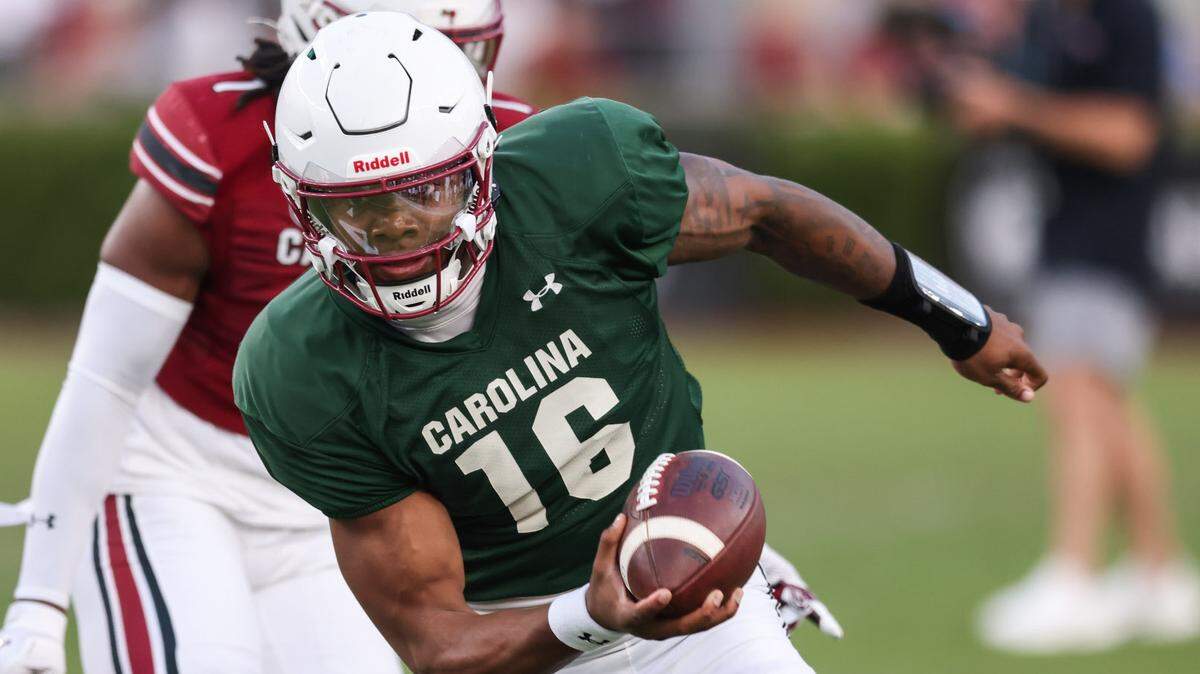
Not every quarterback gets the opportunity that’s ahead of South Carolina’s LaNorris Sellers.
The Gamecocks’ single-season passing leader, Dylan Thompson, only started one season. Recent blue-chippers like Luke Doty and Ryan Hilinski each had stretches, but neither started to begin consecutive seasons in garnet and black.
Sellers grew an enormous amount through his first season, and what he can do in his second in 2025 will go a long way toward the Gamecocks‘ chase to match the hype that has built this offseason.
With that in mind, it’s worth looking back at the Gamecocks who did get a second year behind center and how they fared.
Spencer Rattler, 2023
This might be a bit of a cheat because he’d started more than a season and a half at Oklahoma. But after a decidedly inconsistent first season in Columbia, the former five-star raised his level of play considerably in 2023, throwing for 3,186 yards while completing 68.9% of his passes and posting a 147.7 QB rating. His success didn’t translate team-wide because of an injured and often thin (if top-heavy) group of play-makers and an offensive line that struggled.
Jake Bentley, 2017
Bentley had caught national attention for stepping in as a true freshman and helping salvage Will Muschamp’s first season. Year 2 saw the peak of that coaching tenure, going 9-4, but Bentley just took a modest step forward to being a relatively solid QB. He threw for 2,794 yards, with 18 scores and 12 interceptions, but did not pilot a highly efficient or explosive passing game. (His next year saw considerable improvement.)
Connor Shaw, 2012
The Georgia product took a decided step forward his second season, following a Year 1 when he stepped in to replace Stephen Garcia after his dismissal from the team. Shaw wasn’t a high-volume player, but he was efficient on the way to 1,956 passing yards, 17 touchdowns and seven picks. He also showed grit as a runner, posting 435 yards and leading an offense that averaged 31.5 points per game, helping the Gamecocks to 11 wins.
Stephen Garcia, 2010
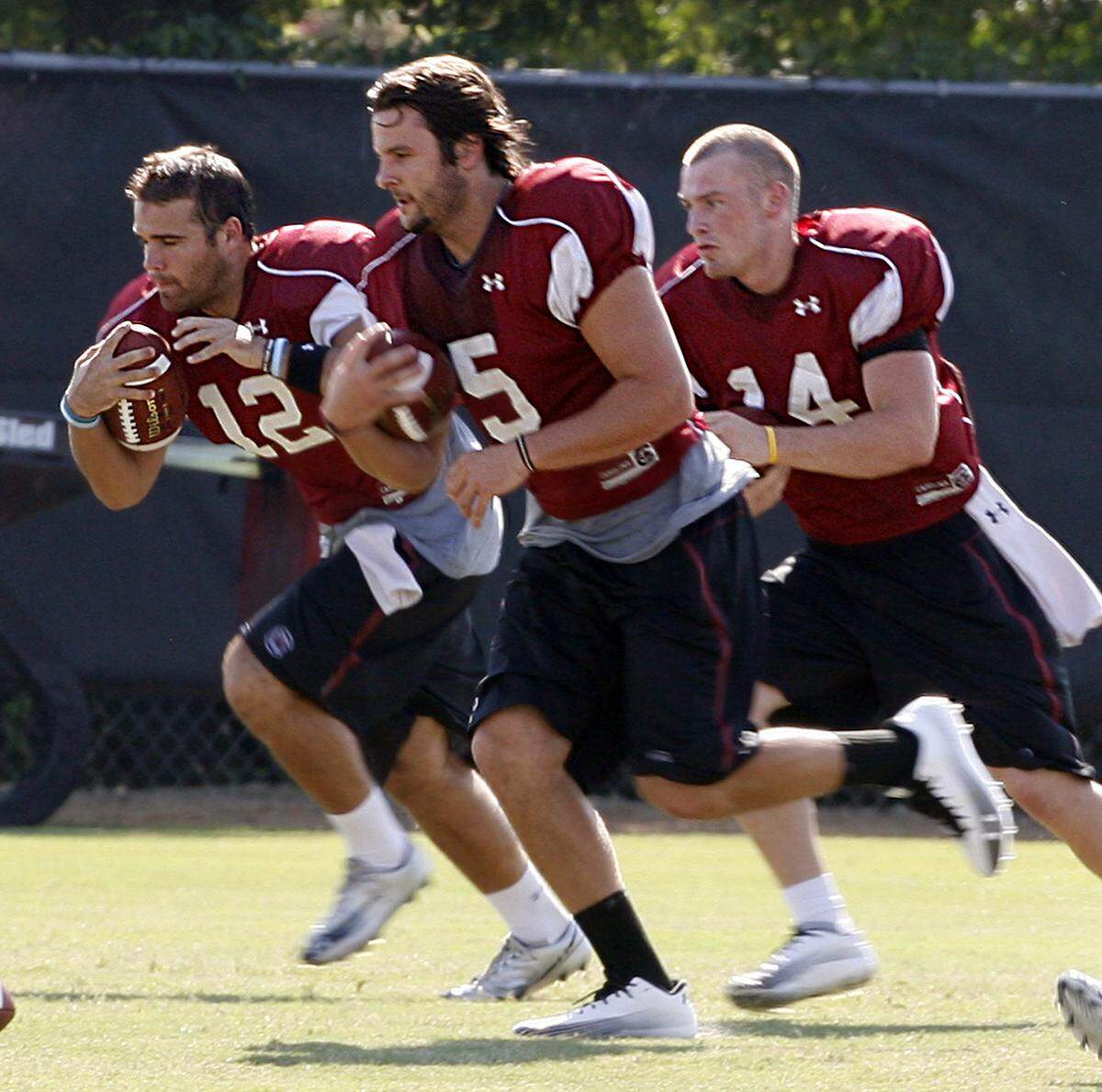
Like with many of the quarterback transitions under Steve Spurrier, Garcia got in a few starts early in a partial season. His true first starting year came as a sophomore, making his second year starting his fourth on campus. That season, he delivered his best, throwing for 3,059 yards, while tossing a career-high 20 touchdowns and 14 interceptions. While handing off to a freshman back named Marcus Lattimore and throwing to a sophomore named Alshon Jeffery, Garcia led the team to an SEC title game appearance and almost 31 points per game.
Blake Mitchell, 2006
Coming off a strong sophomore season, Mitchell’s junior campaign was interrupted by a suspension following a bar fight. He ended up throwing for 1,789 yards and was part of a productive offense, but he missed a chunk of time in the middle of the season when Syvelle Newton was running the show.
Phil Petty, 2000
Petty’s first starting season was effectively cut short in the wave of injuries that contributed to the winless first year with Lou Holtz. The next year, he bounced back in a big way, throwing for 2,110 yards in an early variant of a spread-out offense. He also helped the Gamecocks to an 8-4 record, one of the biggest turnarounds in the history of the sport.
Anthony Wright, 1997
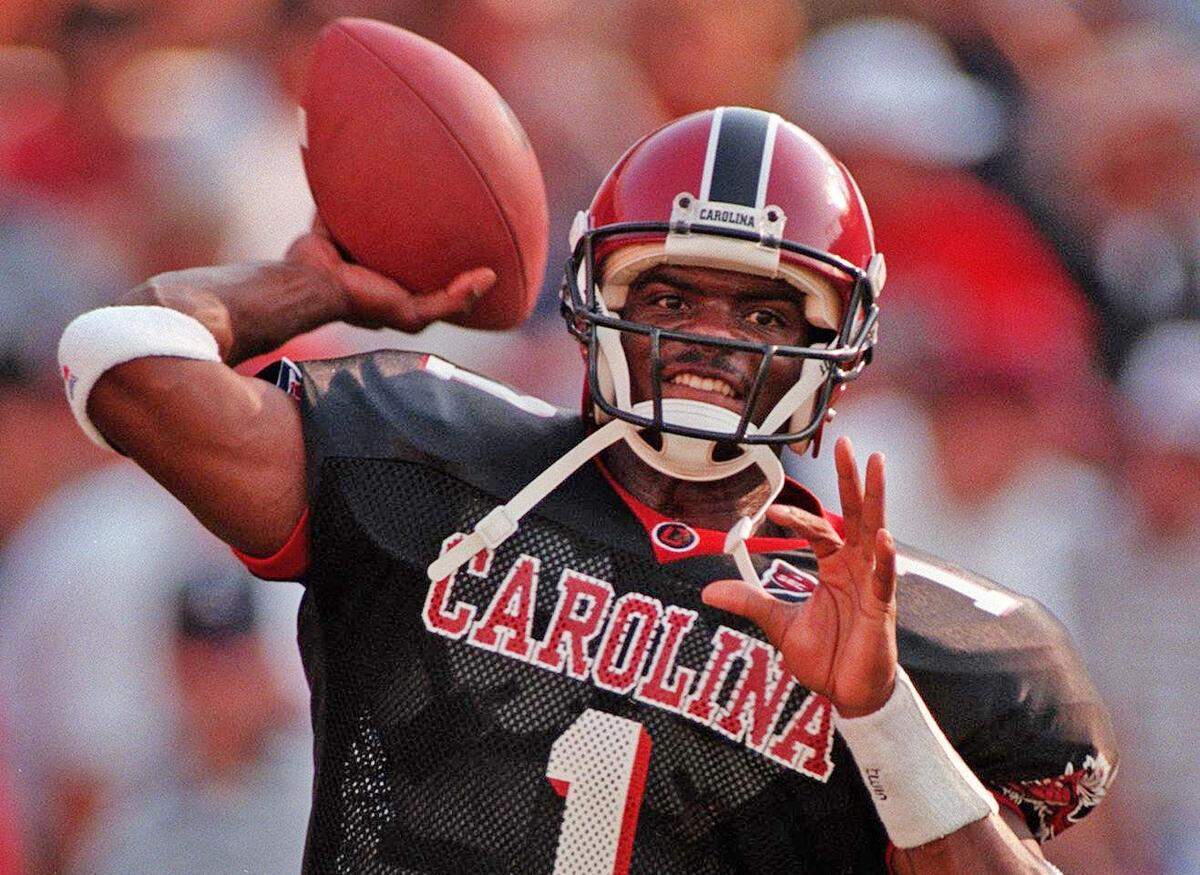
Wright saw his second year as a starter end early with a torn ACL, but not before throwing for 1,685 yards (raising his per-game average by nearly 20 yards) and 18 touchdowns, after only eight the year prior. He was hurt against Tennessee at the start of an Orange Crush slide to finish Brad Scott’s third season.
Steve Taneyhill, 1993
The Pennsylvania product took over the starting job midway through his freshman year, leading the Gamecocks to a strong close to the season. The next year saw the sophomore struggle with 1,930 yards, just six passing touchdowns and an SEC-high 14 interceptions. He bounced back the next two seasons with a different offensive scheme.
Bobby Fuller, 1991
An Appalachian State transfer, Fuller’s second season wasn’t terribly different from his first. He threw for 2,524 yards, with 15 touchdowns (two more than the year prior) and eight picks (one fewer). His second year saw less explosiveness and the team slipped to 3-6-2.
Todd Ellis, 1987
After an explosive start to his career, Ellis saw his numbers dip a bit. He still put up good volume, with 2,902 passing yards, but only had 10 touchdowns and 20 interceptions. That said, he was backed up by a much better defense, and the Gamecocks’ record jumped from 3-6-2 to 8-4.
Mike Hold, 1985
The maestro of the 1984 team’s option offense, Hold saw his workload increase and efficiency dip his second year. He threw for 1,596 yards and ran for 363, but he threw 10 interceptions after throwing four the year prior. He also threw 208 times after 117 passes in 1985 and also ran 71 more times.