Alcohol sales plummet at South Carolina athletics events. A closer look
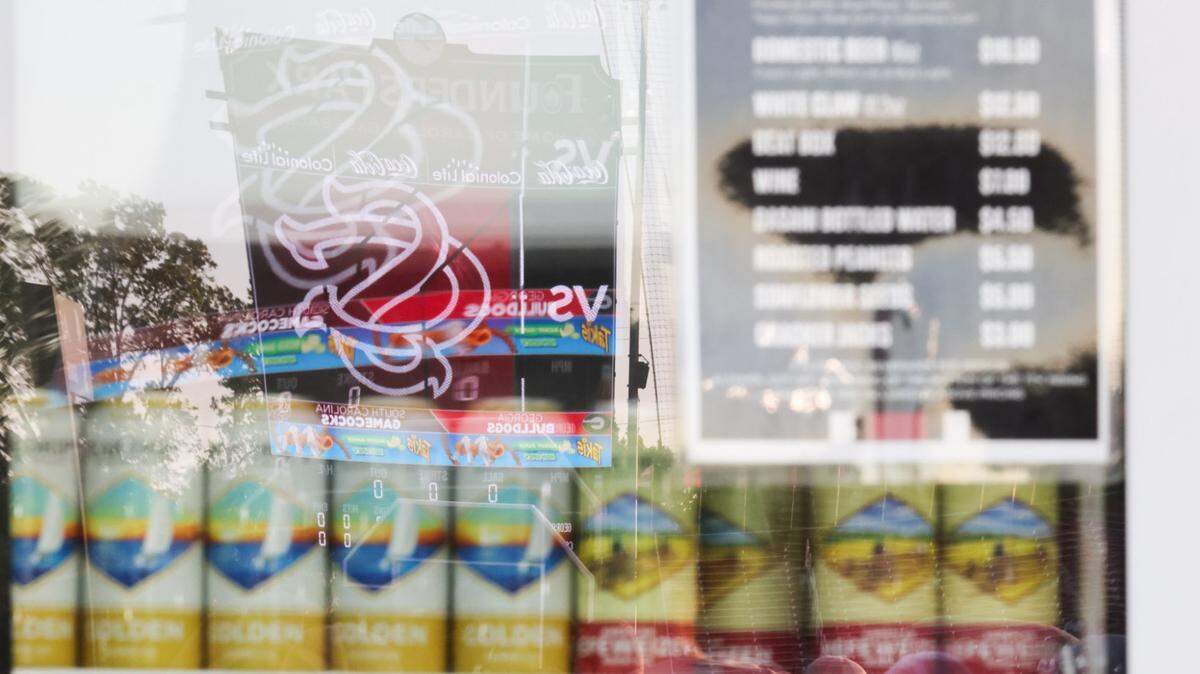
In the darkest hour of South Carolina athletics, Gamecock fans decided against wishing for some semblance of hope. So they asked for the next best thing.
As South Carolina baseball was sputtering to a 22-6, seven-inning March loss to Arkansas, the embarrassment crescendoed into an apathetic anthem.
“We-want-free-beer!” fans screamed inside Founders Park. “We-want-free-beer!”
A 30-rack gift-wrapped with a bow might not’ve been sufficient compensation for the punishment of watching South Carolina baseball that night, yet no free beer was doled out. Less than 15 hours later, Paul Mainieri was out as South Carolina’s baseball coach.
And, well, there is a non-zero percent chance that the pleas for some Miller Lites on the house expedited Mainieri’s departure by a day or two. If complimentary beer was passed out that night, though, it would better explain why South Carolina’s alcohol sales slumped more than its baseball team.
Across its entire athletic department, South Carolina made nearly $3 million less during the 2025-26 season than it did the year before on alcohol sales — profiting $6 million after bringing in $8.99 million in 2024-25. That dip, according to USC, was due in part to a change in how and where alcohol was sold at its venues.
Since the Southeastern Conference lifted its ban on member schools selling beer, wine and liquor at sporting events, South Carolina increased its alcohol sales year after year.
USC debuted in-stadium alcohol during the 2021-22 season, easing in the program as fans were slowly being welcomed back following the COVID pandemic. The Gamecocks racked up just under $2 million in year one, then scaled up to $4.34 million (2022-23), $5.62 million (2023-24) and $9 million (2024-25). That’s year-over-year growth Warren Buffett would do a cartwheel for.
Then came a big dip in 2025-26 — a 33% drop that seems almost incomprehensible.
More than $1 million less sold at Williams-Brice Stadium for football games. Nearly a $1.5 million dip in alcohol sales for men’s and women’s basketball games. The sales from Founders Park were down nearly $50,000 from last year, but the numbers could be very similar when the baseball season wraps up.
Though there are perhaps some positives in fewer drinks being sold at USC games, this is not a trivial financial matter — especially as schools are considering selling their soul to private equity to fund NIL and as South Carolina athletics is taking more “institutional support” money from its university that any other SEC school.
Think about this: It cost about $3.17 million to fund the South Carolina men’s and women’s golf team. South Carolina as a whole made nearly $3 million fewer from alcohol sales this year. Does that mean the golf teams are going to be eating from the McDonald’s value menu for the next year? Not necessarily, but it helps you understand how important $3 million is for an athletic department.
Why did sales drop so drastically?
The 2025-26 alcohol sales are very similar to the 2023-24 numbers, when the football team won just five games and missed a bowl. So maybe folks just drink more when the Gamecocks are winning?
If so, that is not a universal response. Consider the Tennessee Volunteers, which sold $4.3 million worth of alcohol at football games this year ($600,000 less than Carolina). While the Volunteers went 8-5, three of their top four most-profitable games (alcohol-wise) came in losses.
And to the point that there is a correlation between winning and alcohol consumption, until we get sales numbers from Five Points bars after South Carolina blew a 27-point halftime lead at Texas A&M, that cannot be definitive. Because, well, this may not be a case of Gamecock fans drinking less, but just choosing to down beers away from any stadium or arena.
By looking at the scanned-ticket data from South Carolina football games — or rather, the amount of people actually inside the stadium for a given game — the crowds were similar from the Gamecocks’ magical 9-4 season in 2024 to the 4-8 disaster in 2025.
The Gamecocks scanned just under 15,000 fewer tickets from 2025 to 2024. That’s not enough to account for a $1 million less in alcohol sales. Certainly more folks hit the exits early this year — especially during the Vanderbilt and Oklahoma games — but, unless, 30,000 fans bolted at halftime every week to go win the tailgate, there is still more to the story.
For its part, South Carolina acknowledged that the dip in alcohol sales might have been due to fewer people in the stands, but it also cited new guidelines surrounding alcohol service standards.
“Among these new guidelines,” South Carolina said as part of a statement, “food and alcohol sales were separated at stadium concession stands, which cut back on alcohol sales.”
Makes sense. If you force folks to pick a line for either beer or food, maybe the cheeseburger wins out. The only thing odd about that explanation is the fact that South Carolina touted the alcohol changes before the season in a way that made it seem like they expected to sell more beer.
“In order to speed up concession lines to ensure you don’t miss any of the action on the field for the 2025 season,” the school wrote in August, “alcohol sales will be moved out of their current locations and will now be sold in separate stands throughout the stadium.”
Or perhaps this is just further proof that Americans are drinking less these days. That is certainly true, though polls have shown an 8% decline in drinking since 2023 — which doesn’t match up with a 33% tumble for USC sales in one year.
And, well, think of the chant at Founders Park, the one that seemed to perfectly encapsulate the embarrassment South Carolina baseball was that night. Folks weren’t chanting “We Want O’Douls.” They were hollering for beer — free beer. As in: They were done paying for it themselves.