Grief-stricken Couisnard almost walked away from USC basketball. Why he’s still here
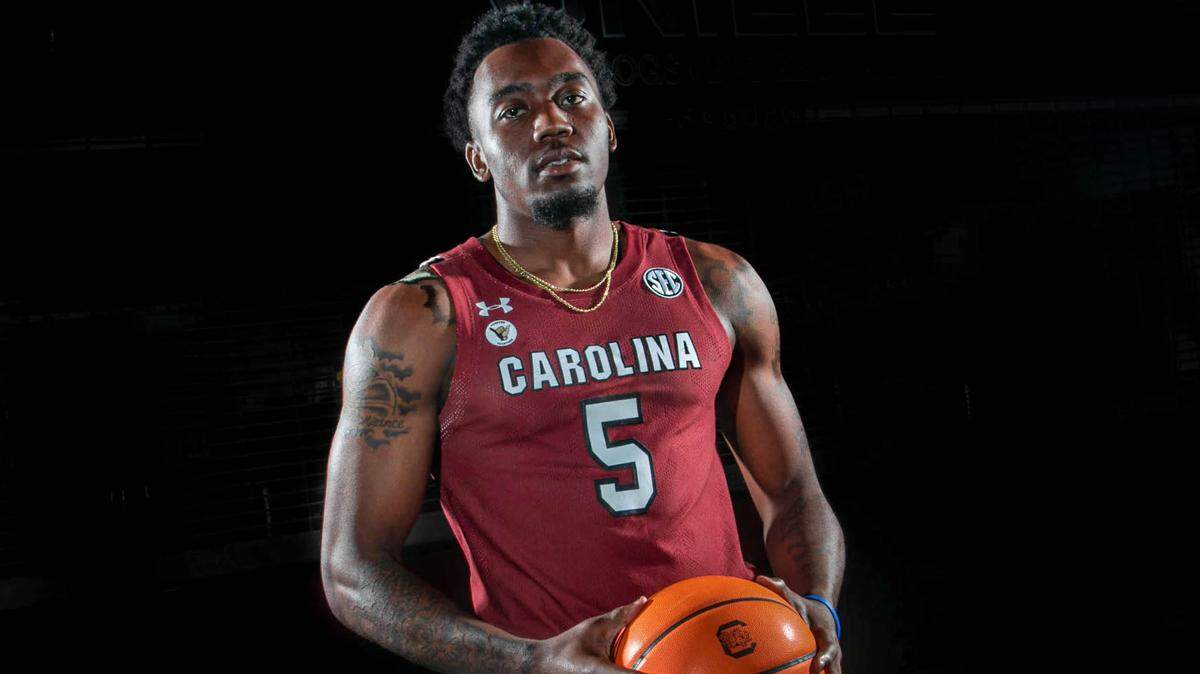
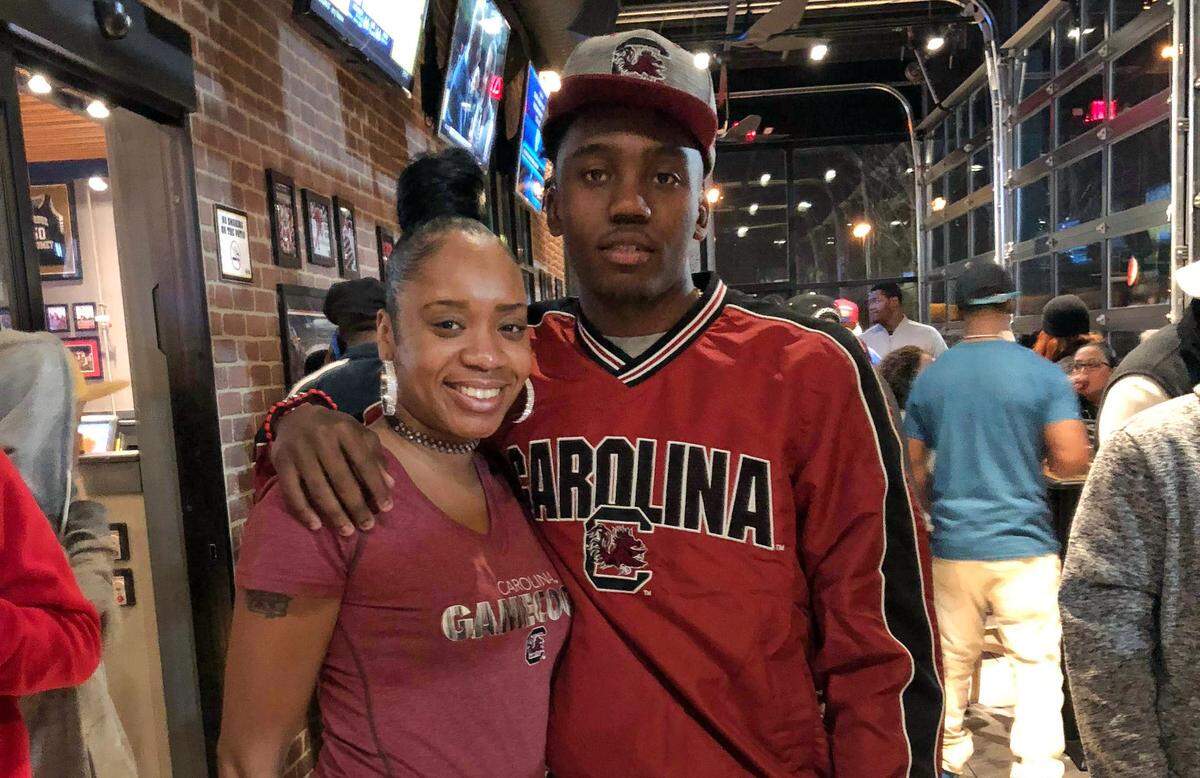
The diagnosis came in August — just before the school year. Raven Merkerson wasn’t quite sure how to tell her son the news.
How will he handle this, on top of everything else?
Jermaine Couisnard has never been the effusive, emotional type. Merkerson calls her son a “non-responder,” someone who prefers to stew over feelings in silence, away from others. But Merkerson, 42, knows that beneath her son’s stoic exterior is a deep emotional well. She’s felt it. The whole family has.
When Merkerson sat down with Couisnard this summer and told him that she had colorectal cancer — that she’d need chemotherapy through mid-December, then six to eight weeks of radiation and eventually surgery — Couisnard didn’t flinch. He didn’t break down. Didn’t cry. Not right away.
But mothers have a knack for seeing through external defenses. Sitting with Couisnard at her home in East Chicago, Indiana, Merkerson could sense the pain behind his eyes, that familiar anguish welling up inside of him again. She saw, in that moment, a look of utter defeat.
“I’m gonna just stay with you,” Couisnard told his mom, finally, after absorbing the news. In a matter of days, the South Carolina men’s basketball guard was supposed to return to Columbia for his junior season.
“Ain’t no point in me going back.”
The basketball court had always been a safe haven for Couisnard, an oasis removed from the gun violence and dangers lurking around his East Chicago hometown. The court is where he found all of his friends growing up, where he found his passion, found himself.
But basketball had lost some of its magic. The game didn’t feel as important, and it hadn’t for some time. Last year had been one of the most mentally challenging periods of Couisnard’s young life.
Just before last season, Couisnard learned that one of his closest childhood friends had been killed — a victim of Chicago gun violence. The news shattered him.
Fans from the outside watched Couisnard struggle to shoot the ball, at a 30% clip, during a miserable 6-15 pandemic-riddled season. But what they didn’t see was Couisnard home alone at night, wracked with grief, isolated due to stringent COVID-19 restrictions, with nothing but time to think and think and think. They couldn’t hear the phone calls to his mom back home, those gut-wrenching conversations filled with unanswerable questions. How could this happen? Who would do something like this?
Basketball felt secondary last season. Couisnard told The State that at times — especially during the team’s multiple COVID-19 shutdowns — he thought about not playing.
When his mom told him this August that she had cancer, all of that pain came rushing back. Couisnard meant what he told his mother. He didn’t see the point in playing basketball.
“I was like, ‘No, the point is for you to go back,’ ” Merkerson told The State. “There’s nothing that you can do for me. What you can do for me is to do what you want to do.”
No one in Couisnard’s corner was going to allow him to walk away from this life he had built for himself. They had seen him work too hard for too long just to get to college, to be able to play the sport he loved. When Couisnard told his father, also named Jermaine Couisnard, how he felt, the elder Couisnard promised he would be there for Merkerson and would help her throughout her cancer treatment.
Though not married, Merkerson and Couisnard are united in their love for their son. They want to see him smile again, to see him have fun on the basketball court. They want to see that sparkle in his eye return, that look of conviction when he takes a shot from the 3-point line and just knows it’s going to fall through the net.
“I told him, ‘Don’t worry about it. With the support system she’s got, I’m here, my mom’s here, my whole family, we’re there for her,” Couisnard’s father told The State. “We need you to go back to school and finish your dream. I got you, and I got her. We’re gonna fight through this together.
“Just like you’ve got to go back and try to fight and get your confidence back, we’ve got to do the same thing here.”
That confidence? That passion? That look of conviction?
It’s back.
Meet Little J
As Bobby Sanders watched Couisnard play the first few games of this season, he took the same mental notes he always does: How does his free-throw shooting look? Is he keeping his elbow up when he shoots? Is he playing aggressive defense?
Most of all, Sanders — a long-time youth basketball coach in East Chicago — honed in on Couisnard’s body language. In the team’s bounceback win over Western Kentucky on Nov. 14, Sanders watched the way Couisnard would stand up on the sideline when he wasn’t in the game, rallying his teammates, pointing to where they should be lining up on the court, directing traffic.
It brought Sanders joy to see Couisnard engaged in the game like that again, after the rigors of last season. That’s the Jermaine Couisnard that Sanders has always known, the one he still thinks about all the time.
“He’s always been that leader,” Sanders told The State. “I like that quality about him. ... I like the way that he carries himself.”
From third grade all the way up to high school, Couisnard played for Sanders’ ECG Ballhogs travel ball team. Sanders, 49, started coaching kids after a stint in the military, with the goal of helping children in his native East Chicago stay on a positive life trajectory, away from the crime and gang activity so prevalent in that area.
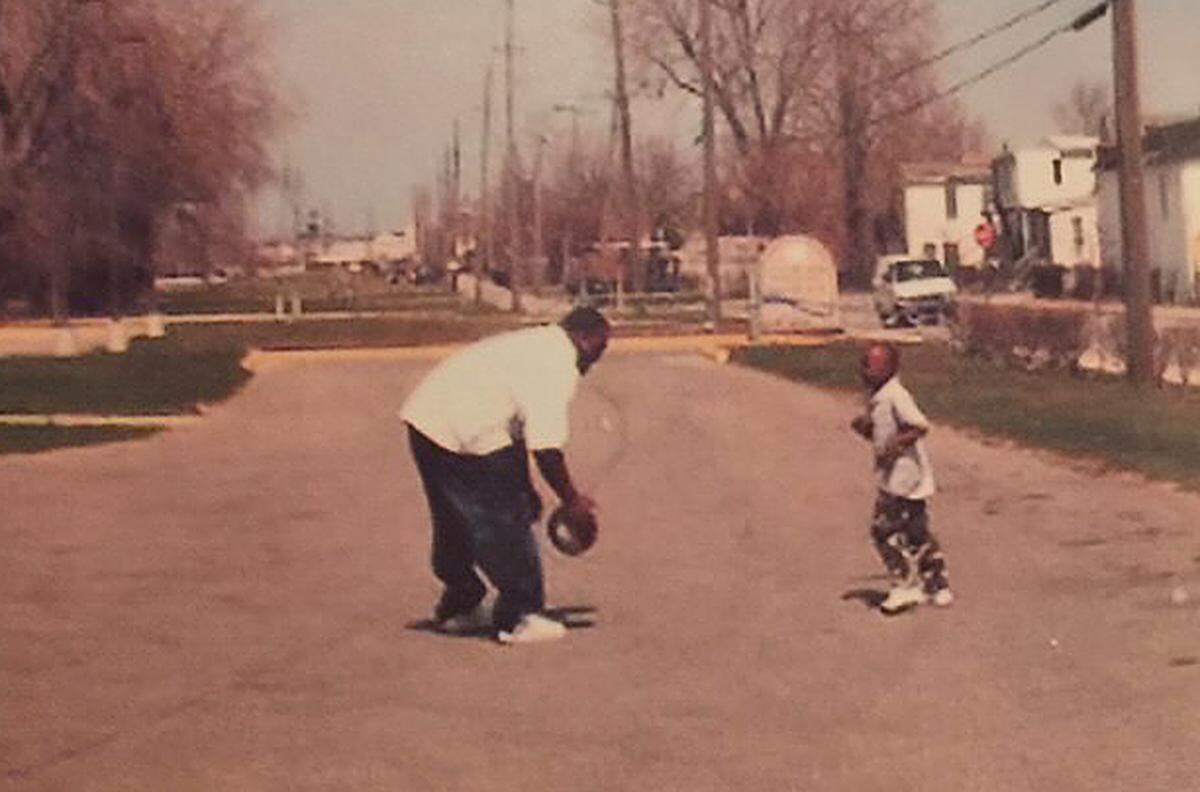
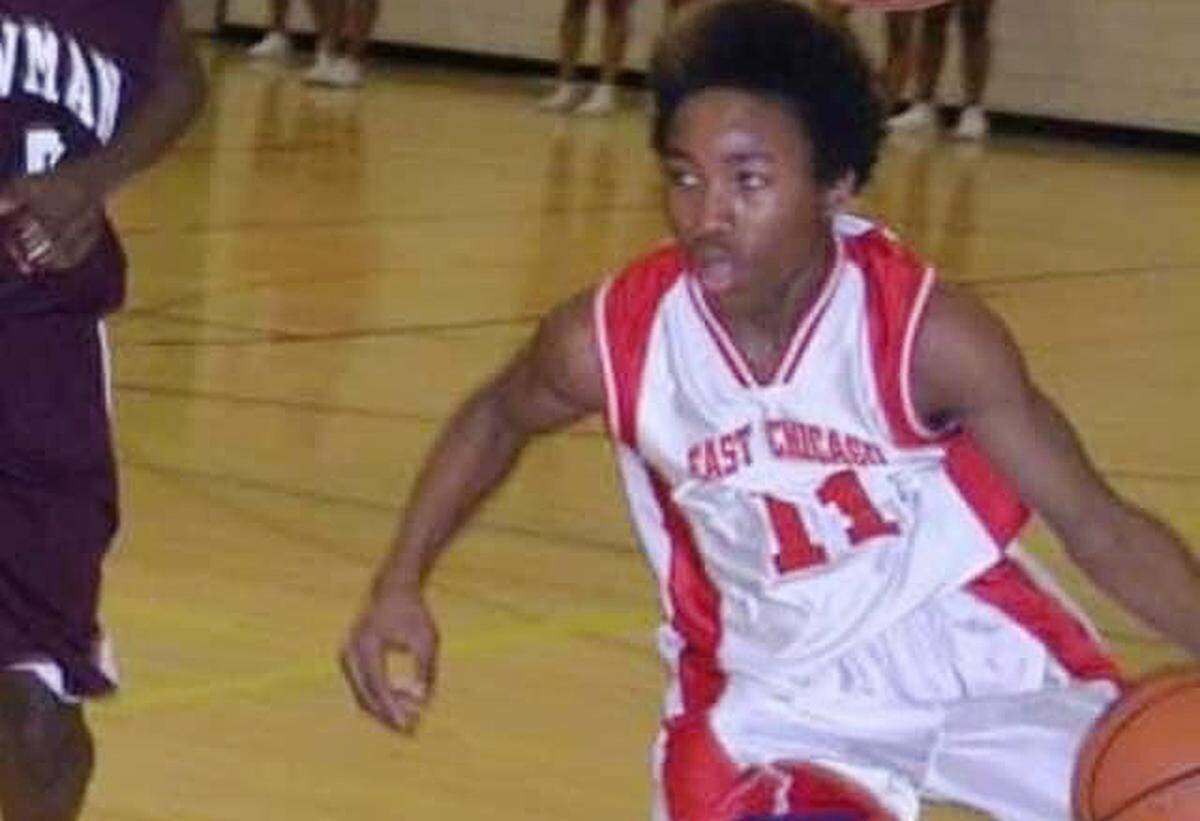
Couisnard and Sanders connected instantly. Even as an 8-year-old, “Little J,” as he was called then, would come to basketball practice with plays he had drawn up himself, inspired by all the hours he spent watching the NBA and basketball YouTube clips. Sitting on the bench during one of his first games, Little J turned to Sanders and said, “I can help you, coach.”
Sanders will never forget it.
“He was a kid that was a coach for me even when he was in the third grade,” Sanders said, laughing. “He had a certain look in his eyes that separated him from the rest of them.
“He was so young. But when he did that, I took notice to it and accepted it. And ever since then he’s been a part of my life.”
Basketball was an early love for Couisnard. Before he learned how to walk, he was already playing with basketballs. And that love for the game brought both of Couisnard’s parents a sense of peace.
Born and raised in East Chicago, the elder Couisnard knew all too well the kinds of traps young men could fall into around town. Some of his friends are still around, he said, but most of them “are gone or they’re in jail.”
Couisnard didn’t want his son anywhere near that sort of lifestyle. Working as a maintenance repair tech at an apartment complex in the Calumet neighborhood, Couisnard used to bring his son with him from repair to repair. The entire complex knew Little J. They watched him grow up.
The neighborhood was its own little bubble. A family. Parents looked out for other parents’ children. With the school located across the street and a basketball court 30 steps away, Couisnard rarely needed to venture anywhere else. The kids of the neighborhood spent their days on that court, forging bonds and sibling-like rivalries. Those kids became brothers, and that complex meant so much to young Couisnard that he has its address tattooed on his leg.
In the same way the entire neighborhood knew Little J, almost everyone knew Andre Bass. He was one of several friends Couisnard kept close to him, going up against each other on the basketball court, eating dinner with each other’s families. Bass always had a smile on his face, always brought positivity.
For years Sanders coached both boys with the Ballhogs. Bass and Couisnard were inseparable. At times, Bass could get a little down on himself as a player. He wasn’t quite as athletic as the other boys, didn’t hit the same growth spurt Couisnard and others did.
But Sanders would watch and admire the way Couisnard would take the time to encourage Bass and lift him up.
“He always kept the guys motivated and always tried to uplift them and let them know that they could do anything they wanted to do,” Sanders said. ‘It was almost like he was a little father to them. Him and Dre especially.
“When the basketball thing was kinda over for Andre, because he didn’t play basketball all through high school, Jermaine kept him around. He made sure that he stayed on the right path and made sure that he was OK. And their brotherhood was tight, man. It was super tight.”
In recent years, Bass had become a father. A homebody. A family man.
On Oct. 21 of last year, he went missing.
The phone call
Two days. Two whole days.
Last October, as Couisnard was preparing for basketball season in Columbia, he received a phone call from back home. His friend Andre Bass had disappeared. For two days, Cousinard tried texting and calling him, and for two days he heard nothing, anxiety boiling with each unanswered message
Around 9 p.m. on Oct. 23, 2020, Bass’ brother called, and Couisnard’s worst fears came to life. Bass’ body had been found. He was shot and killed, and no one knew who pulled the trigger.
Shock. Disbelief. Numbness.
“It really didn’t hit me until like a couple days later,” Couisnard told The State. “I started seeing the (social media) posts about it and just — dang. It’s crazy how somebody just left here that soon. And they were doing so good, like they really changed their life around.
“He was like a family man. He always loved his kids. It’s really a thing he took pride in.”
In the ensuing days, weeks and months, Couisnard tried to unravel the mystery of his friend’s death. The unfortunate reality of Chicago gun violence is that so much of it is random, senseless and unpredictable. So many killings go unsolved.
The more Couisnard thought about it, the more he fell into a fog. Fear consumed him. He thought about his loved ones back home, nearly 800 miles away, thought about his parents and his younger sisters on his dad’s side, Kalani and Maya. Are they safe?
Traumatic memories flickered through his mind. He found himself replaying a day from four years ago, back home in East Chicago, when he let 17-year-old Kalani borrow his car to run an errand. While Kalani sat outside of a friend’s house, a random passerby shot through the car window. Kalani took a bullet in the back of her shoulder, and though she was in and out of the hospital on the same day, the moment shook Couisnard and the entire family. I should have been in that car with her.
Couisnard’s parents did all they could to shield him from that kind of violence while he was growing up. But there’s always been a sense of unease and trepidation. It’s unavoidable. Merkerson still has an app on her phone that tracks her son’s location, just in case.
“Every day it’s still hard,” Merkerson said. “Like, even when he comes home now, I will always call like, ‘Where you at? Where you at?’ I need to know. You never know what’s gonna happen around here for real, like people say that all the time.
“You’ll be like, ‘Oh, he just left my house. Dang, they shot him at the gas station?’ Just anything like that. When Jermaine comes back home, I never can sleep.”
After Bass’ death, the daily grind of student-athlete life became a chore for Couisnard, and the COVID-19 pandemic only added another layer to his anguish. Restricted to the gym and to his apartment, Couisnard spent much of the time stuck in his own head. He leaned on head coach Frank Martin for emotional support as much as he could, but he wasn’t sure who else to talk to. Who could relate to losing a friend so abruptly? So violently?
Not even the basketball court — Couisnard’s lifelong sanctuary — provided any solace. The stands were empty, fans largely replaced by cardboard cutouts. Colonial Life Arena was quiet. Eerie. The team scuffled all year long, never finding a rhythm, getting shut down in spurts, then restarting, then shutting down again. The game didn’t feel the same. Couisnard’s production suffered, his confidence dwindled. Negativity from fans swirled around the program.
No one from the outside knew what Couisnard was going through. He’s never been the type to wear his emotions. He wasn’t sure how to express them.
“You get alone time and you’re by yourself, you really can’t explain it or really talk to people about what’s really going on if they haven’t been through it,” Couisnard said. “You don’t know what to say to people. So I really had no outlet for it. I just took everything in.
“I’ve been telling people mental health is a big thing. People never really know what people are going through, just expect them to perform at a high level and be perfect.”
Throughout the season, Couisnard talked with his family on a near-daily basis. Merkerson has a 48-hour rule: If she doesn’t hear from her son in two days, she will call. Couisnard’s parents gave him constant encouragement and tried to lift his spirits as much as they could. When Couisnard’s grandmother heard the news about Bass, she wanted to fly to Columbia on the spot.
Bass’ death rattled the entire family. It devastated Sanders, who coached and knew both boys since their elementary school days.
Watching from afar last season, Sanders knew how much Bass’ death hurt Couisnard. It affected his body language, his jumpshot, the way he spoke and acted.
But Sanders knew Couisnard would be OK. He knew he would bounce back. Sanders kept thinking about 8-year-old Little J drawing up plays and coaching up his Ballhog teammates, how Sanders could lean on him even as a little boy. In 2013, Sanders was diagnosed with a brain tumor, and he’ll never forget how a middle-school-aged Couisnard went out of his way to try to cheer him up. Last year, just after Bass’ death, Sanders battled kidney cancer, and Couisnard called him regularly to check in.
“He’s always been a kid that handled adversity well,” Sanders said. “I can say that with 100% confidence: The kid handles adversity well.
“Sometimes he may not think so. But I always tell him, ‘Man, you’re one of the strongest kids I know.’ ”
Meet Mature J
Grief doesn’t just disappear. But it can shrink. Over time, the wound scabs over and becomes a scar.
Couisnard will never forget his friend Andre Bass. A year later, his death still tugs at him, and the pain still lingers in the recesses of his psyche. But Couisnard has worked to put himself in a better head space, to move forward with his life.
When his mom sat down with him this August and told him she had cancer, Couisnard felt that same wound rip open again. His mind immediately jumped to the worst possible thought.
“I wouldn’t know what to do if, God forbid, I suddenly lose my mom,” Couisnard said, looking down.
“But I haven’t really even shown her no emotions, because it’s really still shocking to me, like she’s so young and she’s got to go through that.”
The idea of leaving her didn’t sit right with him. Couisnard kept telling her he wasn’t going to go back to Columbia, that he was going to stay with her throughout her treatment. But Merkerson wasn’t going to let her son walk away from this season, from his passion, from his education. Especially not after the hell he endured the season before.
The two reached a compromise. Couisnard would go back to school, but just before the season, he’d fly out to be with Merkerson during her first chemotherapy session on Oct. 7. Merkerson laughs now as she thinks about how she was lying in bed all day while her son was in the next room over playing video games.
But his presence there did make a difference. Those early days of chemo took a hefty toll on Merkerson. Sometimes she didn’t tell Couisnard just how sick she was or how depressed she was feeling because she didn’t want to add to his worries.
But her prognosis appears positive, and today her tone is largely upbeat.
“Now that I’m going through it and seeing what it’s about, I’m like, ‘OK, you can do it,’ ” Merkerson said. “I give myself pep talks every day like, ‘Girl, just get up. Move around, just can’t keep laying down.’ ”
Meanwhile, in Columbia, her son has reclaimed the spark that was snuffed out a year ago.
Martin said before this season that Couisnard was practicing better than he ever has in his USC career. The head coach could tell Couisnard was in a better frame of mind, could see the enthusiasm from newcomers like James Reese and Erik Stevenson rubbing off on him. On a team with nine new players, Couisnard has served as a steady force at starting point guard, scoring 11.3 points per game and helping to lead the team to an 8-3 record to start the season.
But most importantly, he’s acting like himself again.
“I don’t care what you do in life, if your mental’s not right, I think you’ll never be successful in anything,” Couisnard said. “Last year, that was big. I learned a lot. Once I have a clearer mind, you play better, you do everything better. You just carry yourself better.
“I’m not 100% clear mentally, but I’m getting back to my life, back to where I want to be.”
Of course, Couisnard can’t help but think about his mother. He admits that at times he still feels uncomfortable being away from her. But he also has a sense of peace knowing that Merkerson has a support system back home and that his father is with her when she needs him.
If anything, Merkerson and Couisnard have grown closer over the past year and especially in the months since the diagnosis. The mother and son are in constant communication, telling each other everything about their lives, about school and work, suggesting TV shows to each other. Ever so gradually, Merkerson has gotten her son to open up more, chipping away at his unemotional exterior. “J, we gonna have to work on your emotions,” she always jokes with him.
But nothing quite compares to the joy of watching her son play basketball again. Cancer or not, there was no way Merkerson was going to miss the first game of Couisnard’s season.
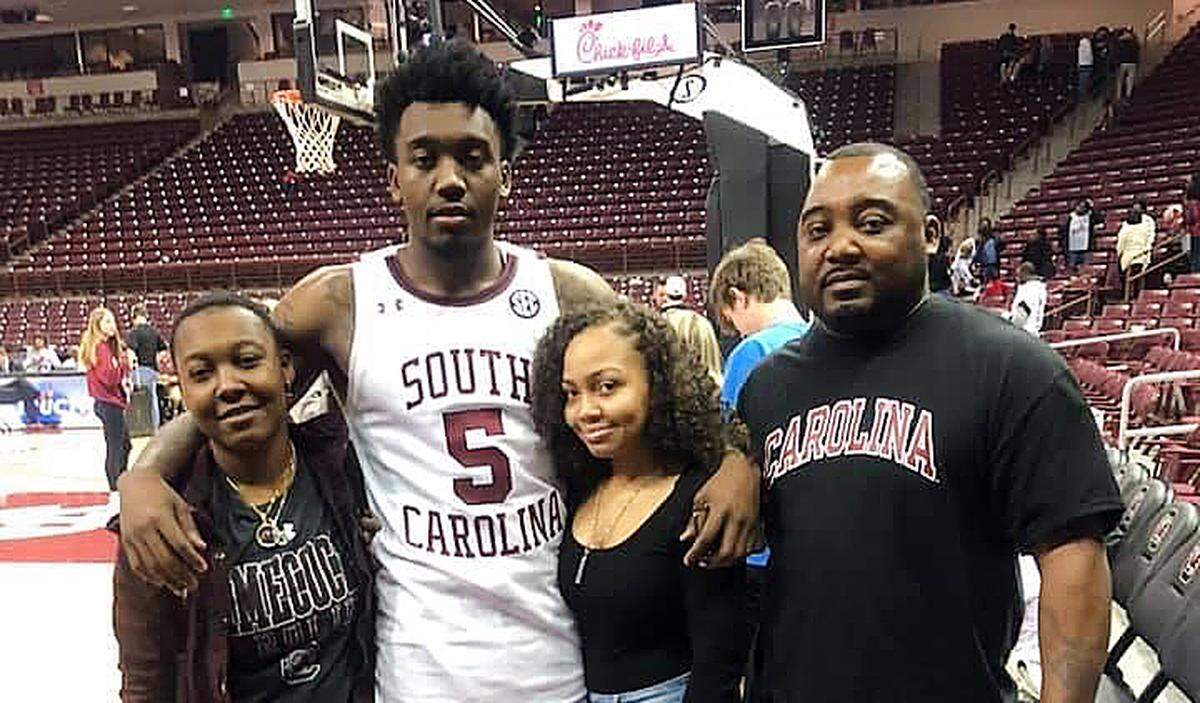
Along with Couisnard’s father and grandmother, Merkerson traveled to Columbia for the season opener against USC Upstate on Nov. 9. She was proud of herself as she walked to her seat without any assistance, without losing her breath or feeling dizzy. Her body has adjusted more and more to the chemo.
But she was even prouder of the man on the court. She’s seen a change in her son, an increased maturity and worldliness, a deeper appreciation for the preciousness of life. Not just a son, she counts him among her best friends, someone she can confide in and trust. He’s a man now.
He’s not Little J anymore.
“I like the Mature J,” Merkerson said, pride swelling in her voice. “His head is in a different place, and it looks good on him. I always tell him, ‘It looks good on you.’
“I like this you.”
This story was originally published December 21, 2021 at 5:00 AM.