Wins, culture, support: It’s the best of times for South Carolina women’s sports
On March 8, long after the game was over and South Carolina women’s basketball had won its fifth SEC tournament title in six years, Dawn Staley briefly retook the floor at Bon Secours Wellness Arena in Greenville.
Speaking with local reporters for a few moments as arena workers started to break down the ESPN set overlooking the court, Staley reflected a little on her team’s dominance in the conference. She broke down some of the ways the Gamecocks defeated rival Mississippi State.
Then she ended by looking ahead — in just a few weeks, everyone expected No. 1 USC to return to Greenville for the Sweet 16 and Elite Eight of the NCAA tournament, and Staley said if they made it back, her team’s comfort level would be boosted by having already played there.
Of course, that never happened. The growing COVID-19 coronavirus pandemic forced the NCAA to cancel its winter and spring championships, and the top-ranked Gamecocks never got the chance to advance to the Final Four and win a national title. Whether they might be recognized by the NCAA as champions or claim one for themselves is still an open question.
But with six consecutive Sweet 16s, a national title and 10 combined SEC regular season and tournament titles since 2013-14, South Carolina’s success is undisputed. It has been, without question, the best stretch in program history.
But it’s not just Staley’s program that has enjoyed a remarkable run of success. Since 2013-14, South Carolina’s women’s sports as a whole have enjoyed a golden age of performance.
Starting with that year, the women’s basketball, softball, soccer and tennis teams have made the NCAA tournament every season and all have made it to at least one Super Regional or Elite Eight in that time. The volleyball squad, which missed the postseason for 15 years in a row, has now made the second round of the NCAA tournament in back-to-back seasons for the first time in program history.
The golf team has qualified for four NCAA championships in that stretch and was on pace to return before the season’s cancellation, ranked No. 7 nationally and led by star freshman Pauline Roussin-Bouchard, the top-ranked amateur player in the world. Equestrian claimed a national title in 2015 and was ranked No. 4 in the nation.
Track & field scored at five of the past six NCAA indoor and outdoor championship meets, including a 10th-place finish at last year’s outdoor championship. Swimming and diving has scored in four of the last six NCAA championships, including 21st place in 2019, which marked the program’s highest finish in 15 years.
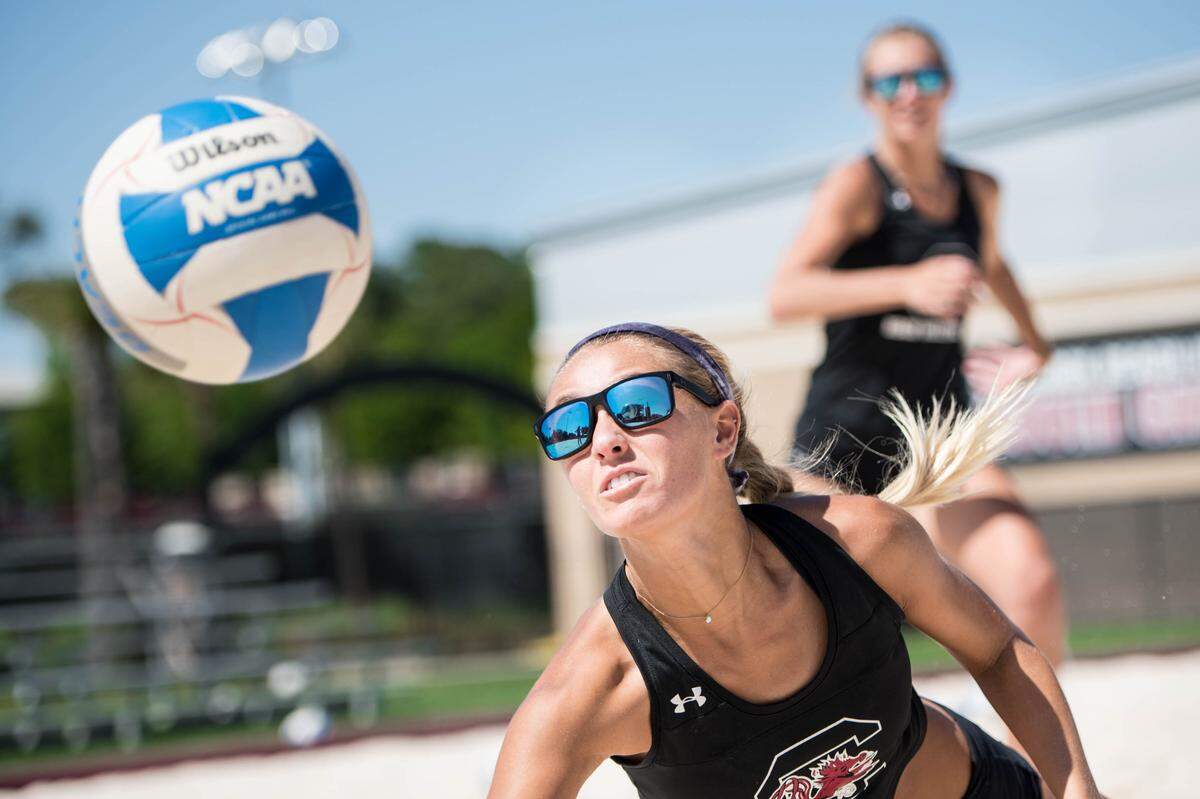
Even the beach volleyball squad, not introduced as a varsity sport until 2013-14, has made a pair of NCAA tournaments.
“We are having a great run in women’s athletics, with where Coach Staley is, and our other teams as well. Shelley Smith in soccer, women’s golf, women’s tennis is off to a great start,” athletics director Ray Tanner said. “That’s important, but I just feel very strongly that, you know, when I go to a (Student-Athlete Advisory Committee) meeting, there’s 50% women in there, 50% men. Nobody’s more important than anybody else, no matter what sports you play.”
Support across the board
The Learfield IMG Directors Cup awards points to athletic departments based on each sport’s finish in NCAA championships. In 2018-19, South Carolina women’s sports produced their highest cumulative total in at least 15 years. All but two of the 11 women’s teams recorded points with their NCAA championship finishes. And that point total has been on a near-constant upward trajectory in the past decade.
That continued success is what sets this current era apart in the mind of softball coach Beverly Smith. Her program, which ended this season ranked No. 16 nationally, had made seven consecutive NCAA tournaments, the longest run of postseason appearances in program history, before this year’s tourney was canceled. The Gamecocks hosted a regional in 2018 and advanced to a Super Regional for the first time since 2007.
“It’s been a consistent performance by the women, and it’s been fun to watch,” Smith said. “I think we’ve got a great group of talented, smart head coaches, and I think we’re recruiting at a high level. I guess my best example of consistency over time is, you look at Coach Staley and women’s basketball.”
Staley’s work in building the women’s basketball program into a national blueblood took time — her first two seasons finished with losing records, and her top recruit transferred after that second year. But as results came and fans followed, she continued to support other women’s teams and the network of encouragement continued to grow. It’s something women’s soccer coach Shelley Smith, who has been at USC since 2001, said she’s always felt.
“When I got here, the women’s coaches and the female head coaches were very welcoming to me as a young coach and helped me, you know, learn more about Columbia or learn more about the SEC,” Smith said. “And that’s not something that’s always visible to the public eye, because we didn’t have all the social media surrounding us, and I think that’s just been something that is easy to do.”
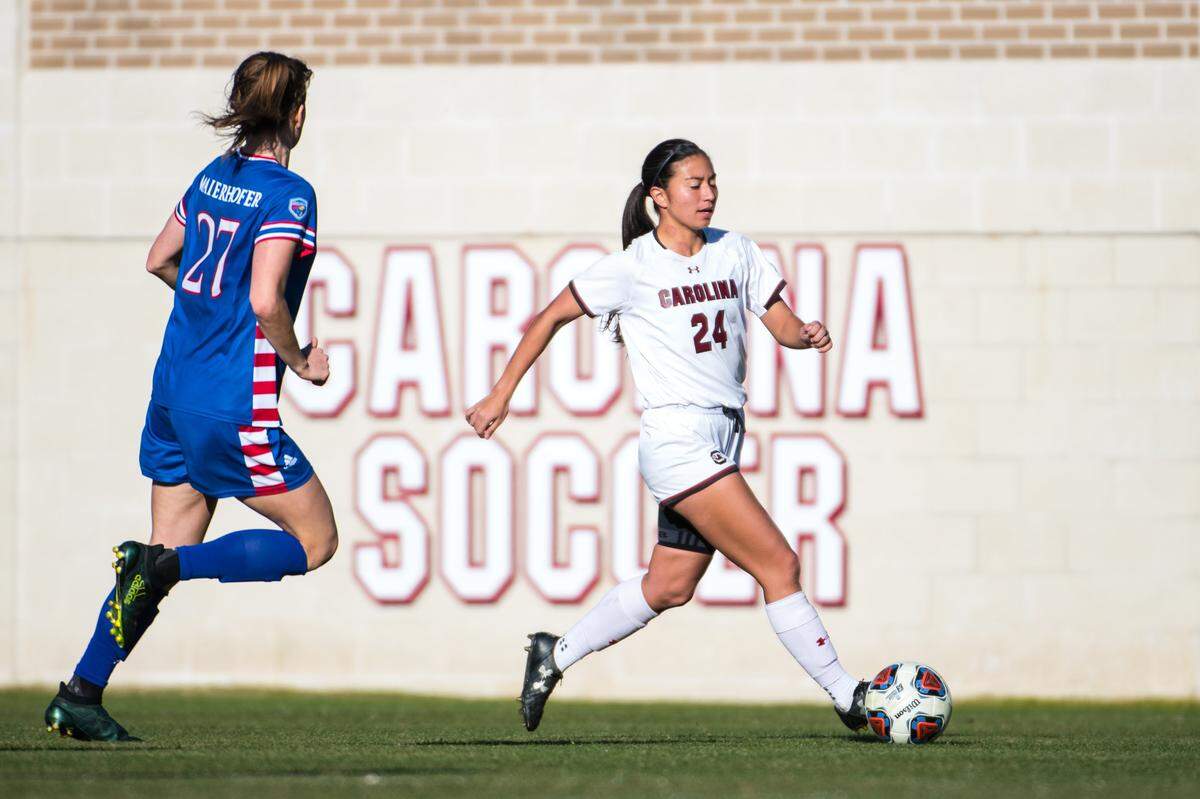
Smith is one of the longest tenured head coaches as South Carolina. In that time she, too, has built a nationally prominent program — after missing the NCAA tournament in each of her first six seasons, the Gamecocks have missed the tourney just once since and advanced to the program’s first ever College Cup in 2017. They also have won three SEC regular season titles and two tournament titles.
“We want the best for everyone in our department, and I think it’s easy to support each other,” she said. “We support the men’s coaches just as much, but I think it’s nice to have female voices that can share stories that help each other and support the fact that we have something in common.”
There’s support from the men’s side as well — players of both genders frequently attend each other’s games and often live, study and even practice in close proximity to each other.
“With South Carolina, it was different because the other gyms, the women had their own basketball practice facility, the men had their own, that’s kind of how it was when I took my visits,” women’s basketball freshman Brea Beal said. “But when I came to South Carolina, it was kind of a shared practice facility, so that was different, but it was also cool. ... I think I like that it was more of like a family feeling, like we’re all together, we all support each other, so that’s the kind of feeling it was.”
Investment off the field
Back in Greenville, Staley was asked what had allowed her program to become a perennial contender on both the conference and national levels.
USC ranked No. 1 in the AP rankings for 10 consecutive weeks to end the year and hasn’t missed the top 25 for more than seven years running, the fourth longest active streak in the country. They ended the virus-shortened season No. 1 in both major polls.
“You have to have administrators who really don’t get in your way. They provide. We’re provided whatever we need to land the top recruits in the country,” Staley said. “Whether we deliver on that each year, it’s on us. We feel like we get everything that we need to get what we need to get done.”
Under the Equity in Athletics Disclosure Act, every college athletics department that receives federal money must release gender equity data, including average coaching salaries for men’s and women’s sports, recruiting expenses, operating expenses and financial aid provided to athletes by gender.
Unsurprisingly in an age of skyrocketing revenues, facility arms races and nationwide recruiting battles, costs have generally gone up across the board for both men’s and women’s sports in the SEC.
But South Carolina’s increased investment in women’s sports still stands out.
In 2003, the first year for which data is available, USC was ninth in the conference in overall expenses on women’s sports, a figure that includes travel, equipment, promotions, recruiting, salaries and benefits, financial aid and other costs, at $6.4 million. In 2011, the year before Tanner took over as athletics director, Carolina was seventh, at $12.5 million.
The most recent data, from 2018, has South Carolina second in the SEC in overall expenses for women’s sports, at more than $22.8 million. That’s behind only Texas A&M — and roughly $3 million more than border rival Georgia and $7.5 million more than in-state rival Clemson.
In the seven years of data since Tanner was hired as AD, South Carolina’s expenses on women’s sports have increased more than 77%, the second highest rate of increase in the conference as well. For comparison, overall expenses on men’s sports have risen 43% under Tanner.
“Being an athlete, being a coach, you have a team, you have a purpose, and that’s to win. ... The thought process to me is, it doesn’t matter if it’s beach volleyball or football, we want to do well. It’s important to do well,” Tanner said of his commitment to investing in all sports. “(The attitude of) we’ll just field the team, we can’t put a lot of money into it, we can’t invest, I don’t come from that background.”
A culture of accountability
Under Title IX, athletic departments must provide proportional scholarship money and equitable opportunity, treatment and benefits to male and female student-athletes. Helping to lead South Carolina athletics’ Title IX efforts is Judy Van Horn, Deputy AD for Internal Operations & Risk Management.
But there’s a distinction between compliance and dedicated efforts to actively provide gender equity.
“It’s part of being a culture, and that’s because of Ray Tanner. He believes in support for all sports, all student-athletes, regardless of gender and sport, to have the opportunity to win, an opportunity to have a championship experience,” Van Horn told The State.
The result, Beverly Smith said, is that she doesn’t feel like she needs to be her own advocate.
“I’ve never had to go into the administration and say, ‘I want this, because you’re doing this for baseball.’ It’s never been a men vs. women thing,” Smith said. “I think we’re in the forefront about, ‘Hey, we’re doing this for baseball, we’ll do it for softball, too.’ I have felt that equity here is really on the forefront of our administration.”
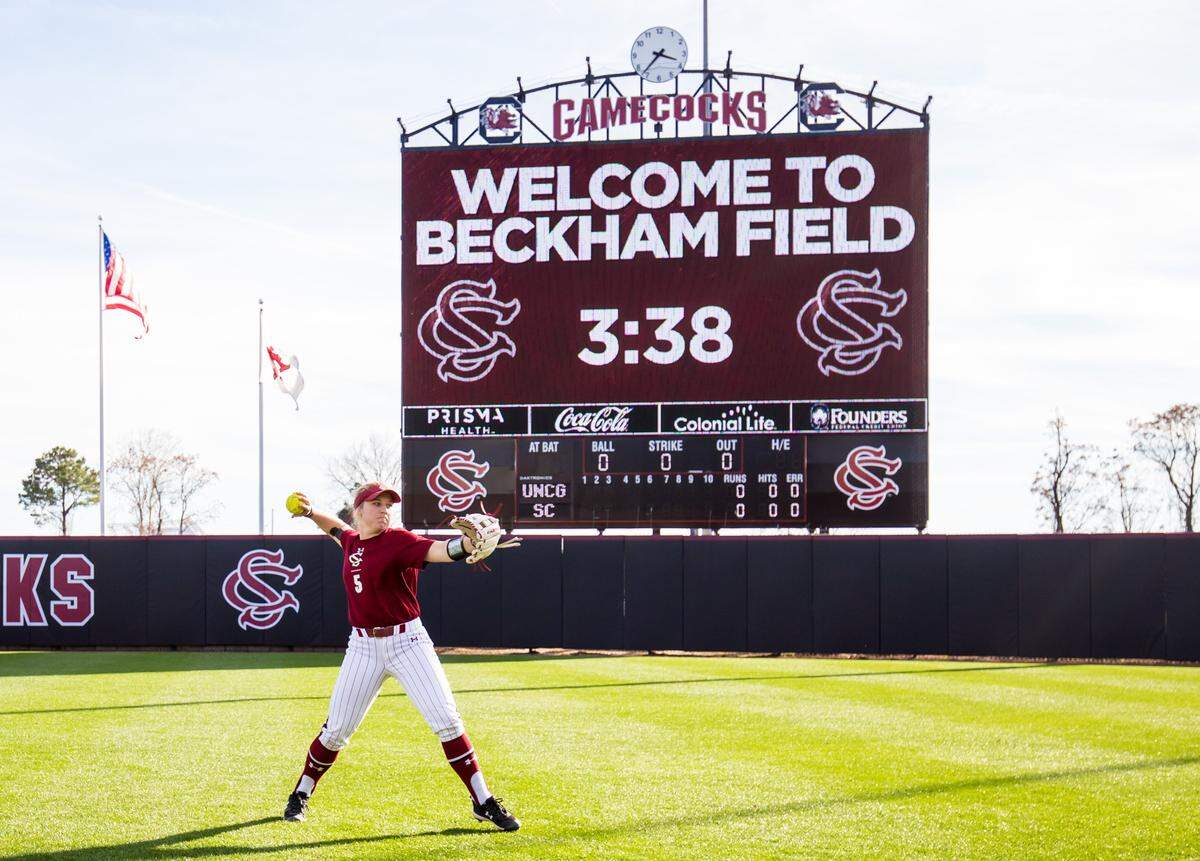
Case in point — Founders Park, where the baseball team plays, got a new video board before the start of the 2019 season. A year later, softball’s Beckham Field got a new one as well, just seven years after opening in 2013.
“I would think for a lot of places, softball wouldn’t come around again on the capital budget for a while,” Smith said. “But we just put in a brand new video board, and I think Tanner recognizes that you just can’t sit back on your laurels.”
As part of that commitment, Van Horn conducts an annual review of the department’s expenses and decision in relation to gender equity. And in addition, the department brings in an outside consultant every couple years to do the same — Janet Judge works as an attorney with a focus on collegiate athletics and Title IX and has served on the NCAA’s Commission on Sexual Violence.
“It is an opportunity for us to audit ourselves, if you will. You know, there’s all kinds of audits that go on in different businesses, different companies, different universities. We choose to to engage with Janet and her firm to make sure we’re getting it right,” Tanner said.
“It is a financial commitment to do that, and you have to be comfortable with somebody getting in your business and letting you know how you can do better,” Van Horn said, noting she was unsure of how many other universities hired an outside consultant. “And we’re comfortable about that because again, it goes back to the culture that’s established by the athletics director.”
Judge’s recommendations have mostly been minor tweaks, Van Horn said, giving an example of the women’s tennis team declining gear offered to the men’s team and documenting that they were both offered the same benefits.
Results on the field
The success of the women’s sports has been in contrast to some of the struggles the more prominent men’s squads have had as of late — football is coming off a 4-8 season; men’s basketball, according to pundits, was on the wrong side of the NCAA tournament bubble for the seventh time in eight years; and baseball, not far removed from national titles in 2010 and 2011, missed the postseason in 2019 and tied the program record for losses in a season.
Tanner acknowledged that for some fans, those results are paramount but defended the progress on the men’s side, too.
“People have kidded me a little bit about, ‘Oh wow, the women’s programs are very successful, your men gotta step it up.’ Well, I mean, we’re not doing too bad on the men’s side either, right?” Tanner said. “You know, you win four games in football, nobody likes that. But, you know, coach [Frank] Martin’s been knocking on the door to the very end as far as postseason play. We’re at a transition in baseball, but a lot of our other men’s sports have done well, too. So you always want to be in the top 20, top 25 in the Learfield Cup. And you want to be in the upper echelon the Southeastern Conference.”
Longevity has helped. Volleyball coach Tom Mendoza was hired in 2018 and before him, no women’s sport has had turnover at the head coaching position since 2012. That’s allowed coaches to develop the culture they want in their programs, so “your traditions don’t graduate,” Beverly Smith said.
Retaining head coaches can be a two-way street — other opportunities arise, and the administration has to hope or convince the coaches to stay. Tanner takes pride on that front.
“We haven’t had a lot of coaches leave us to go other places. And one of the reasons that I think we’re in that position is because they know the commitment is very strong here to them and their programs.”
From an investment standpoint, the athletics department’s expenses on men’s sports is comparable to the middle of the SEC, and there’s been a concerted push to improve facilities, most notably with the Long Family Football Operations Center and ongoing $22.5 million renovations to Williams-Brice Stadium.
But money doesn’t guarantee wins. Coaches and players have to execute and, right now, the women’s sports are simply having more success.
“I think we’re all finding ways to figure out how to compete and be our best at this level,” Shelley Smith said. “And it just happens to be that women’s sports right now at the moment have had a good thing going, and it all has to do with the whole Carolina brand honestly, and the more our name is out there, it’s easier to recruit to the university.”
**********
SEARCH SEC SPORTS SPENDING
USC WOMEN’S SPORTS ACCOMPLISHMENTS SINCE 2013-14
Basketball
6 NCAA tournaments, 6 Sweet 16s, 2 Final Fours, 1 national championship, 5 SEC regular season titles, 5 SEC tournament titles
1 National Player of the Year (first in program history), 4 SEC Players of the Year, 7 first-, second- or third-team All-American selections, 17 first- or second-team All-SEC selections
Softball
6 NCAA tournaments, 1 Super Regional
1 first-, second- or third-team All-American selection, 6 first- or second-team All-SEC selections
Soccer
7 NCAA tournaments, 3 NCAA Quarterfinals, 1 College Cup, 3 SEC regular season titles, 2 SEC tournament titles
10 first-, second- or third-team All-American selections, 24 first- or second-team All-SEC selections
Volleyball
2 NCAA tournaments, 2 second rounds
1 first-, second- or third-team All-American selection (first in program history), 5 first- or second-team All-SEC selections
Golf
3 NCAA regional titles, 4 NCAA championship appearances, 1 NCAA quarterfinals
6 first-, second- or third-team All-American selections, 13 first- or second-team All-SEC selections
Tennis
6 NCAA tournaments, 3 Sweet 16s, 1 Elite Eight, 1 SEC tournament title
1 National Coach of the Year, 1 SEC Player of the Year (first in program history), 7 All-American selections, 9 first- or second-team All-SEC selections
Track & Field
3 NCAA indoor championship top-30 finishes, 1 NCAA indoor championship top-10 finish, 3 NCAA outdoor championship top-30 finishes, 1 NCAA outdoor championship top-10 finish
24 indoor first- or second-team All-American selections, 36 outdoor first- or second-team All-American selections
Swimming and Diving
3 NCAA championship top-30 finishes, 1 NCAA championship top-20 finish
4 SEC champions, 15 All-American selections, 9 All-SEC selections
Equestrian
6 NCEA championship top-10 finishes, 1 national title, 1 SEC title
2 National Coaches of the Year, 1 SEC Coach of the Year, 4 SEC Riders of the Year, 12 first- or second-team All-American selections, 20 All-SEC selections
Beach Volleyball
2 NCAA tournaments
1 CCSA Coach of the Year, 2 All-CCSA selections
This story was originally published March 26, 2020 at 5:00 AM.