Another No. 1 class? What ESPN expert had to say about Dawn Staley’s 2021 group
Two years after securing the No. 1 recruiting class in the nation with a four-member group of five-star talents, Dawn Staley and South Carolina women’s basketball have done it again. Over the past few months the Gamecocks have picked up pledges from five-stars Saniya Rivers, Sania Feagin, Raven Johnson and Bree Hall.
All four are ranked in the top 30 of ESPN’s recruiting rankings. No other program has four in the top 100. The State spoke with Dan Olson, who is responsible for forming those rankings, to get his thoughts on each Gamecock commit and the class overall.
Saniya Rivers
Rivers, a 6-foot guard out of Wilmington, North Carolina, is ranked third overall in the class, which would tie her with current rising sophomore Aliyah Boston as the highest ranked recruit South Carolina has had since A’ja Wilson.
“It seems like she’s just continued to climb in her ability upward. And she’s really, really good through passing lanes and in pressure basketball,” Olson said. “And I think her development of her perimeter game has gotten better, and she’s got that long lanky size. I think she’s gonna be a hell of a college player.”
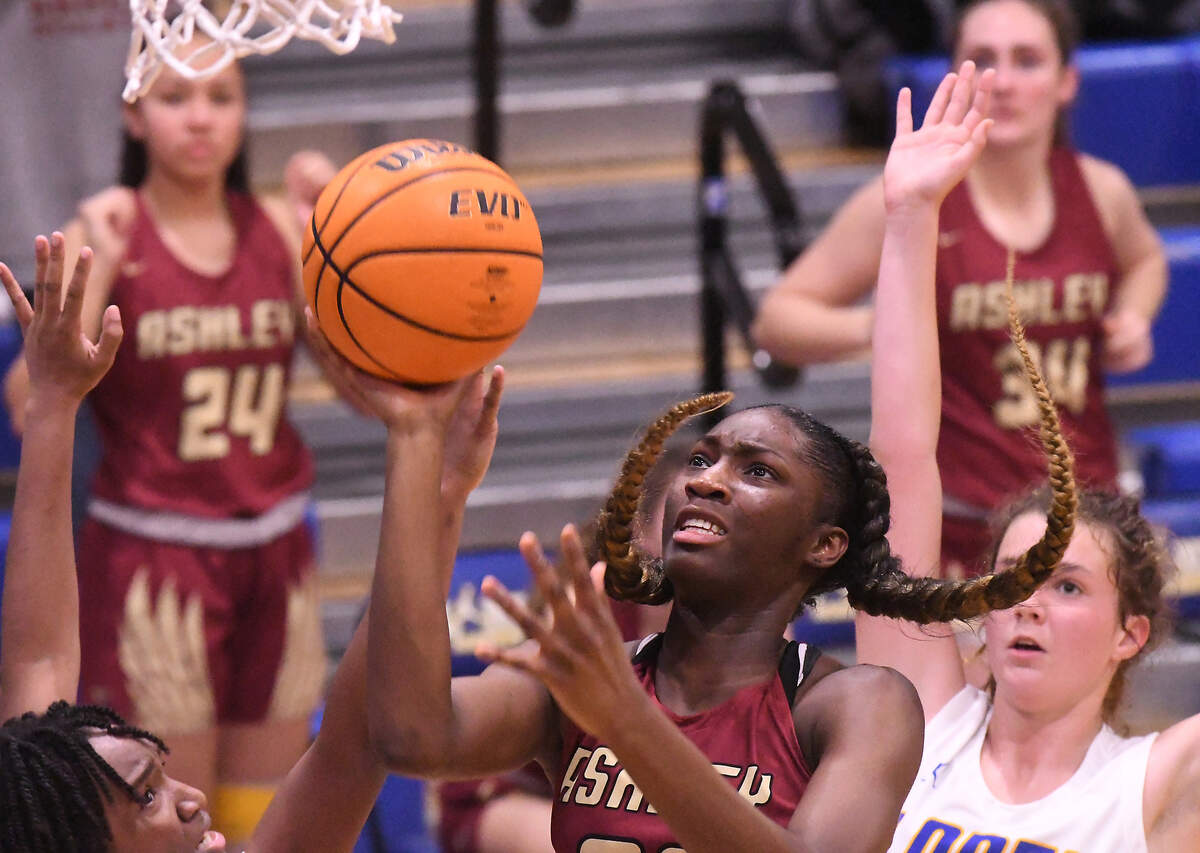
Despite her height, Olson said Rivers will most likely make her impact in the back court. As a “freakishly athletic” player, she’s able to keep up with smaller guards and create havoc on defense.
“She’s capable of taking over games in spurts, just through her defensive pressure, her size, her wingspan and deflecting the ball and turning people over,” Olson said. “And she’s good at finishing the play off of turnovers. You know, she very rarely misses a shot when she’s deflecting and getting the ball up in transition.”
Rivers averaged more than six steals per game in her junior year of high school and was named North Carolina’s Gatorade State Player of the Year.
Sania Feagin
Feagin, a 6-foot-3 forward from Ellenwood, Georgia, is the tallest of the 2021 commits and ranked No. 6 overall. But she’s not a low-post dominant center by any stretch of the imagination. Olson called her “a prototype small forward of the future.”
“She’s got the size, the length, plays like she’s 6-5, explosive, can step you out, stick the 3, but now has the ability to go inside and really do damage, just jump over you,” Olson said. “One of the best front court players in her class that there are.”
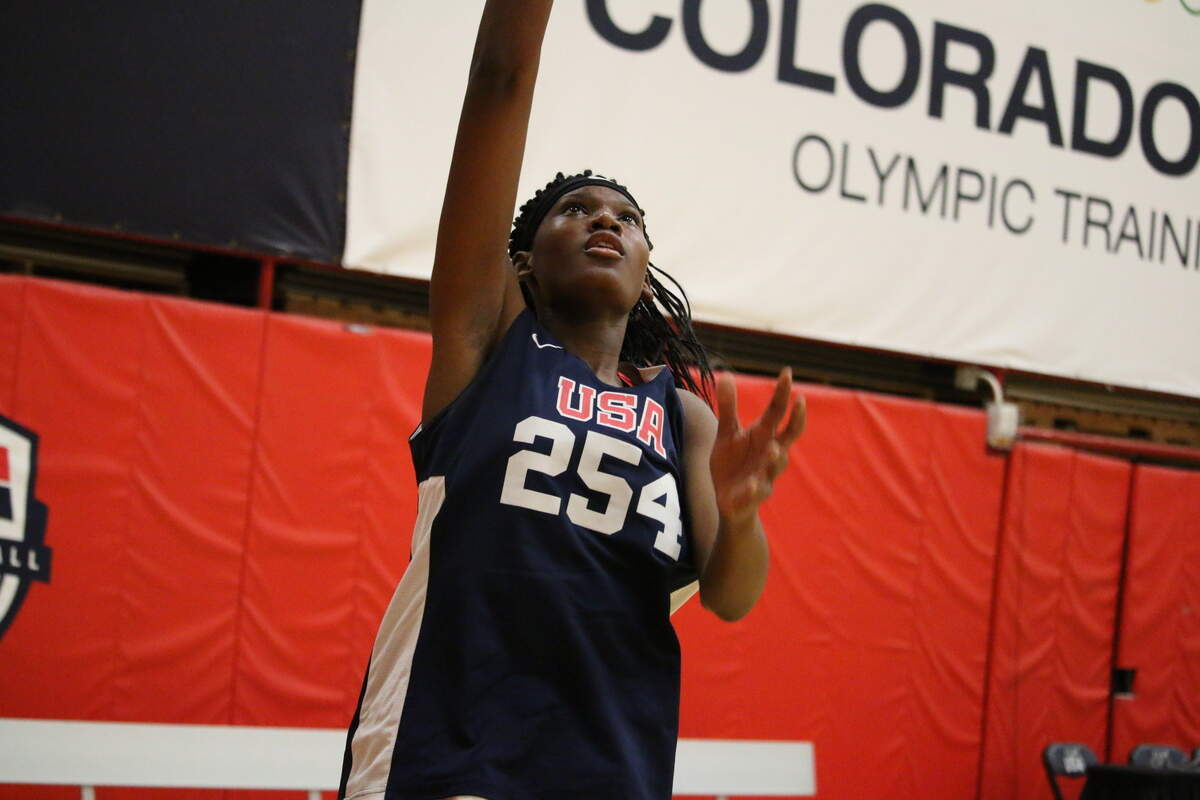
Feagin is also noted as a defensive presence — she averaged 3.6 blocks per game this past season, along with 10.4 rebounds. But with her explosiveness, Olson said, she can be relied upon to defend the perimeter as well at times, making her a valuable resource against pick and rolls.
All in all, Olson said, the physical tools are there Feagin to excel beyond college basketball.
“Feagin was a really impressive player at USA Basketball. She’s got the prototypical ... athletic body that you see on WNBA teams,” Olson said. “She’s got a lot of ability and versatility in her game.”
Raven Johnson
Johnson, a 5-foot-8 point guard from Atlanta ranked No. 13 by ESPN, joins a growing tradition of top floor generals to play under Staley, herself a Hall of Fame point guard. She’s already won three state titles with Westlake High School and has developed a reputation as a winner, Olson said.
“She’s put herself in the upper echelon of the guards that are out there,” Olson said. “Why? She’s performed and competed against the world’s best, and she’s delivered. And she’s really added a consistent jump shot on the perimeter. And she’s really developed her game in a half court set, so she knows more of how to run a team than she did.”
As Johnson’s gotten older, she’s developed more physicality while retaining her athleticism to draw fouls near the basket, Olson said. At the same time, what sets her apart isn’t necessarily her explosiveness, he said.
“When it comes down to (crunch) time and you need a shot, she’s gonna be able to create that shot,” Olson said. “This kid’s really got the tools and the savvy off the dribble.”
Bree Hall
Hall, a 6-foot guard from Dayton, Ohio, ranked No. 26 in the class, gives South Carolina yet another highly athletic, long player to put on the perimeter and clog up passing lanes on defense. And she’s made strides on the offensive end, improving her shooting percentage, especially from 3-point range.
“She’s got great size, continued to develop her game, can score from outside, inside, off the dribble,” Olson said.
With Rivers and Feagin, Hall will give the Gamecocks a wealth of options on defense, Olson said. And while she might be the lowest ranked of the bunch, Olson said the gap between her and higher-ranked players isn’t as big as you might think.
“Ain’t a whole lot of difference between her and No. 12 and No. 10 or No. 9,” Olson said.
Another No. 1 class?
Olson has yet to release any team rankings for the 2021 class. But at this point, he said, he’d put South Carolina at No. 1. No other program has more than two commits in the top 30.
That comes with the caveat that the No. 1 player in the class, guard Azzi Fudd, has yet to announce her commitment. Fudd is considered a generational talent and has drawn interest from virtually every major program in the country. She took an unofficial visit to South Carolina, but many have connected her to powerhouse UConn, where her good friend and No. 1 Class of 2020 player Paige Bueckers, is heading.
If Fudd does go to the Huskies, that would give them the Nos. 1, 5, 17 and 37 players in the class, compared to Nos. 3, 6, 13 and 26 for South Carolina.
Regardless, the Gamecocks are virtually guaranteed a top-two class. And coming right on the heels of 2019’s blockbuster class, that sets Staley’s program up to be among the sport’s elite for a while.
“I‘ve always said that these teams that are out there that can hit it big on a recruiting class like they did (in 2019) and then they turn around and they do it again and then again, that really puts them in a position to be in the race,” Olson said.
That success, Olson said, is a credit to the work Staley’s staff has done, both during the coronavirus pandemic and before it.
“They’ve done their advance work, gotten kids on campus early, before this all got nuts. And it’s really paid dividends for them,” Olson said.