SC private schools push ahead with plan to play sports, including football, this fall
There was no whistle in Doug Dutton’s hand as Cardinal Newman’s football team hit the field Tuesday for the first official practice of the season.
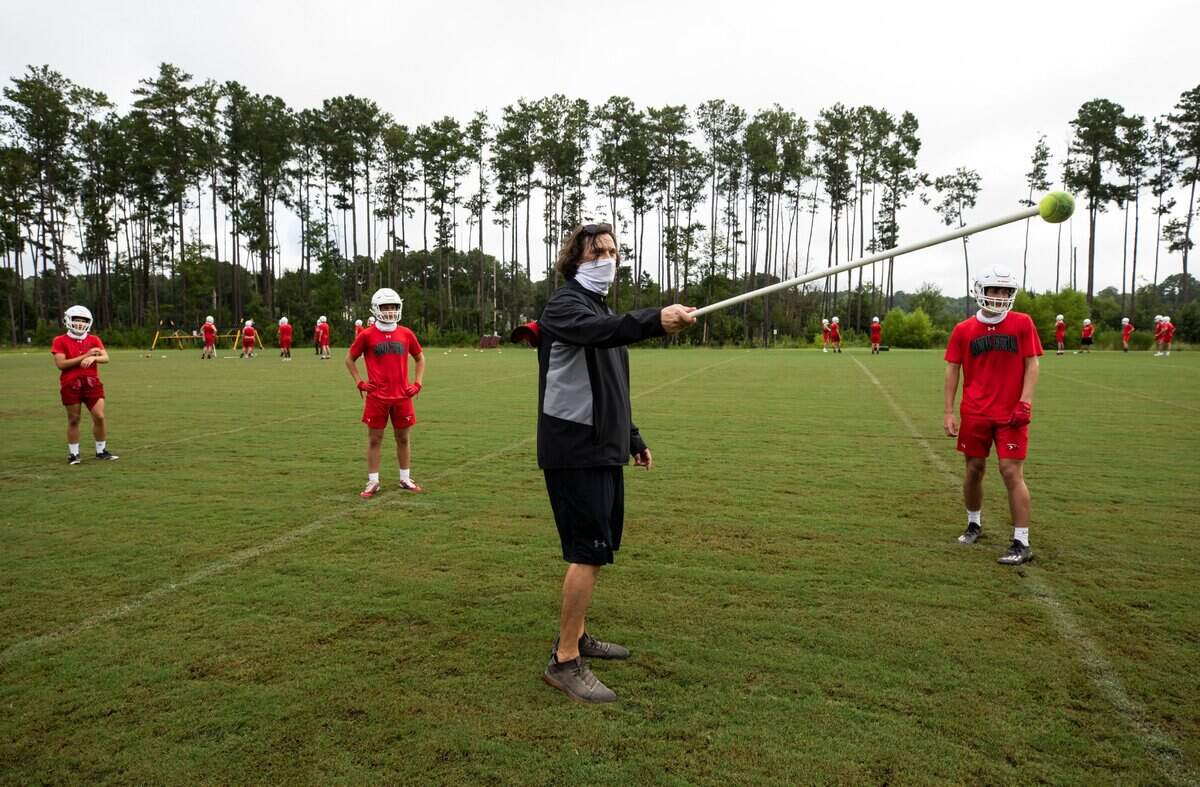
Instead, Dutton and fellow Cardinals coaches carried six-foot plastic poles with a tennis ball at the end. Those poles make sure coaches stay six feet away from players, an idea Dutton got from North Carolina football coach Mack Brown. The Tar Heels coach also is making his staff wear face shields during workouts.
Dutton’s coaches didn’t have face shields but all wore gaiter face coverings as teams from around the state navigate practices during the coronavirus pandemic.
“We are following the rules that we are given and trying to keep the risks as minimal as possible,” Dutton said. “Kids are excited to be out here. ... It is challenging for all of us. Football isn’t a game that is played six feet apart. We are going to have to make sacrifices to be able to do things we want to do.”
Cardinal Newman and South Carolina Independent Schools Association members are working toward a full fall sports season, including football, even as public schools from around the state and region push back the starts of their campaigns.
SCISA moved the start of official practice back one week, eliminated optional Week 0 contests on Aug. 20-21 and won’t allow preseason scrimmages. But the first football games are set for Aug. 28.
The S.C. High School League, which oversees public schools, won’t begin official practice for football until Sept. 8 with a seven-game schedule that starts Sept. 25.
SCISA schools were allowed to begin summer workouts on June 8 and later expanded to 15 players per pod and allowed for intrasquad scrimmages for basketball, volleyball and football (7-on-7).
The first official practice for fall sports was Monday, when football players were allowed to put on helmets for the first time. Teams can begin full-padded practices on Aug. 17.
“Our league has done a great job to give us guidelines,” Ben Lippen football coach James Reynolds said. “Our athletic trainer has done a great job navigating things and we have additional things in place to make sure we get ourselves to a Friday night football game and keep things as healthy as possible.”
The message: Stay safe at sports, at home
SCISA athletics director Mike Fanning told The State he’s been happy with the way schools and coaches have approached workouts and the safety measures that are in place, and how they are telling athletes to safe away from the practice and playing fields.
After Tuesday’s practice, Dutton and the Cardinals’ athletic trainer stressed the importance of staying safe this season.
“We can say all we want, but the kids are going to be ones that are following the protocols. It is a challenge,” Dutton said. “Proud of the effort they have been given, but the attitude is positive. We are going to keep taking it day by day and try to keep everyone safe.”
Players said they are trying to taking things seriously and just are glad to be out there playing sports again.
“My biggest concern about playing this football season is starting the season but not finishing it. Nobody can predict what’s gonna happen,” Heathwood Hall senior Ronnie Porter said. “We have worked hard this summer getting prepared to compete at a high level, while also taking all the necessary precautions for all the players and staff to stay safe and have season.
“I think we are very blessed and fortunate to play this fall. Some states aren’t even playing football. Just the fact we get the opportunity to is a blessing.”
The smaller roster size of SCISA schools’ football teams helps as the try to have a sports season amid COVID-19, the league said. For example, Hammond and Ben Lippen will likely have 40 to 45 players on their varsity squads.
SCISA also doesn’t bus kids to schools each day like public schools do. Teams would have to take buses to away games, but the smaller team size will make it easier to enforce safety measures.
Feedback from parents about going forward with sports this fall has been mostly positive, Fanning said. The league did not consider moving fall sports to the spring like other states have done.
Fanning also said SCISA wouldn’t force a school to play sports if they didn’t want to this fall.
“Not sure from the data that I have seen that spring is the answer,” Fanning said. “We didn’t want to give up on these months. We feel we can provide a safe environment for our athletes, coaches and fans this fall.”
Looking ahead to SCISA plan for game safety
A three-page memo was sent this week to SCISA schools about various guidelines for the upcoming season, including gameday recommendations and guidance for what happens if a player or coach tests positive for COVID-19.
The league won’t require schools to test athletes, but protocols are in place for when a positive test happens.
Among things mentioned in the memo:
▪ Student-athletes, coaches or officials testing positive with mild symptoms should expect to quarantine for a minimum of 10 days from the onset of symptoms. Those with more severe cases should quarantine for at least 14 days. Every participant should have a signed release from a doctor before resuming activities.
▪ Anyone with an immediate family member with COVID-19 positive test results must quarantine. A quarantine period of at least 10 days from the positive test result is commonly recommended. If the final three consecutive days are fever free with no fever-reducing medication, normal activities can resume.
▪ If the student-athlete had contact with infected individuals from an opposing team within the previous seven days, the opposing school’s athletic director should be notified so they can effectively monitor their athletes and coaches.
The plan is for fans to attend games this fall, Fanning said. The league will submit a waiver to the state Department of Commerce on the schools’ behalf regarding the amount of fans allowed in stands. S.C. Gov. Henry McMaster is limiting stadiums and other venues to 250 people or 50% of the posted occupancy, whichever is less. Exceptions can be made to the 250 limit but only with state approval.
While some SCISA crowds typically don’t get over 250, Fanning said the league will will need to have a waiver for playoffs and state championships.
Fans will have to wear face coverings while entering and exiting SCISA venues. Once fans are in their seats and physically distanced from non-family members, they can remove the masks.
The league is recommending schools consider family transportation to limit or reduce the number of students traveling by bus. They also recommend that athletes and coaches wear face coverings on the bus and to spread out athletes while traveling.
There won’t be any postgame handshakes between teams after games. Fans won’t be allowed on the field or court afterward, per SCISA guidance, and should leave the facility and head to their vehicles.
“SCISA’s Return of Fall Sports document is a living document that can and will be updated to include any new state or federal mandates or any game or event management practices that enhances public or student safety,” Fanning said.
This story was originally published August 8, 2020 at 6:45 AM.