Former UNC star Heather O’Reilly on life, coffee and the one soccer rule she would change
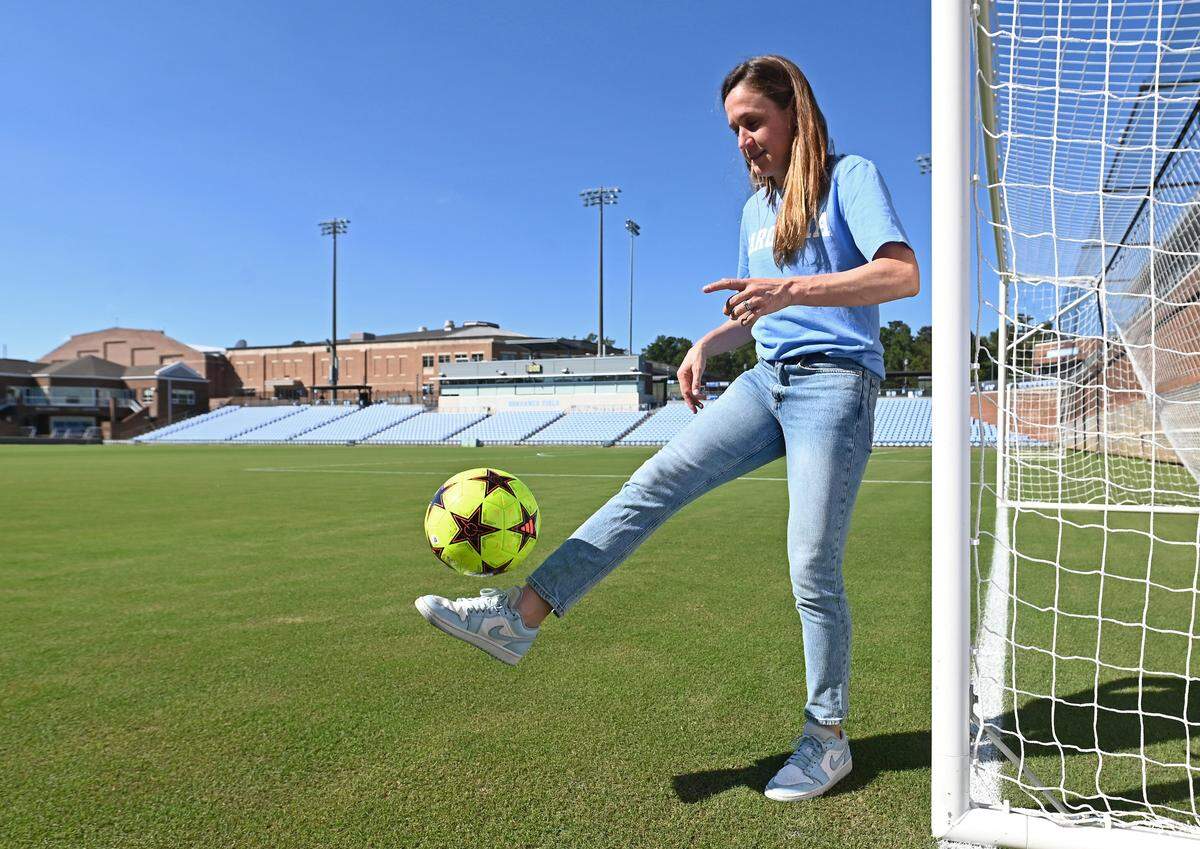
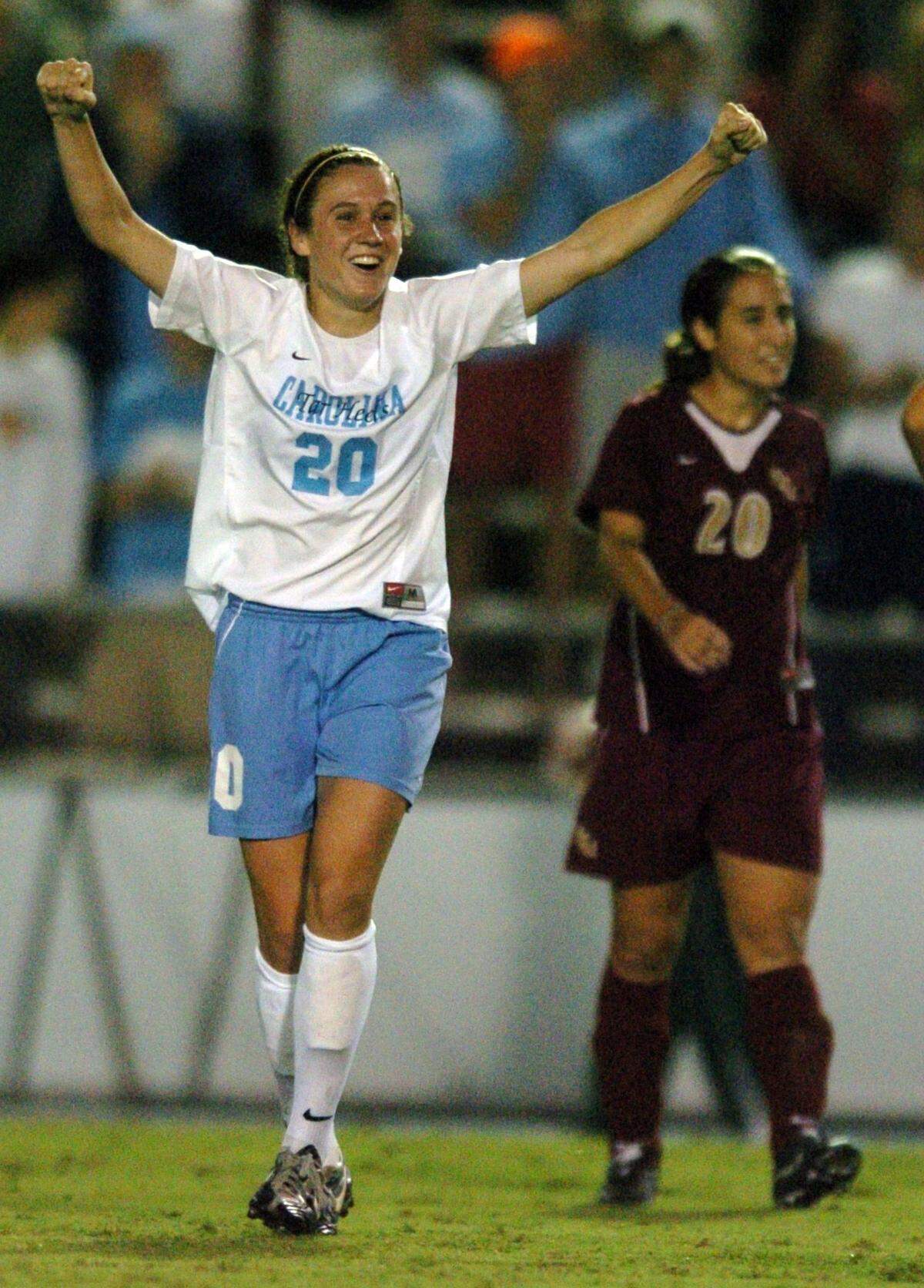
Heather O’Reilly was one of the all-time greats at one of the all-time greatest dynasties in college sports — the UNC women’s soccer team.
O’Reilly helped lead that squad to two NCAA championships, in 2003 and 2006, and had her jersey retired by UNC. Before she even got to Chapel Hill, though, she was a teenage soccer prodigy who was first called up to the U.S. women’s national team as a high school senior from New Jersey.
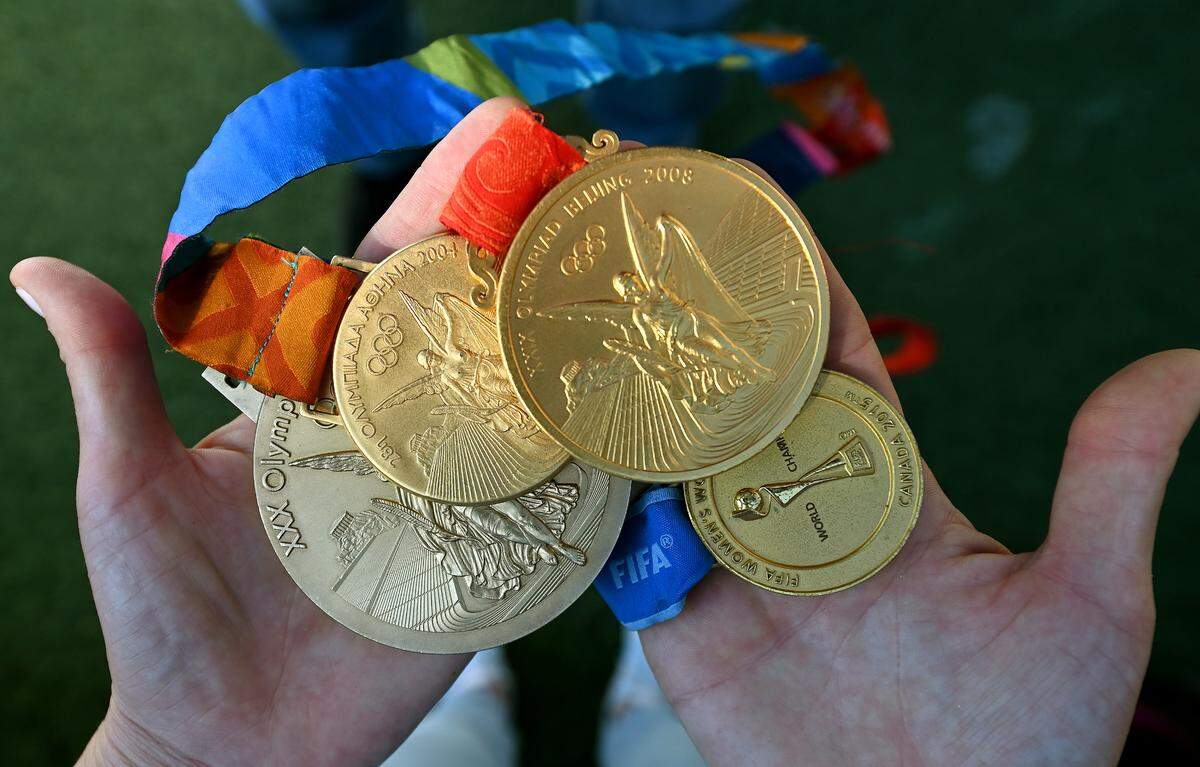
As a member of the U.S. Olympic women’s soccer team, O’Reilly won gold medals in 2004 (as a 19-year-old!), 2008 and 2012. She also won the women’s World Cup with the USWNT in 2015. She played with everyone from Mia Hamm to Alex Morgan to Megan Rapinoe in a 14-year career with an American team that usually ranked as the top women’s squad in the world.
After a long national and international career, O’Reilly has returned to Chapel Hill, where she coaches soccer, pursues a variety of business interests and chases after her two young children. In our conversation, the 39-year-old talked about juggling soccer and family life, hating penalty kicks and helping to save the Carolina Coffee Shop on Chapel Hill’s famous Franklin Street. O’Reilly’s “Sports Legends of the Carolinas” interview has been edited for clarity and brevity.
Scott Fowler: You formally retired in 2019, but you still managed to organize and play on a team that won a million dollars in North Carolina in June. How did that come about?
Heather O’Reilly: So a couple of years ago, I was laying on my couch, just scrolling on my phone, as we all do. And I was reading an article that was talking about this 7-a-side competition that, ironically, was going to be held in North Carolina, and the winner of the tournament (called “The Soccer Tournament”) would take home a million bucks.
My face lit up, because this was all the things that I love. I can still move around the pitch and enjoy the game and play at a pretty high level. So I contact the people right away and say “I want to put in a team.”
And they’re thrilled, right? Because they were a new organization, and they knew that having a couple of prominent figures could help promote the tournament. So in collaboration with the tournament organizers, I put in an all-women’s team last year (in a field otherwise filled with men’s teams). And we got our butts kicked by the men’s teams, as expected.
But we were the most popular team at WakeMed Soccer Park in Cary. Got the biggest crowds. Everybody was cheering for us…. We couldn’t call ourselves the Women’s National Team alumni, but essentially that’s what it was. ... I got most of my cronies from the US women’s national team that wanted to take part in this, and got Mia Hamm and Carla Overbeck on the coaching staff.
So fast forward to this year, they of course wanted us again to take part in the tournament, but after some back and forth with myself and the tournament organizers, we decided that they needed an all-women’s bracket.
And at first they were kind of trying to tell me that it wouldn’t be for a million dollars. It would be a smaller pool of teams there for smaller prize money. And I just said, “Well, just forget about it.”
Not that it was ever OK, but in 2024 that’s not going to fly. ... To their credit, they took that conversation seriously, and they said, “Okay, we’re gonna get there.”
And they did: a million dollars for the guys, a million dollars for the women. And so then I got my squad back together, bolstered it a little bit with some young blood, and we did it. It was such a blast.
Fowler: How did you split up a million dollars?
O’Reilly: Well, every player on the team went home with a $40,000 check. So that was nice. And we had a big staff, as you can imagine, because not everybody can still play, right? So the staff went home with 15 grand, and players went home at 40, and we all had a grand old time.
Inspired by the World Cup
Fowler: How’d you get into soccer in the first place?
O’Reilly: I grew up in New Jersey, youngest of four kids. I was the only girl. I had three older brothers that were super active in all different sports, but particularly soccer. ... A couple of events were really critical to my love for the game.
The first one was the ‘94 men’s World Cup that was held at Giants Stadium. And I was only nine at the time. But I remember going to see Ireland play Italy, and tailgating in the parking lot and my brothers painting their faces. That was the first time I saw the global reach of the game.
And then a few years later, at the ‘99 women’s World Cup, also at what I still call Giants Stadium — that was a critical time in my life.
I was 14 years old and a very good player for my age. But I think I was almost embarrassed by my talent, or I tried to downplay it, because I wanted to be liked and accepted by my peers. So that ‘99 World Cup was just really critical (in) my development to just be like, “There’s no hiding excellence.”
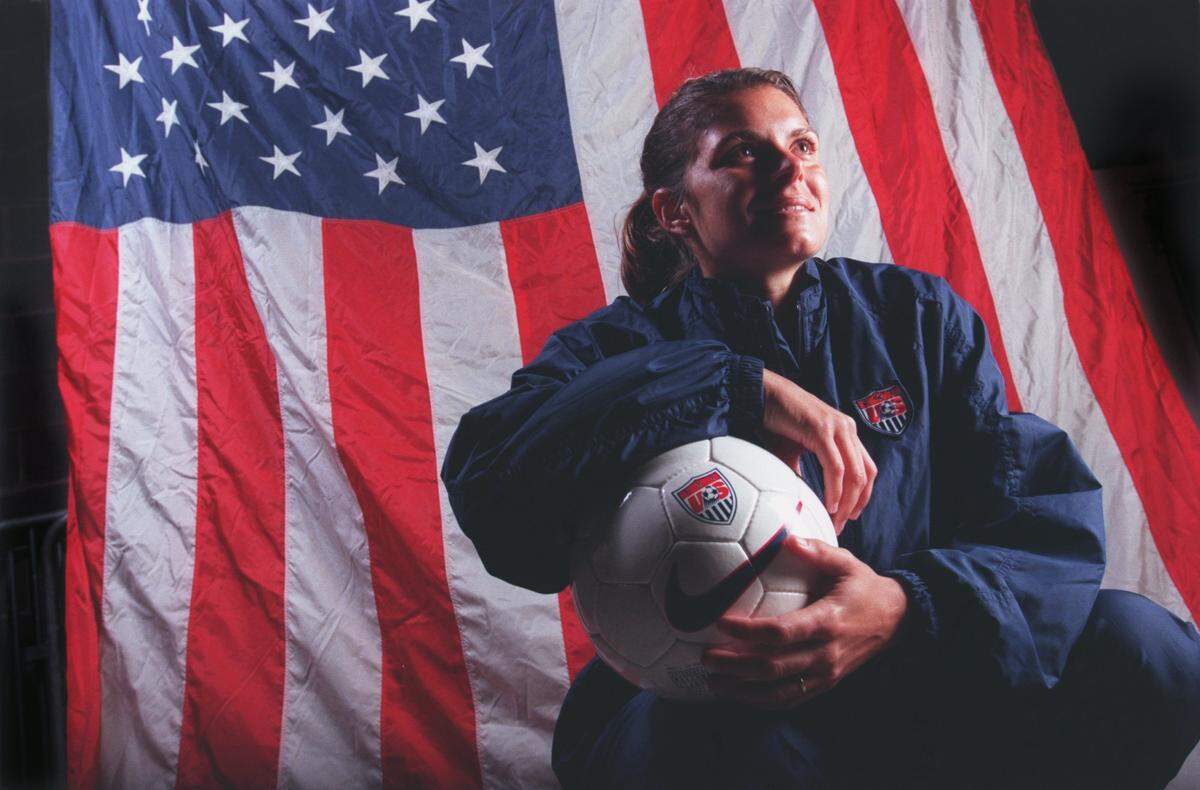
I saw Mia Hamm and Julie Foudy and all these incredible athletes perform at the highest level.
Fowler: And then only three years later, you were actually on that team, joining people like Hamm and Foudy and Brandi Chastain. Was there any tough love for the new kid?
O’Reilly: They were kind, but there was a little bit of tough love. One time in particular, I slept through breakfast, as teenagers do. And they said that because “some” people were late, we were going to run sprints. So we all get on the sideline. I’m like, “Oh my gosh. I’m going to get cut. And they’re going to hate me because we’re running extra.” And I was a fast runner, so I wanted to show off my strength. So I blitzed out of there and got 75% down the field before I realized that nobody’s running with me.
They loved that I was so cocky, thinking I was so far in front of people that nobody would even be in my peripheral vision. But that kind of attitude and kind of delusional self-belief, I think, is what got me there in the first place, right? So they sort of put their arms around me after that… And from age 17 to 31, the national team was a major part of my life.
Fowler: What was the most significant goal you ever scored?
O’Reilly: I’m going to turn that and say it was an assist.
In the 2012 Olympics at London, we were playing a back-and-forth game against Canada. And unfortunately, I didn’t start that game…. It was the semifinals, and late in the game, it was 3-3, and I was called on to come off the bench. We were about 20 seconds away from going to penalty kicks.
And I was able to put a picture-perfect cross into Alex Morgan, which she was able to head in. And I think that anybody who doesn’t start or feels demoted or kicked down a little bit — there was some perseverance there, to still be able to contribute and do my job well.
Fowler: You finished your playing career with the North Carolina Courage, right?
O’Reilly: Yes, and that was perfect. Because this is where it all began for me. WakeMed Soccer Park and Cary — I mean, the number of ACC games that I’ve had there or national championships that I played in.. ... We hosted the (NWSL) final in my final season in 2019 and I walked off the pitch with my hands raised in the air. Standing ovation. All that kind of stuff.
But what people didn’t realize in that final game is that I was pregnant. Very early. We’re doing the champagne in the locker room, and I’m giving a toast, and I’m like, “But I can’t drink it because I’m pregnant!” And all the jaws were on the ground, because I obviously just played 90 minutes.
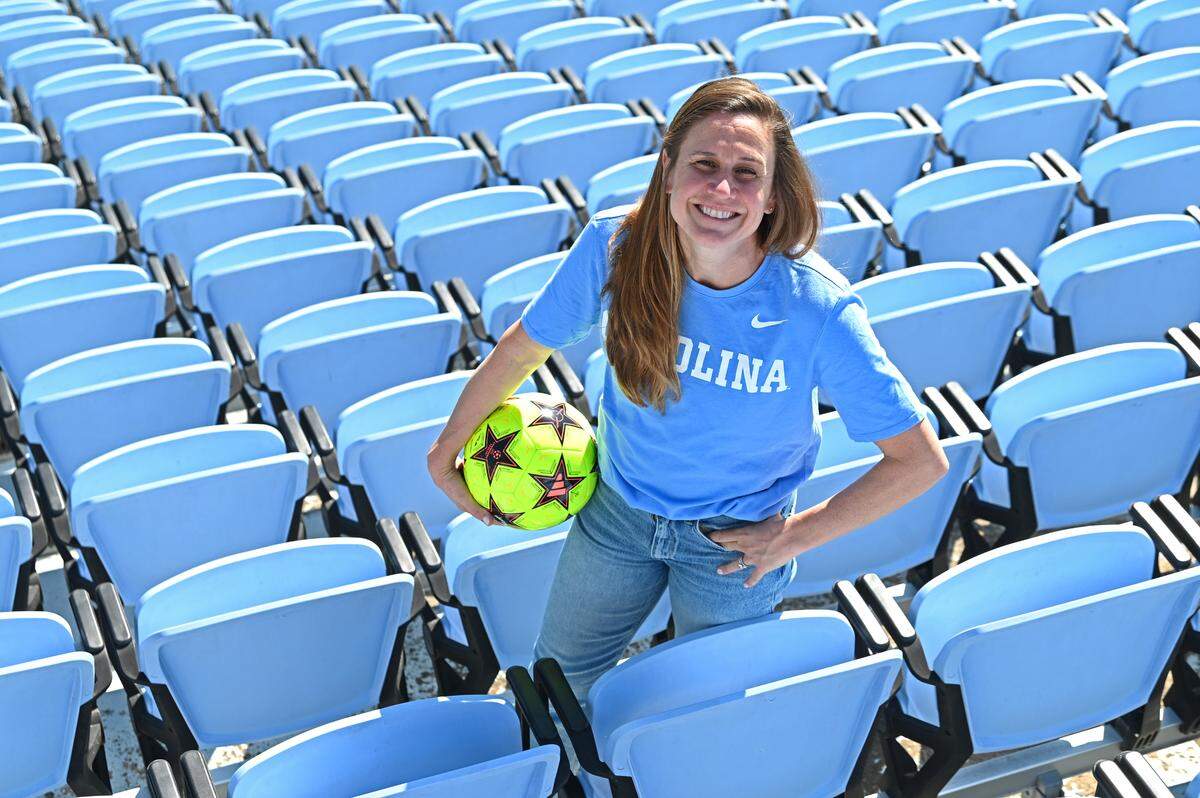
I have two sons, William and Jack. They are 17 months apart. William is four and Jack is not quite three. My husband, Dave, was a Morehead Scholar (at UNC) and on the lacrosse team at Carolina. We’re a Tar Heel family and we love it.
Fowler: You and your husband also helped save the oldest restaurant in North Carolina — the Carolina Coffee Shop on Franklin Street.
O’Reilly: Yes. I have all these different little projects to keep me interested. That started with us reading an online article about the Carolina Coffee Shop going down or going bankrupt. And it just bummed us out.
More than being particularly connected to the coffee shop itself, it was just a bummer for us that just loved Franklin Street and loved independent shops doing well. No offense to something like Jimmy John’s, but we didn’t want another Jimmy John’s. We want to preserve the character of Chapel Hill.
So myself, my husband, and three other couples sort of bantered over email like: “We should save it.” And some of the finance nerds on the email thread dug into it a little further, one thing led to another, and we all bought it and resuscitated it. In 2022, we celebrated the 100-year anniversary of the coffee shop.
Fowler: You were a volunteer coach with the UNC women’s soccer team for several years but aren’t this season. Your coach, Anson Dorrance, stepped down in August after 45 years as the head of that program (and 21 national championships).
Would you be interested in that job?
O’Reilly: I think we’ll see where life goes, right? I love this town and love the university. I would say, never say never. But Anson, for the last few years, has been working with a friend of mine named Damon Nahas, who’s been his right-hand guy. And Anson was very keen to pass the program on to Damon this year as interim coach, and then they’re going to open up the search (after the 2024 season) for who takes over full-time.
So we’ll see. ... Anson deserves, in my opinion, to choose his successor, or at least recommend heavily. If it’s Damon, I will put my weight behind Damon and want him to succeed.
‘I hate penalty kicks’
Fowler: If you ruled soccer, what is the first thing you would change?
O’Reilly: I hate penalty kicks. I think I’m traumatized because I missed some big ones in my day. I actually tell kids (that she coaches) this all the time.
In my junior year at Carolina, we lost early in the NCAAs (on penalty kicks). I was the only penalty-kick taker that got it saved.
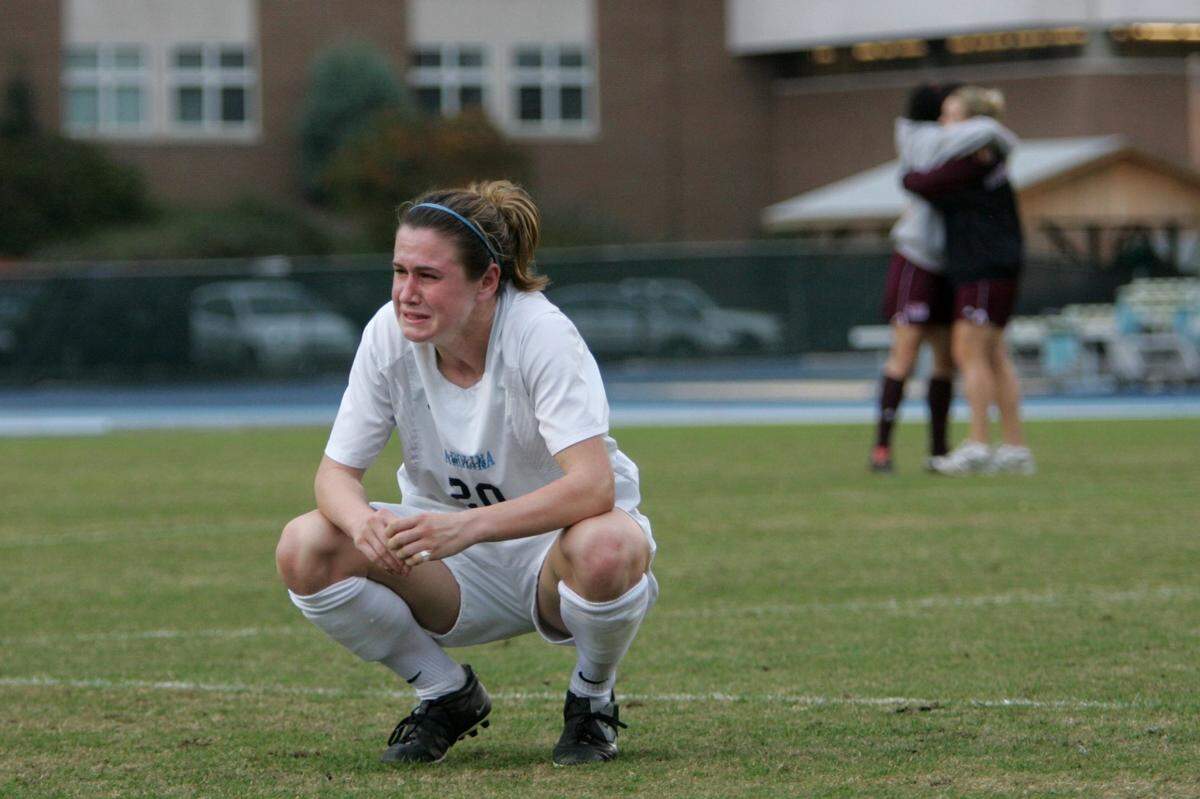
And that did me in for a while mentally. I never wanted to take penalty kicks. You feel the pressure. You let people down. It’s embarrassing, even if I did so many good things in the game, right?
Fast forward to the 2011 World Cup. In the final against Japan, we go to penalty kicks. And at that point I was still kind of scarred. And I pretty much chickened out.
The coach was like, “Are you up for taking one?” And I was like, “I think we should let somebody else.”
And we lost.
And I look back on that decision and am like: “I could have changed history, if I was just a bit bolder.” And whenever I’m talking to young people, (I ask): “Which penalty kick do you think I regret more?”
It’s definitely the one that I didn’t try. That’s the one that keeps me up at night. Not the one that I missed.
Fowler: So what would you do instead of penalty kicks? Play endless overtimes?
O’Reilly: I think, in 11 v. 11, you take a player off (each team) every five minutes. By 8 v. 8, you would definitely be getting the goal. It’s not like it would take much longer.
But here’s the thing: a basketball player wouldn’t want a foul-shooting contest at the end of the game (to break a tie). It’s not the game. That would preserve the game’s integrity, and also probably people’s mental health around penalty kicks.
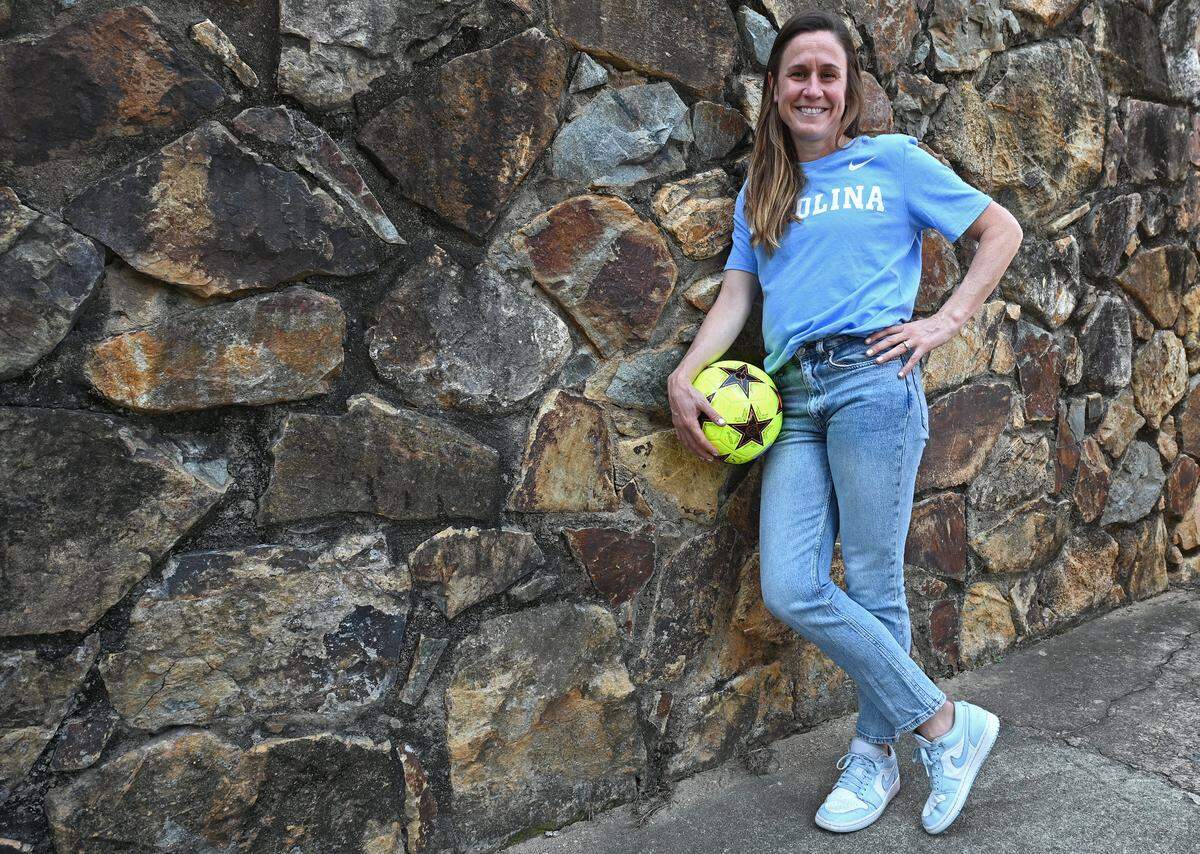
Fowler: You will turn 40 in January. Any big plans?
O’Reilly: (Laughs) How did you know? My husband and I are going to host a big New Year’s party in Chapel Hill. The theme is going to be “Jersey Girl.” And 1980s, too, since I was born in 1985.
So there’s going to be a lot of teased hair. Big hair. Volume. Hairspray. I don’t think it’s going to be a great day for the ozone layer. I may have to buy a carbon credit.
The “Sports Legends” series has won multiple national awards and includes 1-on-1 interviews with guests like Richard Petty, Steph Curry, Roy Williams, Mike Krzyzewski, Jake Delhomme, Jay Bilas, Alonzo Mourning and Dawn Staley. Those are also available on the “Sports Legends of the Carolinas” podcast, where a fuller version of this Heather O’Reilly interview can also be found.
The “Sports Legends” coffee-table book is now available at SportsLegendsBook.com and at local bookstores.
This story was originally published October 30, 2024 at 5:00 AM with the headline "Former UNC star Heather O’Reilly on life, coffee and the one soccer rule she would change."