
Mall changed Columbia, 2 counties with its bounty (+ video)
George Duke never imagined the wooded lane off I-26 where he rode his bicycle 40 years ago would become an economic dynamo for the Midlands.
“It was so country,” Duke said of the dirt road that’s Harbison Boulevard today and clogged with traffic. “Nobody traveled it much.”
Today an estimated 50,000 vehicles daily use a thoroughfare that was once the site of informal drag races for teens and young adults before it became a planned suburban community.
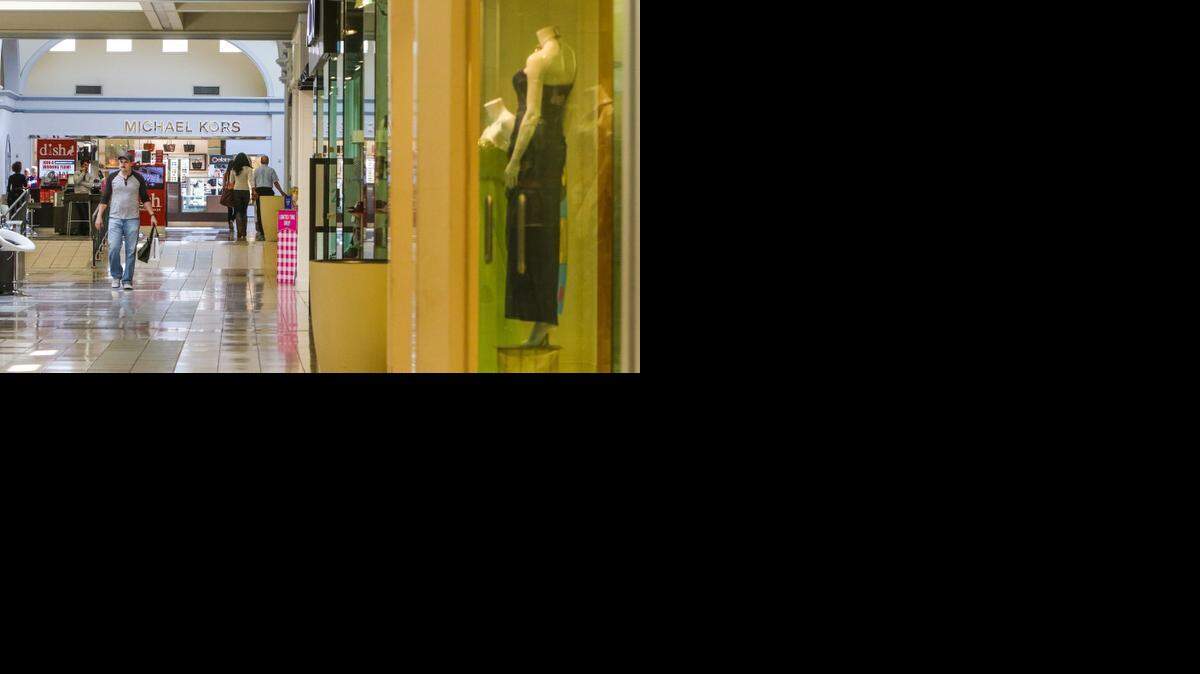
Harbison Boulevard is the gateway for a square-mile retail hub of more than 300 stores, a quarter of them in Columbiana Centre mall as it prepares to celebrate 25 years of operation this summer.
The thriving business and entertainment corridor is home to $442.4 million in development, tax assessment records show. That makes it a revenue bonanza for more than a dozen public agencies.
The area ranks second only to South Carolina Electric and Gas Co.’s power plants on Lake Murray as a source of tax revenue in Lexington County, officials say.
It also generates millions in property and meal taxes for Columbia, whose annexation grab of the area as the mall prepared to open in 1990 has left lingering ill will.
Overall, the area produced nearly $14 million last year in property and meal taxes for Columbia, schools, Riverbanks Zoo and more in Lexington and Richland counties, records show.
Merchandise sold also generates state and local sales taxes, but no aggregate figures are known since national chains don’t reveal income from outlets.
Harbison customers include Duke, a 78-year-old retired business executive who lives on the lake near Chapin.
For him, going to the mall replaced a trip to downtown Columbia and other shopping centers.
“When people out here speak of going to town, that means Harbison,” Duke said.
Mall led the way
Retailing in the Harbison area took off with Columbiana Centre’s opening a quarter of a century ago. The mall anchors a retail hub that analysts say is a regional magnet.
“That will remain a vibrant corridor forever,” predicted Stan Harpe, a real estate agent who sold the site for the mall in the mid-1980s and other nearby tracts afterward.
The mall brought in more stores as well as cinemas and restaurants so that the Harbison area became a source of entertainment as well as a shopping mecca.
“It’s a destination,” Lexington County Planning Director Charlie Compton said.
The site was one of three in the county at which mall developers looked, Compton and Harpe said.
Its location next to I-26, access to water and sewer service and neighborhoods already in place on the lake and the vicinity made it the top choice, they said.
The site also is in an area with steady population growth, said Tony Hanna, a partner with Carolinas Retail Partners.
The mall’s trade area is home to nearly 521,000 people, an increase of 22 percent since 2000, a recent marketing study says. The study does not say how large an area that is. But mall manager Andrew Peach describes its shoppers as mostly coming from a 50-mile circle around the 82-acre shopping complex.
Harbison is “the first choice for retailers coming into the market area,” said Mary Winter Teaster, a partner at CBRE commercial real estate brokers. “It is the retailing hot spot.”
Its popularity belies that the mall was slow to blossom.
The site was set aside for a shopping center near new homes in the mid-1970s by Ozzie Nagler, an internationally-recognized architect and urban designer. He developed the plan for the Harbison area and likes the result so much that he still lives there.
It took 13 years for developers to come up with an acceptable plan as various proposals failed to win favor from the community and lenders, officials said.
Homart Development, a division of retailer Sears, created the mall that analysts say has been a hit since its opening.
“It has become the premier mall in the Midlands,” Teaster said.
Other effects
The mall’s impact extends beyond being a site for shopping and entertainment.
Midlands officials credit the mall with accelerating development along the north shore of Lake Murray.
Nearly 97,000 residents live in the Irmo, Chapin and Dutch Fork areas, an increase of 39,000 since the mall opened its doors, according to census estimates.
Some of that growth would have happened regardless of a mall, but development in the Harbison area made it more inviting for developers to add neighborhoods near I-26, officials said.
“Great businesses and great schools help attract and retain families to an area,” said Lexington-Richland 5 school spokesman Mark Bounds. “The growth of retail in our area, including Columbiana, made a positive impact on our community.”
More than 16,400 students attend Lexington-Richland 5 classrooms in 20 schools today compared with 11,500 students in 12 schools in 1990, records show.
The popularity of the mall and its retail neighbors spelled trouble for the struggling Dutch Square shopping center as well as other merchants in the St. Andrews area and even in downtown Columbia, some analysts say.
“There’s no doubt the mall has had a bad effect on Dutch Square and elsewhere,” Nagler said.
Belk closed its outlet at Dutch Square in January to focus on its operations at Columbiana Centre.
Road woes
Harbison’s popularity created road congestion that still plagues drivers.
Traffic on Harbison Boulevard and nearby Piney Grove Road – particularly back-ups on I-26 at Christmas and other major shopping times – regularly generates complaints.
Planners originally suggested underground entry into the mall on lanes beneath I-26 to lessen congestion but state transportation officials opted instead for the overpass there, planner Compton said.
Bottlenecks on Harbison led Lexington County officials to add Bower Parkway nearby for relief, but that road rapidly became an adjoining retail hub with its own traffic jams.
Too many motorists use Harbison Boulevard instead of other entrances to the area off Lake Murray Boulevard and St. Andrews Road, retail analyst Hanna said.
Interior roads linking developments help keep traffic moving, Compton said.
There are no plans for more roads.
“It’s an easy target,” Harbison designer Nagler said of congestion. “At times, it can be pretty bad but, on the whole, it functions well.
Merchants see the congestion as a plus, commercial real estate broker Harpe said. “If you’re a retailer, you love it,” he said.
Motorists will face even more inconvenience around the mall soon.
Columbiana Drive – a 1.6-mile drive linking the mall to other stores, restaurants and hotels – will be repaved to eliminate potholes. Work will be done at night.
The $2.6 million job is estimated to take two months to finish after it starts in mid-April, Columbia Public Works Director Robert Anderson said.
Annexation war
Columbia won a battle to take in the mall and area around it in the early 1990s, stirring resentment still harbored in nearby Irmo.
“It made me realize politics is dirty,” said Kathy Condom, an Irmo town councilwoman who then led a group of homeowners fighting Columbia’s move.
Using a then-novel strategy of shoestring annexation along the Broad River, Columbia reached the mall and surrounding area first.
“Irmo didn’t wake up in time,” said former town Mayor John Gibbons, who took office after the fight began.
A decade-long series of legal challenges – some of which went to the South Carolina Supreme Court to settle – ended in victory at the top state court for Columbia in 2000.
Irmo learned from the loss.
Town officials matched what Columbia did to reach Harbison but for a different reason.
Irmo instead extended a two-mile sliver along railroad tracks to block Columbia from claiming other commercial areas that still are outside both communities.
Columbia’s decision to poke an unwelcome thumb into Lexington County to annex an area that’s grown to 217 commercial tracts paid off for City Hall.
It takes in $4.2 million annually in property and meal taxes from the areas as well as an undetermined amount in business licenses and other fees, Richland County tax records say
Despite the discontent over what happened, Irmo and Columbia now are partners in law enforcement, fire protection and handling other emergencies.
“In the end, we have to get along,” Condom said.
Looking ahead
The mall and area around it is likely to remain healthy for years, analysts predict.
“Its positioning works both geographically and demographically,” retail analyst Hanna said.
There’s still plenty of space in the I-26 corridor for more neighborhoods with new shoppers to sprout, Compton said.
Major retailers remain strongly interested in being there.
Belk expanded its apparel offerings by moving into a vacancy when Sears departed recently as part of a corporate downsizing.
Any retailer who departs Harbison – mostly for reasons unrelated to low sales there – is quickly replaced, commercial real estate broker Teaster said.
Duke travels from Chapin to the spot where he and friends worked out in the 1970s to shop for clothes and home decor.
Columbiana Centre was being built when he left the Midlands in the late 1980s on a job transfer, returning 10 years later to a radically changed Harbison.
“There used to be nothing out there,” Duke said. “Now it’s much different.”
Reach Flach at (803) 771-8483
5 ways Columbiana Centre changed the Midlands
>>> Spurred growth on the north side of Lake Murray
>>> Generated millions in tax revenue for more than a dozen public agencies
>>> Became the first place retailers look to set up shop in Columbia
>>> Diverted shoppers away from older shopping centers – effectively killing some of them – and even downtown Columbia
>>> Brought shopping alternatives to the then-isolated Harbison, one of the country’s 13 “integrated-use” communities built in the 1970s as a social experiment that mixed residences, businesses and green space. Harbison’s creator, internationally recognized land planner Ozzie Nagler, stayed in Columbia and designed the Three Rivers Greenway.
This story was originally published March 28, 2015 at 10:22 PM.