
WWII veterans reminisce about return trip to Normandy
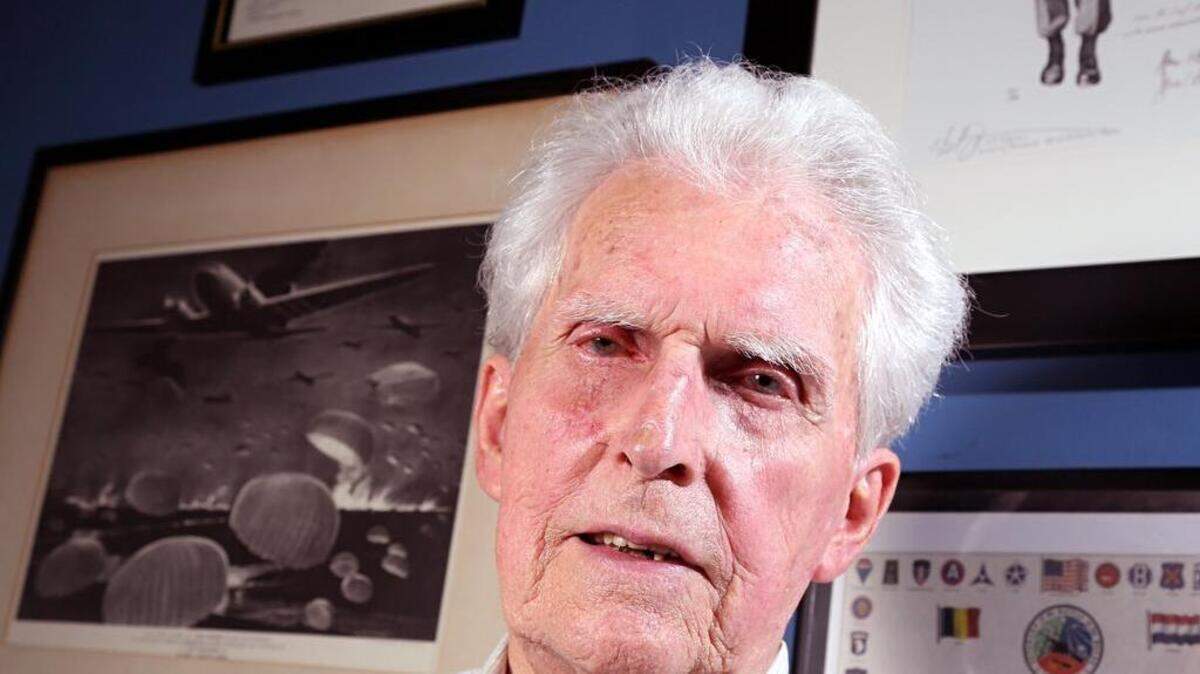
Watching the documentary “South Carolinians in World War II: Return to Normandy” brought back a lot of memories for Leif Maseng and Vernon Brantley.
The film chronicles a trip they and 16 other South Carolina World War II veterans took to France two years ago to attend the 70th commemoration of D-Day, the allied invasion of France during World War II.
Maseng and Brantley, both 92 and Columbia residents, watched the film with a reporter before its broadcast premiere on South Carolina ETV on Nov. 10 at 9 p.m. Some scenes kept them somber, some choked them up, while others made them smile.
They saw familiar faces, some they haven't seen since their trip in June 2014, and a couple they'll never see again. They remembered the ceremony where President Obama, Queen Elizabeth of the United Kingdom, Russian president Vladimir Putin and French president Francois Hollande spoke.
And as did the trip itself, the documentary conjured memories of when they were in that area originally, in 1944, not too long after D-Day.
“I could just feel the cannons going off and firing over the fleet coming in,” Maseng recalled about his visit, as the documentary started. “The heroes are the ones who came across that sand” on D-Day, June 6, 1944.
Maseng and Brantley are both veterans of the Battle of the Bulge, which took place in the Ardennes region of Belgium and France. Maseng jumped on D-Day with the 505th Parachute Infantry Regiment of the 82nd Airborne Division. He was among those who liberated the Sainte-Mer-Eglise, one of the French towns the group of veterans visited.
As the documentary showed French residents thanking the veterans for helping to liberate their country, Maseng and Brantley recounted the warm reception they got there two years ago. “There were people there from every nation,” Brantley says. “One man rode up on a motorcycle from Scotland.”
And Maseng admitted he was very surprised. He had been reluctant to go on the trip, remembering the hostility many U.S. soldiers encountered in 1944. “One thing I feel must be emphasized is that every Frenchman we encountered, whether child, young adult or senior citizen as old as I am, every one of them expressed love and appreciation for what we did for their country,” Maseng says.
Watching one scene with enthusiastic French people treating them like celebrities, he remembered, “Everyone wanted to hug me.”
Maseng is featured often throughout the documentary. Brantley thought Maseng was a good ambassador and spokesman for the group.
Brantley credits retired Jeanne Palyok of Columbia with planning and organizing the trip. “It was a one-woman show,” he says. “She herded us around like a bunch of cats. It was very professional.”
Palyok organized the tour as a tribute to the estimated 2,500 men who fell in the D-Day invasion and as a gift to the veterans on the tour, who attended free of charge, thanks to donations. She also planned trips for the 40th and 50th D-Day anniversaries.
As Brantley watched veterans talk during the documentary, he recalled how many spent most of their lives not wanting to share their war memories. “But as we got older, I think we realized someone needed to talk about it,” he says.
One of the most haunting memories from the trip were the visits they took to the American Cemetery at Colleville-sur-Mer above Omaha Beach, where rows of identical white marble crosses mark the graves of 9,387 American soldiers who fell in the largest amphibious invasion in history. Another 1,557 names of soldiers whose bodies were never found are etched on a memorial wall.
“Walking among the tombstones, hearing the birds sing, that was the highlight of my trip,” Maseng says. “You can’t imagine the feeling you get when you walk through that cemetery. You can feel the lives of the people you knew for such a short time, yet you thought of them as brothers.
“It still chokes me up.”
About the documentary
▪ Wade Sellers of Columbia’s Coal Powered Filmworks was the director.
▪ The 2014 trip lasted 10 days.
▪ The group visited Gold and Utah beaches, the American Cemetery, the German Cemetery, and several cities.
▪ Twenty-three veterans made the trip.
▪ The documentary was funded by the ETV Endowment of South Carolina.
This story was originally published November 1, 2016 at 10:01 PM with the headline "WWII veterans reminisce about return trip to Normandy."