
THE NEXT NEW COLUMBIA: As activity picks up in Columbia’s downtown core, so does demand for living options
When Rick and Deborah Rowe want to enjoy a meal out at M Grille, they leave the car at home.
The retired pair might start their weekend strolling the Soda City market and finish it with a show at Trustus theater. They can pick up their groceries, grab a bite to eat and get in their daily exercise, all without ever taking their car keys out of a drawer at their home.
That’s because their home is in Columbia’s Vista, the growing heart of the city’s entertainment, dining, retail – and, increasingly, living – scenes.
“The downtown environment, for us, has turned out to be one of freedom,” said Rick Rowe, who lives with his wife in a Renaissance Plaza condominium. “We come and go. We have good neighbors. We can socialize. We can go up to the convention center. All those kinds of things are available to us, and it’s just a good lifestyle.”
Downtown Columbia has reached a critical mass of activity to the point where it’s finally experiencing a 24-hour life cycle in the Vista and Main Street corridors. More and more residents appear eager to live in an increasingly vibrant community, and developers are apparently responding to the demand.
Never mind the half dozen or more student housing projects planned and some 3,000 students expected to live downtown in the next few years. At least six residential projects for grown-ups are in the pipeline for the Main Street and Vista districts – plus a residential component is planned for the new Bull Street development.
The next few years are expected to see hundreds of people joining the nearly 1,500 residents, largely young professionals and empty-nesters, who already rent or own homes in the downtown core.
You can live in a lofted apartment above a steakhouse in a 1930s-era building on Main Street, a modern condo steps from the heart of the Vista entertainment district or a luxury townhouse by the riverwalk.
Ten or 15 years ago, perhaps just a handful of trailblazers wanted to live downtown – because, well, there wasn’t much to do there. But now there is, with the restaurant, retail and entertainment scenes exploding over the past few years and more options promised.
Columbia saw just the tip of the downtown living trend in the late ’90s when Parkside apartments cropped up across from Finlay Park, later to be converted to condominiums. Around the same time, downtown residential pioneer Capitol Places upfitted the old Kress department store building on Main Street to house a couple dozen apartments above street-level restaurant and office space, a nod toward a future trend of mixed-use developments downtown.
Then, about the time that the Publix grocery store opened at the corner of Gervais and Huger streets in 2004, residences started popping up all over the Vista. The Publix was the key catalyst for the growth of downtown living, said Scott Garvin, president of Garvin Design Group, which has planned and designed a number of projects in and around downtown, including Mast General Store and the Olympia and Granby mill apartments.
To live downtown, people need to “have all those things that you have outside of town, which is one of the reasons people move outside of town,” he said.
“Publix created a reason for people to live somewhere near Gervais Street. That reason didn’t exist,” Garvin said. “I don’t think that people moving downtown attracts development. I think it’s the other way around.”
Since 1996, the number of restaurants and bars in the Vista has grown from 15 to 68, said Fred Delk, director of the Columbia Development Corp., which guides and encourages development in the Vista and Main Street corridors.
“Inevitably, you create downtown activity with businesses, and then you create 24-hour activity with residential,” Delk said.
After nearly two decades of commercial investment and growth in the downtown core, more than a dozen apartment, townhouse and condominium developments are thriving from Main Street to the river.
And the choices just keep expanding.
“I think there’s a lot of that opportunity down here – developers and business owners just haven’t taken advantage of it yet,” said Garvin, who plans to complete a mixed-use development with a residential component on Gervais Street by the end of the year. “But there is a wave coming.”
Still, as attractive as downtown living is to some, it will only appeal to a fairly narrow segment of people. Even with the growing demand for downtown living options, both Delk and Garvin said they don’t expect families to be among those flocking to the Vista and Main Street.
Quality schools, larger living spaces – and a less expensive way of living – aren’t typically met in urban environments, and that tends to push families out to the suburbs. That’s a trend almost anywhere you go, including Columbia, Delk said.
But the advantages of downtown living, from the convenience to the energy, are enough to draw folks to Columbia’s core in increasing numbers.
The young pros
Since at least the early 2000s, there has been a nationwide trend of young professionals – college-educated, working adults in their 20s and 30s – moving to downtowns.
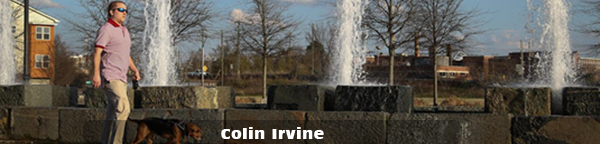
In Columbia, the faces of that trend are people such as Colin Irvine, a 23-year-old from Cincinnati who graduated from the University of South Carolina two years ago.
He moved a few months ago from a house near Five Points to the CanalSide Lofts apartments on the edge of the Vista, a more grown-up environment where he says most of his neighbors are young professionals like himself.
It’s an ideal living situation for him at this point in his life, said Irvine, a sales manager for Vision Property Management. He has a small, manageable living space within close proximity to his job and entertainment. He can walk or catch a cheap ride for a night out, take his girlfriend to dinner at Gervais and Vine or take his dog for a walk along the river.
“If there was nothing to do (downtown), I wouldn’t have considered staying (in Columbia) at all,” said Irvine.
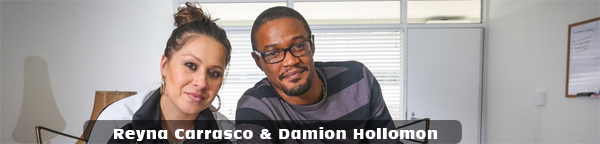
Damion Hollomon, 38, and Reyna Carrasco, 36, just moved from California into The Palms apartments on Main Street. Co-founders of the startup company SmartPhone Records, they’ll be in Columbia for at least several months as they go through a startup accelerator program offered by the USC/Columbia Technology Incubator.
“I’ve always thought of us as being on the cutting edge of everything,” Hollomon said. “It’s the same with technology (as it is with the city): You’re either on the way or in the way. It’s good to be part of something that seems like it’s on the way. ...This city is on the way.”
In recent years, the Incubator has played a major role in cultivating a tech community that has helped attract and keep young professionals.
“I think these startups are starting to realize, ‘I can enjoy being a part of downtown,’” said Laura Corder, director of communications and programs manager for the Incubator, which is located on Laurel Street. “Obviously, there’s not a promise they’ll stay after the program has finished, but that’s part of the goal.”
Hollomon and Carrasco have only been here a few weeks, but they’re already starting to think that way themselves. They love being able to walk to work or dinner or the gym, they said, and they’ve been more than impressed with how social people are as they pass on the streets.
“We haven’t even talked about going home,” Carrasco said. “If for some reason we end up returning (to California), it’s not because we don’t want to stay. It’s not because we’re not sold on it.”
The empty-nesters
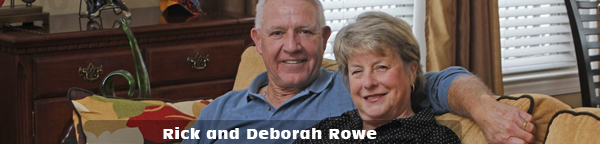
Rick and Deborah Rowe have done the suburban thing. They’ve done the taking-care-of-a-house thing. The driving-everywhere-they-go thing.
And when they retired several years ago, they didn’t want to do anymore of that.
They were looking for freedom in their lifestyle, and they found that in the Vista.
“I’ve had the house. I’ve had to do the yard, paint, do all that stuff. And I said, ‘I just don’t want to do it anymore,’” said Rick, 70, who is president of the Vista neighborhood association. “We wanted to be in a place where we could go anywhere in the area, whether it be restaurants, the post office, hospital, church, whatever.”
The couple bought a condo at Renaissance Plaza on Pulaski Street, near Gervais, about eight years ago. They moved from Raleigh to be closer to their children and their families in Lexington and Bamberg.
They’ve seen downtown grow dramatically in vibrancy in the past few years, Rick said. They go where they want and do what they want with ease, and their options are varied, he said.
“We just take ourselves wherever our thoughts might take us,” Rick said. “The whole idea was to be able to walk and be able to exercise and do what we want here without driving.”
Rick loves living downtown, but he does have some concerns about safe walkability, especially as he and his wife age and the traffic picks up on downtown streets, particularly the dauntingly wide Assembly and Huger streets.
Otherwise, he and his wife have never felt safer, he said.
The would-be downtowner
Almost everything Kim Bendillo does is downtown – everything from work to exercise to gallery crawls to dinners and drinks with friends. Except for living.
“It’s just nice to be able to kind of walk around to those things and go home in five minutes as opposed to trekking across the suburbs,” said 50-year-old Bendillo, the interior designer for Garvin Design Group whose children grew up and moved out of the house.
She lives by the VA hospital off Garners Ferry Road and would love to trade her 10-mile commute for time better spent doing what she enjoys. And she’d be able to do a lot more of what she enjoys – meeting friends at an art gallery, shopping at the Saturday morning Soda City market, having people over after dinner – if every event didn’t turn into a driving trip.
“Even on the weekends, sometimes there are things going on, but I’m like, ‘Oh, do I really want to go downtown?’ because I’m here,” Bendillo said.
Maybe the biggest deterrent to Bendillo moving downtown is the cost of renting or buying in the city’s core. For what she would pay for a small place downtown, she could afford a monthly payment on a much larger house in the suburbs.
But, she said, “I would pay a premium for the convenience.”
This story was originally published March 14, 2015 at 8:26 PM with the headline "THE NEXT NEW COLUMBIA: As activity picks up in Columbia’s downtown core, so does demand for living options."