
Remembering Emanuel: The unanswered phone call
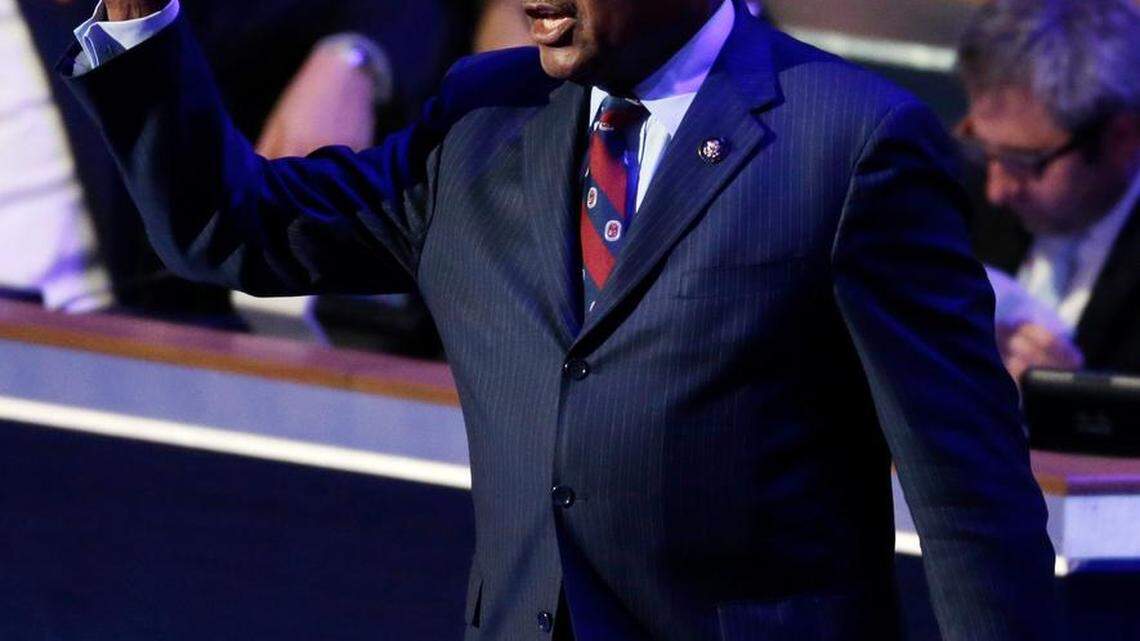
U.S. Sen. Tim Scott got the first call about 9 on a Wednesday night a year ago. A deputy sheriff told him there were reports of a shooting at Emanuel AME Church in his hometown of Charleston.
Scott’s first thought was to check in with his friend the Rev. Clementa Pinckney, the church’s pastor.
“I remember picking up the telephone to call Clementa to see what was happening, and it’s probably my last text that I have to him,” Scott said.
Sitting in his office on Capitol Hill, Scott pulled out his phone and scrolled through his messages – all the way down to June 17 of last year.
“It was at 10:31, and I asked him if he was OK,” Scott recalled, clearing his throat. “He never responded. So for me, the pit in my stomach started to grow. Then, I got another call that there had been fatalities, and I may not be getting a call from him, from Clementa.”
It was a long night too for U.S. Rep. Jim Clyburn, the lone Democrat in South Carolina’s delegation in Congress and also a close friend of Pinckney, who also was a state senator.
“I couldn’t sleep, and stayed on the phone and on my computer all night, trying to make some sense of it,” Clyburn said. “And then all those people from all over the country were there in Charleston in a matter of hours, and it occurred to me this is huge, this is much bigger.”
A year has passed since a young white supremacist gunned down nine black parishioners during a Wednesday night Bible study at the historic black church.
In the immediate aftermath, the political system moved quickly.
After 54 years, the Confederate flag came down from the State House in Columbia. President Barack Obama delivered a eulogy at Pinckney’s funeral, making headlines with a forceful speech on race and gun violence.
Then, inevitably, it seemed to many, things went back to normal. A Confederate flag still is at The Citadel, the state’s military college, despite students’ protests, for example.
Now, on the one-year anniversary of the tragedy, Scott and Clyburn say they want to ensure the opening for a dialogue on race relations and reconciliation isn’t wasted.
“The fact of the matter is that 54 years of South Carolina history did not vanish,” Scott said about the removal of the Confederate flag. “So many things in our country, and especially on race relations, have stayed undercover. We have now had a chance to address some of the important issues together, which is a blessing from God and the sacrifice of the Emanuel Nine.”
For Scott, a Republican who is the first African-American senator from the South since Reconstruction, that has mainly meant focusing his efforts on legislation that he says will help distressed communities rise out of poverty.
Clyburn, who as a student leader was active in the civil rights movement in the 1960s, has taken a different approach. He says real change won’t happen unless South Carolina, and the country, treats the tragedy as part of the larger undercurrent of entrenched – and accepted – racism.
“Dylann Roof didn’t pick that church in isolation. We know he picked that church from the Internet in the days before he carried out this hideous act because he knew the history,” Clyburn said.
“This revolves around movements like Black Lives Matter,” Clyburn said. The activists “reacted to the shooting of Walter Scott and others. And then Dylann Roof reacted to Black Lives Matter.”
Clyburn, who with Scott led a civil-rights pilgrimage to South Carolina in March, said the message of forgiveness and reconciliation was important but needs to be backed by action.
“How do you differentiate between the Confederate battle flag on the State House in South Carolina and the same battle flag flying at The Citadel?” asked Clyburn, who has been pushing a measure that would remove the banner from the military college.
“I just saw a letter the other day saying I should have better things to do with my time than trying to take this flag down,” Clyburn said. “But I don’t think I have anything better to do than to say to The Citadel, `You ought not to be insulting these students you’re preparing to be officers in the U.S. Army.’ ”
For U.S. Rep. Mark Sanford, R-S.C., whose district includes parts of Charleston, the victims’ legacy was the community’s united response, which made it possible to tackle issues that went “against the accepted political wisdom” of lawmakers.
“That which everybody seemed to consider politically impossible was proven to be quite possible in the blink of an eye,” he said, referring to the removal of the Confederate flag. “The unimaginable, in political terms, changed overnight as a consequence of the response of the families. And if that can change, what else might change in terms of criminal justice reform and race relations?”
This story was originally published June 14, 2016 at 6:00 AM with the headline "Remembering Emanuel: The unanswered phone call."