NC residents say they were misled about beach erosion when they bought home on SC coast

When Rodney and Felicia Cain bought an oceanfront house on South Carolina’s coast five years ago, the North Carolina residents say they didn’t know how bad beach erosion was in an exclusive Georgetown County community.
But about two years after purchasing the property for $2.1 million, the Cains discovered sandbags had been buried there to offset “significant erosion’’ that was chewing away at their land south of Myrtle Beach, according to a recent lawsuit the couple filed.
The sandbags had been put there by the previous owners and buried, which covered up how substantial the erosion was, the Cains say. When storms came through and tides rose, they say hundreds of the bags started washing away.
Now, the Cains want the former homeowners to compensate them for failing to disclose the existence of the sand bags and the beach erosion problem before the sale.
In their Nov. 29, 2021 lawsuit, the Cains say they never would have purchased the home if they had known about the sandbags and erosion threat. They have incurred major expenses trying to protect the house, the suit says. And they say the value of their property has dropped.
The Cains have “spent and will continue to expend substantial sums of money in order to remediate and restore the property to make it safe and habitable,’’ the suit says.
The suit’s allegations put the spotlight on the risk of buying beachfront property in South Carolina, foreshadowing potentially more legal disputes involving landowners who acquire oceanfront land, then claim they didn’t know how bad beach erosion was.
Sea levels are rising at an increasing rate along the South Carolina coast and intense storms have become a reality as the earth’s climate heats up.
“The greater stress that nature puts on real estate, the more likely we are to see litigation,’’ said Josh Eagle, a University of South Carolina law professor familiar with coastal environmental issues. “No one likes to lose money.’’
Since 2019, oceanfront property owners along two different Georgetown County beaches have found themselves locked in fights with coastal regulators over how they can protect eroding seaside land from the ocean.
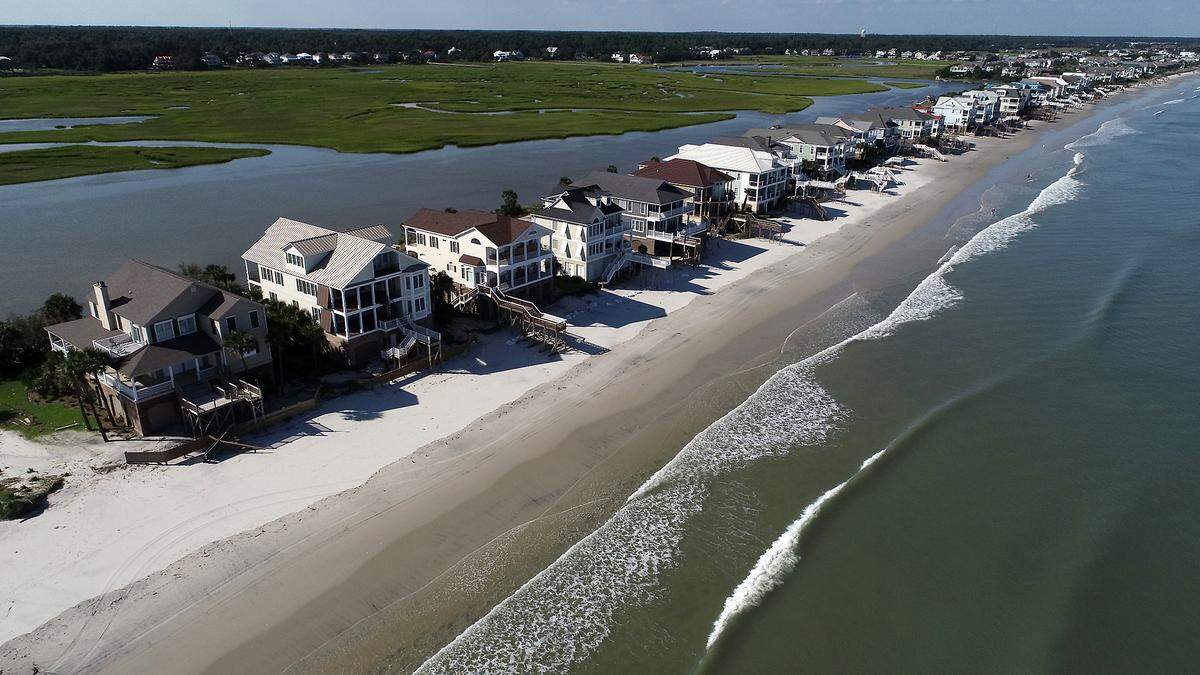
About two years ago, state regulators ordered the removal of illegal seawalls that protected high-end oceanfront houses on an eroding sandspit at Litchfield Beach, an area up the coast from Debordieu.
Homes had been developed there after Hurricane Hugo blasted South Carolina in 1989. Litchfield property owners said they didn’t realize how bad the erosion would become when they bought the homes.
‘Imminent danger’
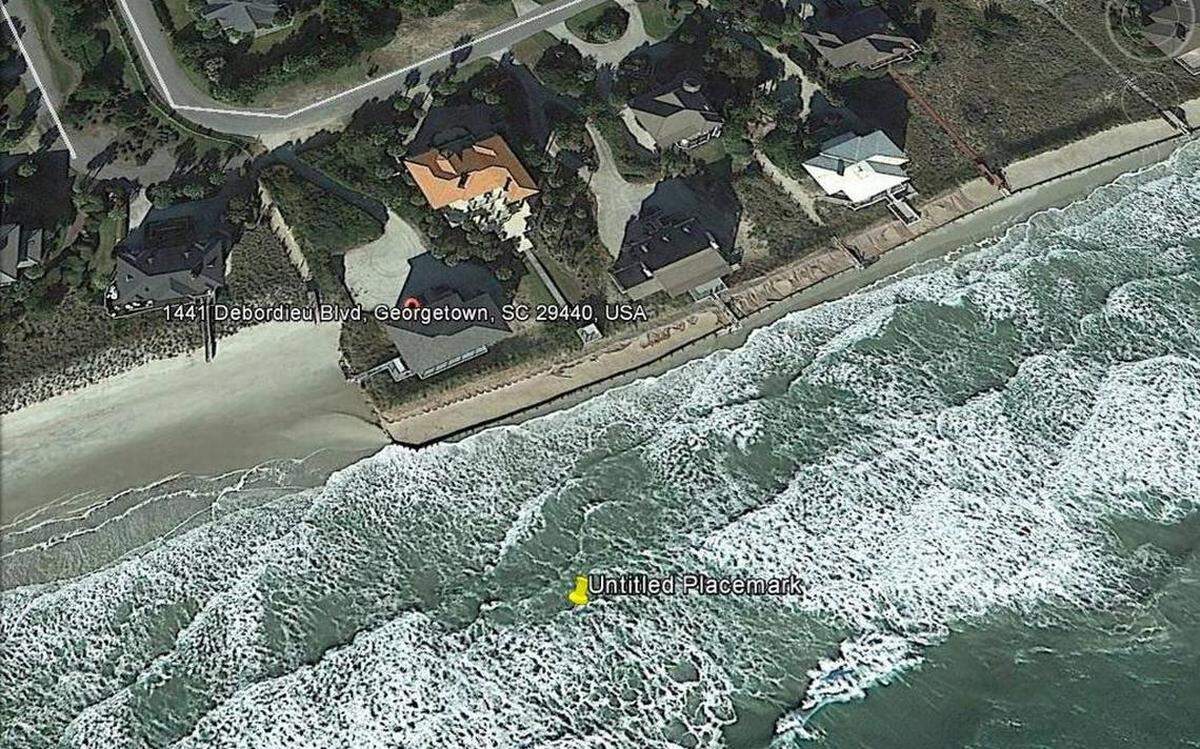
In 2020, the S.C. Department of Health and Environmental Control cited property owners on the southern end of Debordieu for illegally installing a wall of sandbags to fend off the encroaching sea.
The Cains were among that group of property owners at Debordieu who ran afoul of DHEC. But the Cains got into trouble with DHEC after discovering the erosion problem in late 2018, records show.
Effectively, the sandbags the Cains say they discovered following the purchase of their home revealed how bad the erosion was. They then installed a second set of sandbags in an attempt to protect their beach house from erosion, records show.
Mark Bible, a Greenville lawyer who represents the Cains, said the issues are directly related.
“One is a result of the other,’’ Bible said, noting that the Cains were “stuck between a rock and a hard place.’’
The Cains were not available for comment, but state records show that Rodney Cain was worried about the threat to the home he purchased in early 2017.
“My property is in imminent danger of catastrophic loss,’’ Cain was quoted as saying in a Dec. 26 story in The State.
Property owners cited by DHEC for illegally installing the wall of sandbags at Debordieu have, so far, been allowed to keep the bags. They brought in a team of lawyers, including state Sen. Stephen Goldfinch, R-Georgetown, to challenge an effort by DHEC staff to force the sandbags’ removal.
Last month, the DHEC board overturned a staff decision that would likely have forced the bags to be removed after Goldfinch and other attorneys argued that the sandbags were a scientific experiment.
Sandbags, under state law, are only considered a temporary solution to protect oceanfront homes during and immediately after storms, state regulators have said. When the storm goes away and the immediate threat disappears, they are supposed to be removed. Sandbags can worsen beach erosion when hit by waves and prevent sea turtles from nesting on the beach.
The Cain’s 2021 lawsuit names Edward and Marcia Liddy, the former homeowners at Debordieu, and two Georgetown County real estate agents for failing to disclose “defects’’ on the property.
The Liddys, who were not available for comment, owned the house at Debordieu from 2004 until they sold it to the Cains in early 2017, records show. Records show a home and an adjacent lot were sold.
Edward Liddy, a former insurance executive from Illinois, was at one time chairman and chief executive at the American International Group. He also is a former chief executive of the Allstate Corp., The Chicago Sun-Times reported.
According to the suit, state law required the disclosure of the defects to the property the Liddys sold, but the Liddys breached the sales contract by failing to do that.
The Cains, doing business as Northwest Properties LLC., “relied upon the defendants to communicate truthful and accurate information,’’ the suit said.
Georgetown County property records show the home on Debordieu Boulevard has two stories, four bedrooms, four full bathrooms and two fireplaces. Records show it has a finished area of 5,700 square feet.
Buyers should know hazards
Despite the Cains argument that they were not told about the buried sandbags or the extent of erosion, one of the nation’s foremost coastal geologists said people should know the hazards of buying beachfront houses, regardless of whether a disclosure is made.
“Thirty to 40 years ago, there might have been an excuse about not knowing how dangerous it is,’’ said Orrin Pilkey, a professor emeritus of geology at Duke University. “I don’t think that’s an excuse anymore.
People have learned too much about rising sea levels and climate change not to be aware that the beachfront is eroding and vulnerable, said Pilkey, who has studied coastal erosion for more than 50 years.
“It’s kind of like informing somebody when they buy a house that sometimes in the winter, we get snow, or we get rain,” Pilkey said. “They should know that.’’
At Debordieu, the Cains and other property owners who ran into trouble with DHEC last year all have bought houses on the southern end in the past decade.
A seawall installed on the southern end more than 40 years ago juts well onto the beach in front of the homes they bought, which protected houses built farther onto the shore than other homes in the community. The beach has since eroded, and now, waves often pound the seawall. Debordieu homeowners are planning a privately funded beach renourishment project this year to temporarily widen the shore.
Those troubles have resulted in a series of high-profile fights over whether the seawall should be repaired and whether other measures should be taken to protect the homes.
State law bans new seawalls because they can make erosion of the public beach worse. Lawsuits also have challenged the installation of walls that run into the ocean from the beach to trap sand.
Emily Cedzo, who tracks beach issues for the Coastal Conservation League in Charleston, said the hazards of living by the sea are known to many people, but she still finds plenty of people don’t fully realize the risk.
While current state law requires some disclosure that beachfront property is subject to coastal regulation, she said the law may not go far enough.
A disclosure statement included in a real estate title for the house the Cains bought says the property may be subject to regulation by the state Coastal Zone Management Act and may include oceanfront development restrictions.
The disclosure statement also says the law may subject the property to “erosion rates.’’ It says erosion rates are shown on plats for the property that were prepared in 2004.
“There are plenty of property owners who really have no idea the vulnerability of what it is they are purchasing,’’ Cedzo said. “A lot of people may not have grown up along the coast and understand the dynamic nature of our beaches.’’
.png "installed bags 3 photo (2).png")
This story was originally published February 11, 2022 at 2:50 PM with the headline "NC residents say they were misled about beach erosion when they bought home on SC coast."