Hip-hop show coming to Columbia features rapper who pleaded guilty to SC sex assault
A hip-hop concert is coming to Columbia, and it features two rappers who might be as famous for controversies as they are for their music.
DaBaby and Kodak Black are two of the hip-hop stars scheduled to perform at Spring Jam 2022. The show is set for April 22 at Colonial Life Arena, venue officials said in a news release.
Columbia natives Blacc Zacc and Renni Rucci are also scheduled to perform at the concert, along with No Cap, a rapper out of Mobile, Alabama. The Spring Jam lineup is subject to change, according to the release.
Tickets for Spring Jam are set to go on sale Friday at 10 a.m. Ticket prices for the concert were not available.
Tickets will only be available online at Ticketmaster on Friday. Any remaining tickets will be available at Colonial Life Arena’s box office beginning the following day.
Both DaBaby and Kodak Black have released top-10 albums on the Billboard charts. Both also have criminal records.
Kodak Black
Kodak Black — who was born named Dieuson Octave — was arrested on a first-degree criminal sexual conduct charge in November 2016 following an incident in Florence, South Carolina, involving a high school student earlier that year.
According to prosecutors, Kodak Black pushed the girl against a wall and onto a bed, biting her neck and breast during the assault, the Associated Press reported. The victim told Kodak Black to stop, but he didn’t.
The girl did not immediately report the assault to law enforcement; instead she told a nurse at her Richland County high school, who informed the school resource officer before the information was eventually brought to the attention of the Florence County Sheriff’s Office.
In April 2021, Kodak Black pleaded guilty to first-degree assault and was given a 10-year suspended sentence and put on 18 months of probation.
In another incident in April 2019, Kodak Black was arrested on drugs and weapons charges as he attempted to reenter the United States from Canada near Niagara Falls, New York.
Also in 2019, Kodak Black was sentenced to more than three years in prison for falsifying federal forms in order to buy firearms from a Miami-area gun shop, outlets reported. However, then-President Donald Trump pardoned the rapper on that conviction during Trump’s final days in the Oval Office in 2020.
In June 2021, Kodak Black was honored in his native Florida with a proclamation sponsored by former Broward County commissioner and Pompano Beach Mayor Dale Holness. It recognized Kodak Black for paying college costs for three children of the two FBI agents killed during a raid in Sunrise, Florida, paying funeral costs for a police officer in South Carolina, and donating $100,000 to the Nova Southeastern University law school in memory of Meadow Pollack, a victim in the Marjory Stoneman Douglas school shooting in 2018.
Since then, Kodak Black was charged with trespassing in Pompano Beach, Florida, on New Year’s Day 2022.
Earlier this week, Kodak Black was wounded when he was among four people who were hit by gunfire in a Los Angeles shooting, the Associated Press reported. A gunman shot four people Saturday after a brawl erupted outside a restaurant hosting a party that followed a Justin Bieber concert, authorities said.
There was no word on Kodak Black’s condition, and a message to his publicist at Atlantic Records has not been returned.
Kodak Black first enjoyed large-scale fame in 2015 when Drake posted a video of himself dancing to his song “Skrt.”
Since then, Kodak Black has become known for his songs “Zeze,” “Roll in Peace,” “Tunnel Vision,” “Testimony,” and “No Flockin.” His album “Dying to Live” debuted at No. 1 on the Billboard 200 chart in December.
Kodak Black’s new album, “Back for Everything,” will be released on Feb. 25.
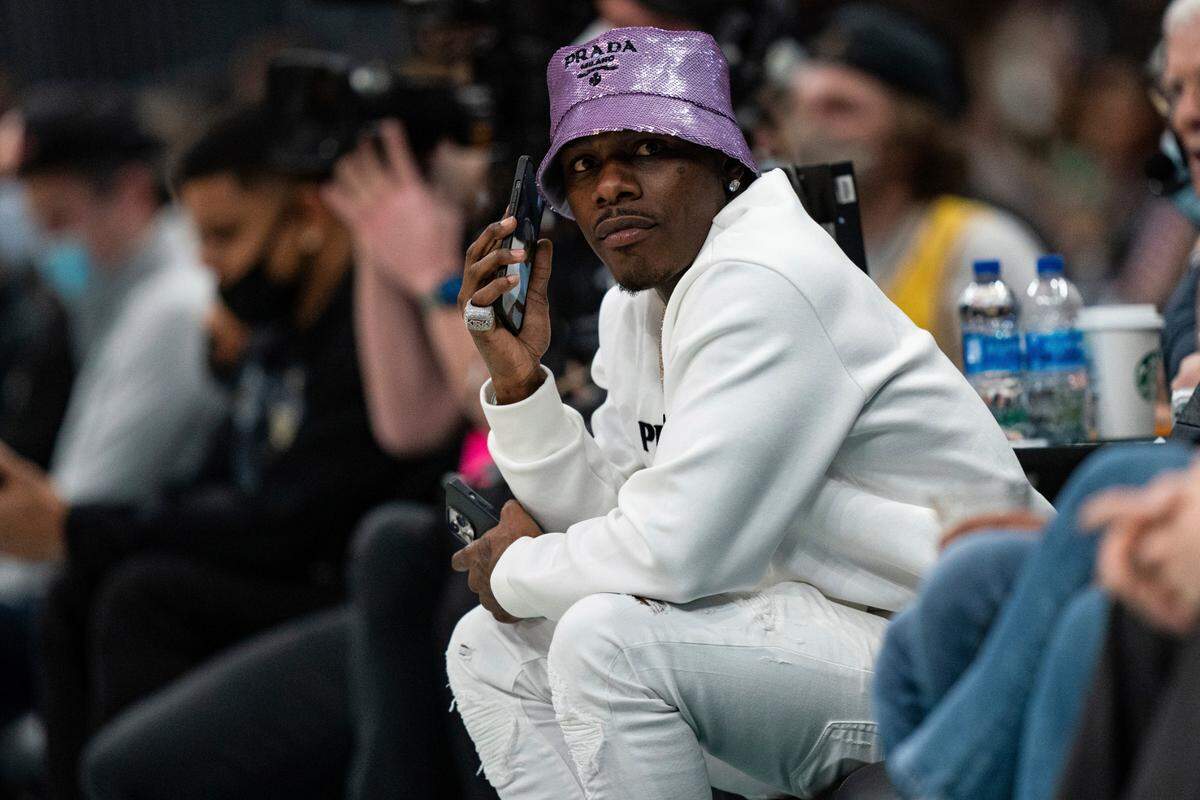
DaBaby
DaBaby, whose real name is Jonathan Lyndale Kirk, is no stranger to controversy. The Charlotte native has had run- ins with the law and drew the ire of many for his comments during a concert last summer.
After a 2021 music festival in Miami, DaBaby apologized for “hurtful and triggering” comments he made regarding HIV/AIDS.
“If you didn’t show up today with HIV, AIDS, or any of them deadly sexually transmitted diseases that’ll make you die in two to three weeks, then put your cellphone lighter up,” DaBaby told attendees at Rolling Loud Miami. “Ladies, if your p---- smell like water, put your cellphone lighter up. Fellas, if you ain’t sucking d--- in the parking lot, put your cellphone lighter up.”
His first apology in a video shared to DaBaby’s Instagram account might have missed the mark.
“I said, ‘If you don’t got AIDS, put a cellphone lighter up ... All the lights went up – gay or straight – you wanna know why? Because even my gay fans don’t got AIDS. My gay fans, they take care of themselves ... They ain’t no junkies on the street,” he said in the video.
After that, the rapper again apologized for his “misinformed comments” about HIV/AIDS, saying “he knows education on this is important.”
Among those critical of DaBaby for his comments were fellow musicians, including Elton John, Madonna and Dua Lipa. He was also dropped from several other music festivals in 2021.
DaBaby also has had troubles with the law.
In a February 2021 lawsuit, DaBaby and some of his associates were accused of beating and robbing a vacation rental homeowner near Hollywood Hills, California, and breaking COVID-19 crowding rules to boot in December.
In January 2021, the rapper was charged with carrying a concealed weapon and carrying a loaded firearm in a vehicle, after a security guard at a Gucci store on Rodeo Drive called 911 about a man who had a gun in his waistband in the store.
In November 2019, he was arrested on a weapons charge in connection to a fatal shooting in a North Carolina Walmart. In June 2020, a Mecklenburg County District Court judge found him guilty of the misdemeanor charge of carrying a concealed weapon, and he was sentenced to a year of unsupervised probation.
DaBaby’s 2019 debut album “Baby on Baby” reached top 10 in the Billboard top 200 albums of the year. He has sold more than 5 million records in the U.S., and has been nominated for eight Grammy awards.
DaBaby recently scored his first No. 1 hit on the Billboard Hot 100 list with “Rockstar (ft. Roddy Rich).”
He’s also known for other songs like “Suge,” “BOP,” “Ball If I Want To,” and “Red Light Green Light.”
Blacc Zacc
Blacc Zacc, whose real name is Zachary Chapman, was born and raised in Columbia. He began rapping at age 13, when his father built an in-home studio for his use, according to promoters.
He released his first song in 2010 called “First Round Draft Pick.” That led to his first album being released in 2016, called ‘Dirty Summer.”
Renni Rucci
Born in Columbia, Renni Rucci began rapping by releasing remixes of songs, including Cardi B’s “Bodak Yellow,” 21 Savage’s “Bank Account,” and Moneybagg Yo’s “Trending,” promoters said. These remixes, along with her original track “Mirror Mirror,” caught the attention of Migos’ label Quality Control, and she was signed to its subsidiary label Wolf Pack Global Music, and has released two albums titled “Big Renni” and “QuickTape.”
No Cap
When he was 9 years old, No Cap and his brother, who goes by the name of Backend Foreign, would put on local shows for the people in their community, promoters said.
After releasing his debut track “Boss Moves,” in 2017, No Cap appeared in songs with rappers such as Lil Baby, Lil Uzi vert, among others, according to promoters. He might be best known for his song “Steel Human” which reached No. 31 on Billboard’s top 200 list in August 2020.
BEHIND THE STORY
MOREThis is a breaking news story
In a breaking news situation, facts can be unclear and the situation may still be developing. The State is trying to get important information to the public as quickly and accurately as possible. This story will be updated as more information becomes available, and some information in this story may change as the facts become clearer. Refresh this page later for more updated information.
This story was originally published February 16, 2022 at 1:14 PM.