
‘Are you serious? A witch doctor?’
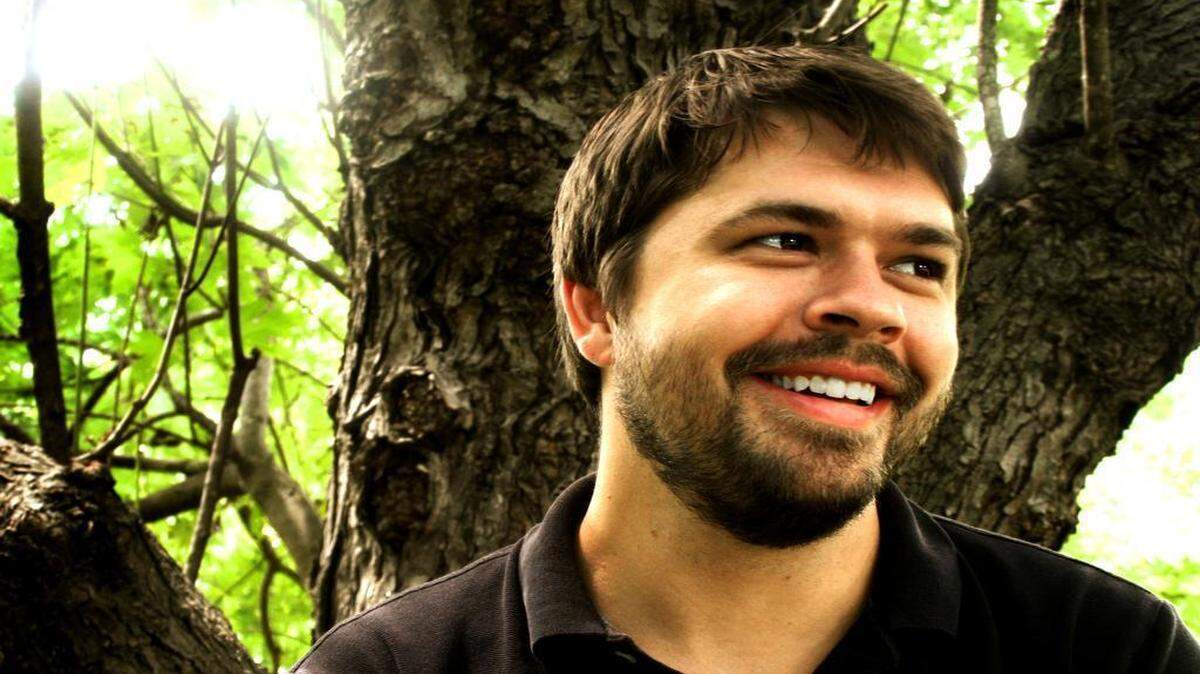
Recently, The State sat down with James E. McTeer II, recent winner of the South Carolina First Novel Prize Competition.
While McTeer, 31, now lives and works as an elementary-school librarian in Columbia, he says he spent the first 27 years of his life in Beaufort and also lived for a time in Ridgeland.
We talked to McTeer about his childhood growing up in a family where storytelling was second nature and a famous grandfather loomed large. We also talked about writing, on winning one of the area’s top literary prize’s for his debut novel “Minnow,” and how the award has changed his life.
Just as some background for our readers, your grandfather, James Edwin McTeer, was known as the boy sheriff, the witch doctor sheriff, a legendary lawman who practiced “white magic.”
Yes, and the high sheriff of the Lowcountry. Sheriff without a gun. A lot of things.
Your grandfather is also the subject of a new TV series based on the book “Coffin Point: The Strange Cases of Ed McTeer, Witch Doctor Sheriff.” Are you excited that his story will be finding a new audience or will be heard by people outside of the South, or the Lowcountry for that matter?
It’s very exciting. The book is by Baynard Woods and I’m actually a friend of his. He was in Beaufort not too long ago and we had a little meeting ourselves. It’s very exciting to have someone tinkering on a pilot based on his book.
I was talking to my dad the other day about how it’s really cool that a new generation is going to get to know the legend of my grandfather. It’s always been out there. I don’t think his name has ever faded away, but we’re kind of at that point where other generations are moving on and we might lose some of that story but all of a sudden here’s this show, and my book too, bringing a little more attention back to that name.
And so what was it like growing up with tales of your grandfather? Were you aware of his reputation?
It was part of our family history, growing up and for as far back as I can remember. He died of course in ’79, about three or four years before I was born, so I never knew him personally but growing up, we cherished that family history and getting the stories first hand in a way through his memoirs. ... He put down four memoirs: “50 Years as Lowcountry Witch Doctor,” “Beaufort Now and Then,” “High Sheriff of the Lowcountry” and “Adventures in the Woods and Waters of the Lowcountry.”
So how much of his story or that time period played a part in your novel? Is it fair to say it was the inspiration for “Minnow” and when was it set?
It was set in 1910 or turn of the century. ... But you could even see late 1890s. And (it was) very much inspired by granddad’s legend as a whole. Just the momentum of his story and his legend led me to want to write a local story, or a local tale about voodoo and about witch doctors and even more specifically, there are lots of scenes and lots of characters and little bits and pieces that were inspired by his memoirs.
So for our readers, Minnow is a young boy who goes on a quest on behalf of a sick or dying father. There’s a witch doctor in Port Royal who sends him to find the grave of yet another witch doctor?
Right, I looked at several different levels of root workers and witch doctors. Minnow arrives in Port Royal and meets a root doctor more in line with what granddad would have been. So he meets Dr. Crowe, who is an African-American, so that’s not really supposed to be granddad, but it’s what I envision as a root doctor; someone who is dispensing roots, and potions and sort of everyday remedies. And the idea that he sends Minnow out to get the grave dust from the grave of another root doctor, Sorry George, and he meets out there a witch doctor closer to the original roots of the witchcraft that came from Africa. So Minnow encounters both a root doctor and I would say a legitimate witch doctor.
Are you prepared to see some raised eyebrows as you venture out of the South or out of the region, when it comes to talking about voodoo, witch doctors and that sort of thing?
(Laughing) For me, I grew up with it, so it seems so normal to me. And so it does sort of catch me by surprise when someone is like, “Are you serious? A witch doctor? What are we talking about here?”
Some of my coworkers don’t know much about Beaufort or my family, and when I mention that granddad was a witch doctor and he was a white man, they don’t know what to think. But I’m used to that reaction. That’s kind of what makes it fun, and it kind of gives me a hook to take my story out to the world.
The book is set among the sea islands, these lush barrier islands around Beaufort that have taken on something of a mythical status themselves. How important is that setting or natural history to you in the telling of “Minnow?”
Everyone loves where they are from and everyone loves the land where they grew up, but people from the Lowcountry have a special connection to the land there, whether it’s work-play or just living there so setting out to write a local novel, I knew I had to capture that setting and give the novel a real sense of place.
And it is, like you said, a mythical, magical place, but I think it really lends itself to a fairy tale type of story like “Minnow.” There are all sorts of bizarre and strange things out there on the islands, and you just never know what you’re going to find when you cross another creek.
There are themes of sacrifice, of personal experience and growth gained through pain, whether it’s spiritual or physical pain. One of my favorite lines in the book is where the character of Petruchio says to young Minnow, about the road to Sorry George’s grave, “I can show you, but it’s your road.”
Another favorite scene is the gathering on the beach with the lavish descriptions of Frogmore stew, fried fish, hushpuppies and other delicacies which you then juxtapose later with this terrible scene of bodies and the dead literally sticking out of the mud after a hurricane has passed through. Did you intentionally set out to try and make a point about the agony and beauty of life or was that just a happy accident?
It was very, very intentional for a few reasons. You said growth through pain and that makes me think of the South. When I think of Southern literature, I think about the painful moments, that there are struggles, and there are things that we as a society and a community and as a people have to struggle through and that’s something of southern identity. Also this idea that usually growth and change comes with pain, it comes with struggle, it comes with war, it comes with strife.
Also, another big important theme in my book is childhood and the journey we go through as a child. I think all of us know that childhood is this wonderful, amazing, magical thing that you can never get again once it’s gone. But at the same time, childhood is very painful. There are a lot of struggles in childhood that we can’t control. And like you said, it’s a road that we have to walk on, on our own. Grownups and adults can show us the way, but in the end it’s just your little childhood feet putting the steps down in front of you.
When did you first sit down and start writing “Minnow” in earnest?
I had written a few other books. I’ve written my whole life but then there comes a time when you sit down and write seriously. I had a few other books in the drawer and you’re kind of pinging them against agents and editors and not hearing much.
So I started thinking smaller scale, maybe looking at a local press or at a local publisher. And I knew I had a local novel or a Southern novel in me. I had never written something purely Southern or purely Beaufort, so I said, “Let me look at some local presses and let’s see where that road leads us.” And it led me to the S.C. First Novel prize competition.
Did you think, “I’d like to enter this into the First Novel Prize competition” or did someone present you with the idea?
I was right in the thick of writing the book. And when I knew it was going well, I thought, “Let’s start looking at publishers.” And so I literally got on the Internet and started looking at South Carolina publishers that would be interested in a local story like the kind I was writing.
Hub City Press stuck out above and beyond the rest that was out there. And it just so happened that I noticed that about the time I could get the book wrapped up there was this competition. So I thought, “Let me enter the book into the competition and if that’s successful, great. We’ll go from there. But if it’s not, I’ll try to query them and try to publish with them anyway.”
What has it been like since, after winning the prize?
I am literally living my dream. I mean I pinch myself to try to wake up. Like I say, it was sort of an intentional strategy to write the local novel and pursue the local press and to have it work out this well, has been unbelievable and most of all to have the support of the South Carolina Arts Commission and especially Hub City (Press). They’ve put me in a position that many first-time authors never get to be in.
All the folks at Hub City – they have set up events, readings, signings, festivals, interviews. Getting the book published is a huge prize, but the support of the Arts Commission and Hub City is probably just as big a treat.
Where will you go from here? Do you feel like or consider yourself a novelist now and will you be devoting your time to a next book?
I’m still going to teach and be a librarian. Teaching children how to enjoy and love books is the perfect job. But I do consider myself a novelist. I said, “Hey, I can go ahead and call myself a novelist.” I don’t usually like doing that. I’m kind of modest, but finally I figured, I could go ahead and call myself an author.
I’ve got several books in the drawer that I think are pretty polished and other ideas in my head. (Also) now I’m thinking spinoffs to “Minnow.” But I definitely want to keep going with the writing thing and Hub City has put me in a great position to do that.
And I just signed with an agent out of New York City. Terra Chalberg of Chalberg & Sussman.
... One of the first things (executive director of the Hub City Writers Project) Betsy (Teter) said to me was, “Look, we want to support you, but we hope we don’t publish your second book, because we want someone in New York to publish your second book so that everyone will come read ‘Minnow’ after that.”
Reach Lucas at (803) 771-8362.
IF YOU GO
Hub City Press and the South Carolina Arts Commission will host a book launch reception for McTeer on Thursday, April 30, from 5:30-7 p.m. at Tapp’s Art Center, 1644 Main St. McTeer will give a brief reading and sign books. The event is free and open to the public.
First Novel Prize offers first-time writers a ‘leg up’
For anyone who has ever dreamed of publishing a novel, the South Carolina First Novel Prize, sponsored by the Hub City Press and South Carolina Arts Commission, offers a chance to do just that.
“We like plucking people from obscurity and giving them a platform,” says Betsy Teter, executive director of the Hub City Writers Project.
First awarded in 2008 and then sponsored by Hub City Press and the South Carolina State Library, the biennial prize competition has grown not only in the number of submissions but in credibility and visibility as well, says Teter.
“We’ve had four great books so this thing really works,” she says. “All the books we’ve published have done well. It creates its own visibility.”
The release of “Minnow,” by James E. McTeer II, marks the most recent book to receive the honor. Others who have won include Brian Ray for “Through the Pale Door,” Matt Matthews for “Mercy Creek” and Susan Tekulve for “In the Garden of Stone.”
Teter says the goal of the prize is not just to land writers for the press to publish, but to help launch debut novelists’ writing careers.
“It’s what we really love doing at Hub City. Our forte is debut. We’re all about emerging new Southern voices.”
Winners receive a $1,000 book advance and earn royalties. In addition, Hub City and the Arts Commission work to build excitement and buzz for the new novelist’s book by setting up events and coordinating publicity. Recipients of the prize have gone on to land literary agents, publish additional works or are working on second novels.
Teter says the prize also helps bring attention to Southern writers that might otherwise not be heard.
“First, it’s hard to get published. Second, it’s hard to get published as a Southerner. There are few slots for Southern novels and Southern novelists. (The prize) is a door you can go through to get a platform. …It’s a leg up. Southerners need legs up.”
For more information on the prize or Hub City, visit www.hubcity.org.
This story was originally published April 26, 2015 at 4:04 PM.